Free tools Windows power users keep installed
One-click scans. No signup required.
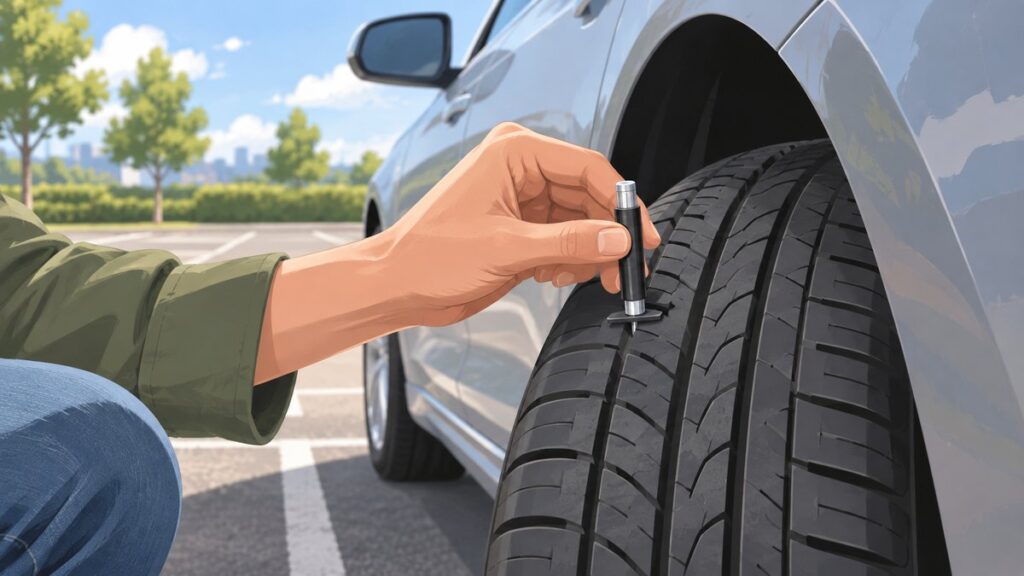
Check tire tread with the molded wear bars, an upside-down penny, or a tread-depth gauge. For U.S. passenger tires, NHTSA says to replace a tire when tread reaches 2/32 inch. Check several spots on every tire: uneven wear can leave one area dangerously low even when another looks fine.
1. Check the treadwear indicator bars
Most passenger tires have small raised bars molded across the bottoms of the main grooves. Turn the steering wheel to make the front tires easier to see, then look into the grooves for these bars. If the surrounding tread is level with a bar, the tire has reached its wear limit and should be replaced. On passenger tires, the bars correspond to 2/32 inch of tread. NHTSA explains how to identify treadwear indicators.
As an Amazon Associate I earn from qualifying purchases.
Look at several grooves and positions around each tire. Wear may differ across the tread or around the tire, so one healthy-looking section does not tell the whole story.
PC Slower Than It Used to Be?
A free scan shows the junk files, broken settings and background clutter dragging Windows down - then fixes them in one click.Free scan · Windows 10 & 11Crashes, No Sound, or Screen Glitches?
Random freezes, missing sound and display glitches usually trace back to one bad driver. Find and replace yours safely.Free scan · under a minute2. Try the penny test
- Place a U.S. penny in a main tread groove with Lincoln’s head upside down and facing you.
- Check whether the top of Lincoln’s head is visible.
- Repeat in several grooves and at different points around each tire.
If the top of Lincoln’s head is visible, NHTSA says to replace the tire. The penny gives a quick visual check near the U.S. passenger-tire limit; it does not measure tread depth precisely or inspect the tire for damage. The NHTSA tire guidance describes the test.
#1 Best Overall

- 1.Accurate and Efficient: Different colors on the bar represents different scopes, the red range on bar: 0 - 3/ 32; Yellow range on bar: 3/ 32 - 6/ 32; Green range on bar: 6/ 32 - 32/ 32, allowing you easy and fast to read and calibrated
- 2.Reusable:Tire tread gauge is made of sturdy material, reusable and long lasting, which is an efficient tool to moenitor tire tread levels, make driving safer
- 3.Convenient:Tire tread Depth gauge measures approx 3.35 x 1.06 inch, small size, also features a pocket clip for easy carrying, you can clip it on your pocket, ideal for quick and convenient getting and using
- 4.Simple to use :Place the black flat edge of the tire tread gauge on both sides of the tire tread, press down the color bar until it reaches the bottom of the tread groove, and read the depth measurement on the indicator bar.
- 5.Easy to read: There are 3 different color codes of areas on the bar that add simplicity and convenience, which show you a clear result of your tyre condition, really easy to read, giving you a fast and accurate measurement to tread depth, smart, high efficiency
3. Measure tread with a gauge
A tread-depth gauge provides a numerical reading rather than a visual pass-or-fail check. A basic graduated probe gauge is sufficient for checking depth; follow the gauge’s instructions if its design differs.
- Park on level ground and make sure the tire is stationary.
- Insert the probe into a main tread groove, avoiding the raised wear bar.
- Press the gauge’s shoulders or base flat against the adjacent tread surface.
- Read the scale. Depending on the gauge, it may show 32nds of an inch, millimeters, or both.
- Repeat across the inner, center, and outer tread areas, and at several positions around the tire.
Use the smallest reading when judging a tire, not the average. One badly worn area can be masked by deeper tread elsewhere. For U.S. passenger tires, NHTSA’s replacement guidance is 2/32 inch; local rules and requirements for other vehicle or tire categories can differ.
Rank #2

- Accurate and precise tire tread depth readings in 1/32 inch increments (1/128 inch resolution)
- Durable dial type gauge with easy-to-read 32nds scale (max. tread depth 14/32 inch)
- Color coded scale shows true tire health - safe range (green), showing wear (yellow), or needs replacement (red)
- Calibrated to meet or exceed industry standards for precise accuracy of tire tread depth (+/- 0.25%)
- Rugged, convenient, and compact design for easy storage with included leather pouch
Which method should you use?
| Method | What it tells you | Tool needed | Best use |
|---|---|---|---|
| Wear bars | Whether tread is level with the tire’s built-in limit indicators | None | Fast visual screening |
| Penny test | Whether the tread is near the U.S. passenger-tire replacement threshold | U.S. penny | Quick check when no gauge is available |
| Tread-depth gauge | A numerical tread-depth reading at the point measured | Tread-depth gauge | Comparing multiple areas and spotting uneven wear |
Wear bars and the penny test are convenient, no-tool or near-no-tool checks; a gauge takes more effort but gives a reading you can compare across the tire. None replaces checking multiple points.
What’s actually slowing this PC down?
Pick the symptom - the matching free tool is one click away.
Check for damage and uneven wear, too
Tread depth is only one part of tire condition. While checking, look for cuts, cracks, bulges, or irregular wear. A tread check cannot rule out internal damage. If you find damage, uneven wear, or are unsure about a borderline reading, have a qualified tire professional inspect the tire. NHTSA recommends checking tires at least once a month. See its tire safety guidance.
Rank #3

- 1. Accurately measures tire tread depth gauge, Calibrated from 0 to 1 inch in 1/32 inch
- 2. Color coded tire tread depth gauge clearly indicates the tire different phase by colors
- 3. Tire tread depth gauge of Red range on bar: 0-3/32; Yellow Range on bar: 3/32 - 6/32; 5. Green Range on bar: 6/32-32/32
- 4. Comes with a pocket clip, easy to carry a tire tread depth gauge
- 5. Tire tread depth gauge reads in 32nds Suitable for trucks, motorcycles, automobiles and any passenger vehicle
What the 2/32-inch threshold means
NHTSA’s U.S. consumer guidance says tires should be replaced when tread is worn down to 2/32 inch. That is guidance for passenger tires, not a universal legal rule for every state, country, vehicle, or specialty tire. States set their own in-use vehicle requirements, so check local rules if you need to establish legal compliance. A tire can also lose performance before reaching the minimum tread depth, particularly in wet or slushy conditions; Bridgestone cautions that 2/32 inch is not a guarantee of good performance in every condition.
Quick Recap
Best Value

- 1. Accurately measures tire tread depth gauge tool, Calibrated from 0 to 1 inch in 1/32 inch
- 2. Color coded tire tread depth gauge tool clearly indicates the tire different phase by colors
- 3. Tire tread depth gauge of Red range on bar: 0-3/32; Yellow Range on bar: 3/32 - 6/32; 5. Green Range on bar: 6/32-32/32
- 4. Comes with a pocket clip, easy to carry a tire tread depth gauge tool
- 5. Tire tread depth gauge tool reads in 32nds Suitable for trucks, motorcycles, automobiles and any passenger vehicle
Rank #4
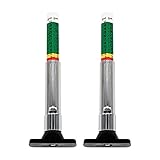
- Accurate measures tire tread depth gauge tool
- Calibrated from 0 to 1 inch in 1/ 32 inch
- Red range on bar: 0-3/32; Yellow Range on bar: 3/32 - 6/32; 5. Green Range on bar: 6/32-32/32
- Pocket-sized gauge, easy handy
- 2 pack
Product prices and availability are accurate as of the date/time indicated and are subject to change. Any price and availability information displayed on Amazon at the time of purchase will apply.