No—an OEM part is not automatically better. The right choice depends on the exact part, its fit and function, safety implications, documented standards, warranty responsibility, availability and total installed cost. “OEM,” aftermarket and recycled are sourcing descriptions, not universal quality grades. Compare the specific parts on your estimate rather than assuming one label settles the question.
What “OEM,” aftermarket and recycled actually mean
People often use “OEM” as shorthand for “best,” but the term can describe more than one thing. It may mean a part sourced through the vehicle manufacturer, an automaker-branded service part, or equipment made by the original supplier but sold under another name. Those are not necessarily identical products, and a supplier that made an original assembly is not automatically selling the same specification through every channel.
As an Amazon Associate I earn from qualifying purchases.
The Federal Trade Commission (FTC) defines an aftermarket part as one made by a company that did not make the vehicle. The FTC also describes new replacement parts as generally made to the vehicle maker’s original specifications, whether the vehicle maker or an independent company produces them. A recycled part is a used part originally installed in a vehicle, later removed and sold for reuse. Remanufactured or rebuilt parts are another category: a used core has been restored, but the process and warranty depend on the supplier.
Ask the repairer to identify the exact source and condition. “Replacement bumper” is not enough information; you need to know whether it is an automaker-branded new part, a new independent replacement, a certified collision part, a recycled assembly or a remanufactured component.
#1 Best Overall
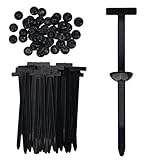
- Universal Auto Fastener: Our universal cable tie buckle zip tie replaces over 95% of screws and clips on most car models, letting you securely mount bumpers, trunk liners, engine guards, underbody panels, splash shields, and fender liners.It minimizes compatibility concerns, offering a one-solution fix for a wide range of vehicle repair needs.
- Self-Locking Design: Our car clips use a smart pin & button mechanism for a secure, tight lock. It holds the strap and buckle firmly together, providing strong, rivet-like fastening that prevents slippage or loosening, even during long drives or over rough terrain, keeping automotive components reliably in place for long-term performance.
- Easy & Quick Install: Our automotive clips offer swift, effortless installation. You simply place the ziplock pro cable ties where it's needed, insert the buckle, push it into place, and trim off the excess strap—all in just a few minutes, with no extra tools required. This saves valuable time and effort on automotive repairs, making DIY fixes incredibly simple and quick.
- Durable Nylon Construction: Our cable clips are made from industrial-grade, UV-resistant nylon that resists heat, wear, and aging. Its reinforced composition delivers long-lasting stability and strength even under pressure or extreme conditions, delivering unwavering durability you can always trust.
- Compact & Portable: Our 100-piece bumper clips are compact, lightweight, and easy to store in your glove box, console, or toolbox. Always ready for on-the-go fixes, they give you the flexibility to handle unexpected repairs anytime—without costly trips to the mechanic or searching for spare fasteners.
Are OEM parts better than aftermarket parts?
There is no supported universal rule that OEM parts are always superior. Quality is specific to the part and the evidence available for it. A replacement lamp, control module, hood, brake hose and interior trim have different failure modes, standards and fit requirements. A recognized certification can provide useful evidence for a defined category, but it does not turn every part carrying a broad “aftermarket” label into an equivalent—or every unlisted part into an unsafe one.
Fit and function come first
Verify the vehicle’s year, make, model, trim, engine or drivetrain where relevant, body style, position and part number. A part that looks identical can have a different connector, sensor mount, material, calibration requirement or mounting point. Poor fit can add labor, paint work, noise, water leaks or alignment problems. For electronic and driver-assistance components, an apparently interchangeable part may require programming or calibration after installation.
Safety relevance changes the decision
Prioritize documented standards and qualified installation when a part affects restraints, braking, steering, lighting, visibility, crash energy management or sensors. Ask how the completed repair will preserve the vehicle’s required safety-system function, not merely whether the replacement is labeled OEM.
Free tools Windows power users keep installed
One-click scans. No signup required.
The National Highway Traffic Safety Administration (NHTSA) identifies categories of replacement equipment that can be subject to Federal Motor Vehicle Safety Standards (FMVSS), including lamps and reflectors, tires, brake hoses, glazing and seat-belt assemblies. Applicability is item-specific. Requirements for those categories should not be generalized to every fender, engine component or piece of trim.
Evidence is stronger than a label
Useful evidence can include a part-specific certification, a test record, a documented material specification, a clear warranty and a supplier willing to identify the manufacturer. “Meets OEM quality” without a specification or accountable seller is a marketing statement, not a complete comparison.
Rank #2

- 【Abundant Quantity & Comprehensive Sizing】 This 240-piece automotive clips and fasteners kit includes 12 of the most popular sizes of bumper clips and car plastic rivets. Ideal for a wide range of car repair, modification, and maintenance tasks, this set ensures you have the right bumper clips and car clips for any job—from minor fixes to major overhauls.
- 【Superior-Quality Materials】 Made from high-grade plastic, these automotive clips and fasteners are built to resist wear, corrosion, and heat. The durable construction ensures long-lasting performance under various driving conditions, making these car clips a reliable choice for any automotive project.
- 【Wide Vehicle Compatibility】 Engineered to fit a broad range of makes and models, this push retainer kit is compatible with GM, Ford, Toyota, Honda, Chrysler, and more. Whether used as door trim panel clips or fender clips, these automotive clips adapt seamlessly to your vehicle’s requirements.
- 【Cost-Saving & Easy Installation】 Save time and money with this complete kit. It includes 5 fastener removers for easy extraction of old car clips, and the new bumper clips are designed for quick, secure installation—even for beginners no longer need to go to a auto repair shop.
- 【Convenient Storage & Organization】 The kit comes neatly organized in a compact plastic box with labeled compartments, making it easy to store and identify each type of automotive clip or bumper clip. Keep your car clips accessible in your garage or vehicle, ready whenever you need them.
Do I have to use OEM parts after an accident?
For used-vehicle repairs in the United States, federal law does not impose a blanket OEM-only rule. NHTSA has stated that “use of an aftermarket part in the repair of that vehicle is not prohibited per se by 30122.” The condition is important: a repairer may not knowingly make a required safety system inoperative, and replacement equipment covered by an applicable FMVSS must meet that standard.
This is a federal baseline, not a promise that every dispute is simple. State insurance rules, repair contracts, manufacturer procedures, lease terms and the vehicle’s design can affect what a shop or insurer must disclose or pay for. The NHTSA guidance is U.S.-specific, so a different country or state may apply different rules.
Outdated Drivers Are Slowing You Down
One free scan finds every outdated or missing driver and matches the right update for your exact hardware.Free scan · exact hardware matchWindows Errors? Fix Them Before They Spread
Repair common Windows errors and clear accumulated junk for a smoother, more stable PC - no reinstall needed.Free scan · no reinstallBody panels have a different regulatory picture
NHTSA’s historical interpretation explains that replacement body parts such as fenders, bumpers and hoods are not generally required by federal law to be crash-tested as replacement parts. The agency also said it had not conducted studies specifically comparing replacement body-part impact performance with OEM parts. That limited testing mandate does not prove that every aftermarket panel is unsafe or that every OEM panel is superior; it means federal evidence and requirements are narrower than many buyers assume.
Does using aftermarket parts void my warranty?
No. The FTC’s consumer guidance says, “Your warranty stays in effect if you use aftermarket or recycled parts.” A vehicle manufacturer or dealer cannot deny warranty coverage simply because an independent part was installed. To reject a claim for a damaged component, the manufacturer or dealer must show that the aftermarket or recycled part caused the damage.
That causation exception matters. If an incorrectly specified oil filter contributes to engine damage, or an electrical component damages another module, the disputed repair may require evidence about the part and installation. It does not automatically cancel unrelated warranty coverage on the entire vehicle.
Rank #3

- GENUINE OEM: Original Toyota/Lexus factory oil filter part number 90915-YZZN1, ensuring perfect fit and optimal performance for your vehicle
- COMPATIBILITY: Specifically engineered for Toyota and Lexus vehicles, maintaining manufacturer specifications and warranty requirements
- SUPERIOR FILTRATION: Advanced filter design captures harmful engine-damaging particles while maintaining proper oil flow
- QUALITY CONSTRUCTION: Heavy-duty housing and high-grade filter media provide reliable protection throughout the entire service interval
- EASY INSTALLATION: Direct replacement filter with standard threading for quick and simple oil change maintenance
Keep the written estimate, invoice, part information, maintenance records and any installation or calibration documentation. The FTC recommends retaining service records, and those records help establish what was installed, when it was installed and who performed the work. State disclosure requirements may also require an estimate to identify the type of replacement part.
What CAPA certification tells you—and what it does not
The Certified Automotive Parts Association (CAPA) operates a certification program for specified replacement parts, particularly collision components. CAPA describes factory audits, part testing, vehicle test fitting and ongoing monitoring. Its standards address measurable attributes such as dimensions, materials, fasteners, fit and coating performance for covered categories; some electronic components receive electromagnetic-compatibility testing.
Certification is part-specific and category-specific. Search the exact part in CAPA’s current database, confirm that the listing matches the vehicle application and look for the physical CAPA seal on the delivered part. A shop’s statement that a brand is “CAPA approved” is not a substitute for checking the individual listing and current status.
CAPA also states, “CAPA does not warrant parts.” The seller and manufacturer remain responsible for the product warranty. Ask who pays for removal, replacement, refinishing, recalibration and other labor if the part fails or does not fit.
How to interpret CAPA’s published figures
| Figure | What it represents | What it does not prove |
|---|---|---|
| More than 201 million replacement parts had earned CAPA certification | CAPA’s program count; the overview page does not state a year | It is not evidence that all aftermarket parts equal OEM parts or that certification covers every category |
| 13 of 15 sampled parts failed comparability requirements | A CAPA 2011 report using a small selected sample of independently manufactured collision parts | It is not a failure rate for the aftermarket market today |
| 14 of 15 sampled parts failed CAPA comparability requirements or FMVSS 108 compliance | A CAPA 2012 report based on another small historical sample | It is not a current, market-wide estimate |
These figures are useful warnings against assuming that an unverified replacement is equivalent to an original part. They cannot support a general claim that most aftermarket parts fail, nor can they establish a current OEM-versus-aftermarket superiority rate.
Do these 3 things before closing this tab:
1Repair Windows errors before they cause bigger problems2Fix the driver behind crashes, sound loss and screen glitches3Clear out junk files and repair common Windows errorsRank #4

- Universal Fit Kit - 6 Popular Sizes Car Clips, Perfect for Door Trims, Radiator Shields, Fenders, Bumpers & Splash Guards – Ideal as Bumper Clips
- Premium Quality: These Plastic Rivets Are Made of Nylon Material, Boasting Sturdy Construction and Long-Lasting Durability—They Won’t Break or Crack During Use
- Save Time & Money: 120-Piece Automotive Clips – Sufficient for Auto Parts Replacement, No Need to Run to Auto Parts Stores for Separate Fasteners
- Included Rivet Remover: Easily & Quickly Remove Door Panels & Push Pin Clips Without Damage, Making Access to Tight Areas a Breeze
- Wide Compatibility: Fits Ford, GM, Toyota, Honda & Most Other Brands – Ideal for Replacing Door Trim Panels, Radiator Shields, Fenders & More, Perfect as Retainer Clips
Compare the exact parts on your estimate
When a quote offers two or more choices, compare them across the same questions. The cheapest line item may require extra paint, fit correction, delivery time or calibration, while a higher-priced part may carry a clearer warranty or arrive sooner.
| Decision axis | Questions to ask |
|---|---|
| Exact fit and function | Is it listed for the vehicle’s year, make, model, trim and position? Does it perform the same function and support the same connectors, sensors and mounts? |
| Safety relevance | Is it part of a required safety system or a category covered by an FMVSS? Could poor fit or installation interfere with a restraint, lamp, sensor or visibility? |
| Evidence | Is there a part-specific certification or test record? For a collision part represented as CAPA certified, does the exact listing and physical seal match? |
| Condition and provenance | Is it new, aftermarket, remanufactured, rebuilt or recycled? Who made or supplied it, and can the seller document its origin? |
| Warranty and responsibility | Who warrants the part? Who covers installation labor, paint, calibration and removal if it fails or does not fit? |
| Total installed cost and availability | What is the full estimate, including labor, paint, delivery, calibration and likely fit-related work? When can the repair be completed? |
How to check a proposed replacement before approving it
- Read every line item. Ask the shop to label each part OEM-branded, aftermarket or recycled and to provide the manufacturer or brand where possible.
- Verify compatibility. Match the part number and application to the vehicle identification information, trim, position and required options before ordering online or authorizing installation.
- Identify safety standards. Ask whether the component falls into a regulated category such as a lamp, tire, brake hose, glazing or seat-belt assembly, and request the applicable compliance information.
- Check certification claims. If a collision part is represented as CAPA certified, search the exact part in CAPA’s database and inspect the delivered part for the seal. Do not rely solely on a brand-level claim.
- Define warranty responsibility. Get written answers about parts and labor if the component fails, fits poorly, causes a warning light or requires repeat calibration.
- Plan the post-repair check. Ask how the shop will verify alignment, warning lights, sensor operation, restraint function, lighting aim and any required calibration before returning the vehicle.
- Keep the file. Save the estimate, invoice, part numbers, certification information, photographs, maintenance records and calibration report.
When each option can make sense
Choose an OEM-branded part when the evidence and risk justify it
An OEM-branded service part can be sensible when the vehicle has a highly integrated electronic system, a difficult-to-match sensor or connector, a safety-critical function, a new model with limited independent supply or a manufacturer procedure that specifies a particular component. The reason is the documented fit, function or support for that exact application—not the word “original” by itself.
Consider a documented aftermarket part for a defined application
A new independent replacement may be reasonable when the part number is confirmed, the seller is accountable, relevant standards or certification are documented, the warranty is clear and the total installed cost and schedule are favorable. For a less safety-sensitive component, those facts may outweigh the automaker’s branding.
Use recycled parts when condition and provenance are clear
A recycled assembly can offer an appropriate match, especially for body or interior components, if its condition, mileage or prior use, included hardware and warranty are documented. Inspect for hidden damage, corrosion, missing sensors and incompatible revisions. A recycled part is not automatically inferior, but its history is part of the evidence you need.
Common mistakes that create expensive problems
- Comparing labels instead of part numbers: “OEM quality” does not confirm fit for a specific trim or position.
- Ignoring the installed total: A low purchase price can be erased by extra labor, paint blending, shipping, programming or calibration.
- Assuming certification is universal: A certification applies only to the listed part and covered standard; check current status.
- Forgetting labor responsibility: A parts warranty may not pay for removal, refinishing or installation.
- Accepting a warranty denial without causation evidence: The FTC warranty rule concerns whether the part caused the damage, not whether an aftermarket part was used at all.
- Skipping the safety-system verification: A visually correct repair still needs functional checks for restraints, lamps, sensors and warning systems when those systems were involved.
A practical decision rule
For safety-critical or highly integrated components, prioritize exact fit, documented standards, part-specific evidence and qualified installation. For less safety-sensitive parts, a well-documented alternative can be reasonable when the part number, warranty, seller responsibility, availability and full installed cost make sense. Neither principle says that every OEM part is best or every aftermarket part is acceptable; it tells you what evidence should carry the decision.
The most useful request at the counter is simple: “Please identify the exact part, who made it, what standard or certification applies, who warranties the part and labor, and what the complete installed price is.” That turns an OEM-versus-aftermarket argument into a verifiable comparison.
Quick Recap
Product prices and availability are accurate as of the date/time indicated and are subject to change. Any price and availability information displayed on Amazon at the time of purchase will apply.