Tesla’s “We, Robot” event on October 10, 2024, was primarily a vision-and-prototype presentation—not a conventional product launch. Held at Warner Bros. Studios in Burbank, California, the event introduced three major projects: the two-seat Cybercab autonomous vehicle, the larger Robovan people-and-cargo mover, and demonstrations of Tesla’s Optimus humanoid robot.
Tesla also promised unsupervised autonomous driving for existing Model 3 and Model Y vehicles during 2025 and described a future Robotaxi network in which privately owned and Tesla-owned vehicles could earn money by carrying passengers. However, Tesla did not make a consumer-ready Cybercab, Robovan or Optimus available to order that night.
As of August 10, 2026, Tesla has launched a Robotaxi service using Model Y vehicles and reported that Cybercab production began in 2026. But broad consumer availability, final pricing and full-scale production remain unresolved, while Robovan has no verified production timetable and Optimus remains in factory preparation rather than commercial customer delivery.
The quick answer: what Tesla announced
| Project or announcement | What Tesla showed or claimed | Status and what was missing |
|---|---|---|
| Cybercab Unveiled prototype |
A compact, two-seat autonomous vehicle with no steering wheel or pedals. Elon Musk said it would cost less than $30,000 and enter production in 2026. | The price was a target, not a confirmed MSRP. Tesla did not provide final range, battery capacity, crash ratings, production volumes, an order date or a consumer reservation process. |
| Robovan Unveiled concept |
A large autonomous electric vehicle intended to carry up to 20 people or goods. Tesla suggested uses including shuttles, transit, construction and food service. | No price, production date, factory, reservation system or meaningful production specification was announced. |
| Optimus Demonstrated robot |
Humanoid robots walked, danced, served drinks, handed out items, played rock-paper-scissors and interacted with guests. Musk projected a future price of roughly $20,000 to $30,000. | Optimus was not offered for sale. Human assistance was reported during some interactions, so the demonstrations did not establish that every behavior was autonomous. |
| Existing Model 3 and Model Y Forward-looking promise |
Tesla said these vehicles would receive unsupervised autonomous-driving capability in California and Texas during 2025. | Tesla’s commercial product remained FSD (Supervised), which requires driver attention and does not make a vehicle autonomous. The event did not provide a detailed rollout or regulatory timetable. |
| Robotaxi network Business strategy |
Tesla described a network of privately owned and company-owned autonomous vehicles that could provide rides and generate revenue. | The event did not explain the complete app, pricing, insurance, owner revenue share, cleaning, maintenance, remote assistance or operating-area model. |
Tesla’s official “We, Robot” recap presented these products as parts of a larger AI and autonomy platform. The important distinction is that the event combined unveiled prototypes, staged demonstrations and long-term predictions under one ambitious vision.
#1 Best Overall

- BRING MORE LIFE TO YOUR DESK – Meet Eilik – your little robot friend with personality. With loving animations, expressive reactions, and playful interactions, Eilik brings more joy to your everyday life. Whether on your desk, at your workspace, or by your bedside, Eilik quickly becomes a familiar companion for special moments.
- EVERY INTERACTION BRINGS A NEW SURPRISE – Touch Eilik and discover playful reactions that bring your little robot friend to life. Whether you’re giving Eilik a gentle touch, picking Eilik up, or playing together, Eilik responds with expressive animations, charming expressions, and playful reactions. Every interaction reveals more of Eilik’s personality and makes your little companion feel even more special.
- READY FOR LITTLE MOMENTS, RIGHT AWAY – Eilik is ready to interact right out of the box – no complicated setup required. A simple touch is all it takes, and Eilik responds with expressive animations and charming reactions. Easy, intuitive, and full of little surprises that make every moment special.
- EVEN MORE FUN TOGETHER – Every Eilik has its own charm. Bring two or more Eiliks together and watch them interact in their own playful ways – they play, dance, tease each other, and create fun moments together. Whether with friends, family, or as a couple, more Eiliks mean even more ways to play and enjoy.
- MORE POSSIBILITIES AWAIT – Eilik is more than a little robot – it’s the beginning of a bigger world filled with new experiences. Expand your Eilik experience with AI Station for natural AI conversations and Panxer for exciting adventures. Regular updates also bring new animations, games, and surprises along the way.(AI Station and Panxer sold separately.)
What was the “We, Robot” event?
Tesla held “We, Robot” on October 10, 2024, at Warner Bros. Studios in Burbank, California. Instead of launching a conventional production car with a full specification sheet and ordering process, Tesla used the event to show what it believes transportation and robotics could become.
The presentation had several elements:
- A keynote led by Elon Musk
- The Cybercab reveal
- Demonstration rides in Cybercab prototypes around the Warner Bros. backlot
- The surprise reveal of the larger Robovan
- Optimus robots walking, dancing and interacting with guests
- Claims about autonomous driving, ride-hailing economics, safety and Tesla’s future business model
The event’s theatrical setting mattered. Warner Bros. offered a controlled private environment where Tesla could demonstrate vehicles without the full complexity of unrestricted public-road operation. The presentation showed that Tesla could operate vehicles in that event environment; it did not by itself prove that a no-controls vehicle was ready for general commercial service on public roads.
Tesla framed autonomy as the next stage of its mission. The company’s official recap linked autonomous vehicles and humanoid robots through shared artificial-intelligence, software and manufacturing capabilities. In that strategy, Cybercab would provide autonomous transportation, Robovan would handle larger groups and cargo, and Optimus would perform physical tasks in homes, businesses and factories.
Cybercab: Tesla’s main announcement
What the Cybercab is
The Cybercab was presented as a purpose-built autonomous vehicle for Tesla’s future Robotaxi network. It is a compact two-seat vehicle with no conventional driving controls:
Quick wins for a faster PC:
Clear out junk files and repair common Windows errorsFree Scan →Scan for outdated or missing drivers - takes under a minuteDriver Scan →- No steering wheel
- No accelerator pedal
- No brake pedal
- Two passenger seats
- A compact, coupe-like body
- Butterfly-style upward-opening doors
- Exterior styling influenced by the angular Cybertruck design language
The vehicle arrived on stage carrying Elon Musk, and Tesla offered attendees rides in Cybercab prototypes around the studio property. Tesla’s Q3 2024 shareholder update described the Cybercab and Robovan as vehicles designed from the ground up for autonomy and specifically noted their lack of a steering wheel and pedals.
The visible vehicle should not be treated as the final production specification. Tesla did not establish the production Cybercab’s definitive dimensions, curb weight, interior design, safety equipment, battery size, range, crash-test rating or charging performance at the event.
Price: a target below $30,000
Musk said the Cybercab would cost less than $30,000. That figure is best understood as a projected target, not a confirmed U.S. MSRP. Tesla did not say whether the amount would include destination charges, taxes or other fees, and it did not disclose financing, lease pricing or insurance costs.
There was also no order page, deposit program or explanation of whether the vehicle would be sold directly to private customers, fleet operators, Tesla itself or some combination of those groups. A price projection does not mean a buyer could reserve or purchase a Cybercab.
Do these 3 things before closing this tab:
1Clear out junk files and repair common Windows errors2Fix the driver behind crashes, sound loss and screen glitches3Repair Windows errors before they cause bigger problemsFor context, Tesla has historically revised vehicle pricing and specifications before production. The Cybercab’s final cost would depend on its battery, autonomy hardware, manufacturing process, regulatory equipment and production scale—none of which had been fully disclosed at “We, Robot.”
Operating-cost and efficiency claims
Musk described a projected operating cost of approximately $0.20 per mile. This was Tesla’s or Musk’s projected figure, not an independently measured operating result.
A real Robotaxi cost-per-mile calculation would need to account for much more than electricity:
- Electricity prices and charging losses
- Routine maintenance
- Tire wear
- Cleaning between passengers
- Insurance
- Remote assistance
- Depreciation
- Financing
- Battery degradation and eventual replacement
- Fleet utilization and time spent charging or waiting
- Regulatory and customer-support costs
That is why the $0.20-per-mile claim should not be compared directly with a private car’s energy cost. The two figures may be measuring different categories of expense. Contemporary coverage reported the operating-cost projection, while Tesla’s shareholder update supplied a separate efficiency estimate.
Tesla said the Cybercab’s next-generation powertrain was expected to achieve approximately 5.5 miles per kilowatt-hour. That was an estimate, not an EPA-certified efficiency rating or range figure. Tesla did not disclose the battery capacity needed to turn that efficiency estimate into a usable driving range.
Charging
Tesla described wireless or inductive charging for the Cybercab. However, the event did not provide a complete charging specification, including charging speed, connector details, battery size, charging-network requirements or how vehicles would be moved and charged between rides.
For a high-utilization autonomous fleet, charging logistics are central to the business model. A vehicle that spends substantial time charging, waiting for a charger or being moved to a service facility will generate less revenue than one operating continuously. Tesla did not quantify that trade-off at the event.
Production timing and what happened afterward
Musk said Tesla expected Cybercab production in 2026. This was a company target, not a guaranteed launch date or promise of broad customer availability.
Free tools Windows power users keep installed
One-click scans. No signup required.
The timeline subsequently developed in stages:
- Tesla’s 2024 annual report listed Cybercab as “in development.”
- Tesla’s Q1 2026 update listed Cybercab in pilot production and said volume production was expected during 2026.
- Later reporting on Tesla’s July 22, 2026 Q2 update said production had begun, but Tesla had softened or removed its earlier language promising volume production during 2026.
The most accurate summary is that Tesla met the narrower milestone of beginning production activity in 2026, according to later company reporting. That does not mean the Cybercab was in mass production, broadly available to consumers or operating at the scale implied by the original event vision.
The company’s Q1 2026 update, Q2 2026 update and July 2026 reporting are more useful for assessing progress than the original 2026 prediction alone.
Rank #2

- Meet EMO, Your New Desk Buddy - Say hello to EMO, the ultimate desk robot that’s here to jazz up your workspace. With built-in AI model and wide-angle camera, it can see you, hear you and understand you, just like a real pet would
- Voice Commands Enabled - The EMO robot comes with a series of built-in voice commands, you can talk and play with EMO like with a real pet. And with the ability to connect to network and powered by ChatGPT, you can have more complex conversations with EMO like talking to a tech-savvy friend who’s always up for a chat
- Dance Party & Game Time - EMO is ready to party! Simply turn up your favorite tunes and tell EMO to dance with you, it’ll be your perfect desk-side party buddy. Plus, EMO supports to connect to the EMO app for a range of interactive games and activities. Whether you’re solo or with friends, EMO ensures you’re always entertained
- Endless Fun - The EMO robot features with multiple sensors built-in to bring more interactions with you, you can rub it, shake it and even “shoot” it with finger gesture, making it feel like you’re playing with a real pet. It even “gets sick” with weather changes, so you can care for it like you would a furry friend
- Enjoy Every Moment with EMO - With the EMOPET App has a unique achievement system that helps record all the big and little moments you have spent with EMO, like a new dance moves, a new expression, celebration of your birthday, and more...Enjoy all the life events with your new best buddy!
Cybercab is not the same thing as Robotaxi
These terms describe different things:
- Cybercab: Tesla’s purpose-built autonomous vehicle.
- Robotaxi: Tesla’s broader autonomous ride-hailing service and business.
Tesla launched a Robotaxi service in June 2025 using Model Y vehicles. That service launch did not mean the Cybercab was commercially available. Tesla’s 2025 annual report said the purpose-built Cybercab would be added to the Robotaxi business over time.
This distinction is crucial. Tesla could begin operating a ride-hailing service with modified or existing vehicles before the dedicated no-controls Cybercab reached volume production.
What’s actually slowing this PC down?
Pick the symptom - the matching free tool is one click away.
The separate promise for existing Model 3 and Model Y vehicles
Musk also said Tesla expected to bring unsupervised autonomous driving to existing Model 3 and Model Y vehicles in California and Texas during 2025. This was a major promise at the event, even though it received less visual attention than the Cybercab reveal.
It was separate from the purpose-built Cybercab. Existing Teslas use a driver-assistance system and hardware intended for vehicles with a human driver. Tesla’s commercial product language remained FSD (Supervised), and Tesla’s own filings state that FSD (Supervised) does not make a vehicle autonomous and requires the driver to remain attentive.
Unsupervised operation would require more than a software update. It would involve validation of the vehicle’s operating domain, regulatory approval, safety evidence, remote-assistance procedures, insurance and a system for handling unusual or hazardous situations. The Associated Press reported the 2025 promise, while Tesla’s annual filing preserves the distinction between supervised driver assistance and autonomous operation.
Robovan: the surprise reveal
What Tesla showed
The biggest surprise of the event was the Robovan, a large, boxy autonomous electric vehicle designed to move people or goods. Musk said it could carry up to 20 people. The displayed prototype had a spacious interior, sliding doors and a flexible concept intended to support passenger and cargo configurations.
Recommended Free Tools
Tesla suggested possible applications including:
- Shuttle transportation
- Mass transit
- Sports-team transportation
- School transportation
- Goods and cargo delivery
- Construction support
- Food service
These were illustrated use cases and strategic possibilities, not confirmed products, customer contracts or announced operating businesses. Tesla’s official event recap described the Robovan as a vehicle for groups or goods, including mass transit, construction and food service.
What Tesla did not announce
The Robovan presentation was much less specific than the Cybercab reveal. Tesla did not announce:
- A price
- A production date
- A factory or manufacturing plan
- A reservation program
- Battery capacity
- Range
- Motor configuration
- Production dimensions
- Payload rating
- A final seating layout
- A regulatory pathway
- Whether it would be sold to customers or operated only as part of a Tesla fleet
Musk said Tesla intended to build the Robovan, but the presentation supplied no meaningful commercial timetable. It is therefore more accurate to call it an autonomous vehicle concept or prototype than a launched Tesla product.
There is also a difference between the stated capacity and what viewers could infer from the prototype’s interior. Musk’s “up to 20 people” statement should be treated as Tesla’s maximum claim, not as a certified production seating capacity. The displayed configuration appeared to show fewer visible seats.
Optimus: demonstrations mixed with long-term promises
What the robots did at the event
Optimus robots appeared throughout “We, Robot.” Demonstrations and displays included robots:
- Walking among attendees
- Dancing
- Serving drinks
- Handing out items
- Playing rock-paper-scissors
- Conversing with guests
- Responding to requests and prompts
Those are the behaviors Tesla displayed in the event environment. They should be kept separate from Musk’s broader claims about what Optimus could eventually do in ordinary life.
What Musk said Optimus could eventually do
Musk described Optimus as a general-purpose humanoid robot that could eventually perform tasks such as:
- Teaching
- Babysitting
- Walking a dog
- Mowing a lawn
- Getting groceries
- Serving drinks
- Acting as a companion or friend
These were future capability claims, not capabilities established by the demonstrations. A robot serving a drink in a carefully arranged event setting is not the same as a robot reliably handling cluttered homes, children, pets, stairs, weather, unpredictable objects and liability-sensitive tasks.
Outdated Drivers Are Slowing You Down
One free scan finds every outdated or missing driver and matches the right update for your exact hardware.Free scan · exact hardware matchWindows Errors? Fix Them Before They Spread
Repair common Windows errors and clear accumulated junk for a smoother, more stable PC - no reinstall needed.Free scan · no reinstallOptimus price projection
Musk projected that Optimus could eventually cost approximately $20,000 to $30,000 when produced at scale. Tesla did not announce a retail price, sales date, deposit program or final production design.
It also did not provide a warranty, battery-life specification, payload rating, safety certification, customer-support model or explanation of how owners would update, supervise and repair the robot. “$20,000 to $30,000” should therefore be described as a long-term projection—not as a price at which a customer could buy Optimus.
How autonomous were the demonstrations?
After the event, TechCrunch reported that human operators assisted with Optimus interactions, including conversation and some manipulation tasks.
That does not establish that every Optimus behavior was remotely controlled, nor does it make the robots “fake.” Teleoperation can be used for safety, data collection, training or demonstration support. But it does change what the presentation proves:
The Tool Desk
Outbyte Driver Updater FREEFix the driver behind crashes, sound loss and screen glitchesFind Drivers →Outbyte PC Repair FREERepair Windows errors before they cause bigger problemsFix Now →Rank #3

- Build your own six-legged, artificial intelligence robot that moves by reacting to the gestures and sounds that you make!
- Use the included app to assign your own movements to your robot's functions, enabling it to walk, turn, and stop; explore the concept of machine learning as your AI robot learns the gestures and sounds to better perform the assigned functions.
- The 64-page, full-color step-by-step manual and fun, comic book-style story explains the mechanics behind your AI and provides an engaging intro to the history and future of AI technology.
- A comprehensive overview of the science of the future for kids ages 10+ (with help from an adult) or 12+ (for independent play)
- Perfect combination of hands-on and digital learning!
- It may demonstrate that the robot can move or balance in the event environment.
- It does not establish that every conversation or object-handling action was independently generated by the robot.
- It does not establish reliable autonomy in an uncontrolled home, workplace or public setting.
- It does not provide a benchmark for commercial reliability.
The fair description is that Tesla staged public Optimus demonstrations while the level of autonomous operation was not fully disclosed and human assistance was reported for some interactions.
Optimus status in 2026
Tesla’s 2025 annual report described Optimus as a general-purpose autonomous humanoid robot still in development and stated that Tesla had not yet commercialized its Bots business.
Tesla’s Q1 2026 update said the company was preparing production lines, including a first-generation line in Fremont and a future second-generation line in Texas. As of July 2026 reporting, those lines were still being installed and Tesla expected production “soon,” but there was no verified consumer sales program.
In other words, factory preparation was progress toward production—not proof that customers could buy or receive a commercial Optimus.
Tesla’s larger Robotaxi and autonomy business model
“We, Robot” was not merely a car reveal. Tesla presented a business model built around much higher vehicle utilization and autonomous mobility services.
Under Tesla’s vision:
- Privately owned Teslas could eventually join a ride-hailing network when their owners were not using them.
- Dedicated Cybercabs could operate more intensively than personal vehicles.
- Autonomous rides could reduce transportation costs.
- Higher utilization could allow Tesla to earn software, fleet and mobility revenue in addition to vehicle revenue.
- Autonomous vehicles could reduce parking demand because they would not need to remain parked near their owners.
- The same AI and manufacturing platform could support both cars and humanoid robots.
Tesla also projected that autonomous vehicles could become much safer than human-driven vehicles—Musk referred to vehicles being 10, 20 or 30 times safer than human drivers. That is a future claim, not a measured result established by the event.
Tesla’s official recap also suggested that autonomous transportation could eventually cost less than a bus ticket. That is a strategic aspiration dependent on vehicle utilization, energy, maintenance, insurance, labor, regulation and depreciation. It is not an established fare or current operating result.
What the event did not show
The missing information is as important as the reveals. Tesla did not provide:
What’s actually slowing this PC down?
Pick the symptom - the matching free tool is one click away.
- A final Cybercab MSRP
- A Cybercab range figure
- A Cybercab battery specification
- An EPA efficiency or range rating
- A Cybercab order page or reservation process
- A Cybercab production-volume schedule
- A Robovan production date
- A Robovan price or complete specification
- An Optimus sales date
- A complete Robotaxi application and fare structure
- Terms for owners who might place their vehicles into Tesla’s network
- A revenue-sharing model
- Insurance arrangements
- Cleaning, maintenance and vandalism procedures
- Remote-assistance and emergency-response procedures
- Passenger evacuation and accessibility details
- Regulatory approval for unrestricted public-road operation
These omissions explain why “We, Robot” should be understood as a product-vision event rather than a complete commercial launch.
How much did the demonstrations prove?
Cybercab rides took place on a private backlot
The Cybercab demonstration rides occurred on the Warner Bros. studio property. A private backlot is materially different from unrestricted public-road operation involving:
- Mixed traffic and unpredictable drivers
- Pedestrians and cyclists
- Emergency vehicles
- Bad weather and poor visibility
- Road construction and temporary lane changes
- Complex intersections
- Police or first-responder direction
- Unmapped or recently changed streets
- Public passenger liability
The rides demonstrated operation in the event environment. They did not, by themselves, prove readiness for an unrestricted autonomous ride-hailing service.
Tesla’s reported ride count
Tesla executive Ashok Elluswamy later said the event used 19 Cybercabs and 29 Model Ys and completed approximately 1,300 autonomous trips carrying more than 2,000 guests without a safety-related event. That account was reported by Benzinga.
Quick wins for a faster PC:
Repair Windows errors before they cause bigger problemsFix Now →Fix the driver behind crashes, sound loss and screen glitchesFind Drivers →The figure should be attributed to Elluswamy and treated as an event-specific company claim, not as an independent safety study. It does not provide the mileage, weather conditions, intervention rate, route complexity, near-miss data or comparison group needed to assess real-world safety.
Independent reader supportYour contribution helps us test, update, and keep practical guides available for everyone.Regulatory and practical barriers
Why the missing controls are significant
A vehicle without a steering wheel or pedals is not simply an ordinary passenger car with its driver controls removed. Many vehicle-safety rules were written around vehicles operated by human drivers. NHTSA has discussed how Federal Motor Vehicle Safety Standards can create challenges for automated vehicles because some requirements assume the presence of manual controls.
For example, stopping-performance rules and requirements involving manual brake controls do not map neatly onto a vehicle designed never to be driven by a human. NHTSA’s explanation of AV-related regulatory issues provides that broader context.
As of June 2026, NHTSA had begun rulemaking to remove manual brake-control requirements for vehicles designed never to be operated by humans while retaining stopping-performance requirements. That was a later regulatory development, not something Tesla announced at “We, Robot.” The proposal does not by itself approve the Cybercab for sale or public operation. NHTSA’s rulemaking announcement should be consulted for the current status.
Recommended Free Tools
California permits and deployment rules
California requires autonomous-vehicle manufacturers to move through testing and deployment permits. Updated rules adopted in April 2026 added requirements involving staged testing, safety cases, mileage thresholds, first-responder procedures, remote operations and data reporting.
The California DMV’s rule announcement explains those requirements. The DMV’s permit-holder list identifies Tesla Robotaxi LLC as authorized for testing with a driver, but permit status and approved operating areas must be checked before making a claim about commercial driverless service in a particular California location.
Rank #4
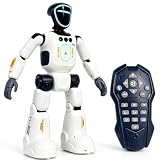
- Smart AI-Inspired Robot Toy for Kids: Bring futuristic fun to playtime with this smart interactive robot toy. Designed with AI-inspired features, glowing LED face effects, music, movement, and responsive controls, it keeps kids engaged through hands-on play and imagination
- Gesture Sensing & Remote Control Play: Kids can control the robot with simple hand gestures or use the included remote control for forward, backward, left turn, right turn, dancing, music, and demo functions. Easy operation makes it fun for beginners and exciting for daily play
- DIY Programming for Creative Fun: Create custom action sequences with the programmable function. Kids can set movements, add music, and play back their own routines, helping encourage creativity, logical thinking, and hands-on STEM learning through interactive play
- Voice Recording & Playback: Record fun messages and let the robot play back. The voice recording feature makes parent-child interaction more exciting and gives kids a fun way to hear their own voice while playing with the robot
- Singing, Dancing & Educational Companion: This robot toy combines built-in songs, dance moves, auto demo, science knowledge, and interactive play in one entertaining design. A birthday, holiday, or Christmas gift for boys and girls who love robots, technology, and smart toys
Tesla’s 2025 annual report also warned that autonomous-vehicle and ride-hailing regulations vary by jurisdiction and can delay or restrict deployment. A no-controls Cybercab’s commercial availability depends on more than completing the vehicle:
- Federal vehicle compliance
- State and local permits
- Commercial insurance
- Emergency-response procedures
- Remote-assistance infrastructure
- Passenger access and evacuation protocols
- Safety-performance evidence
- Charging and maintenance operations
- Accessibility and ride-hailing requirements
The main technical, manufacturing and business risks
Technical risks
Unsupervised autonomy must handle rare, difficult situations rather than only predictable routes. Relevant challenges include long-tail driving scenarios, bad weather, construction zones, unusual traffic controls, poor road markings, sensor degradation, software failures and dependence on remote assistance.
For Optimus, the equivalent challenges include dexterity, balance, battery life, object recognition, safe interaction with people and reliable operation in unstructured environments. A robot that performs a task once for a demonstration is not necessarily ready to perform it repeatedly, safely and economically.
Manufacturing risks
The Cybercab requires a new vehicle architecture, while Optimus requires specialized components and production lines that Tesla had not yet commercialized. Battery-cell availability, automated manufacturing, component supply, quality control and cost targets could all affect timing and price.
Tesla’s 2026 reporting identified battery production and manufacturing scale as constraints affecting Cybercab and related programs. Later reporting said Optimus production lines were still being installed. These are practical bottlenecks, not merely software problems.
Business and ownership risks
Tesla’s Robotaxi model also depends on questions the event left unanswered:
Free tools Windows power users keep installed
One-click scans. No signup required.
- Will owners trust Tesla to use their cars to carry strangers?
- How will damage, vandalism and lost property be handled?
- Who pays for cleaning and routine maintenance?
- How will revenue be divided between Tesla and vehicle owners?
- Can ride prices cover depreciation, insurance, charging and downtime?
- How much remote assistance will each vehicle require?
- Will riders accept a vehicle with no steering wheel or pedals?
- How will passengers exit if the vehicle loses connectivity or power?
The answer to each affects whether the projected $0.20-per-mile operating model is realistic. Fleet utilization must be high enough to offset the cost of the vehicle and its infrastructure, while the service must remain safe and affordable.
How Tesla’s vision compares with other transportation models
The useful comparison is not simply whether another vehicle looks similar. It is whether the system is actually operating, under what conditions and with what business model.
- Waymo: A comparison point for commercial driverless ride-hailing in approved U.S. markets.
- Zoox: A comparison point for a purpose-built autonomous vehicle designed without conventional driver controls.
- Cruise Origin: An example of how regulatory, safety and operational challenges can delay or halt a purpose-built autonomous shuttle program.
- Traditional taxis and ride-hailing: Existing services with human drivers, established insurance structures and broad operating experience.
- Public transit: The relevant benchmark for Tesla’s claims about low-cost, individualized transportation and the Robovan’s potential role.
These comparisons highlight the gap between a prototype, a controlled demonstration and a scaled transportation service. Tesla’s event presented the destination; it did not provide all the operating details needed to show how the destination would work.
What happened after “We, Robot”?
- October 10, 2024: Tesla held the event at Warner Bros. Studios and revealed Cybercab, Robovan and the latest public Optimus demonstrations.
- October 23, 2024: Tesla’s shareholder update described Cybercab and Robovan as purpose-built autonomous vehicles without steering wheels or pedals and included the estimated 5.5 miles-per-kilowatt-hour Cybercab powertrain figure.
- January 30, 2025: Tesla’s annual filing listed Cybercab as in development and said the company intended to begin its Robotaxi business in 2025.
- June 2025: Tesla launched a Robotaxi service using Model Y vehicles. This was a service launch, not the commercial release of the purpose-built Cybercab.
- April 22, 2026: Tesla’s Q1 update listed Cybercab in pilot production, said volume production was expected during 2026 and described preparation of Optimus production lines.
- July 22, 2026: Reporting on Tesla’s Q2 update said Cybercab production had begun, while the earlier volume-production language for 2026 had been softened or removed. Optimus production lines were still being installed.
- August 10, 2026: Cybercab production activity had progressed, but final pricing, broad consumer availability and production scale remained unresolved. No verified Robovan production timetable or commercial Optimus sales program had emerged.
Tesla’s 2025 annual report and its Q1 2026 update provide the company’s later status descriptions. The July 2026 report on Tesla’s Q2 update provides the subsequent timeline qualification.
The most accurate way to interpret the event
“We, Robot” made the Cybercab the most concrete announcement, but even that vehicle was still a prototype backed by a price and production target rather than a complete retail product.
The Robovan was an earlier-stage concept with a compelling range of possible uses but almost no commercial specifications. Optimus was a public robotics demonstration paired with ambitious claims about future household and industrial work, with reported human assistance that limited what the demonstrations proved.
The event’s larger message was that Tesla wants to become an autonomous-mobility and robotics company, not only an electric-car manufacturer. The subsequent history shows some movement toward that strategy: Tesla began Robotaxi operations with Model Y vehicles and reported Cybercab production activity. It also shows the continuing gap between a staged 2024 vision and fully scaled, regulated, commercially available autonomy.
Frequently Asked Questions
Can I buy a Tesla Cybercab?
No. As of August 10, 2026, Tesla had reported Cybercab production activity, but it had not published a confirmed consumer MSRP, ordering process or broad customer-availability schedule. The event’s “under $30,000” figure was Elon Musk’s projected target, not a retail price.
The Tool Desk
Outbyte PC Repair FREERepair Windows errors before they cause bigger problemsFix Now →Outbyte Driver Updater FREEFix the driver behind crashes, sound loss and screen glitchesFind Drivers →Is the Cybercab the same thing as Tesla Robotaxi?
No. Cybercab is the purpose-built two-seat autonomous vehicle. Robotaxi is Tesla’s ride-hailing service and business. Tesla launched Robotaxi service in June 2025 using Model Y vehicles before the Cybercab became broadly available.
Was Optimus fully autonomous at the “We, Robot” event?
The event demonstrated Optimus walking, dancing, serving drinks and interacting with guests, but it did not establish that every behavior was autonomous. TechCrunch reported that human operators assisted with some conversations and manipulation tasks. The demonstrations should therefore be treated as staged public demonstrations with an incompletely disclosed level of autonomy.
What happened to Tesla’s Robovan?
Tesla showed a Robovan prototype capable, according to Musk, of carrying up to 20 people or goods. Tesla did not announce a price, production date, factory, reservation program or final specification, and no verified production timetable had emerged as of August 10, 2026.
Did Tesla deliver unsupervised Full Self-Driving to Model 3 and Model Y vehicles in 2025?
Tesla promised unsupervised autonomous driving for Model 3 and Model Y vehicles in California and Texas during 2025. That promise was separate from the Cybercab reveal. Tesla’s commercial FSD product remained FSD (Supervised), which requires active driver supervision and does not make the vehicle autonomous.
Do these 3 things before closing this tab:
1Scan for outdated or missing drivers - takes under a minute2Repair Windows errors before they cause bigger problems3Fix the driver behind crashes, sound loss and screen glitchesThe Bottom Line
Bottom line: Tesla’s “We, Robot” event was a declaration of an autonomy-and-robotics strategy, not three completed product launches. Cybercab was the most developed reveal: a two-seat, no-controls vehicle with a projected price below $30,000 and a 2026 production target. Robovan was an early concept, and Optimus was a demonstration platform paired with long-term claims. By August 2026, Tesla had moved from the event’s vision to Model Y Robotaxi operations and reported Cybercab production, but final pricing, mass availability, Robovan commercialization and consumer Optimus sales remained open questions.
Quick Recap
Product prices and availability are accurate as of the date/time indicated and are subject to change. Any price and availability information displayed on Amazon at the time of purchase will apply.