No—federal law does not currently require every new car sold in 2027 to contain a surveillance camera, infrared sensor, or remotely controlled kill switch. The viral claim combines a real 2021 law with an unfinished rulemaking and an incorrect interpretation of the date.
Section 24220 of the Infrastructure Investment and Jobs Act directs the U.S. Department of Transportation, through the National Highway Traffic Safety Administration (NHTSA), to develop a future safety standard for advanced drunk and impaired driving prevention technology. As of August 10, 2026, NHTSA has not issued a final technical rule. The technology could eventually use breath sensing, touch or tissue spectroscopy, driver monitoring, vehicle-behavior analysis, or a combination of methods—but the law does not choose a camera, require facial recognition, authorize government surveillance, or create a remote police shutdown system.
As an Amazon Associate I earn from qualifying purchases.
The short answer
The headline that “federal surveillance technology becomes mandatory in new cars by 2027” is misleading in several separate ways. Here is the status of each underlying claim:
| Claim | What the record shows |
|---|---|
| Congress enacted a law addressing impaired-driving prevention technology. | True. Section 24220 was enacted on November 15, 2021. |
| NHTSA must develop a safety standard. | True. The law directs the agency to pursue a Federal Motor Vehicle Safety Standard. |
| A final rule already exists. | False as of August 10, 2026. NHTSA’s rulemaking remains at the prerule stage. |
| The required equipment must be a camera or infrared sensor. | Not established. The statute is technology-neutral. |
| Every new car must have the system in 2027. | Unsupported. The possible 2027 date concerns the outside timing for issuing a rule, not automatic compliance by 2027 model-year vehicles. |
| The federal government or police will receive a remote kill switch. | Not stated in the law. Section 24220 concerns onboard prevention or limitation of vehicle operation after the vehicle detects possible impairment. |
| Privacy, recording, and data-sharing rules are settled. | False. NHTSA identified those as open rulemaking and design questions. |
The most accurate summary is: the law is real, but the “2027 federal surveillance car” is not.
#1 Best Overall

- Replacement Mount for Garmin GPS Devices: This GPS Windshield Mount Holder compatible with ALL Garmin Devices with 17mm Swivel Ball Mounting Pattern. Direct replacement for Garmin GPS Navigation Screen Display holder. Compatible with Garmin Nuvi, Garmin Dezl, Garmin RV, Garmin Drive, Garmin DriveSmart and other devices utilizing the 𝟏𝟕𝐦𝐦 𝐛𝐚𝐥𝐥 𝐣𝐨𝐢𝐧𝐭
- Powerful Suction Cup GPS Mount: Equipped with 2.5in diameter strong sticky gel pad, which made this suction cup holder for Garmin GPS can provide strong suction power to windshield, dashboard, countertop, or most smooth flat surfaces and will never fall off
- Support 360 Rotation: GPS mount for car dashboard with 360 degree ball joint which can adjust your Garmin Navigator display to any ideal angle without obstructing your view
- Simple to Use and Install: No tools required, easily attach a GPS to this gps navigator holder. 𝐈𝐦𝐩𝐨𝐫𝐭𝐚𝐧𝐭 𝐍𝐎𝐓𝐄: 𝐍𝐎𝐓 𝐂𝐨𝐦𝐩𝐚𝐭𝐢𝐛𝐥𝐞 𝐰𝐢𝐭𝐡 𝐆𝐚𝐫𝐦𝐢𝐧 𝐃𝐫𝐢𝐯𝐞𝐬𝐦𝐚𝐫𝐭 𝟖𝟔, 𝐃𝐞𝐳𝐥 𝐎𝐓𝐑𝟖𝟎𝟎 𝐎𝐓𝐑𝟖𝟏𝟎 𝐎𝐓𝐑𝟏𝟎𝟎𝟎 𝐎𝐓𝐑𝟏𝟎𝟏𝟎, 𝐑𝐕 𝟖𝟗𝟎 𝟏𝟎𝟗𝟎 𝟏𝟎𝟗𝟓, 𝐎𝐯𝐞𝐫𝐥𝐚𝐧𝐝𝐞𝐫, 𝐚𝐞𝐫𝐚 𝟔𝟔𝟎 𝟕𝟔𝟎, 𝐃𝐚𝐬𝐡 𝐂𝐚𝐦 𝐬𝐞𝐫𝐢𝐞𝐬. (𝗠𝗼𝘂𝗻𝘁𝗶𝗻𝗴 𝗯𝗿𝗮𝗰𝗸𝗲𝘁/ 𝗰𝗿𝗮𝗱𝗹𝗲/ 𝘀𝗼𝗰𝗸𝗲𝘁 𝗶𝘀 𝗡𝗢𝗧 𝗜𝗻𝗰𝗹𝘂𝗱𝗲𝗱)
- Build to Last: Reinforced hard plastic holder, fits like your original holder on dash. Reusable gel pads that adhere to any flat or curved portion of your dashboard, and work well in hot and cold conditions. To restore adhesion, simply rinse the sticky surface with warm water and wipe dry
What Section 24220 actually requires
Section 24220 directs the Transportation Secretary to establish a safety standard requiring certain new passenger vehicles to include advanced drunk and impaired driving prevention technology. The statute defines that technology through the result it must achieve rather than by naming a particular sensor.
The eventual system must use one of three basic approaches:
- Passive driver-performance monitoring: It could passively monitor the driver’s performance, accurately identify whether the driver may be impaired, and prevent or limit vehicle operation when impairment is detected.
- Passive BAC detection: It could passively and accurately detect whether the driver’s blood alcohol concentration is at or above the applicable statutory legal threshold, then prevent or limit operation.
- A combination: It could combine driver-performance monitoring and BAC detection.
That wording leaves major engineering and policy choices unresolved. The law does not specify:
Quick wins for a faster PC:
Repair Windows errors before they cause bigger problemsFix Now →Scan for outdated or missing drivers - takes under a minuteDriver Scan →- a camera, infrared illumination, eye tracking, pupil-dilation analysis, or facial recognition;
- continuous video or audio recording;
- cloud connectivity, GPS tracking, or a cellular subscription;
- government or police access to raw sensor data;
- data retention, facial-image storage, or automatic sharing;
- a remote command channel that allows an outside party to disable a vehicle; or
- one particular way to prevent or limit operation.
This is a performance-oriented mandate. However, it is an unusually difficult performance standard because a false decision could affect whether a vehicle starts, continues moving, or safely gets its occupants out of traffic.
What “passive” means
In its January 2024 Advance Notice of Proposed Rulemaking (ANPRM), NHTSA described passive detection as technology that works without direct action from vehicle occupants.
That generally means the driver would not have to deliberately blow into a mouthpiece, press a button, or touch a sensor each time the vehicle is started. NHTSA said a directed-breath breathalyzer requiring the occupant to blow toward a sensor would not meet the agency’s stated definition of passive detection for that ANPRM.
“Passive” describes how the measurement is obtained. It does not by itself answer whether a system records data, stores it locally, sends it outside the vehicle, or permits another party to review it. Those privacy and cybersecurity questions remain separate.
The date problem: a rule deadline is not a 2027 car deadline
Viral posts commonly merge three different dates:
- the date Congress gave NHTSA to issue a rule;
- the possible end of a statutory extension; and
- the later date when manufacturers must comply with the completed standard.
Those dates are not interchangeable.
| Date | What happened or could happen |
|---|---|
| November 15, 2021 | The Infrastructure Investment and Jobs Act, including Section 24220, became law. The enacted law is available through GovInfo. |
| January 5, 2024 | NHTSA published its ANPRM seeking information about technology, testing, privacy, safety, and implementation. |
| March 5, 2024 | The ANPRM comment period closed. |
| November 15, 2024 | The original statutory deadline for issuing the final rule. |
| December 2024 | NHTSA reported that technology readiness, testing methods, and production integration remained unresolved. |
| February 2026 | NHTSA’s latest listed annual report said no production technology had been independently verified as sufficiently precise, fast, and reliable for the statutory mandate, and no final standard had been issued. |
| October 2026 | The Unified Agenda lists analysis of ANPRM comments as the next planned activity for RIN 2127-AM50. |
| November 15, 2027 | The potential outer date contemplated by the statute if the Secretary determines that an extension is necessary—up to three years after the original deadline. |
| Two to three years after the final rule | The statute separately provides the manufacturer compliance window. A rule issued on the last possible extended date would therefore generally point to compliance around 2029–2030, not 2027. |
The key distinction is simple: the deadline for issuing a rule is not the deadline for every new vehicle to comply with it. Even if NHTSA issued a final rule on November 15, 2027, the statutory two-to-three-year compliance period would generally come afterward.
The extension should also be described accurately. The law does not mean NHTSA automatically received a blanket three-year extension. It permits the Secretary to extend the timing by up to three years if the standard cannot yet satisfy the requirements of the National Traffic and Motor Vehicle Safety Act, with reporting obligations when the original deadline is missed. A missed 2024 deadline is not proof that the law was canceled.
Where NHTSA’s rulemaking stands
As of August 10, 2026, NHTSA has:
- published an ANPRM;
- received and begun analyzing public comments;
- issued reports to Congress about the technology and rulemaking progress; and
- continued research into testing, reliability, privacy, cybersecurity, countermeasures, and consumer acceptance.
It has not identified a final FMVSS for this mandate. The current Unified Agenda lists RIN 2127-AM50 at the “prerule” stage, rather than the proposed-rule or final-rule stage.
That status does not guarantee that the project will succeed, fail, or remain on its current schedule. It means that the technical and regulatory work is not complete. NHTSA’s February 2026 report to Congress said the agency had not found a production-ready system that could passively measure alcohol at or above 0.08 g/dL with the precision, speed, and reliability needed for a requirement that could restrict vehicle operation.
What’s actually slowing this PC down?
Pick the symptom - the matching free tool is one click away.
Public-comment totals also require care. Some congressional material refers to more than 18,000 comments, while NHTSA’s February 2026 report describes more than 3,000 unique comments. Those figures appear to use different counting descriptions and should not be casually treated as the same statistic.
What technology could eventually be required?
NHTSA’s materials discuss several broad technical paths. The agency has not selected a final architecture.
Rank #2

- Vehicle dash mount for use on any stable surface
- Securely holds your GPS in vehicle,Does not slide or detach while vehicle is in motion
- Standard 17 mm GPS Car Mount: car gps mount especially works for Garmin GPS units with a 17 mm swivel ball mounting pattern, and it will not be compatible with 22mm or 25mm ball sockets
- Adjustable to position GPS in a variety of angles
- Garmin ball mount easily attaches to your existing cradle
1. Camera-based driver monitoring
A driver-facing camera can observe indicators such as eye gaze, head position, eyelid movement, posture, or unusual lack of response. In current vehicles, these systems are generally used to detect drowsiness, inattention, sudden unresponsiveness, or whether the driver is watching the road while using hands-free driver assistance.
That is not the same as measuring alcohol impairment. NHTSA said existing production camera systems were mostly designed for driver engagement and attention, not reliable alcohol detection. In its 2024 report, the agency said it was not aware of an on-road production implementation of camera-based alcohol-impairment detection.
A camera could eventually be part of an impairment-prevention system, but the statute does not make it mandatory. Nor does the existence of a camera establish that it records or transmits video.
2. Breath-alcohol sensing
Breath sensing is a more direct way to estimate BAC than attempting to infer intoxication from facial movements or driving behavior. The challenge is obtaining a reliable reading passively inside a moving vehicle without requiring a deliberate breath sample.
Real-world conditions create difficult questions: cabin airflow, ventilation, temperature, sensor contamination, alcohol vapors, mouthwash, cleaning products, passenger breath, calibration, and the need to distinguish the driver from other occupants. The vehicle also has to produce a useful result quickly enough to prevent an impaired trip or respond safely while the vehicle is moving.
The Driver Alcohol Detection System for Safety (DADSS) program, an industry-government research partnership, says it expects to complete development of a passive breath sensor by the end of 2026 and begin licensing a reference design in early 2027. That is a DADSS development projection—not federal certification, a final NHTSA rule, or proof that all new cars will use the design.
Free tools Windows power users keep installed
One-click scans. No signup required.
3. Touch or tissue-spectroscopy sensing
NHTSA has also discussed touch-based and tissue-spectroscopy approaches. These systems attempt to measure alcohol-related signals through contact with a surface or tissue rather than relying on a camera’s interpretation of behavior.
They still raise integration and reliability issues. A production system would need to work for different drivers, seating positions, skin conditions, temperatures, and vehicle interiors. The agency must also determine how to test the system objectively and what should happen when the sensor cannot obtain a valid reading.
4. Vehicle-behavior analysis
Another approach is to examine how the vehicle is being driven—for example, lane-position variability, steering patterns, speed changes, or other performance indicators. This can potentially operate without a dedicated alcohol sensor, but it cannot directly measure BAC and may confuse impairment with road conditions, fatigue, distraction, mechanical problems, unfamiliar roads, weather, or ordinary individual driving styles.
5. Hybrid systems
A final system could combine multiple signals: for example, driver monitoring, vehicle behavior, and a direct alcohol measurement. A hybrid could reduce dependence on one imperfect signal, but it could also increase cost, complexity, maintenance requirements, privacy exposure, and the number of ways a failure or disagreement between sensors must be handled.
Recommended Free Tools
The statute does not require the technology to detect drug impairment. NHTSA’s ANPRM said drugged driving was not being considered in that rulemaking because of technological immaturity and the lack of suitable testing protocols.
Why the technology and rule are difficult
The central problem is not simply whether a sensor can detect some signs associated with alcohol. It is whether the complete vehicle system can make a sufficiently accurate decision in billions of ordinary trips without creating a safety problem of its own.
False positives and false negatives
A false positive could prevent a sober driver from starting the vehicle, reduce the vehicle’s speed, or trigger an unsafe intervention. A false negative could allow an impaired driver to proceed and create false confidence that the system provides more protection than it really does.
Rank #3
![1Zero GPS Suction Cup Car Mount for Garmin [Quick Extension Arm] | Replacement GPS Dash Ball Mount Dashboard Windshield Car Holder for Garmin Nuvi Dezl Drive Drivesmart Zumo Driveassist RV](https://m.media-amazon.com/images/I/51FQr4+ofaL._SL160_.jpg)
- Note: Not compatible with Drivesmart 86, Dezl OTR800 OTR810 OTR1000 OTR1010, RV 890 1090 1095, Overlander, aera 660 760, Dash Cam series. Mounting base only, not including mounting bracket, cradle, or socket part
- For simple Access and Ideal Viewing: The newly designed ball plunger telescopic arm pivots at 240 degrees and adjusts from 4.13 inches to 5.75 inches. Adjust the length of the arm with just one hand, simply push or pull, and no more annoying screws
- Strong Adhesive Suction Cup: Thanks to the strong suction cup and adhesive gel base, 1Zero suction GPS car mount will mount your Garmin GPS steadily in the ideal viewing position
- Optimal Alternative GPS Car Mount: An alternative to gps cd slot mount holder, gps air vent mount holder, gps friction beanbag mount holder, and gps dash pad
- For All Garmin Nuvi GPS: Such as 1100 1200 1250 1260 1300 1350 1370 1390 1450 1490 1690 2200 2250 2300 2350 2360 2370 2450 2460 3450 3490 3550 3590 40 50 60 200 205 250 260 270 350 360 370 500 550 600 610 650 660 670 680 750 760 770 780 850, and more
NHTSA’s February 2026 report said no independently verified system had demonstrated adequate reliability near the legal limit and described the error rate of current detection technology around that threshold as unacceptably high. The agency also noted that even a hypothetical 99.9% accuracy rate could still produce millions to tens of millions of incorrect outcomes across an estimated 227 billion U.S. driving trips per year.
Do these 3 things before closing this tab:
1Scan for outdated or missing drivers - takes under a minute2Clear out junk files and repair common Windows errors3Fix the driver behind crashes, sound loss and screen glitchesThat does not mean a 99.9% system has actually been demonstrated or that every trip would receive an independent decision. It illustrates why a high-sounding laboratory accuracy figure is not enough to justify a nationwide requirement.
Drivers are not identical
A camera or behavior model might have difficulty with:
- sunglasses, reflective eyewear, face coverings, or unusual lighting;
- different driver heights, seating positions, and steering-wheel locations;
- low light, glare, rain, fog, or a blocked or dirty camera;
- medical conditions, disabilities, eye conditions, facial differences, or atypical movement;
- fatigue that is not caused by alcohol;
- passengers who breathe near a cabin sensor; and
- shared vehicles, rentals, fleet vehicles, or a driver who is not the vehicle owner.
A breath or touch sensor has its own failure modes, including contamination, calibration drift, temperature, ventilation, and substances that may interfere with a reading.
Intervention can create a second hazard
Even a correct detection does not answer how a moving vehicle should respond. Stopping immediately could leave occupants in a travel lane, expose them to a rear-end collision, strand them in a dangerous area, or interfere with an emergency.
Outdated Drivers Are Slowing You Down
One free scan finds every outdated or missing driver and matches the right update for your exact hardware.Free scan · exact hardware matchWindows Errors? Fix Them Before They Spread
Repair common Windows errors and clear accumulated junk for a smoother, more stable PC - no reinstall needed.Free scan · no reinstallNHTSA has therefore considered staged responses and different actions depending on whether the vehicle is parked, beginning a trip, traveling normally, or dealing with an unresponsive driver. The agency’s ANPRM discussed possibilities such as:
- preventing the vehicle from shifting out of park;
- an ignition-interlock-style restriction;
- warnings or escalating alerts;
- speed reduction or a limited “limp-home” mode;
- stopping in the lane; or
- guiding the vehicle toward a slower lane or shoulder.
None of those options is currently the nationwide final requirement. The statute’s phrase “prevent or limit” operation leaves the intervention design to the rulemaking and the safety evidence supporting it.
Defeat and emergency scenarios
NHTSA is also examining whether drivers could evade, spoof, block, or manipulate a system; how an emergency override would work; how a system would be re-enabled after an interruption; and how a failed sensor would affect vehicle operation. A rule would need to address not only normal performance but also predictable misuse and failures.
Is this surveillance technology?
“Surveillance technology” is a political and privacy characterization, not the name used by Section 24220. A driver-facing camera could certainly raise surveillance concerns, especially if it records images, identifies a person, or sends data to a remote service. But the law itself does not require any of those features.
The Tool Desk
Outbyte PC Repair FREERepair Windows errors before they cause bigger problemsFix Now →Outbyte Driver Updater FREEFix the driver behind crashes, sound loss and screen glitchesFind Drivers →Section 24220 does not require:
- continuous monitoring while the vehicle is parked;
- recording or retaining cabin video;
- uploading images to a manufacturer or government server;
- facial identification;
- sharing information with police; or
- government access to raw sensor feeds.
NHTSA’s ANPRM asked questions about whether certain imagery should be prohibited from being recorded, how data should be stored, and what privacy and cybersecurity controls should apply. The agency indicated that more detailed privacy analysis was expected at the proposed-rule stage.
So the defensible conclusion is not that privacy risks are imaginary. It is that the final privacy architecture has not yet been determined. A future rule could require onboard processing, data minimization, deletion limits, cybersecurity protections, or disclosure requirements—but those details cannot be assumed before the proposed and final rules are published.
Does the law create a remote car “kill switch”?
No remote government shutdown authority appears in Section 24220. The law addresses an onboard system that detects possible impairment and then prevents or limits the vehicle’s operation. That is different from a police officer, NHTSA, or another outside party sending a command over a cellular or internet connection to disable a vehicle.
For example, a vehicle might autonomously refuse to shift out of park after an onboard system detects a problem. That would be an onboard safety intervention. It would not, by itself, be a remotely operated kill switch.
Rank #4
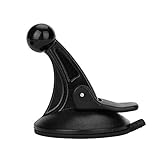
- 【Mount Type】 Windshield
- 【Specification】 Diameter: 2.2inch; Height:2.5inch.
- 【High Quality Material】Made of plastic, very durable and strong. Windshield suction performs well in hot climates and attaches easily with one-touch lever.
- 【Easy to Use】 Keep your Garmin Nuvi GPS with you at all time with this windshield suction mount. Just stick the mount to your windshield with the suction cup and lock it in place.
- 【Universal Compatibility】 Perfect Compatible with ALL Garmin GPS Devices with 17mm Swivel Ball Mounting Pattern. (Mounting Bracket NOT Included)
The independent AFP fact-check likewise found no provision in the Infrastructure Investment and Jobs Act granting third parties remote access to disable vehicles. Existing connected-car services can raise separate questions about remote features, data, cybersecurity, and manufacturer access, but those broader connected-vehicle issues should not be presented as powers created by Section 24220.
Which vehicles would be covered?
The statute applies to passenger motor vehicles manufactured after the effective date of the eventual standard. It defines a new vehicle as one that has not been purchased for purposes other than resale.
NHTSA’s ANPRM described the contemplated scope as new vehicles carrying 12 or fewer individuals, while excluding motorcycles and trucks not designed primarily to carry their operator or passengers. That is the agency’s contemplated scope—not a substitute for the exact coverage, exemptions, phase-ins, and compliance language that a final rule would establish.
Several practical consequences follow:
- Current cars are not being retrofitted under Section 24220. The law does not require owners to install the technology in vehicles already on the road.
- Used vehicles are not automatically subject to a new-vehicle manufacturing standard. A used car manufactured after the eventual effective date could, of course, already contain the required equipment because it was originally built to comply.
- Model year, manufacturing date, sale date, and compliance date are not necessarily identical. The final rule will determine the operative compliance details.
- Commercial trucks, buses, motorcycles, and specialty vehicles should not be included or excluded by a blanket social-media claim. Their treatment depends on the statute and final rule’s scope.
Someone buying a vehicle before a final rule should not be told that a particular model is permanently exempt. The safer statement is that an existing vehicle is not retroactively covered and that the future standard will apply according to its own manufacturing and compliance provisions.
What current driver-monitoring systems already do
Some new vehicles already have driver-facing cameras or infrared illumination. These systems show what cabin monitoring can look like, but they are not evidence that the federal impaired-driving mandate has been finalized or that the systems can measure alcohol.
Ford BlueCruise
Ford says BlueCruise uses a driver-facing camera and infrared lighting to track eye gaze and head position while specified hands-free driver-assistance functions are active. Ford also says that, during regular use, images, photos, and videos are not sent off the vehicle. The system is intended to help determine whether the driver is paying attention while using the assistance feature—not to establish BAC.
Ford’s explanation of “watch the road” warnings also illustrates an important limitation: a driver-monitoring camera can enforce attention to the road without detecting alcohol impairment.
GM Super Cruise
GM’s Super Cruise materials describe a camera and infrared illumination that monitor driver attention while the system is operating. Depending on the system and situation, warnings can escalate and some systems can guide the vehicle to a controlled stop if the driver does not respond.
That controlled-stop behavior is an advanced-driver-assistance response to an unresponsive or inattentive driver. It is not the same thing as an alcohol BAC test and is not a federal Section 24220 implementation. GM’s owner information also states that its Driver Attention Camera does not record or share photos, audio, or video for the described system; actual privacy practices can vary by vehicle, feature, model year, settings, and connected service.
More broadly, a modern vehicle can have telematics, microphones, cameras, event-data recording, navigation, or connected services even if it does not have a federally mandated impairment-prevention system. A buyer concerned about privacy should evaluate the vehicle’s complete data ecosystem, not just Section 24220.
Independent reader supportYour contribution helps us test, update, and keep practical guides available for everyone.Safety arguments on both sides
Why supporters favor the technology
Alcohol-impaired driving remains a major roadway-safety problem. A reliable passive system could prevent someone from beginning an impaired trip, supplement ignition interlocks and enforcement, and reduce the opportunity for an impaired driver to reach the road. NHTSA has said that mature technology could significantly reduce impaired-driving deaths; its countermeasures research treats advanced detection as a potential emerging tool rather than an already perfected product.
Supporters also argue that a vehicle-based system could operate before a crash occurs and could be available to all drivers, rather than only to people already convicted of driving under the influence.
Why critics and cautious regulators object to rushed implementation
The strongest objections are not limited to privacy. They include:
Best Value

- Never Fall Off-Metal Hook Design: Miracase car phone holder adopts simplified locking design. The steel metal hook(with silicone pad and mat) will catch one of car air vent blades and provide excellent strudiness. It will work well for your car even in extremely harsh environments. NOTE: ONLY Compatible with horizontal and vertical vents. Not suitable for round vents.
- Universal Compatibility: Miracase cell phone stand for car mount is compatible with the smartphones (4.0-7.2 inches) and thicker cases. Note!!The lengh of vent clip hook is MAX 1.4inch(3.6cm), it will be compatible with vent blades less than 1.4 inches (3.6 cm) wide. NOTE:Not suitable for Round Vent.
- One-hand Operation: With quick release button, adjustable clamp arms and foot, Miracase car phone mount makes it very easy to insert and remove your phone with single hand. Provide you with safer driving whether you are talking, navigating or listening to music or charging.
- 360-degree Flexible Rotation: The 360-degree rotatable design will provide you with the best viewing angle to keep secure driving. You can place your phone in any orientation (landscape, portrait and more), Just enjoy the best drving experience
- Professional Support: Please contact us for any product issues, a satisfying solution is promised forever
- false positives that prevent sober drivers from starting or continuing a trip;
- false negatives that allow impaired driving or create unwarranted confidence;
- unsafe stopping or speed reduction in traffic;
- drivers being stranded in dangerous locations;
- misclassification involving disabilities, medical conditions, facial coverings, sunglasses, or unusual lighting;
- breath-sensor contamination, calibration, ventilation, temperature, and passenger-identification problems;
- data breaches or secondary use of sensitive cabin information;
- attempts to evade or spoof the system;
- difficulty handling shared vehicles and emergency driving; and
- additional repair, maintenance, insurance, and ownership costs.
NHTSA’s own materials identify consumer acceptance, emergency overrides, cybersecurity, privacy, re-enablement timing, defeat strategies, and unintended consequences as issues that still require resolution. A safety standard that prevents impaired driving but creates a different serious hazard would not satisfy the purpose of the law.
Can an owner remove or disable the system?
NHTSA’s ANPRM explained that the federal “make inoperative” prohibition applies to manufacturers, distributors, dealers, and repair businesses. It does not apply in the same way to individual vehicle owners. That does not amount to a recommendation to disable safety equipment or a guarantee that modification is legally consequence-free.
Owners should also consider state and local law, vehicle inspection rules, insurance, warranty terms, emissions or equipment requirements, liability, and the possibility that a final rule could contain additional requirements. A manufacturer, dealer, or repair shop generally cannot simply defeat a required safety system because a customer requests it.
What’s actually slowing this PC down?
Pick the symptom - the matching free tool is one click away.
What Congress is doing about the mandate
The mandate remains federal law unless Congress changes it. Several later congressional actions have been discussed online, but none should be confused with a repeal already taking effect.
- H.R. 1137, the No Kill Switches in Cars Act: Introduced on February 7, 2025, this bill proposed repealing Section 24220. It remained an introduced bill in the available congressional record, not enacted law. See the bill text.
- H.R. 6850, the DRIVE to HALT Drunk Driving Act: Introduced on December 18, 2025, and referred to the House Energy and Commerce Committee, this proposal offered a separate deployment framework. It did not prove that the existing technology had already been mandated nationwide. See Congress.gov.
- House Amendment 155 to H.R. 7148: On January 22, 2026, the House rejected a proposal to block funds used to implement Section 24220 by a recorded vote of 164–268. The failed amendment did not repeal the underlying 2021 law. See the vote record.
Accordingly, it is inaccurate to say that Congress “passed a kill-switch law” in 2026. The relevant statutory language was enacted in 2021, while the 2026 vote described above was an unsuccessful effort to restrict implementation funding.
What shoppers should check before buying a car
A car can have camera-based attention monitoring today without being subject to a future federal alcohol-detection mandate. If privacy or vehicle control matters to you, ask the dealer and read the owner’s manual rather than relying on a headline.
- Does the vehicle have a driver-facing camera, cabin camera, infrared sensor, microphone, or other interior sensor?
- When is each sensor active—only while a driver-assistance feature is operating, during ordinary driving, at startup, or in other situations?
- Does the system record images, audio, or video?
- Does information stay inside the vehicle, or is it transmitted to the manufacturer or a connected-services provider?
- Is the feature connected to hands-free driving or another ADAS function, or does it operate during ordinary driving?
- What happens if the camera is blocked, dirty, misaligned, or unable to recognize the driver?
- Can the driver disable the feature, and what functions stop if it is disabled?
- Does the vehicle require a cellular subscription, account login, or connected-services enrollment?
- What does the manufacturer’s privacy policy say about retention, sharing, deletion, and secondary use?
- What do the manual and warranty documents say about warnings, immobilization, emergency overrides, sensor failure, and service?
These are useful questions even if you are buying a vehicle long before any final Section 24220 rule. Modern cars can collect data for reasons unrelated to impaired-driving prevention.
Windows Errors? Fix Them Before They Spread
Repair common Windows errors and clear accumulated junk for a smoother, more stable PC - no reinstall needed.Free scan · no reinstallCrashes, No Sound, or Screen Glitches?
Random freezes, missing sound and display glitches usually trace back to one bad driver. Find and replace yours safely.Free scan · under a minuteWhat to watch for next
The next meaningful developments would be regulatory documents, not another viral “2027” graphic. Readers should look for:
- a NHTSA notice of proposed rulemaking;
- a defined performance standard and objective test procedure;
- technical evidence showing accuracy near the legal threshold in real-world conditions;
- a proposed Privacy Impact Assessment or specific privacy and cybersecurity controls;
- clear provisions for sensor failure, emergency override, shared vehicles, and safe intervention while moving;
- a final Federal Motor Vehicle Safety Standard;
- the final vehicle scope, effective date, phase-in provisions, and manufacturer compliance date; and
- manufacturer owner-manual disclosures explaining how the production systems work.
Until those documents exist, neither the hardware nor the privacy design can be stated with certainty. A development milestone from DADSS, an existing driver-attention camera, or a congressional proposal is not a substitute for a final NHTSA standard.
Sources
The primary materials for this explanation are the statutory text, NHTSA’s February 2026 report to Congress, NHTSA’s December 2024 report, the January 2024 ANPRM, and the 2026 Unified Agenda entry. Additional examples and legislative details are linked above.
Frequently Asked Questions
Will my current car have to be retrofitted with an impairment detector?
No. Section 24220 does not require owners to retrofit vehicles already on the road. The future standard is directed at covered passenger vehicles manufactured after its effective date. A used vehicle built after that date could already include the system, but existing cars are not automatically subject to a retrofit requirement.
Do these 3 things before closing this tab:
1Repair Windows errors before they cause bigger problems2Fix the driver behind crashes, sound loss and screen glitches3Clear out junk files and repair common Windows errorsWill a 2027 model-year car definitely have a federally required camera?
No. As of August 10, 2026, there is no final rule requiring a camera, and NHTSA’s rulemaking is still listed at the prerule stage. The possible November 15, 2027 date is an outside rule-issuance date contemplated by the statute, not a universal 2027 vehicle-compliance date.
Can police or the federal government remotely shut down my car under Section 24220?
The statute does not provide a federal or police-operated remote shutdown channel. It addresses onboard technology that may prevent or limit operation after detecting possible impairment. Connected-car services raise separate privacy and cybersecurity questions, but they should not be confused with authority created by Section 24220.
Does the planned system detect drug impairment too?
Not in the NHTSA ANPRM discussed here. That rulemaking focused on alcohol and impaired-driving prevention. NHTSA said drugged driving was not being considered there because of technological immaturity and a lack of suitable testing protocols.
The Bottom Line
The law is real; the “2027 federal surveillance car” claim is not established. Section 24220 requires NHTSA to pursue a future impaired-driving-prevention safety standard, but no final rule currently mandates cameras, infrared sensors, continuous recording, facial recognition, or remote government shutdowns in all new cars. NHTSA is still determining whether any system can meet objective accuracy and safety requirements without unacceptable false positives, dangerous interventions, or unresolved privacy and cybersecurity risks.
Quick Recap
Product prices and availability are accurate as of the date/time indicated and are subject to change. Any price and availability information displayed on Amazon at the time of purchase will apply.