Free tools Windows power users keep installed
One-click scans. No signup required.
The Honda CR-V has six generations in North America, spanning the 1997 through 2026 model years. It began as a compact, boxy SUV with a standard four-cylinder engine and available all-wheel drive. Over time, it grew into a larger crossover with turbocharging, hybrid power, advanced driver assistance, and—starting in the sixth generation—a plug-in hybrid option in selected markets.
The year ranges below follow U.S. model years. Other markets sometimes received a generation earlier or later, and equipment could vary substantially by country.
Honda CR-V generations at a glance
| Generation | U.S. model years | Body style and major changes |
|---|---|---|
| First | 1997–2001 | Compact five-door SUV; rear-mounted spare tire, 2.0-liter engine, available Real Time 4WD |
| Second | 2002–2006 | Larger unibody SUV; side-hinged tailgate, improved interior, 2.4-liter engine in North America |
| Third | 2007–2011 | More car-like design; spare tire moved inside, longer wheelbase, available V6-like performance from a 2.4-liter four-cylinder |
| Fourth | 2012–2016 | More refined crossover; continuously variable transmission introduced, major 2015 refresh |
| Fifth | 2017–2022 | Turbocharged 1.5-liter engine, Honda Sensing became widely available, hybrid added for 2020 |
| Sixth | 2023–present | Larger and more spacious; hybrid lineup expanded, plug-in hybrid introduced in some markets |
First-generation Honda CR-V: 1997–2001
The first-generation CR-V was Honda’s answer to buyers who wanted the practicality of an SUV without the size, weight, and truck-like behavior of a traditional 4×4. Honda launched the CR-V in Japan in 1995; the first U.S. model arrived for 1997.
It used a unibody platform, a 2.0-liter four-cylinder engine, and front-wheel drive or Honda’s Real Time 4WD system. The system could send power to the rear wheels when the front wheels lost traction, but it was not intended to replace a low-range four-wheel-drive system on difficult trails.
The Tool Desk
Outbyte Driver Updater FREEFix the driver behind crashes, sound loss and screen glitchesFind Drivers →Outbyte PC Repair FREEClear out junk files and repair common Windows errorsFree Scan →#1 Best Overall
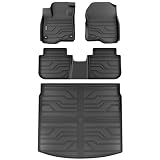
- Custom Fit - No cutting needed : Floor Mats & Cargo Liner for 2023 2024 2025 2026 2027 Honda CRV Gasoline EX-L/EX/LX & CRV Hybrid Sport-L/Hybrid Sport/Hybrid Sport Touring/Hybrid TrailSport (Cargo Tray in Upper Position,Not Fit in Lower Positon)
- All-Scenario & All-Weather Protection : Thanks to the precise full coverage and High-Wall edge design, these floor mats effectively contain slush, heavy mud, accidental liquid spills and everyday debris. Snow, water, sand and all kinds of residues are well trapped inside without leaking onto your car. TPE won't crack in freezing winter or warp in summer heat. designed for long-term use in all seasons. Especially suitable for daily driving, outdoor camping, travel and vacation
- Odorless TPE Material : Ideal for families and pet owners - honda crv floor mats made of TPE material (thermoplastic elastomer), recyclable and Odorless, honda crv 2026 accessories can be hold up in extreme weather conditions, so you don’t have to worry about cracking, curling, or the mats breaking dow
- Easy to Clean : Cleaning these floor mats for 2023-2026 honda crv just a few simple steps. 1) Remove the floor mats from your vehicle and shake off loose dirt and debris. 2) Rinse them thoroughly with water and let them air dry naturally. 3) Reinstall the floor mats back into your car for continued use. Speed up drying with a hair dryer, ready for use within minutes
- Buckles & Anti-slip : Don't worry about sliding floor mats again. The specially design buckles for additional stability. Surface anti-slip texture on top to prevent items from sliding.Stay firmly in place during driving, even on turns or sudden stops. Enjoy reliable traction during aggressive or everyday driving, ensuring confidence and stability with every acceleration, brake, and maneuver
Distinctive features included a side-hinged rear door with the spare tire mounted on it, a tall roof, and a washable rear floor. The rear seats could fold and the rear floor could be configured for carrying or sitting, giving the small CR-V a useful advantage over many conventional sedans.
What to know when buying a 1997–2001 CR-V
- Rust around the rear quarter panels, rocker panels, tailgate, and underside is more important than cosmetic wear.
- Check the automatic transmission for delayed engagement, slipping, or harsh shifts.
- Listen for differential noise on all-wheel-drive models and confirm that all four tires match in size and similar tread depth.
- Timing-belt service matters because the B20-series engine uses a belt. Ask for documentation rather than assuming it was completed.
- Safety equipment and crash protection are much older than those in later CR-Vs.
Second-generation Honda CR-V: 2002–2006
The second-generation CR-V arrived for 2002 with a more rounded body, a roomier cabin, and a stronger 2.4-liter four-cylinder engine in the North American market. It remained a compact crossover, but it felt more substantial and was easier to use as a family vehicle.
The rear door still opened from the side, although the spare tire was integrated more cleanly into the design. Honda retained the flat, practical interior and the foldable rear-seat system. Available Real Time 4WD continued to operate automatically rather than requiring the driver to select a locked 4WD mode.
Early second-generation models used a five-speed manual or four-speed automatic transmission, depending on trim and market. Later models benefited from equipment upgrades and improved crash protection.
Common second-generation issues
- Air-conditioning compressor and clutch failures can be expensive if the system has contaminated itself with metal debris.
- Automatic-transmission fluid should be changed at the correct intervals using Honda-specified fluid.
- Rear differential fluid service is essential on AWD vehicles. Neglect can cause a groaning or binding noise during tight turns.
- Power-window regulators, door locks, and aging suspension components are common inspection points.
- On a used example, verify whether recalls and safety campaigns were completed by checking the vehicle identification number with Honda.
Third-generation Honda CR-V: 2007–2011
For 2007, Honda redesigned the CR-V with a longer wheelbase, a more upright but less utilitarian appearance, and a spare tire relocated beneath the cargo floor. The side-hinged rear door remained, but the exterior looked more like a modern crossover than a miniature off-road wagon.
Rank #2

- 🚗FITS LIKE A GLOVE:Perfect fit for honda crv 2023 2024 2025 2026 2027(include hybrid). Auxko floor mats are high-precision laser measured, meaning our custom fit will offer optimal coverage and look as if the mats came with your honda cr-v 2023 2024 2025 2026 2027. Auxko incorporates a specially designed retention system and non-slip nibs on the mats to keep them locked in place.
- 🚗MOST APPROPRIATE MATERIAL:Auxko honda crv 2023 2024 2025 2026 2027 accessories mats are constructed from TPE (thermoplastic elastomer), Free of both latex and PVC, 100-percent recyclable, Odorless. Auxko mats for honda cr-v 2023 2024 2025 2026 2027 are both soft and durable. More importantly, they’ll hold up in extreme weather conditions, so you don’t have to worry about cracking, curling, or the mats breaking down
- 🚗EASY TO CLEAN: A garden hose gun can easily cleaning the floor mats for honda crv 2023 2024 2025 2026 2027. Also a wet cloth and some running water can do. Routine maintenance are really easy
- 🚗HIGH-WALL DESIGN: The beveled edge prevents the walls from curving in. The high-wall design keeps any messes within the liner and off your honda crv's carpet. The High grooves and ridges are engineered to channel water
- 🚗WORTH EVERY PENNY: We know that you want to choose the best for your vehicle, and Auxko mats are truly fit and protective for your vehicle. This is what Auxko does for you. If you have any questions, please do not hesitate to contact us, our after-sales team is willing to serve you
All North American versions used a 2.4-liter four-cylinder engine. A five-speed automatic was the main transmission, and front-wheel drive or Real Time 4WD was available. The larger cabin brought better rear-seat space and a more useful cargo area, while the driving position remained high and easy to access.
The 2007–2009 models have a different front-end and interior treatment from the 2010–2011 facelift. The refresh brought styling changes and equipment updates, but it did not create a new generation.
Buying advice for the 2007–2011 CR-V
- Check the air-conditioning. Confirm that it produces cold air at idle and while driving. Compressor and clutch repairs can be costly.
- Inspect the rear differential. A shudder, groan, or hopping sensation in a tight parking-lot turn can indicate overdue or incorrect differential-fluid service.
- Test the door locks and windows. Actuators and regulators can fail with age.
- Look underneath. Exhaust corrosion, subframe rust, leaking struts, and worn control-arm bushings are more significant than small dents.
- Scan for warning lights. A dashboard with ABS, VSA, or airbag lights should not be treated as a minor issue until the fault codes are identified.
Fourth-generation Honda CR-V: 2012–2016
The fourth-generation CR-V began with the 2012 model year. Honda kept the familiar five-door crossover layout but made the vehicle quieter, more refined, and easier to live with. The rear door became a conventional liftgate rather than the previous side-hinged design.
Recommended Free Tools
The North American CR-V used a 2.4-liter four-cylinder engine. A five-speed automatic transmission was used initially, while a continuously variable transmission became part of the lineup during the generation. Depending on year and trim, buyers could choose front-wheel drive or all-wheel drive.
The 2015 refresh is the key dividing point within this generation. It brought revised exterior styling, interior and equipment changes, and a continuously variable transmission across the main gasoline lineup. Some later models also offered Honda Sensing safety technology, including systems such as forward-collision warning, lane-departure warning, and collision-mitigation braking.
Rank #3

- ⚠️𝐀𝐓𝐓𝐄𝐍𝐓𝐈𝐎𝐍: 𝐍𝐎𝐓 𝐟𝐢𝐭 𝐜𝐚𝐫𝐠𝐨 𝐦𝐚𝐭 𝐢𝐧 𝐥𝐨𝐰𝐞𝐫 𝐩𝐨𝐬𝐢𝐭𝐢𝐨𝐧
- 【Fits Like a Glove】Custom fit for Honda Honda CR-V 2023 2024 2025 2026 2027Gasoline (EX-L/EX/LX) & Hybrid (Hybrid Sport-L/Hybrid Sport/Hybrid Sport Touring/Hybrid TrailSport) & e:FCEV, Cargo Tray in Upper Position. LASFIT floor mats are precisely designed using real vehicle 3D scanning technology to ensure a vehicle specific fit, providing full coverage and protection for the driver, passenger, and rear seats, including the areas under the gas and brake pedals, the edges of the seat slide rails.
- 【TPE: Safe & Durable】LASFIT floor mats for CRV 2023-2024 2025 2026 2027 are made of 100% high quality TPE material, which combines environmental friendliness and durability perfectly. TPE is safe, healthy, providing all-around safety for you, your family, kids and pets. TPE is also durable and resistant to deformation, ensuring mats remain in original shape for a long time without worrying about seasonal heat or extreme cold weather.
- 【All-Weather & All-Scenario Protection】Whether it's a snowstorm, muddy roads, or spills from snacks and playful pets, Lasfit floor mats provide comprehensive protection for your original carpet, effectively preventing dirt and wear. The full coverage design and raised lip around the edges help prevent snow, water, mud, sand, and other stains or liquids from seeping into the carpet, keeping your car looking brand new all year round. The unique buckle design, surface anti-slip texture, and back anti-slip studs ensure the mats and items on them stay securely in place, giving you peace of mind on every journey.
- 【Split-Fit Design】The LASFIT trunk mat and seatback protector for the 2023-2026 2027Honda CR-V feature a multi-piece, split design that allows for easy individual installation and removal. You can fold down or lift up the second-row seats effortlessly without removing the mats, making it convenient to switch between 5-seat and 2-seat, 3-seat, 4-seat configurations. The split seat-back section also supports independent folding of the second-row seats, providing greater flexibility.
Best years within the fourth generation
There is no single universally best year, but the 2015–2016 models generally offer newer safety and convenience technology than the earliest examples. A 2012–2014 CR-V may still be a sensible purchase if it has strong maintenance records and no signs of accident or water damage.
During a test drive, check for CVT hesitation, engine or transmission warning lights, uneven tire wear, noisy wheel bearings, and vibration under braking. On AWD models, verify that the rear differential has received regular fluid changes.
Quick wins for a faster PC:
Repair Windows errors before they cause bigger problemsFix Now →Scan for outdated or missing drivers - takes under a minuteDriver Scan →Fifth-generation Honda CR-V: 2017–2022
The fifth-generation CR-V was a major mechanical and packaging change. It debuted for 2017 with a larger cabin, more cargo space, improved ride comfort, and a 1.5-liter turbocharged four-cylinder engine in most North American trims. Lower trims used a continuously variable transmission, while all-wheel drive remained available.
Honda Sensing became broadly available, bringing forward-collision warning, automatic emergency braking, lane-keeping assistance, adaptive cruise control, and road-departure mitigation to much of the range. The exact feature list depended on trim and model year.
Honda added a CR-V Hybrid for 2020. The hybrid uses a 2.0-liter Atkinson-cycle four-cylinder engine with Honda’s two-motor hybrid system. It was available with all-wheel drive in the U.S. and delivered a different driving experience from the turbocharged gasoline model: stronger low-speed response, quieter operation in many conditions, and improved fuel economy.
Rank #4

- 🚗FITS LIKE A GLOVE: Auxko floor mats cargo mat for honda crv 2023 2024 2025 2026 2027 (gasoline: EX-L/EX/LX, hybrid: Sport-l/Sport/Sport Touring/TrailSport)are high-precision laser measured, meaning our custom fit will offer optimal coverage and look as if the mats came with your honda crv 2023 2024 2025 2026 2027. Auxko incorporates a specially designed retention system and non-slip nibs on the mats to keep them locked in place.
- 🚗MOST APPROPRIATE MATERIAL:Auxko crv 2023 2024 2025 2026 2027 accessories floor mats constructed from TPE (thermoplastic elastomer), Free of both latex and PVC, 100-percent recyclable, Odorless. Auxko mats liner for honda crv 2023 2024 2025 2026 2027 are both soft and durable. More importantly, they’ll hold up in extreme weather conditions, so you don’t have to worry about cracking, curling, or the mats breaking down
- 🚗EASY TO CLEAN: A garden hose gun can easily cleaning the floor mats cargo mat compatible with honda crv 2023 2024 2025 2026 2027. Also a wet cloth and some running water can do. Routine maintenance are really easy
- 🚗HIGH-WALL DESIGN: The beveled edge prevents the walls from curving in. The high-wall design keeps any messes within the liner and off your honda crv 2023 2024 2025 2026 2027 carpet. The High grooves and ridges are engineered to channel water
- 🚗WORTH EVERY PENNY: We know that you want to choose the best for your vehicle, and Auxko mats are truly fit and protective for your vehicle. This is what Auxko does for you. If you have any questions, please do not hesitate to contact us, our after-sales team is willing to serve you
The 2020 refresh updated the front and rear styling and brought equipment changes. The 2021 and 2022 models remained fifth-generation vehicles; the 2022 model year did not begin a new generation.
Known concerns on fifth-generation CR-Vs
- Some 1.5-liter turbo models have been associated with fuel dilution, in which gasoline enters the engine oil. Short trips and very cold climates can make the problem more noticeable. Check for maintenance records, software updates, and any symptoms such as a rising oil level or fuel smell in the oil.
- Turbocharged models require the correct oil grade and regular oil changes. Do not extend intervals simply because the engine is small.
- CVT behavior should be smooth. A high-pitched whine is not automatically a failure, but shuddering, slipping, or delayed response warrants diagnosis.
- Hybrid buyers should obtain a battery-system inspection, especially on high-mileage or heavily used vehicles.
- Test every driver-assistance feature. A camera or radar fault can disable several safety systems at once.
Sixth-generation Honda CR-V: 2023–present
The sixth-generation CR-V began for 2023 and remains current through the 2026 model year. It grew slightly, gained a more upright exterior, and offered a roomier rear seat and cargo area. Honda continued to sell both gasoline and hybrid versions, with availability varying by trim and market.
In the U.S., the gasoline CR-V uses a 1.5-liter turbocharged four-cylinder engine and CVT. Hybrid models use a 2.0-liter four-cylinder and Honda’s two-motor hybrid system. Depending on trim, the hybrid may be front-wheel drive or all-wheel drive. The hybrid powertrain is not the same as a plug-in system: it charges through regenerative braking and the gasoline engine rather than a household outlet.
The sixth-generation CR-V is also the first CR-V generation to offer a plug-in hybrid in some markets. The European-market CR-V e:PHEV can be charged externally and has equipment and powertrain details that do not directly match the U.S. lineup. A vehicle imported from another market should not be assumed to have the same parts, software, warranty, or charging compatibility as a U.S.-market CR-V.
For 2026, the U.S. CR-V continues within the sixth generation rather than starting a seventh generation. Trim names, powertrain availability, and standard equipment can change from one model year to the next, so a listing should be checked against its window sticker or VIN-specific build information.
What’s actually slowing this PC down?
Pick the symptom - the matching free tool is one click away.
Best Value

- Custom Fit: Compatible with 2023 2024 2025 2026 2027 Honda CRV Gas and Hybrid Models. Compatible with LX, EX, EX-L, Sport Hybrid, Sport-L Hybrid, Sport Touring Hybrid, and TrailSport Hybrid. Place the cargo mat in the Upper Position on Gas trims (and on the standard floor for Hybrid trims). Please confirm model years before purchasing
- Full Coverage: High edge floor mats prevent most dirt and overturned water bottles from staining the vehicle's felt. This full set of all season floor mats and cargo mat provides long-lasting full coverage protection from daily wear and tear on your SUV's floor. Considering the actual needs, JOULARISE added door sill protectors to the set to protect paint from being damaged
- Parents' Favorite: Full Mats are made of durable all weather TPE material which is no smell, no matter in hot or cold weather, protecting SUV from dirt, pet scratches, and other damages, maintaining its original appearance. Waterproof material to handle every accidental drink spill and wet umbrella. Non-slip surface prevents cargo movement in trunk area. Full set mat can be cleaned by wiping with a damp towel or rinsing directly with water,easily deal with pet hair
- Firmly Fixed: The backrest mats are equipped with hook and loop fasteners, allow mats to be firmly attached to the seat back and prevent displacement, easy adjusting the seat without moving the mats
- JOULARISE Excellent Service: Crafted with precision 3D laser scanning, JOULARISE ensures a custom fit for your 2023 2024 2025 2026 2027 CRV with these full mats set. If items have any problems, please let us know, and we will provide you a satisfactory solution. Notes: The full set are folded during shipping, after receiving leave full mats in sunlight for a while to help restore their original appearance
Used-buying checks for a 2023–2026 CR-V
- Confirm whether the vehicle is gasoline, hybrid, or an imported plug-in hybrid.
- Check that the infotainment system, cameras, radar-based safety functions, wireless phone integration, and charging ports work correctly.
- Inspect the hybrid battery warranty and service history rather than treating the hybrid system as maintenance-free.
- On AWD models, check tire matching and listen for driveline noise during slow, tight turns.
- Make sure recall work is complete, particularly for newer vehicles with electronic safety or seat-belt systems.
Which Honda CR-V generation should you buy?
| Priority | Generation to consider | Why |
|---|---|---|
| Lowest purchase price | Second or third | Simple four-cylinder powertrains and plentiful parts, but age-related repairs are unavoidable. |
| Basic, proven used crossover | Fourth | Comfortable size, practical interior, and broad parts availability. |
| Modern safety technology | Late fourth or fifth | Honda Sensing and newer structural and electronic safety features are more common. |
| Fuel economy | 2020–2022 hybrid or sixth-generation hybrid | Hybrid models generally use less fuel than comparable gasoline CR-Vs, especially in city driving. |
| Newest cabin and maximum space | Sixth | Larger interior and the latest infotainment and driver-assistance hardware. |
Condition matters more than the generation badge. A well-maintained 2014 CR-V is usually a better purchase than a neglected 2018 model. Before buying, obtain a vehicle-history report, inspect the underside, verify maintenance, scan the vehicle for stored fault codes, and budget for tires, brakes, fluids, and deferred repairs.
FAQ
How many Honda CR-V generations are there?
There are six Honda CR-V generations in North America. The first began with the 1997 model year, and the sixth began with the 2023 model year and continues through the current 2026 model year.
What years are the best Honda CR-V generations?
The best choice depends on budget and priorities. Late fourth-generation CR-Vs, especially 2015–2016 models, offer a useful balance of simplicity and newer equipment. The 2020–2022 hybrids are strong choices for fuel economy, while 2023–2026 models offer the newest design and technology.
Which Honda CR-V years have a turbo engine?
Most North American fifth-generation CR-Vs, from 2017 through 2022, use a 1.5-liter turbocharged four-cylinder engine. The sixth-generation gasoline CR-V, from 2023 onward, also uses a 1.5-liter turbocharged engine. Hybrid versions use a different 2.0-liter-based powertrain.
Windows Errors? Fix Them Before They Spread
Repair common Windows errors and clear accumulated junk for a smoother, more stable PC - no reinstall needed.Free scan · no reinstallCrashes, No Sound, or Screen Glitches?
Random freezes, missing sound and display glitches usually trace back to one bad driver. Find and replace yours safely.Free scan · under a minuteWhat is the difference between a CR-V hybrid and a plug-in hybrid?
A conventional CR-V hybrid charges its battery through regenerative braking and the gasoline engine. It cannot normally be plugged into a household outlet. The CR-V e:PHEV sold in selected markets has a larger battery and can be externally charged, but it is not the same configuration as the standard U.S. CR-V Hybrid.
The Bottom Line
The U.S. Honda CR-V has six generations: 1997–2001, 2002–2006, 2007–2011, 2012–2016, 2017–2022, and 2023–present. The biggest milestones are the move from the original boxy SUV to the larger third generation, the CVT-equipped fourth generation, turbocharging in 2017, hybrid power in 2020, and the larger sixth-generation redesign for 2023. When shopping used, prioritize maintenance history, rust condition, AWD service, transmission behavior, and the exact gasoline or hybrid powertrain over the generation alone.
Quick Recap
Product prices and availability are accurate as of the date/time indicated and are subject to change. Any price and availability information displayed on Amazon at the time of purchase will apply.