Some links on this page are affiliate links: if you buy through them we may earn a commission, at no extra cost to you.
The best Honda Civic years to buy used are generally 2013–2015 and 2019–2020. These model years combine a mature design, comparatively strong reliability data, and fewer serious model-specific concerns than the Civic years that deserve more caution.
The main years to inspect especially carefully are 2001, 2006–2009, 2011, 2016, and 2017–2018. That does not make every Civic from those years a bad car. A well-maintained, rust-free 2011 can be a better purchase than a neglected 2015. The individual car’s VIN, service history, accident record, rust, and mechanical condition matter more than a year-based reputation.
As an Amazon Associate I earn from qualifying purchases.
Best Honda Civic years to buy
2013–2015: the best value in the ninth generation
The 2013, 2014, and 2015 Civics are the easiest used-Civic years to recommend for buyers who want a relatively simple, affordable daily driver. Honda revised the ninth-generation Civic after the unpopular 2012 redesign, and Consumer Reports rates all three years more reliable than the average vehicle from their respective model years.
Most regular Civic sedans use a naturally aspirated 1.8-liter four-cylinder engine. That engine is less complicated than the turbocharged engines found in many newer Civics, and parts and service are widely available. The standard LX or EX sedan is usually the sensible configuration for a low-cost ownership target.
Popular on Amazon
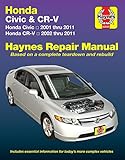
- Step-by-step procedures written from a complete teardown and rebuild, giving you the confidence to tackle repairs at any skill level.
- Over 700+ clear photos and diagrams that simplify complex systems, helping you complete jobs faster and with fewer mistakes.
- Comprehensive troubleshooting and fault-finding guides to quickly diagnose problems and reduce costly downtime.
These cars are not maintenance-free. Check for neglected fluid changes, worn suspension components, air-conditioning problems, rust, and evidence of accident repair. On 2014 and 2015 models, confirm that transmission recall NHTSA 15V574000 was completed. Affected cars could develop drive-pulley-shaft damage that might result in loss of acceleration or, in some circumstances, front-wheel lockup. The remedy was a software update performed free by Honda.
Best configuration: a stock LX or EX sedan with the 1.8-liter engine, consistent oil-change records, and documented CVT service. Treat modified cars, heavily abused Si models, and neglected coupes as separate cases.
Free tools Windows power users keep installed
One-click scans. No signup required.
2019–2020: mature tenth-generation choices
The 2019 and 2020 Civics are strong newer-used options. The tenth-generation car had been on the market for several years by this point, and the 2019 model received interior and exterior updates. Honda Sensing driver-assistance features became standard on most trims, although equipment varies by body style and performance model.
Consumer Reports rates both years about average for reliability rather than dramatically above average. That makes them reasonable targets, not automatic “best years” regardless of condition. A pre-purchase inspection is particularly important because the tenth-generation Civic has several checks that can affect ownership cost.
The most widely discussed issue is the air-conditioning condenser. Honda Service Bulletin 19-091 covers corrosion-related condenser leaks on:
- 2016–2020 Civic coupes and sedans
- 2017–2021 Civic hatchbacks, excluding the Type R
Honda extended coverage for an eligible condenser to 10 years from the vehicle’s original purchase date with unlimited mileage. This extension does not cover damage from road debris or vehicles with branded or salvage titles. Ask a Honda dealer to check eligibility by VIN, and test the A/C rather than assuming the warranty will apply.
The Tool Desk
Outbyte PC Repair FREEClear out junk files and repair common Windows errorsFree Scan →Outbyte Driver Updater FREEFix the driver behind crashes, sound loss and screen glitchesFind Drivers →2021: sensible, but not an exceptional reliability year
A carefully inspected 2021 Civic can make sense if it is priced below a comparable newer car. Consumer Reports rates its reliability about average and lists several recalls. It benefits from being a late version of the tenth-generation design, but its available repair data does not justify calling it one of the Civic’s strongest years.
Check the A/C condenser coverage, fuel-pump campaigns, passenger-seat air-bag weight-sensor recall information, and all other VIN-specific records before buying.
2022–2024: newer, safer, and worth checking carefully
The 2022 Civic began the eleventh generation and received a more modern interior, updated styling, and improved standard equipment. Consumer Reports rates the 2022 model more reliable than the average car from that model year. The newer design can be attractive, but recall completion remains essential.
Also popular on Amazon

- Step-by-step procedures written from a complete teardown and rebuild, giving you the confidence to tackle repairs at any skill level.
- Over 700+ clear photos and diagrams that simplify complex systems, helping you complete jobs faster and with fewer mistakes.
- Comprehensive troubleshooting and fault-finding guides to quickly diagnose problems and reduce costly downtime.
One important campaign affects certain 2022–2025 Civics. Recall NHTSA 24V744000 concerns steering gearbox assemblies that may have excessive internal friction. The condition can make steering difficult. Honda repairs or replaces the affected component at no charge.
What’s actually slowing this PC down?
Pick the symptom - the matching free tool is one click away.
A 2022, 2023, or 2024 Civic should not be rejected automatically because of this recall. It should also not be purchased without confirming that the steering gearbox repair and every other open safety campaign have been completed.
2025–2026: too new for a firm long-term ranking
The 2025 Civic brought back a hybrid model using a 2.0-liter gasoline engine and two electric motors, while the optional 1.5-liter turbocharged engine was discontinued. The 2026 model is still too new to have the same depth of long-term repair data available for older generations.
These are not “avoid” years. They are simply premature candidates for a definitive durability ranking. For a newer Civic, confirm current recalls, review warranty coverage, and compare the price against a lightly used earlier model.
Honda Civic years to avoid or approach cautiously
2001 automatic: the clearest transmission warning
The 2001 Civic equipped with the four-speed automatic transmission deserves the strongest warning on this list. CarComplaints records hundreds of owner complaints about transmission failure for this model year, with transmission problems representing its dominant complaint category. Complaint data is not a controlled failure-rate study, but the concentration is enough to make an automatic 2001 a poor gamble without documentation.
Quick wins for a faster PC:
Fix the driver behind crashes, sound loss and screen glitchesFind Drivers →Repair Windows errors before they cause bigger problemsFix Now →Scan for outdated or missing drivers - takes under a minuteDriver Scan →A manual-transmission 2001 does not have the same automatic-transmission risk. However, a car more than two decades old still requires an inspection for rust, deteriorated wiring, oil leaks, worn suspension, air-bag recall completion, and general age-related deterioration. A documented replacement or rebuild improves the case for an automatic, but it does not eliminate the need for inspection.
2006–2009: inspect for engine-block coolant leaks
Some 2006–2008 Civics and early-production 2009 cars were covered by Honda warranty extensions for cracked engine blocks. Coolant could seep from the block, eventually causing low coolant or overheating. The original extended coverage was limited to 10 years from the original purchase date, so it has expired on these vehicles.
This issue does not mean every Civic from 2006–2009 will crack its engine block. It does mean the cooling system deserves a deliberate inspection:
- Look around the engine block for dried coolant residue or fresh seepage.
- Pressure-test the cooling system when the engine is cold.
- Check the coolant level and inspect the radiator, hoses, water pump, and expansion tank.
- Ask whether the temperature gauge has ever moved above normal.
- Do not dismiss a sweet smell, repeated coolant loss, or evidence of overheating.
The 2008 Civic is particularly difficult to recommend because its Consumer Reports reliability rating is below the same-year average and it has a high recall count. The 2006 model also has a high current recall count, along with owner-reported concerns involving air conditioning, paint, and engine-block problems. Recall totals are not failure rates, but they justify a more cautious buying process.
Also popular on Amazon

- Complete Vehicle Coverage: Covers Honda Civic Sedan, Coupe, and Hatchback gasoline models from 2016–2022, including FC/FK platform vehicles equipped with 1.5L and 2.0L gasoline engines.
- Step-by-Step Repairs: Detailed instructions for routine maintenance, troubleshooting, and major component repairs.
- Online Wiring Diagrams Included: Access vehicle-specific wiring diagrams and additional online repair information.
- Hands-On Workshop Procedures: Developed from complete vehicle teardown with clear photos, illustrations, torque specs, and service data.
- Trusted DIY Repair Guide: Haynes manuals are relied on worldwide by DIYers and technicians for accurate repair and maintenance information.
2011: below-average reliability data
Consumer Reports rates the 2011 Civic less reliable than other vehicles from the 2011 model year. It is not automatically defective, but it should not be purchased solely because older Civics have a reputation for durability.
Prioritize documented oil changes, transmission service, cooling-system maintenance, and rust inspection. A clean 2011 with excellent records and a favorable inspection may still be worthwhile, especially if its price is substantially below a comparable 2013–2015 car.
2012: not an automatic avoid
The 2012 Civic was criticized when new for its interior quality, ride, and refinement. That reputation has led to blanket advice to avoid every 2012 model. Current reliability data does not support that broad conclusion: Consumer Reports rates the 2012 Civic more reliable than other cars from the same model year.
The 2012 is still a redesign-year vehicle, and a 2013 is usually the better target when the price difference is small. But a well-maintained 2012 that passes inspection can be a reasonable budget purchase.
2016: first year of a major redesign
The 2016 Civic introduced a heavily redesigned tenth-generation platform. First-year redesigns deserve extra scrutiny because new engines, electronics, transmissions, and chassis components have had less time to prove themselves in service.
Certain 2.0-liter Civics were recalled because improperly installed piston-pin snap rings could lead to engine seizure, oil leakage, loss of motive power, and a possible fire. Confirm completion of the applicable recall using the VIN.
Also inspect the A/C condenser and CVT. During the test drive, watch for shuddering, hesitation, delayed engagement, or abnormal noises. Turbocharged 1.5-liter models require particular attention to oil-change records and overall maintenance, although it is too broad to reject every 1.5-liter Civic solely because it has a turbocharger.
2017–2018: buy only after campaign and condition checks
The 2017 Civic is rated about average for reliability by Consumer Reports and has several listed recalls. Certain examples had campaigns involving halfshafts and electronic power-steering components.
The 2018 model also has multiple recalls. Certain 2017–2018 cars were included in a steering recall involving a torque-sensor magnet that could cause power-steering assist to operate in the wrong direction during a full-lock turn. Some 2018–2019 hatchbacks, excluding the Type R, were also recalled because a fuel-pump impeller could swell, seize the pump, and cause a no-start or stall.
Also popular on Amazon

- Step-by-step procedures written from a complete teardown and rebuild, giving you the confidence to tackle repairs at any skill level.
- Over 700+ clear photos and diagrams that simplify complex systems, helping you complete jobs faster and with fewer mistakes.
- Comprehensive troubleshooting and fault-finding guides to quickly diagnose problems and reduce costly downtime.
These model years are not universal rejects. They are simply not the years to buy without a VIN search, A/C test, service records, and an independent inspection.
Independent reader supportYour contribution helps us test, update, and keep practical guides available for everyone.Honda Civic year-by-year checks
| Model years | What to check before buying |
|---|---|
| 2001 | Automatic-transmission history, rust, air-bag recalls, leaks, wiring, and age-related wear. |
| 2006–2009 | Engine-block coolant seepage, overheating history, rust, paint condition, A/C, and Takata air-bag recall completion. |
| 2011 | Maintenance records, transmission behavior, cooling system, rust, and open recalls. |
| 2012 | Overall condition and redesign-year wear; do not reject it solely because of its old reputation. |
| 2013–2015 | CVT service history, rust, A/C operation, and transmission software recall 15V574000 on applicable vehicles. |
| 2016 | 2.0-liter piston-pin recall, A/C condenser eligibility, CVT behavior, and turbo-model maintenance. |
| 2017–2018 | Steering, halfshaft, fuel-pump, A/C condenser, and hatchback-specific campaign records. |
| 2019–2021 | A/C condenser coverage, fuel-pump recalls, passenger-seat weight-sensor recalls, and service history. |
| 2022–2025 | Steering gearbox recall 24V744000 and all other VIN-specific safety campaigns. |
| 2025–2026 | Current recalls, warranty terms, hybrid-system coverage where applicable, and the limited long-term data. |
How to check a used Civic’s recalls
- Get the vehicle’s 17-character VIN from the lower-left corner of the windshield or the driver-side doorjamb.
- Enter it into Honda’s Honda Recall Lookup.
- Run the same VIN through the NHTSA recall lookup.
- Ask the seller for dealer repair orders showing that completed campaigns were actually performed.
- Have an independent shop scan the vehicle and inspect it even when no open recall appears.
Recall repairs are free at an authorized dealer, but a recall does not cover ordinary wear, neglected maintenance, accident damage, or every known mechanical problem. A completed recall is not evidence that the car has been maintained properly.
What to inspect on any used Honda Civic
- Cold start: insist on starting the engine cold and listen for rattles, knocking, rough running, or excessive smoke.
- Cooling system: check coolant level, residue, leaks, and whether the engine reaches and holds normal temperature.
- Transmission: look for delayed engagement, slipping, shuddering, harsh shifts, or hesitation. Confirm CVT fluid service where the maintenance schedule calls for it.
- Air conditioning: run the A/C at idle and while driving. Weak cooling or an oily condenser area may indicate a leak.
- Rust: inspect the rocker panels, rear wheel arches, subframes, brake and fuel lines, suspension mounting points, and underneath the car.
- Accident repairs: compare panel gaps, paint texture, tire wear, alignment, and structural areas. Avoid relying on a clean-looking exterior alone.
- Records: verify oil changes, brake work, tires, battery replacement, transmission service, and any engine or cooling-system repairs.
- Modifications: be cautious with lowered cars, engine tunes, aftermarket turbo components, cheap tires, and electrical alterations.
The practical buying recommendation
For most U.S. used-car shoppers, the shortlist is straightforward:
Recommended Free Tools
- Best overall value: a 2013–2015 Civic sedan with the 1.8-liter engine, complete records, and no structural rust.
- Best newer option: a 2019–2020 Civic after confirming the A/C condenser situation and completing a VIN recall check.
- Budget alternative: a 2012 Civic if it is meaningfully cheaper than a comparable 2013 and passes an inspection.
- Buy only with exceptional documentation: a 2001 automatic or a 2006–2009 Civic with unexplained coolant loss or overheating history.
- Do not buy by model year alone: pay for a pre-purchase inspection and walk away from severe rust, open safety recalls, poor transmission behavior, or missing service records.
The right Civic is not necessarily the one with the “best” year on paper. It is the one with a clean title, a verifiable maintenance history, completed recalls, a healthy cooling system and transmission, and a price that leaves room for normal age-related repairs.
FAQ
What is the best Honda Civic year to buy used?
The 2013–2015 Civic is the strongest value target for most buyers, especially a stock LX or EX sedan with the 1.8-liter engine and complete maintenance records. The 2019–2020 Civic is a good newer alternative after recall and A/C checks.
What Honda Civic years should I avoid?
Approach the 2001 automatic, 2006–2009 models with coolant-loss concerns, 2011, 2016, and 2017–2018 cars cautiously. None should be rejected by year alone, but these models require more thorough inspection and recall verification.
Is the 2012 Honda Civic a bad car?
Not automatically. The 2012 received criticism for refinement when new, but current reliability data rates it better than the average 2012 vehicle. A 2013 is generally preferable when prices are close, while a well-maintained 2012 can still be a sensible budget choice.
Do these 3 things before closing this tab:
1Clear out junk files and repair common Windows errors2Fix the driver behind crashes, sound loss and screen glitches3Repair Windows errors before they cause bigger problemsShould I avoid a Honda Civic with a CVT?
No. A CVT is not automatically unreliable. Check for shuddering, hesitation, delayed engagement, abnormal noises, and evidence of correct fluid service. The condition and maintenance history of the specific transmission matter more than the presence of a CVT alone.
The Bottom Line
Best used Honda Civic years: 2013–2015, followed by 2019–2020 and carefully inspected 2021 models. Years requiring the most caution: 2001 automatics, 2006–2009 cars with possible engine-block coolant leaks, 2011, 2016, and 2017–2018 examples with incomplete recall histories. Check the VIN, inspect for rust and leaks, test the transmission and A/C, and pay for a pre-purchase inspection before buying any Civic.




