Recommended Free Tools
Yes. Apple canceled the vehicle-building side of Project Titan on February 27, 2024, according to Reuters, Bloomberg-sourced reporting, and TechCrunch. Apple did not issue a conventional cancellation announcement, but the decision was followed by the cancellation of Apple’s California autonomous-vehicle testing permit, effective September 27, 2024.
As of August 9, 2026, Apple still has automotive software products and continues to publish autonomous-driving research. However, there is no public evidence that Apple has restarted a program to design, manufacture, and sell an Apple-branded car.
Was the Apple Car real?
Yes—but “Apple Car” was a nickname used by the media, not the confirmed name of a publicly announced Apple product. Project Titan was a real internal Apple automotive and autonomous-systems program, reportedly started around 2014. What remained uncertain was what Apple would ultimately build.
Apple never publicly announced a finished vehicle, production design, price, battery specification, range, manufacturing partner, or launch date. The project changed direction repeatedly over roughly a decade. Depending on the period being discussed, Project Titan was reported to involve:
#1 Best Overall

- Never Fall Off-Metal Hook Design: Miracase car phone holder adopts simplified locking design. The steel metal hook(with silicone pad and mat) will catch one of car air vent blades and provide excellent strudiness. It will work well for your car even in extremely harsh environments. NOTE: ONLY Compatible with horizontal and vertical vents. Not suitable for round vents.
- Universal Compatibility: Miracase cell phone stand for car mount is compatible with the smartphones (4.0-7.2 inches) and thicker cases. Note!!The lengh of vent clip hook is MAX 1.4inch(3.6cm), it will be compatible with vent blades less than 1.4 inches (3.6 cm) wide. NOTE:Not suitable for Round Vent.
- One-hand Operation: With quick release button, adjustable clamp arms and foot, Miracase car phone mount makes it very easy to insert and remove your phone with single hand. Provide you with safer driving whether you are talking, navigating or listening to music or charging.
- 360-degree Flexible Rotation: The 360-degree rotatable design will provide you with the best viewing angle to keep secure driving. You can place your phone in any orientation (landscape, portrait and more), Just enjoy the best drving experience
- Professional Support: Please contact us for any product issues, a satisfying solution is promised forever
- An Apple-designed electric passenger vehicle;
- A fully autonomous vehicle with little or no conventional driver controls;
- An autonomous-driving software platform for use in another company’s vehicle;
- An electric vehicle capable of autonomous driving on highways; and
- Eventually, a more conventional EV with driver-assistance features similar in scope to a Level 2 system.
The evidence that Apple was doing real work—not merely entertaining a rumor—includes a California autonomous-vehicle testing permit, sensor-equipped Lexus SUVs tested on public roads, recruitment of automotive and autonomy specialists, Apple’s 2019 acquisition of Drive.ai, and Tim Cook’s public confirmation in 2017 that Apple was working on “autonomous systems.” Cook described autonomy as a major AI project, but stopped short of confirming that Apple would manufacture and sell a car.
A separate first-party confirmation came from Airbnb in 2026. In announcing Ahmad Al-Dahle as its chief technology officer, Airbnb said he had created and led Apple’s autonomous-technology group beginning in 2014 and worked on the core AI systems for Apple’s self-driving-car project. That is useful evidence that the group existed, although it does not establish that Apple ever finalized a consumer vehicle. See Airbnb’s announcement.
The short answer: Project Titan was canceled, but not every Apple automotive project was
The most accurate way to describe the outcome is:
Apple ended its planned Apple-built electric vehicle in February 2024. It did not end every research or software effort related to cars, autonomy, maps, machine learning, or robotics.
On February 27, 2024, reports said Apple executives told the Project Titan team that the vehicle effort was ending. Reuters based its report on Bloomberg-sourced information, while TechCrunch separately reported the cancellation and the expected reassignment of some employees to generative-AI work. Apple did not publish a product-cancellation statement and declined to comment publicly at the time.
Do these 3 things before closing this tab:
1Repair Windows errors before they cause bigger problems2Fix the driver behind crashes, sound loss and screen glitches3Clear out junk files and repair common Windows errorsThe strongest subsequent public-status evidence is regulatory. Apple asked California to cancel its autonomous-vehicle testing permit; the request was reportedly received on September 25, 2024, and permit AVT030 ended on September 27, 2024. Apple does not appear on the California DMV’s current autonomous-vehicle testing permit-holder list, which was updated in 2026. AppleInsider reported the permit cancellation, and the California DMV maintains the permit-holder list.
Permit cancellation is not proof that Apple stopped every possible autonomy experiment. Simulation, private-road work, software research, or research conducted outside California would not necessarily require that specific permit. It is nevertheless strong evidence that Apple was no longer operating the same California public-road testing program associated with Project Titan.
Project Titan timeline
Project Titan was not a single, stable product plan. Its history is better understood as a series of increasingly less ambitious vehicle concepts followed by cancellation.
2014: Apple’s automotive initiative reportedly begins
Apple reportedly began its automotive initiative around 2014. Airbnb’s 2026 announcement independently identified 2014 as the year Al-Dahle created Apple’s autonomous-technology group. Early reporting portrayed the effort as a possible Apple-designed electric car that could challenge Tesla and traditional automakers.
“Project Titan” was an internal codename associated with this changing collection of vehicle, autonomy, software, and engineering work. It was not the name of a product Apple promised to sell.
2015–2016: The product direction becomes uncertain
Apple reportedly struggled with a fundamental question: should it build an entire car, develop the autonomous-driving technology and partner with an automaker, or pursue both?
That choice mattered because a vehicle company must solve far more than the driving software. It must also engineer a crashworthy body, battery system, thermal management, braking and steering systems, manufacturing processes, service networks, regulatory compliance, supply-chain contracts, and long-term warranty obligations. Apple had extensive experience designing consumer electronics, but not mass-producing road vehicles.
Leadership and organizational changes added to the uncertainty. Reports described disagreements over product direction and repeated efforts to redefine what Titan was supposed to deliver. TechCrunch’s timeline summarizes the reported scope and leadership changes.
2017: Apple receives a California testing permit
California authorized Apple to test autonomous vehicles with safety drivers. Apple used Lexus RX450h SUVs fitted with sensors and cameras rather than a publicly revealed Apple-designed vehicle.
This was an important confirmation that Apple was testing autonomous-driving technology on public roads. It was not confirmation of a production car. A testing permit does not show that a company has finalized a design, chosen a manufacturer, set a price, or obtained approval to sell a consumer vehicle.
That same year, Tim Cook publicly acknowledged Apple’s work on autonomous systems. His wording was deliberately broader than “we are building a car,” which is why the statement confirmed the technology effort without resolving Apple’s manufacturing plans.
Rank #2

- 【True Military-Grade, Version 6.0 BEST Ultimate Model】The leader in high-end car phone holders. Rigorously tested to meet MILITARY GRADE standards - reliability, stability, integrity, longevity, security, durability. Overcome all weaknesses to design the version 6.0 Ultimate holder with international military-grade shockproof certification No. GZMR220601855501. This VANMASS car phone holder obtained CP65 / REACH / RoHS safety certifications
- 【Larger & More Adhesive Suction Cup, Strongest Suction】Unmatched Vacuum Grip! According to the 2026 latest data from car phone holder mount that 85 LBS is not too weak to cause falling, or too strong to damage your car. We not only increased the diameter of the suction cup from 59mm to 69mm but also upgraded the suction cup forging technology. Applied pure PU with epoxy resin adhesive synthetic exclusive technology to enhance suction power by 50%; UV-resistant material makes dashboard cell phone holder still stable under sunlight, never drop!
- 【𝐃𝐞𝐭𝐚𝐢𝐥𝐬 𝐚𝐫𝐞 𝐊𝐢𝐧𝐠 & 𝐊𝐞𝐲, 𝐒𝐚𝐲 𝐆𝐨𝐨𝐝𝐛𝐲𝐞 𝐭𝐨 𝐎𝐥𝐝 𝐅𝐢𝐱𝐞𝐝-𝐟𝐨𝐨𝐭 𝐕𝐞𝐫𝐬𝐢𝐨𝐧】① 0"-0.78" adjustable feet: wider and deeper for all 4"-7" phones, outperform traditional fixed-foot phone stands for car. ② Military-grade shockproof silicone panel on phone holder's feet and the innovative air capsule silicone (soft & highly elastic) inside the arm clamps provide full smartphone protection: increasing friction, and no-sliding. ③ The unique non-slip fingerprint texture on the side clamps ensures the fastest & tightest grip
- 【𝐋𝐨𝐧𝐠𝐞𝐫 & 𝐒𝐭𝐫𝐨𝐧𝐠𝐞𝐫 𝐇𝐨𝐨𝐤 𝐂𝐥𝐢𝐩, 𝐂𝐨𝐦𝐩𝐚𝐭𝐢𝐛𝐥𝐞 𝐟𝐨𝐫 𝟗𝟗% 𝐂𝐚𝐫𝐬】Listening to 12,000+ customers' voices, we increased the hook length of this phone mount for truck from 1.07" to 1.29" to make it fit 99% cars/ vans/ trucks, etc., and to reduce obstruction of air flowing out of the vent. Working well with all vertical/horizontal vents and some other vents; This innovative vent hook clip is forged with the highest purity steel, TOP1 sturdy, stable, safe, durable
- 【𝐌𝐮𝐥𝐭𝐢-𝐅𝐮𝐧𝐜𝐭𝐢𝐨𝐧, 𝐄𝐧𝐝𝐥𝐞𝐬𝐬 𝐏𝐨𝐬𝐬𝐢𝐛𝐢𝐥𝐢𝐭𝐢𝐞𝐬】Whether on the dashboard/ windscreen/ vent or on the desk, this suction cup phone mount works perfectly. vanmass 2026 ultimate car phone mount can also be a smartphone for desk & kitchen & bathroom & gym & office, meeting & bedside table, such a multi-scene design! Great for most cars, pickup trucks, SUVs, trucks, taxis, touring cars; A good assistant to Uber, Lyft drivers
2018–2019: Hiring, cuts, and the Drive.ai acquisition
Apple recruited executives and engineers from Tesla and other automotive companies, along with specialists in batteries, vehicle engineering, autonomy, and manufacturing. In 2019, Apple acquired autonomous-driving startup Drive.ai, bringing in additional talent and technology.
Quick wins for a faster PC:
Repair Windows errors before they cause bigger problemsFix Now →Fix the driver behind crashes, sound loss and screen glitchesFind Drivers →Clear out junk files and repair common Windows errorsFree Scan →Apple also confirmed cuts affecting more than 200 employees in the autonomous-vehicle effort in January 2019. The company said at the time that it continued to view autonomous systems as an important opportunity. The cuts were therefore a restructuring signal, not proof that Titan had already been canceled. Axios reported on the 2019 workforce reduction.
2020: The passenger-car plan returns
In late 2020, Reuters reported that Apple was again considering an autonomous passenger vehicle, potentially using advanced battery technology and targeting production around 2024 or 2025.
That date was a reported target, not an Apple promise. It illustrates one of the central problems with old Apple Car stories: a rumored target could be repeated for years even as the project’s scope and schedule changed.
The reported battery plans were also possibilities, not confirmed specifications. Apple never announced the chemistry, capacity, range, charging performance, or supplier for an Apple vehicle.
What’s actually slowing this PC down?
Pick the symptom - the matching free tool is one click away.
2021: Partnership discussions do not produce a confirmed manufacturing deal
Apple reportedly held discussions involving Hyundai, Kia, Nissan, Japanese automakers, and other possible manufacturing or technology partners. None became a publicly confirmed production agreement.
A partner could have solved some of Apple’s manufacturing problem, but it would also have raised difficult questions about control, economics, branding, factory investment, intellectual property, and responsibility for vehicle development. Apple’s reported difficulty finding a workable path reinforced the difference between building a software platform and building a complete automobile.
2022: The most ambitious autonomy plan is scaled back
Reports said Apple abandoned the most radical version of Titan: a vehicle that could operate without a steering wheel or pedals. The reported plan shifted toward autonomous driving in limited highway conditions, with the target moving to 2026.
This change is significant because “autonomous” can describe very different capabilities. A vehicle that can drive itself on a defined highway under restricted conditions is not equivalent to a car that can operate without human involvement everywhere.
The National Highway Traffic Safety Administration’s automation descriptions distinguish among these levels. SAE’s J3016 taxonomy is the relevant industry reference.
2023: Public-road testing increases
Apple’s California test vehicles reportedly traveled more than 450,000 miles between December 2022 and November 2023, more than triple the previous year’s total, according to The Washington Post.
That mileage showed that Apple was still running a substantial testing operation late in the project. It did not show that Apple had a production-ready car. Test mileage measures activity under the conditions and rules of a testing program; it does not by itself establish reliability across all roads, weather, traffic, or regulatory environments.
California’s public reporting system also has limits. It does not necessarily capture simulation, private-road testing, work conducted outside California, or every form of autonomy research. The Washington Post covered Apple’s reported testing mileage, while the California DMV explains the scope of its testing-mileage reporting.
Free tools Windows power users keep installed
One-click scans. No signup required.
January 2024: The plan is reportedly reduced again
By January 2024, reporting said Apple had moved the target to 2028 and reduced the proposed product to a more conventional electric vehicle with limited driver-assistance features. TechCrunch’s timeline also reported that Apple still lacked a formal prototype at that point, although this was reported information rather than an Apple-confirmed statement.
The reported final concept was therefore far removed from the early image of a completely autonomous Apple vehicle without conventional controls. It was closer to an EV with advanced assistance that would still require the driver to supervise the road.
Rank #3

- Improved Stability with 4-Lock Protection: The Lamicall holder for cell phone in vehicle features an innovative 4-lock protection and is compatible with both vertical and horizontal car air vents, ensuring excellent stability even during sharp turns or bumpy roads. Note: Hook extension range 10 mm-29 mm. The thickness of the vent blade is less than 4.2 mm. Not suitable for Round Vent.
- Thick Case Compatible: With upgraded arms which provide a wider grip and a fully adjustable foot, this phone mount for car vent clip is suitable for thicker cases, wallet cases or battery cases. The ultra-thick silicone back layer ensures a scratch-free experience for your device!
- Pretty-Design & High-Quality: The holder panel is made of soft silicone material which is anti-wear, effectively protecting the back of the phone. PC+ABS Material with better heat resistance, which is endurable for the extreme temperature of -4°F-194°F.
- 360-Degree Rotation: Unlike similar products on the market, this cell phone car holder gives you the best viewing angle no matter your needs, providing a 360-degree fully rotative design great for navigation, changing playlists, taking calls and more.
- Hassle-Free Installation: Say goodbye to complicated systems that take up your time and energy! Our cell phone automobile cradles are easy to install in a matter of seconds, requiring only 2 simple steps!
February 27, 2024: Apple cancels the vehicle program
Apple executives reportedly informed the team that the vehicle project was ending on February 27, 2024. Some employees were expected to move to generative-AI projects; others were reassigned or faced layoffs.
Read the date as the reported internal cancellation date, not the date of an Apple newsroom announcement. Apple never publicly presented a production Apple Car, so there was no launch event or formal product page to take down.
Outdated Drivers Are Slowing You Down
One free scan finds every outdated or missing driver and matches the right update for your exact hardware.Free scan · exact hardware matchWindows Errors? Fix Them Before They Spread
Repair common Windows errors and clear accumulated junk for a smoother, more stable PC - no reinstall needed.Free scan · no reinstallSeptember 27, 2024: The California autonomous-testing permit ends
Apple’s California autonomous-vehicle testing permit was canceled at Apple’s request, effective September 27, 2024. This was a separate, later public record that reinforced the February reporting about the vehicle program’s end.
2025–2026: Apple continues adjacent automotive work
Apple published autonomous-driving machine-learning research in February 2025. Its paper, “Robust Autonomy Emerges from Self-Play,” describes a simulated driving system trained through self-play. That demonstrates continuing technical interest in autonomy; it does not demonstrate a revived consumer-car program.
Apple also expanded its in-car software strategy:
- CarPlay Ultra gives Apple a deeper role in the vehicle’s displays, controls, gauges, and infotainment experience while the automaker remains responsible for the car.
- In July 2026, Apple announced Apple Maps and MapKit for Automotive integration for Ford’s upcoming electric-vehicle platform. Ford remains the vehicle maker, and this announcement concerns navigation, mapping, and in-car software—not an Apple vehicle.
What was the last Apple Car concept supposed to do?
The answer depends on which stage of Titan is being described. The project reportedly moved through this progression:
- Apple-designed electric car: an attempt to enter the vehicle market with an Apple-branded EV.
- Highly autonomous vehicle: an ambitious concept that could perform most or all driving with minimal conventional controls.
- Autonomy platform: a possible software-centered approach that could have relied on an established automaker for the vehicle.
- Highway-autonomous EV: a narrower system intended to operate without continuous driving in defined conditions.
- Level 2-style EV: a further-reduced plan in which the system could control steering and acceleration or braking in certain conditions, while the human driver remained responsible.
Under SAE terminology, Level 2 is not a self-driving car. It can control steering and speed simultaneously in certain conditions, but the driver must monitor the road and remain responsible for driving. At Level 4, the automated system handles all driving within limited operating areas and the occupant does not need to drive while it is active. Level 5 would handle all driving everywhere and in all conditions.
That distinction prevents a common exaggeration in Apple Car coverage. The project’s early ambition was often described in Level 4- or Level 5-like terms, while the reported final concept had much narrower Level 2-style assistance.
Why did Apple cancel Project Titan?
Apple has not published an official postmortem identifying one definitive cause. The following explanations are the strongest themes in reporting, but they should be understood as reported reasons and business analysis—not as Apple’s formal conclusion.
1. Full autonomy was technically and commercially difficult
The hardest version of Titan required Apple to solve a highly demanding autonomy problem while also developing a safe, reliable, certifiable, manufacturable vehicle. Reports indicated that Apple could not make its preferred level of autonomy commercially feasible on the required timetable.
Scaling back autonomy made the project easier technically, but it also weakened its strategic case. If the result was an EV with driver assistance comparable to systems already offered by established automakers and technology companies, Apple would have had to justify the enormous cost of building the vehicle itself.
The Tool Desk
Outbyte Driver Updater FREEScan for outdated or missing drivers - takes under a minuteDriver Scan →Outbyte PC Repair FREEClear out junk files and repair common Windows errorsFree Scan →2. The scope kept changing
Titan reportedly moved from a radical autonomous car to a highway-autonomous vehicle and then to a more conventional EV. Each reset could address a technical obstacle, but repeated resets consume time, disrupt teams, and make it harder to define the product’s economics.
The changes also made old predictions unreliable. A report about a steering-wheel-free vehicle, a 2024 launch, or a breakthrough battery may have described one stage of the project rather than the final plan—or a product that was never approved for production.
3. Leadership and organization were unstable
The effort went through several leaders and restructurings. Apple’s 2019 cuts were publicly confirmed, while later reporting described continued disagreements about direction, business model, and manufacturing. A decade-long project with changing leadership and no public product milestone faces a high risk of losing momentum and internal support.
4. Building a car is a different business from building consumer electronics
Apple can design tightly integrated hardware and software, but a road vehicle introduces safety-critical engineering, regulatory approval, crash testing, factory tooling, supplier quality, service logistics, recalls, and long-term parts support.
Recommended Free Tools
Apple’s reported partner discussions never resulted in a confirmed manufacturing path. Without a credible plan for production at automotive scale, even excellent autonomy software would not have been enough to deliver an Apple-branded vehicle.
Rank #4
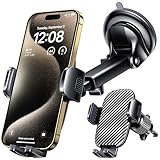
- 3 IN 1 Phone Holders for Your Car: Cell phone GPS navigation holder car is equipped with a suction cup and vent clip, which can be freely mounted on the windshield, dashboard, and air vent for feeding your different usage needs. Cell phone Camera Mounts holder is applied to most cars, pickup trucks, SUVs, taxis. A perfect assistant for Uber, Lyft drivers.
- Enhanced Powerful Suction Cup: Phone GPS navigation holder mount is equipped with double-lock suction cup and uses heat-resistant TPU material , which can provide strong suction power on smooth surfaces, and keep the mount stable in any conditions. To restore adhesion, simply rinse the sticky surface with warm water and wipe dry.
- Perfect Flexibility: Car phone Camera Mounts holder with 360 degree ball joint and adjustable telescopic arm, which can adjust your phone to any ideal angle without obstructing your view. The telescopic arm can be extended from 6.5 inches to 8.1 inches. Easily adjust the distance between you and the car mount.
- Full Protection: iPhone car mount with vacuum silicone rubber and thick panels can provide full protection for your phone from scratches and drops even at high speeds, bumps or turns.
- Easy Operation: Car mount for iPhone has a one-touch release button, you can release your phone with one hand while driving. Adjustable feet accommodate all 4-7 inch phones and most thick cases.
5. The final product may not have justified the investment
As the autonomy goal was reduced, the proposed product reportedly became a conventional EV with limited driver assistance. That could have made the project more achievable, but it also reduced the distinctiveness that might have justified Apple’s entry into a competitive, capital-intensive market.
In other words, the project faced a difficult trade-off: the more ambitious the product, the harder and more expensive it was to build; the more conservative the product, the less obvious the reason for Apple to build the entire car.
6. Generative AI created a more immediate use for some of the team
Reports said some Titan employees were reassigned to generative-AI work after the cancellation. By early 2024, Apple had a strong incentive to accelerate its AI efforts, and moving people and expertise into a nearer-term strategic priority offered a more immediate return than continuing a vehicle program with an uncertain launch.
Quick wins for a faster PC:
Repair Windows errors before they cause bigger problemsFix Now →Fix the driver behind crashes, sound loss and screen glitchesFind Drivers →This does not mean Apple “continued the car project through AI.” The vehicle program ended. Some personnel and potentially useful technical knowledge may have been redirected, but that is different from keeping Project Titan alive as a car.
7. EV-market conditions made the decision harder
Reuters also placed the cancellation in the context of slower EV demand, high interest rates, automaker cutbacks, and the expense of entering the automotive market. These conditions may have affected the business case, but the available reporting does not prove that EV demand alone caused Apple to cancel the project.
How much did Apple spend?
Some reports estimated that Apple spent more than $10 billion on Project Titan over its decade of development. That number is a reported estimate, not an official Apple figure or an audited standalone project budget.
It may include years of salaries, research, testing, acquisitions, facilities, equipment, prototypes, and other development costs, but the public sources do not provide a verified accounting breakdown. The safest conclusion is that Titan was a multibillion-dollar effort—not that Apple published a precise $10 billion loss attributable solely to a finished car.
MacRumors summarized the reported cost estimate.
Independent reader supportYour contribution helps us test, update, and keep practical guides available for everyone.How many people worked on Project Titan?
Published estimates conflict because different reports may count different groups and different points in time. The most useful summary is:
- TechCrunch cited an estimate of approximately 1,400 employees remaining at cancellation.
- Other reports described nearly 2,000 employees associated with the effort at that time.
- Earlier reporting suggested the project may have reached approximately 5,000 workers at its peak.
Accordingly, it is more accurate to say that roughly 1,400 to 2,000 people were associated with Titan when it was canceled, depending on the source and definition, with a larger reported peak workforce. None of these figures was published by Apple as an official headcount.
What happened to the team and technology?
Reports said some employees moved into Apple’s generative-AI organization, while others were reassigned or laid off. Apple’s autonomous-driving research did not disappear from the public record: the company published further machine-learning work in 2025.
It is reasonable to expect that expertise developed during Titan could be useful in areas such as machine learning, perception, simulation, robotics, mapping, and software for third-party vehicles. However, the public sources do not establish a complete inventory of technology transferred from Titan to other Apple products. Claims that a particular feature is definitively “Titan technology” should therefore be treated cautiously.
Outdated Drivers Are Slowing You Down
One free scan finds every outdated or missing driver and matches the right update for your exact hardware.Free scan · exact hardware matchPC Slower Than It Used to Be?
A free scan shows the junk files, broken settings and background clutter dragging Windows down - then fixes them in one click.Free scan · Windows 10 & 11What is Apple doing in cars now?
CarPlay Ultra
CarPlay Ultra represents an ecosystem strategy rather than a vehicle-manufacturing strategy. Apple supplies a deeper software and interface layer for participating automakers’ vehicles, potentially reaching displays and vehicle functions beyond traditional infotainment. The automaker still designs, builds, certifies, sells, and services the car.
That approach gives Apple a way to influence the in-car experience without taking on the full cost and liability of manufacturing a vehicle. It also fits Apple’s existing strengths in software, services, interfaces, maps, and device integration.
Apple Maps and MapKit for Automotive
Apple’s July 2026 Ford announcement is another example of this direction. Apple Maps and MapKit for Automotive can provide navigation and mapping experiences within a Ford vehicle platform. It does not make Ford’s vehicle an Apple car, and the announcement does not establish that the work came directly from Project Titan.
The distinction is important: Apple can become more deeply embedded in vehicles made by other companies while having no plan to build a vehicle of its own.
Best Value

- Versatile Car Phone Mount: Cell phone car mount boasts premium suction strength and an upgraded air vent clip, allowing for flexible installation options on windshields, dashboards, and air vents. Note!3M Dashboard Pad is NOT REQUIRED when using a phone holder on windshield
- Strong Suction Performance: Car phone holder comes with a double-locked suction cup made of heat-resistant TPU material, guaranteeing it stays firmly attached to your dashboard even in extreme heat. Reactivate its sticky power by washing with water and air-drying.
- Fully Adjustable Design: Featuring a 360-degree rotating ball joint and an adjustable extension arm ranging from 3.7 inches to 5.9 inches, this dash-Mounted phone mount for cars allows you to customize your phone's placement to any desired angle or distance, offering maximum viewing flexibility.
- Universal Fit: Engineered to accommodate all smartphones ranging in size from 4.0 to 7.1 inches and devices up to 14mm thick, including GPS devices, this phone stand for trucks includes a one-touch release mechanism for swift and easy phone mounting. It serves as an excellent accessory for drivers requiring constant phone access, enhancing driving stability and safety.
- Comprehensive Safety Features: The car phone mount for iPhone includes a unique hook design fortified with stainless steel and padded with thick plastic, ensuring secure engagement with air vent blades without causing scratches. The robust silicone rubber provides sturdy protection, even on bumpy roads. Note: Not suitable for circular air vents desk mount.
Autonomous-driving research
Apple’s February 2025 machine-learning publication shows that autonomy remains a legitimate research area. A research paper, however, is not a product announcement, a new testing permit, or evidence that Apple has restarted vehicle production.
Could Apple revive the Apple Car?
It is technically possible. Apple has not published a detailed postmortem saying that it can never return to vehicles, and a company can change its strategy. But there is no public evidence as of August 9, 2026 that Apple has restarted an Apple-branded vehicle program.
A credible revival would normally produce stronger evidence than a rumor or concept image. Useful signals would include:
- An Apple press release or executive statement naming a vehicle program;
- New Apple job postings or regulatory filings clearly tied to vehicle production;
- A new autonomous-vehicle testing permit;
- A confirmed manufacturing, platform, or vehicle-development partnership;
- Supplier disclosures specifically tied to Apple vehicle production; or
- A physical prototype documented by credible reporting from multiple independent sources.
The following are not enough on their own to establish a revival:
What’s actually slowing this PC down?
Pick the symptom - the matching free tool is one click away.
- An Apple patent;
- A machine-learning paper about autonomous driving;
- A CarPlay update;
- A new Apple Maps automotive feature;
- A former Titan employee joining a robotics company;
- An analyst’s predicted launch year; or
- An unofficial render labeled “Apple Car.”
How to read old Apple Car articles
Many older pages still discuss an Apple Car launching in 2026 or 2028. Those dates belong to pre-cancellation reporting and should be labeled as historical predictions, not current plans.
The same caution applies to commonly repeated specifications:
- Steering-wheel-free interior: reported for an earlier concept, never confirmed as a production design.
- Breakthrough battery: reported as a possibility or plan, never confirmed by Apple as a final technology.
- Specific price, such as below $100,000: speculation, not an Apple-published price.
- Four-seat layout: an unconfirmed rumor, not a published specification.
- Exact range, launch date, or manufacturing partner: never confirmed by Apple for a production vehicle.
- Concept art: usually an unofficial rendering based on rumors, not an image of an Apple design.
The right question is not “Did Apple once consider this feature?” It is “Was this feature ever confirmed for a production vehicle?” For the Apple Car, the answer to the second question is generally no.
Frequently Asked Questions
Did Apple ever build an Apple Car prototype?
Apple built or operated sensor-equipped Lexus test vehicles for autonomous-driving development, but it never publicly demonstrated a production Apple vehicle. Reporting in early 2024 said the project still lacked a formal prototype; that was reported information, not an Apple-confirmed statement.
Free tools Windows power users keep installed
One-click scans. No signup required.
Was the Apple Car going to be fully autonomous?
That was reportedly the early ambition. Project Titan later shifted from a radical vehicle with minimal conventional controls to highway-limited autonomy and finally to a more conventional EV with Level 2-style driver assistance. Level 2 still requires the human driver to monitor the road and remain responsible.
Was the Apple Car going to have a steering wheel?
The steering-wheel-free design was associated with an earlier reported concept. Apple never confirmed that design, and reports said the final pre-cancellation concept was much more conventional.
How much money did Apple lose on Project Titan?
Reports estimated that Apple spent more than $10 billion over the project’s development. Apple did not publish an official project budget, so the figure should be treated as an estimate rather than an audited loss.
How many employees worked on Project Titan?
Reports vary. Estimates place the workforce at roughly 1,400 to 2,000 people around the February 2024 cancellation, with earlier reports suggesting a peak of about 5,000. The totals depend on which teams and time periods are counted.
The Tool Desk
Outbyte PC Repair FREERepair Windows errors before they cause bigger problemsFix Now →Outbyte Driver Updater FREEFix the driver behind crashes, sound loss and screen glitchesFind Drivers →Did Apple cancel all self-driving or autonomy research?
No. Apple canceled the planned vehicle program, but it continues related research. Its February 2025 autonomous-driving machine-learning paper shows ongoing technical interest. That research is not evidence of a revived Apple car.
Is CarPlay Ultra the Apple Car?
No. CarPlay Ultra is Apple automotive software that works inside participating automakers’ vehicles. It can give Apple a deeper role in the in-car interface, but Apple is not the vehicle manufacturer.
Does Apple Maps for Ford mean Apple is building a car?
No. Apple’s July 2026 announcement concerns Maps and MapKit for Automotive integration with Ford’s upcoming electric-vehicle platform. Ford remains responsible for the vehicle; the partnership is evidence of Apple’s software strategy, not a revived Project Titan car.
Will Apple ever build a car?
No one outside Apple can rule it out permanently, but there is no public evidence of a revival as of August 9, 2026. A new permit, confirmed manufacturing partnership, supplier evidence, production-related filings, or an Apple announcement would be much stronger evidence than a patent or rumor.
The Bottom Line
Project Titan was real, but the Apple-built car was not. Apple reportedly canceled the vehicle program on February 27, 2024, and ended its California autonomous-vehicle testing permit effective September 27, 2024. Apple continues to work on autonomy research, CarPlay Ultra, Maps, and automotive software partnerships—but those efforts should not be mistaken for a revived Apple Car. As of August 9, 2026, the evidence supports “canceled vehicle program,” not “delayed launch.”
Quick Recap
Product prices and availability are accurate as of the date/time indicated and are subject to change. Any price and availability information displayed on Amazon at the time of purchase will apply.