If reliability is your first priority, start with the Japanese middleweights: Yamaha’s MT-07 is the best-supported overall choice, followed closely by Suzuki’s SV650 ABS, Honda’s Rebel 500, and Kawasaki’s Ninja 500. Those four recommendations are grounded in the only broad independent brand comparison found for this subject—but that comparison is historical, not a current 2026 test.
For the other major brands, the ranking becomes provisional. The best current model from each brand is generally the least specialized, most mainstream motorcycle in its lineup, but there is not enough current independent data to assign precise failure-rate positions.
The short version: Buy the Yamaha MT-07 if you want the strongest evidence-backed brand choice. Choose the Suzuki SV650 ABS for a simpler, proven middleweight, the Honda Rebel 500 for an easygoing and widely supported motorcycle, or the Kawasaki Ninja 500 for a practical sport-bike format. For used motorcycles, a documented service history and a clean VIN-specific recall check matter more than this ranking.
What this ranking actually measures
“Reliability” here means the likelihood of avoiding unscheduled repairs and major failures. It does not mean owner satisfaction, comfort, performance, resale value, warranty length, or how exciting a motorcycle is to ride.
Recommended Free Tools
#1 Best Overall
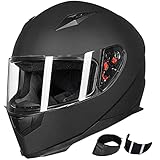
- 2 Visors Included: Clear + Smoked and 1 Neck Scarf for Winter Use
- Streamlined Aerodynamic Design Reduces Wind Noise and Drag
- Advanced and Lightweight Durable ABS Shell
- Quick Release Clasp and Strap and Removable Inner Lining Pads
- Meets or Exceeds FMVSS-218 and DOT Safety Standards
There is no current, comprehensive, independently audited U.S. reliability table covering every major motorcycle brand and every current model year. The strongest comparable evidence located is a Consumer Reports owner survey of more than 12,300 motorcycles from model years 2008 through 2014. It estimated the percentage of motorcycles expected to have a failure within four years:
| Brand | Estimated four-year failure rate |
|---|---|
| Yamaha/Star | 11% |
| Suzuki | 12% |
| Honda | 12% |
| Kawasaki | 15% |
| Victory | 17% |
| Harley-Davidson | 26% |
| Triumph | 29% |
| Ducati | 33% |
| BMW | 40% |
| Can-Am | 42% |
The survey establishes a broad historical pattern: Yamaha, Suzuki, Honda, and Kawasaki performed better than the measured European and American brands. It does not establish the failure rate of a 2026 MT-07, Rebel 500, R 1300 GS, or any other current model.
Current public powersports material from J.D. Power does not provide a comparable U.S. motorcycle-brand dependability table. The motorcycle quality study located during research covered India and measured initial quality, which is not the same as long-term reliability. That distinction is why the first four positions below are evidence-backed, while the remaining positions should be read as practical, provisional recommendations.
The ranking: most reliable current motorcycle candidate from each major brand
| Rank | Brand | Current model pick | Evidence status | Confidence |
|---|---|---|---|---|
| 1 | Yamaha | MT-07 | Historical survey leader; current model fit is inferred | Medium-high |
| 2 | Suzuki | SV650 ABS | Historical survey tied second; mature current platform | High |
| 3 | Honda | Rebel 500 | Historical survey tied second; current model verified | High |
| 4 | Kawasaki | Ninja 500 | Historical fourth among the leading Japanese brands; current model verified | Medium-high |
| 5 | Harley-Davidson | Nightster, with a Sportster S caveat | Historical mid-pack; current model choice is not independently ranked | Medium-low |
| 6 | Triumph | Speed Twin 900 | Historical result below the Japanese brands; restrained current pick | Medium-low |
| 7 | Ducati | Scrambler Icon | Historical result below Triumph; least specialized current pick | Medium-low |
| 8 | BMW Motorrad | R 1300 GS | Historical result near the bottom; recommendation is based on mainstream status and warranty, not simplicity | Low |
| 9 | Royal Enfield | Interceptor 650 | Provisional; no comparable current U.S. failure rate located | Low |
| 10 | Indian Motorcycle | Scout | Provisional; current lineup verified, reliability rank not measured | Low |
| 11 | KTM | 390 Duke | Provisional; current specifications and support verified | Low |
| 12 | Aprilia | Tuareg 660 | Provisional; insufficient comparable current independent data | Low |
| 13 | Moto Guzzi | V7 | Provisional; insufficient comparable current independent data | Low |
Important: Positions 9 through 13 are not statistically separable. They are a practical order based on model simplicity, mainstream status, available manufacturer information, and the absence of comparable independent data—not measured failure rates.
Free tools Windows power users keep installed
One-click scans. No signup required.
1. Yamaha MT-07: the best-supported overall choice
Yamaha is the clearest answer when the question is narrowed to the best-supported brand-level reliability reputation. The Consumer Reports survey gave Yamaha/Star the lowest estimated four-year failure rate in the comparison, at 11%.
The MT-07 is the sensible current Yamaha recommendation because it uses a mainstream parallel-twin platform rather than a highly specialized or supercharged performance engine. It is popular, mechanically approachable, and powerful enough for commuting, back-road riding, and general ownership without being an extreme superbike.
There is an important qualification. The current-generation MT-07 has gained electronic throttle control, a color TFT display, smartphone connectivity, and other updates. Those features do not prove that the motorcycle is unreliable, but they do mean the present model is not identical to every older Yamaha included in the survey. The honest conclusion is that Yamaha is the strongest evidence-backed brand winner, while the MT-07 is a medium-confidence current model fit.
Best for: A buyer who wants the strongest combination of historical brand evidence, conventional engine layout, usable performance, and broad market support.
2. Suzuki SV650 ABS: the unfashionable but proven pick
Suzuki tied Honda at a 12% estimated four-year failure rate in the Consumer Reports comparison. The SV650 is a particularly rational choice because its conventional middleweight design has remained familiar for many years, with a straightforward mechanical layout and a long-running V-twin architecture.
The current 2026 SV650 is available with ABS according to Suzuki’s official model information. That makes the SV650 ABS a strong choice for a buyer who values proven fundamentals over the latest dashboard, riding mode, or engine-management technology.
The SV650 is not necessarily the most advanced motorcycle in this group. That is part of its appeal. Fewer specialized systems can mean fewer expensive systems to diagnose, although routine maintenance, age, previous modifications, and owner treatment still determine the condition of an individual bike.
Best for: Riders who want a durable-feeling, versatile standard motorcycle and are comfortable choosing substance over novelty.
Windows Errors? Fix Them Before They Spread
Repair common Windows errors and clear accumulated junk for a smoother, more stable PC - no reinstall needed.Free scan · no reinstallCrashes, No Sound, or Screen Glitches?
Random freezes, missing sound and display glitches usually trace back to one bad driver. Find and replace yours safely.Free scan · under a minute3. Honda Rebel 500: the lowest-stress Honda choice
Honda also recorded an estimated 12% four-year failure rate, tying Suzuki and placing it just behind Yamaha in the available historical comparison. Honda should not automatically be called the survey winner, but it remains one of the most defensible current choices for a low-stress ownership experience.
The 2026 Rebel 500 uses a 471cc liquid-cooled parallel-twin engine with fuel injection. ABS is standard on the listed U.S. trims. Its moderate output, conventional engine, manageable size, and large-market positioning make it a sensible reliability-oriented Honda recommendation.
As with every current motorcycle, the individual machine still matters. Check recalls, follow the service schedule, and confirm that the specific motorcycle has not been damaged, modified with poor-quality electrical accessories, or stored improperly. A strong brand average cannot rescue a neglected example.
Best for: Newer riders, commuters, and buyers who want an approachable motorcycle with mainstream Honda support.
Rank #2

- 【DOT Certified & High-Impact Protection】 This full face motorcycle helmet meets or exceeds DOT FMVSS-218 standards, ensuring professional-grade safety. Built with a rugged ABS shell and energy-absorbing EPS, these motorcycle helmets dot approved provide ultimate defense for street bikes, cruisers, and sport bikes
- 【Optimized Airflow for All-Weather Riding】 Experience superior ventilation with 4 strategically placed air intakes and exhaust vents. This full face helmet design minimizes wind resistance and fogging, keeping you cool during summer rides and providing a reliable full face helmet adult option for rainy or cold weather
- 【Quick-Release Dual Visor System】 Adapt to any light condition with ease. Our full face helmet motorcycle features a tool-free quick-release system. Each order includes a pre-installed tinted shield plus a bonus clear visor, making these full face motorcycle helmets for men and women versatile for both bright days and night riding
- 【Washable Lining & Comfort Fit】 Maintain freshness on every journey with our fully removable and machine-washable interior. The moisture-wicking sponge padding makes these motorcycle helmets for adults incredibly comfortable for long-distance trips, ensuring a snug fit for these full face motorcycle helmets dot certified
- 【Complete Bundle & Perfect Sizing】 We include a premium carrying bag for easy storage and scratch protection. Whether you are searching for motorcycle helmets for women or men, TRIANGLE offers 4 sizes (S-XL) to ensure a secure fit. Please measure your head circumference to find the perfect full face motorcycle helmet for women or men
4. Kawasaki Ninja 500: the practical Kawasaki sport-bike
Kawasaki’s estimated four-year failure rate was 15%—higher than Yamaha, Suzuki, and Honda in the survey, but still substantially better than the European brands included in that same comparison.
The Ninja 500 is the appropriate current Kawasaki pick because it is a mainstream middleweight rather than a highly stressed or supercharged performance model. Its 451cc liquid-cooled parallel-twin engine gives the buyer a useful sport-bike format without requiring the complexity and cost of Kawasaki’s most performance-focused motorcycles.
The 15% figure should not be described as the current Ninja 500’s defect rate. It is a historical brand-level estimate from older motorcycles. The model recommendation is an inference based on Kawasaki’s historical position and the Ninja 500’s relatively conventional role in the current lineup.
Best for: Riders who want sporty ergonomics and fairing protection without moving into an expensive high-performance platform.
The Tool Desk
Outbyte PC Repair FREEClear out junk files and repair common Windows errorsFree Scan →Outbyte Driver Updater FREEScan for outdated or missing drivers - takes under a minuteDriver Scan →5. Harley-Davidson Nightster: choose carefully within the range
Harley-Davidson’s historical result was a 26% estimated four-year failure rate. That placed it behind the four Japanese leaders, but ahead of Triumph, Ducati, BMW, and Can-Am in the Consumer Reports dataset.
If the goal is to identify the least complicated current Harley-Davidson candidate, the Nightster is the more restrained street-platform choice. However, confidence is limited because the available official material reviewed for this article most clearly verifies the current Sportster S, not a comparative reliability result across Harley’s lineup.
The 2026 Sportster S uses Harley-Davidson’s liquid-cooled 1250T Revolution Max engine and includes substantial electronics, rider aids, and a TFT display. It may be an appealing motorcycle, but those specifications make it a poor candidate for a claim of maximum mechanical simplicity. Choose it for its performance and character, not because the evidence proves it is Harley’s most trouble-free model.
For a used Harley, age, service history, previous modifications, and the quality of work performed by the servicing dealer may matter more than the brand’s historical average. A well-maintained older motorcycle can be a better ownership bet than a neglected newer one.
Best for: Buyers who want a Harley-Davidson specifically and have dependable local dealer and parts support.
6. Triumph Speed Twin 900: the restrained Triumph choice
Triumph’s estimated four-year failure rate was 29% in the historical survey, below the Japanese brands measured. There is no current independent dataset that supports a precise reliability rank for the present Triumph lineup.
The Speed Twin 900 is nevertheless the most defensible current Triumph recommendation for a reliability-focused buyer. It is a mainstream Modern Classic rather than a large, high-output, or highly specialized platform. Current equipment includes cornering ABS, connectivity, Marzocchi forks, and a parallel-twin engine.
That equipment can improve safety and usability, but it also means “simple” should be understood comparatively. The Speed Twin 900 is less aggressive than some alternatives in Triumph’s range; it is not proven by current survey data to have a specific failure rate.
Do these 3 things before closing this tab:
1Repair Windows errors before they cause bigger problems2Scan for outdated or missing drivers - takes under a minute3Clear out junk files and repair common Windows errorsBest for: Riders who prioritize styling and character but want a relatively conventional road motorcycle within Triumph’s lineup.
7. Ducati Scrambler Icon: the least specialized Ducati pick
Ducati recorded a 33% estimated four-year failure rate in the historical Consumer Reports survey. That is well above the Japanese leaders and below only the measured BMW and Can-Am results among the brands in the comparison.
The Scrambler Icon is the most defensible Ducati choice because it is a lightweight, mainstream platform rather than a Panigale superbike or a heavily equipped, high-output adventure-tourer. That does not make it “bulletproof.” The current Scrambler Icon includes ride-by-wire, riding modes, traction control, cornering ABS, and a TFT display.
Those systems are useful, but they reinforce the need for correct diagnostics and scheduled service. The Scrambler Icon should be selected as the least specialized Ducati option, not as a statistically proven reliability leader.
What’s actually slowing this PC down?
Pick the symptom - the matching free tool is one click away.
Rank #3
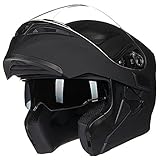
- High Resistance ABS Shell With Micrometrically Adjustable Strap
- Meets or Exceeds FMVSS-218 and DOT Safety Standards
- Helmet Liner / Cheek Pads are Lightweight, Soft and Easily Removable and Washable
- Sleek and Lightweight Design Reduces Wind Noise
- Modular Flip-Up Function Anti-Scratch, Anti-Fog and Wide View Clear Visor
Best for: Buyers who want Ducati design and character and are willing to budget for specialist service when necessary.
8. BMW R 1300 GS: warranty and dealer support matter more than simplicity
BMW had the lowest measured result among the major brands in the Consumer Reports comparison apart from Can-Am, with an estimated 40% four-year failure rate. That is historical owner-survey evidence, not a verdict on every current BMW motorcycle.
If one current BMW must be named, the R 1300 GS is the best-supported mainstream platform choice. It is a highly capable 1,300cc boxer adventure motorcycle producing 145 horsepower and available with extensive equipment options. In the U.S., BMW lists a three-year/36,000-mile warranty for the model.
Those facts support a recommendation based on dealer support and warranty coverage—not on mechanical simplicity. More equipment, greater performance, and adventure-bike hardware can increase the number and cost of components that require inspection, diagnosis, or replacement.
Quick wins for a faster PC:
Repair Windows errors before they cause bigger problemsFix Now →Fix the driver behind crashes, sound loss and screen glitchesFind Drivers →Clear out junk files and repair common Windows errorsFree Scan →A simpler, mature used BMW may be a better simplicity-first proposition than a first-year or heavily optioned new model, but that is a separate used-bike conclusion. Do not interpret the R 1300 GS recommendation as evidence that it has the lowest failure rate in BMW’s range.
Best for: Long-distance and adventure riders who have access to a competent BMW dealer and value warranty protection.
9. Royal Enfield Interceptor 650: a provisional conventional-twin choice
Royal Enfield cannot be placed on the same statistical footing as the first four brands because no comparable independent U.S. long-term failure rate was located for the current lineup.
The Interceptor 650—also identified by Royal Enfield as the INT650—is the most defensible candidate within the brand. It is a conventional, widely distributed twin-cylinder standard rather than a highly specialized motorcycle. Royal Enfield’s official material verifies the INT650 product family and its accessory ecosystem, but that product information establishes what the motorcycle is, not how often it fails.
Place it below the evidence-backed Japanese choices provisionally, and pay particular attention to local dealer quality, parts availability, and service expertise before buying.
Best for: Riders who want classic styling and a straightforward twin but have confirmed dependable local support.
10. Indian Motorcycle Scout: the mainstream Indian candidate
Indian’s official U.S. site lists a current 2026 lineup, but the research did not find a current independent failure-rate comparison placing Indian against Yamaha, Suzuki, Honda, Kawasaki, Harley-Davidson, and the European brands.
The Scout is the logical reliability-oriented pick because it is a mainstream cruiser platform rather than a limited-production or highly specialized performance motorcycle. That is a model-selection judgment, not a measured reliability ranking.
Quick wins for a faster PC:
Fix the driver behind crashes, sound loss and screen glitchesFind Drivers →Clear out junk files and repair common Windows errorsFree Scan →Scan for outdated or missing drivers - takes under a minuteDriver Scan →For an Indian owner, dealer access and parts availability may matter as much as brand-level reliability. A buyer outside a major metropolitan area should verify who will perform scheduled service and how long model-specific parts typically take to obtain.
Best for: Cruiser buyers who specifically want Indian Motorcycle styling and have strong local support.
11. KTM 390 Duke: buy with dealer support and maintenance discipline
The 2026 KTM 390 Duke uses a 398.7cc single-cylinder engine and six-speed transmission, with extensive rider information and a stated warranty and support program. Its smaller engine and relatively focused mission make it the sensible KTM candidate for this list.
Low displacement does not equal proven long-term reliability, however. The current-generation design and electronics mean there is not enough evidence to place the 390 Duke alongside the four Japanese leaders. KTM belongs in a “buy carefully” category: follow the maintenance schedule, avoid questionable modifications, and make sure the local dealer has the diagnostic equipment and technical experience to support the bike.
Recommended Free Tools
Rank #4

- Unmatched Protection & Durability:Built Tough for Extreme Adventures, Our Helmet Exceeds Expectations by Meeting FMVSS-218 and DOT Safety Standards. Its Robust Construction Safeguards Ensuring Ultimate Security as You Conquer the Toughest Terrains
- Convenient Flip-Flop Mechanism: Easy Switching Between Full-Coverage Helmet and Open Mode, This Modular Motorcycle Helmet Is Perfect for City Riding and Long-Distance Touring
- Stay Cool and Comfortable with Strategically Placed Vents That Ensure Maximum Airflow and Reduce Heat and Moisture Buildup During the Ride
- Comfortable Interior Lining: Enjoy the Cozy Plush Lining That Provides Long-Lasting Comfort Even on Long Rides
- The Modular Design Makes It Suitable for Snowmobiles, Dirt Bikes, Scooters, Bike Riding and More. With Its Innovative Features, It Is Sure to Be an Ideal Choice for Riders Looking for a Stylish, Comfortable and Safe Helmet!
Best for: Riders who value sharp handling and technology and are prepared to be disciplined about service.
12. Aprilia Tuareg 660: a capable but complex provisional pick
The Tuareg 660 is the logical Aprilia candidate only for a buyer who specifically wants an adventure motorcycle. It is a sophisticated, electronically equipped machine rather than a simplicity-first middleweight.
Current independent long-term failure-rate data were not located, so Aprilia remains below the Japanese brands in this overall ranking. That does not justify calling Aprilia categorically unreliable. The narrower, evidence-based conclusion is that the data are thinner and the Tuareg 660 is more specialized than the conventional Japanese recommendations.
Dealer competence should be a deciding factor. Before purchase, identify the nearest authorized service location, ask whether it regularly works on the Tuareg platform, and price routine wear items and scheduled service.
Best for: Adventure riders who want the Tuareg’s off-road capability and have reliable Aprilia support nearby.
13. Moto Guzzi V7: the simpler choice within Moto Guzzi
The V7 is the most defensible Moto Guzzi candidate because it is a traditional roadster and a relatively uncomplicated choice within the brand’s range. More complex touring and adventure motorcycles may involve additional equipment and service considerations.
There was not enough current independent reliability evidence to put Moto Guzzi on the same statistical footing as Yamaha, Suzuki, Honda, or Kawasaki. “Simpler within the brand” is an inference about the model’s role and layout, not a measured failure-rate result.
As with Royal Enfield, KTM, and Aprilia, local support is central. A V7 can be a reasonable ownership choice when the buyer has access to a capable dealer or experienced independent motorcycle technician; distance from service support can turn minor issues into expensive downtime.
Do these 3 things before closing this tab:
1Fix the driver behind crashes, sound loss and screen glitches2Clear out junk files and repair common Windows errors3Scan for outdated or missing drivers - takes under a minuteBest for: Riders who value traditional character and are comfortable verifying specialist support before purchase.
Where does Can-Am fit?
Can-Am recorded the highest estimated four-year failure rate in the Consumer Reports comparison, at 42%. It is not assigned a current two-wheel model position in this article because the relevant Can-Am products are a different vehicle category from the conventional two-wheel motorcycles ranked above. Its historical figure should not be silently transferred to another type of vehicle or treated as a current model-year rate.
Why Japanese motorcycles lead the evidence-backed part of the list
The available survey does not prove that every Japanese motorcycle is more reliable than every European or American motorcycle. It does show a meaningful brand-level pattern in the measured population, with Yamaha, Suzuki, Honda, and Kawasaki recording the lowest estimated failure rates.
Several factors may help explain why conventional Japanese middleweights are attractive reliability bets:
- Mainstream production: High-volume models tend to have broader parts availability and more technicians familiar with their common systems.
- Moderate performance: An engine designed for usable everyday power is generally a less extreme starting point than a highly stressed performance platform.
- Long model histories: Mature architectures give manufacturers and service networks more time to identify recurring issues.
- Manageable ownership costs: Common tires, brakes, filters, chains, and other consumables are often easier to source.
These are reasons to favor the four Japanese recommendations—not proof that a particular motorcycle will never need repairs.
Independent reader supportYour contribution helps us test, update, and keep practical guides available for everyone.How to make a more reliable purchase than the ranking alone can provide
1. Check the exact VIN for open recalls
Before buying any new or used motorcycle, use the National Highway Traffic Safety Administration’s official recall and VIN tools. A VIN lookup reveals unrepaired recalls for that specific vehicle. General make-and-model searches can show broader recalls, investigations, complaints, and manufacturer communications, but they do not replace checking the motorcycle’s VIN.
Complete recall work through an authorized dealer before treating the motorcycle as ready for normal use. If a seller will not provide the VIN for a legitimate pre-purchase check, consider that a warning sign.
2. Prioritize service records over brand reputation on used bikes
For a used motorcycle, documented oil changes, valve-clearance checks where applicable, brake-fluid service, coolant replacement, chain or belt care, tire replacement, and recall completion are more useful than a generic brand ranking.
The Tool Desk
Outbyte PC Repair FREERepair Windows errors before they cause bigger problemsFix Now →Outbyte Driver Updater FREEScan for outdated or missing drivers - takes under a minuteDriver Scan →Best Value
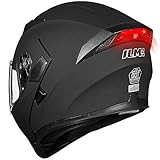
- High Resistance ABS Shell With Micrometrically Adjustable Strap
- Meets or Exceeds FMVSS-218 and DOT Safety Standards
- Helmet Liner / Cheek Pads are Lightweight, Soft and Easily Removable and Washable
- Sleek and Lightweight Design Reduces Wind Noise
- Modular Flip-Up Function Anti-Scratch, Anti-Fog and Wide View Clear Visor
Look for records that identify dates, mileage, parts, and the servicing business. Be cautious when the only evidence of maintenance is a seller’s verbal assurance or a box of unlabelled receipts.
3. Inspect modifications and crash damage
Pay special attention to aftermarket electrical accessories, nonstandard engine tuning, poorly routed wiring, altered airboxes or exhaust systems, crash repairs, bent controls, leaking fork seals, and evidence of improper storage. Modifications can create problems that have nothing to do with the manufacturer’s original design.
4. Confirm service and parts support locally
Call the nearest dealer before buying, particularly for Aprilia, BMW, Ducati, Indian, KTM, Moto Guzzi, Royal Enfield, and Triumph. Ask whether the shop regularly services the exact model, whether factory diagnostics are available, and how model-specific parts are sourced.
Dealer quality can outweigh a modest difference in brand-level reliability. A motorcycle that is easy to service correctly is often a better ownership bet than a theoretically stronger model that no nearby shop understands.
Free tools Windows power users keep installed
One-click scans. No signup required.
5. Prefer a mature platform when reliability outranks novelty
A first-year redesign may be excellent, but it has less real-world history than a mature platform. If maximum dependability is more important than having the latest display or electronics, favor an established model with a long service history and a large owner base.
6. Budget for the type of motorcycle you are buying
Adventure and performance motorcycles can require more frequent service and more expensive tires, brakes, electronic components, and suspension parts. A warranty limits financial exposure for covered failures, but it does not prove that the motorcycle has a lower failure rate.
Maintenance items that directly affect reliability
Reliability is partly designed into the motorcycle and partly created by ownership. Keep the service schedule, tire pressures, fluids, fasteners, battery, and final drive in order. Store the bike dry and secure, and do not leave fuel, battery, or electrical issues unattended for an entire season.
Once you have selected the exact model and year, a motorcycle repair manual can make scheduled inspections and basic work more precise. Match the manual to the exact model-year fitment; a generic manual is not a substitute for the manufacturer’s service specifications.
For seasonal or infrequent use, a motorcycle battery tender can help maintain the battery during storage when used according to the battery and charger instructions. It is a storage aid, not evidence that one brand is more reliable than another.
DIY owners may also benefit from a properly rated motorcycle maintenance stand. Verify the stand type, load rating, and contact points for the specific motorcycle, and never rely on an unstable stand while working underneath a machine.
For a chain-driven motorcycle, a motorcycle chain cleaning kit is relevant to routine care. It is not appropriate for motorcycles with belt or shaft final drives, and chain-cleaning products must be used in accordance with the chain and motorcycle manufacturer’s guidance.
When you need model-specific consumables, tires, or replacement parts, compare fitment through a reputable source for model-specific motorcycle maintenance parts. Verify the year, trim, ABS equipment, and final-drive configuration before ordering.
What’s actually slowing this PC down?
Pick the symptom - the matching free tool is one click away.
Which one should you buy?
- Best evidence-backed overall pick: Yamaha MT-07.
- Best simple and proven alternative: Suzuki SV650 ABS.
- Best approachable everyday motorcycle: Honda Rebel 500.
- Best sport-bike choice: Kawasaki Ninja 500.
- Best Harley-Davidson candidate: Nightster, with careful attention to service and dealer support.
- Best European choice when character matters: Triumph Speed Twin 900, Ducati Scrambler Icon, or BMW R 1300 GS depending on the riding mission—not because current reliability data rank them above one another.
- Best provisional choices from the remaining brands: Royal Enfield Interceptor 650, Indian Scout, KTM 390 Duke, Aprilia Tuareg 660, and Moto Guzzi V7, provided local support is strong.
Sources and scope
The historical percentages come from the Consumer Reports owner survey covering more than 12,300 motorcycles from model years 2008–2014. Current model names and specifications were checked against official manufacturer materials reviewed for this article. Recall guidance is based on NHTSA’s official VIN and recall tools.
No current, all-brand, independently audited U.S. reliability study was located that compares Yamaha, Suzuki, Honda, Kawasaki, Harley-Davidson, BMW, Ducati, Triumph, KTM, Indian, Royal Enfield, Aprilia, and Moto Guzzi on the same basis. The ranking therefore separates measured historical evidence from model-selection judgment.
Frequently Asked Questions
Is Honda the most reliable motorcycle brand?
Honda is one of the strongest choices, but the available Consumer Reports survey ranked Yamaha/Star first at an estimated 11% four-year failure rate. Honda tied Suzuki at 12%. That study covered 2008–2014 model years, so neither figure should be presented as a current 2026 failure rate.
Are Japanese motorcycles more reliable than European motorcycles?
The available historical owner survey points in that direction at the brand level: Yamaha, Suzuki, Honda, and Kawasaki had lower estimated four-year failure rates than Triumph, Ducati, and BMW. It does not mean every Japanese motorcycle will outperform every European model, and it does not measure the current model years directly.
Does a longer motorcycle warranty mean the bike is more reliable?
No. A warranty reduces the buyer’s financial exposure to covered problems, but it does not establish a lower failure rate. Warranty length should be considered alongside dealer quality, exclusions, service requirements, and the manufacturer’s ability to provide parts.
What is the most reliable used motorcycle?
There is no single answer without inspecting the individual bike. A used motorcycle with complete service records, no major crash damage, properly installed equipment, and no open VIN-specific recalls is usually a better bet than a neglected example from a higher-ranked brand.
Should I buy a first-year motorcycle redesign if reliability is my priority?
Prefer a mature platform when reliability is more important than having the newest technology. A first-year redesign may be completely successful, but it has less long-term field history and fewer established repair patterns than a model with several years of service data.
The Bottom Line
Bottom line: The Yamaha MT-07 is the best-supported current recommendation, but the evidence is historical rather than a 2026 test. Suzuki’s SV650 ABS, Honda’s Rebel 500, and Kawasaki’s Ninja 500 are similarly sensible choices for buyers who value conventional layouts and mainstream support. Beyond those four, choose by model mission, dealer access, service cost, and the condition of the exact motorcycle—not by false precision in a ranking that current data cannot fully support.




