PC Slower Than It Used to Be?
A free scan shows the junk files, broken settings and background clutter dragging Windows down - then fixes them in one click.Free scan · Windows 10 & 11Outdated Drivers Are Slowing You Down
One free scan finds every outdated or missing driver and matches the right update for your exact hardware.Free scan · exact hardware matchFor most used-car shoppers, the best older Honda Accord to buy is a well-maintained 2016 or 2017 four-cylinder. The best newer used choices are generally the 2020 and 2021 Accord, while the 2020–2022 2.0-liter turbo with its 10-speed automatic is the strongest performance configuration. On a tight budget, a 2011 or 2012 four-cylinder can make sense, but age, rust, oil consumption, and deferred maintenance now matter more than the model-year reputation.
The Accord years that deserve the most caution are the 2003 V6 automatic, 2008–2010—especially 2008—the 2013 V6 automatic, and the 2018 1.5-liter turbo. That does not make every car from those years defective. The decisive question is usually more specific: model year + engine + transmission + production date + maintenance history.
This guide covers U.S.-market Accord sedans and hybrids from approximately 2000 through the 2026 model year. Canadian, Japanese, European, coupe, plug-in-hybrid, and other-market Accords can have different engines, equipment, recalls, and reliability patterns.
Quick recommendations
| Buyer priority | Best starting point | What to verify |
|---|---|---|
| Best overall older used Accord | 2016–2017 four-cylinder, preferably an LX, Sport, EX, or EX-L | CVT-fluid service, battery-sensor recall, rust, accident history, and oil consumption |
| Best newer used Accord | 2020–2021 | Complete records, all VIN-specific recalls, and careful inspection of the 1.5T engine if equipped |
| Best performance | 2020–2022 2.0T with the 10-speed automatic | Harsh or delayed shifts, turbo-system problems, higher fuel costs, and maintenance history |
| Best fuel economy | 2020–2022 Hybrid or 2025–2026 Hybrid | Hybrid fault codes, battery condition, fuel-pump recall, and the hybrid ICM software recall where applicable |
| Best inexpensive older car | 2011–2012 four-cylinder | Rust, air-conditioning repairs, suspension wear, oil consumption, and age-related electrical problems |
| Best current new Accord | 2025–2026, after recall verification | 2026 reliability is predicted rather than demonstrated over long-term ownership |
| Best manual-transmission option | 2013–2017 four-cylinder Sport manual, where available | Scarcity, modifications, clutch wear, and how the car was driven |
These are starting points, not guarantees. A neglected 2017 can be a worse purchase than a carefully maintained 2015, and a rust-free, documented 2009 may be preferable to a flood-damaged or rebuilt-title 2016.
Free tools Windows power users keep installed
One-click scans. No signup required.
#1 Best Overall

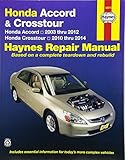
- Step-by-step procedures written from a complete teardown and rebuild, giving you the confidence to tackle repairs at any skill level.
- Over 700+ clear photos and diagrams that simplify complex systems, helping you complete jobs faster and with fewer mistakes.
- Comprehensive troubleshooting and fault-finding guides to quickly diagnose problems and reduce costly downtime.
How the best and worst years were judged
“Best” does not mean the year with the fewest internet complaints. It means the configuration that offers the most convincing balance of:
- Powertrain durability: engine design, transmission behavior, known failure patterns, and service requirements.
- Safety: crash performance, standard driver-assistance equipment, and completed safety recalls.
- Repair exposure: the likelihood and cost of engine, transmission, airbag, electrical, fuel-system, steering, or hybrid-system work.
- Age-adjusted ownership cost: suspension, air-conditioning, exhaust, wheel-bearing, rust, and rubber-component repairs become increasingly important on older cars.
- Purchase value: whether paying more for a newer Accord buys meaningful safety equipment, lower age-related risk, and remaining warranty coverage.
- Configuration: four-cylinder versus V6, naturally aspirated versus turbocharged, gasoline versus hybrid, CVT versus conventional automatic, and sedan versus coupe.
- Documentation: maintenance records and an independent inspection often matter more than a one-year difference.
Consumer Reports reliability results are useful because they reflect owner-survey data, but they are not a guarantee for an individual vehicle. For example, Consumer Reports rated the 2016 Accord and 2017 Accord more reliable than other vehicles from their respective model years. It also rated the 2020 and 2021 Accords favorably. Those results support the recommendations, but condition, mileage, climate, ownership history, and powertrain still determine the risk of the specific car in front of you.
The best Honda Accord model years to buy
1. 2016–2017 four-cylinder: the best older used Accord
The 2016 and 2017 Accords are late examples of the ninth generation, which ran from 2013 through 2017. Their naturally aspirated 2.4-liter four-cylinder is generally the most straightforward configuration in this part of the Accord lineup, and most four-cylinder cars use a continuously variable transmission (CVT). These years also offer substantially newer safety and infotainment equipment than earlier Accords without the first-year-redesign risk of the 2013 or 2018 model.
For an ordinary used-car buyer, the ideal example is a stock, accident-free four-cylinder with consistent oil changes and documented CVT-fluid service. The 2017 Accord’s engine, transmission, trim, and safety equipment are detailed in Honda’s 2017 brochure.
The Tool Desk
Outbyte PC Repair FREERepair Windows errors before they cause bigger problemsFix Now →Outbyte Driver Updater FREEFix the driver behind crashes, sound loss and screen glitchesFind Drivers →Why it ranks first:
- Naturally aspirated four-cylinder powertrain rather than a turbocharged engine.
- Late-generation engineering and a mature production run.
- Good balance of cabin space, fuel economy, safety equipment, and purchase price.
- Better reliability survey results than many competing cars from the same years, according to Consumer Reports.
- Manual-transmission four-cylinder Sport models exist, although clean, unmodified examples are difficult to find.
What to inspect: CVT fluid history, oil leaks, timing-chain noise, low oil level, cooling-system condition, worn suspension parts, rust, and accident repairs. A CVT is not automatically unreliable, but it should not be treated as maintenance-free. Hesitation, shuddering, whining, engine flare, or delayed engagement during a test drive are reasons to stop and obtain a specialist diagnosis.
The V6 makes the Accord quicker and smoother, but it is not automatically the better reliability choice. It adds fuel consumption and mechanical complexity, and certain 2013–2015 V6 Accords were covered by a Honda starter campaign. The Honda/NHTSA bulletin and a Cars.com summary of bulletin A16-002 describe a starter-gear clearance problem that can cause grinding or spinning during startup.
2. 2020–2021: the best newer used Accord for most buyers
The 2020 and 2021 Accords are established examples of the 10th generation, introduced for 2018. They retain that generation’s excellent interior space, refined ride, modern safety technology, and available 2.0-liter turbocharged performance. They are newer than the 2016–2017 cars, so they usually carry a higher purchase price, but they can reduce age-related repair exposure and provide more contemporary driver assistance and connectivity.
Consumer Reports rated the 2020 Accord more reliable than other cars from its model year and described the 2021 Accord as much more reliable than other cars from its model year. A separate 2026 used-vehicle analysis from Clutch also identified 2020–2021 as strong used-buy candidates, although that analysis is dealer inspection data rather than an industry-wide failure-rate study.
Quick wins for a faster PC:
Clear out junk files and repair common Windows errorsFree Scan →Fix the driver behind crashes, sound loss and screen glitchesFind Drivers →Repair Windows errors before they cause bigger problemsFix Now →There are three materially different configurations to consider:
- 1.5T/CVT: efficient and widely available, but it requires close inspection for coolant loss, misfires, fuel-system recall completion, unusual oil level or fuel smell, and evidence of injector or head-gasket work.
- 2.0T/10-speed automatic: the preferred choice for buyers who want performance and want to avoid the specific complaint pattern associated with the 1.5T. It still has turbocharger and transmission complexity, and it costs more to buy, fuel, insure, and repair.
- Hybrid: attractive for fuel economy, but battery condition, hybrid-system fault history, and recall completion must be checked rather than assumed.
For most shoppers, a 2020 or 2021 with complete records is the best newer used Accord. Choose the 2.0T if performance matters and the budget supports it; choose the hybrid if fuel economy matters more; and scrutinize the 1.5T rather than rejecting or accepting it automatically.
3. 2015 four-cylinder: a good value only at the right price
The 2015 four-cylinder is a reasonable value when it costs meaningfully less than a comparable 2016 or 2017 and has unusually good documentation. It benefits from the ninth-generation platform and avoids the first production year of that redesign, but it is not quite as clean a recommendation as 2016–2017.
Consumer Reports’ 2015 Accord reliability page lists several recalls, and certain 2015 four-cylinder vehicles were included in a small connecting-rod-bolt recall affecting specified production dates. The VIN, not the model-year label, determines whether a particular vehicle was included and whether the repair was completed.
Buy a 2015 four-cylinder when the price difference is substantial enough to reserve money for repairs. If the seller wants nearly 2016–2017 money, the newer car is usually the better risk-adjusted choice.
4. 2011–2012 four-cylinder: the budget pick with an age penalty
The four-cylinder 2011 and 2012 Accords can be good inexpensive transportation. Consumer Reports rated the 2012 Accord more reliable than other vehicles from its model year, while the 2011 model was approximately average.
In 2026, however, these cars are roughly 14 or 15 years old. Their original design reputation matters less than whether the current vehicle has rust, oil-consumption symptoms, a functioning air conditioner, healthy suspension, intact subframes, and a documented service history. Common age-related expenses can include struts, control-arm bushings, engine mounts, wheel bearings, alternators, starters, exhaust components, catalytic converters, weather seals, brake lines, and air-conditioning parts.
Best buyer: someone who can buy a rust-free, independently inspected example at a low price and keep a repair reserve.
Do these 3 things before closing this tab:
1Scan for outdated or missing drivers - takes under a minute2Clear out junk files and repair common Windows errors3Fix the driver behind crashes, sound loss and screen glitchesRank #2

- Step-by-step procedures written from a complete teardown and rebuild, giving you the confidence to tackle repairs at any skill level.
- Over 700+ clear photos and diagrams that simplify complex systems, helping you complete jobs faster and with fewer mistakes.
- Comprehensive troubleshooting and fault-finding guides to quickly diagnose problems and reduce costly downtime.
Not the best buyer: someone who needs predictable, low-maintenance transportation and cannot absorb a major repair. In that situation, paying more for a newer Accord may be cheaper overall.
5. 2025–2026: the current new-car choices
The 2023 Accord began the 11th generation. Current Accords use either a gasoline 1.5-liter turbocharged engine or Honda’s two-motor hybrid system, depending on trim. Consumer Reports describes the 2023–present Accord as an evolutionary redesign with a 192-horsepower 1.5T base powertrain and 204-horsepower hybrid versions.
For a new-car buyer, the 2025 and 2026 models offer the advantages of a current vehicle: newer crash-avoidance hardware, fewer years of wear, factory warranty coverage, and no prior-owner accident or maintenance uncertainty. Consumer Reports gives the 2025 Accord a strong reliability result and predicts above-average reliability for the 2026 model. The word predicts matters: a 2026 model has not accumulated a decade of real-world ownership data.
Honda’s current 2026 specifications and trim page lists gasoline LX and SE trims and hybrid Sport, EX-L, Sport-L, and Touring trims. The 2026 Accord is listed as an IIHS Top Safety Pick; the IIHS Accord rating page states that its crash-test ratings apply to 2023–2026 models, while the 2026 Top Safety Pick listing identifies the Accord among Honda’s qualifying vehicles.
The 2025 or 2026 Accord is therefore the best answer for a buyer prioritizing a new-car warranty and current safety technology. It is not necessarily the lowest-cost answer, and the long-term reliability of the 2026 model remains unproven.
Best Accord engines and transmissions
Year-only rankings conceal the most important part of the decision. Two Accords with the same badge can have different engines, transmissions, fuel systems, recall populations, repair costs, and driving histories.
| Powertrain | Best fit | Advantages | Risks and inspection points |
|---|---|---|---|
| 2.4-liter naturally aspirated four-cylinder/CVT | 2016–2017; also carefully selected 2011–2015 examples | Simple engine design, good fuel economy, broad parts availability | CVT service, oil consumption, leaks, timing-chain noise, cooling system, suspension and rust |
| 3.0- or 3.5-liter V6/automatic | Buy for power, not as an automatic reliability upgrade | Smooth, strong performance and higher-trim availability | Fuel cost, VCM-related concerns, starter campaign on certain 2013–2015 cars, and transmission history on older V6 cars |
| 1.5-liter turbo/CVT | 2020–2022 only with excellent records; carefully evaluated 2018–2019 cars | Good economy, adequate performance, plentiful availability | Fuel-pump recall, coolant loss, misfires, fuel dilution complaints, injector or head-gasket repairs, CVT condition |
| 2.0-liter turbo/10-speed automatic | 2020–2022 performance choice | 252 horsepower and strong acceleration; avoids 1.5T-specific concerns | Higher purchase and operating costs; check turbo system and harsh, delayed, or abnormal transmission shifts |
| Hybrid | 2020–2022 or 2025–2026 for fuel economy | Low fuel consumption and strong everyday drivability | Battery, inverter, motor-generator, software, 12-volt battery, and recall status require specialized checks |
| Four-cylinder manual | 2013–2017 Sport, where available | Driver involvement and no CVT | Scarce, often modified, and subject to clutch and abuse-related wear |
2.4-liter naturally aspirated four-cylinder
This is generally the preferred configuration in a 2016–2017 Accord. It does not have a turbocharger, and the engine’s power delivery is predictable. That does not eliminate maintenance: verify oil changes, inspect for leaks, listen for timing-chain noise, and check that the cooling system is healthy.
With a CVT-equipped car, ask for evidence of the correct transmission-fluid service. During the drive, it should pull away smoothly without shudder, flare, whining, or delayed engagement. Do not buy solely on the assumption that a Honda CVT will last forever; buy the individual vehicle after checking its service and operating condition.
What’s actually slowing this PC down?
Pick the symptom - the matching free tool is one click away.
3.0- or 3.5-liter V6
The V6 is appealing because it is smooth and powerful, but “V6” is not a synonym for “best Accord.” It brings higher fuel consumption, more engine-management complexity, and additional issues to investigate, including variable cylinder management (VCM) concerns and transmission history.
Certain 2013–2015 V6 Accords had the starter/ring-gear issue described in Honda bulletin A16-002. Earlier V6 automatics, particularly the 2003–2004 cars and some 2005–2007 examples, also deserve especially careful transmission verification. A buyer should test for slipping, flare, harsh shifts, delayed engagement, and abnormal noise, and should request documentation for recall-related or transmission repairs.
1.5-liter turbocharged four-cylinder
The 1.5T is efficient and common, but its inspection checklist is longer than the naturally aspirated four-cylinder’s. Honda issued a recall for certain 2018–2022 Accord 1.5T vehicles because a fuel-pump impeller could swell and seize, potentially causing loss of motive power or stalling. Read the Honda/NHTSA fuel-pump recall bulletin and verify the individual VIN.
Owner-report databases also contain complaints involving gasoline in the oil, head-gasket failures, engine shutdown, and engine failure on 2018 cars. CarComplaints’ 2018 engine page and its gasoline-in-oil page are useful for identifying patterns, but these are self-selected owner reports—not a measured failure rate, and not proof that every 1.5T has the same defect.
Check the oil level and smell, coolant level, dried coolant residue, cold-start behavior, misfire history, check-engine-light history, injector work, and head-gasket work. An unusually high oil level or a strong fuel odor in the oil deserves professional diagnosis before purchase.
2.0-liter turbocharged four-cylinder
The 2.0T produces 252 horsepower in the 2018–2022 generation and uses a 10-speed automatic. It is the preferred 10th-generation configuration for a buyer who wants performance and wishes to reduce exposure to the specific 1.5T complaint pattern.
It is not trouble-free or inexpensive. Turbocharged components, premium trims, larger tires, and the 10-speed transmission can increase repair and ownership costs. Test light-throttle upshifts, downshifts, reverse, and drive engagement. Harsh shifts, repeated hesitation, delayed engagement, or abnormal downshifts should be diagnosed before purchase.
Accord hybrids
Honda has sold several substantially different hybrid Accords: the first-generation hybrid from 2005–2007, the 2014 hybrid and plug-in hybrid, the 2017 hybrid, the 2018–2022 hybrid, and the 2023–2026 hybrid. Battery age, hybrid-system design, software, warranty coverage, and recall history vary, so they should not be treated as one reliability category.
Rank #3
A hybrid inspection should include a scan for high-voltage battery, inverter, and motor-generator faults; state-of-charge behavior; cooling-fan operation; 12-volt battery condition; signs of flood exposure or long-term outdoor storage; and confirmation of remaining battery warranty eligibility. Honda advertises an eight-year limited high-voltage battery warranty for current hybrid vehicles, but coverage details and eligibility depend on the vehicle and the applicable warranty terms. Do not promise a particular battery lifespan based only on mileage or age.
Honda Accord years and configurations to approach carefully
2003 V6 automatic: the clearest powertrain-specific avoid
The 2003 V6 automatic is the most defensible “avoid unless exceptionally documented” Accord recommendation. Honda recalled certain 2003–2004 V6 Accords with automatic transmissions because heat around second gear could weaken or damage transmission components. The remedy involved inspection and an oil-jet modification, with replacement transmissions required in some cases. The Honda/NHTSA recall bulletin explains the campaign.
This warning does not apply equally to every 2003 Accord. A 2003 four-cylinder manual or automatic is a different configuration. Even so, any 2003 car is now more than two decades old, so rust, accident damage, airbag status, and age-related repairs can outweigh the original powertrain distinction.
2008–2010, especially 2008: inspect rather than blindly accept
The eighth-generation Accord began with the 2008 model year, and these cars deserve more scrutiny than their reputation for durability sometimes receives.
The main concerns include:
- Excessive oil consumption: Honda extended warranty coverage for piston rings and pistons on eligible 2008–2011 four-cylinder Accords for eight years or 125,000 miles, whichever came first. That coverage has expired for all of these cars by 2026, but Honda’s 12-087 bulletin shows that the issue was formally recognized for eligible vehicles.
- Side-airbag deployment: Certain 2008–2009 sedans were subject to a software recall related to inadvertent side-airbag deployment. Honda’s airbag recall explanation provides the campaign details. NHTSA also investigated inadvertent side-airbag deployments on certain 2008 Accords in investigation PE14-004.
- Recall history: the cited Consumer Reports pages list nine recalls for 2008, eleven for 2009, and thirteen for 2010. These counts can include later campaigns and should not be treated as a direct reliability score.
Do not automatically reject every 2008–2010 Accord. Require evidence of oil-consumption monitoring or engine work, check the dipstick, look for blue exhaust smoke, verify airbag and other recall repairs by VIN, and pay for an independent inspection. A V6 is not automatically exempt from the age and safety concerns.
2013, particularly the V6 automatic
The 2013 Accord introduced the ninth-generation redesign. It can be a good car—especially as a four-cylinder—but it deserves more scrutiny than the later 2015–2017 cars.
Certain 2013–2015 V6 Accords had a starter problem caused by inadequate clearance between the starter gear and torque-converter ring gear. Symptoms can include grinding or a starter that spins without properly engaging. The issue is described in Honda bulletin A16-002.
Consumer Reports’ 2013 reliability information also reflects owner-reported concerns involving starter failure and battery drain. In addition, NHTSA investigated an electric-power-steering torque-sensor issue affecting some 2013–2014 Accords; see NHTSA investigation PE14-033. Some cars were subject to later warranty-extension or product-update activity.
Recommended Free Tools
A 2013 four-cylinder with records and a clean inspection can still be a sensible purchase. A 2013 V6 automatic with grinding on startup, unclear transmission history, or warning lights should be passed over.
2018, especially the 1.5T
The 2018 Accord is not a blanket “never buy” car. It was a major redesign with new turbocharged engines, a new hybrid system, new electronics, and a new body. Consumer Reports describes its reliability as approximately average and lists five recalls on its cited 2018 overview and reliability page.
The 1.5T deserves special caution because owner reports and service experiences have highlighted fuel dilution, coolant intrusion or head-gasket repairs, air-conditioning compressor or refrigerant-leak problems, CVT complaints, and electronics issues. The fuel-pump recall affecting certain 2018–2022 1.5T Accords is an official safety campaign, but recall completion does not certify the engine, injectors, turbocharger, head gasket, or transmission.
If considering a 2018, favor a thoroughly documented 2.0T or hybrid over an undocumented 1.5T. For any 1.5T, inspect the oil and coolant closely, perform a cold start, scan for pending codes, and ask directly about misfires, injector replacement, coolant loss, head-gasket work, and fuel-pump recall completion. A repaired recall alone is not proof that the car is trouble-free.
2023–2024 hybrid with unknown recall status
The 2023 and 2024 Accords are not “worst years.” They are early examples of a new generation with strong current-market appeal and modern safety equipment. The issue is that certain early 11th-generation cars have important recalls, making VIN verification essential.
Certain 2023–2024 Accords and Accord Hybrids were recalled because a high-pressure fuel pump could crack and leak fuel; see NHTSA recall 24V-763. Certain 2023–2025 Accord Hybrids were also recalled because an integrated-control-module CPU could reset while driving, potentially causing loss of drive power. The cited recall report covers 256,603 vehicles; see NHTSA recall 25V-785.
These are “verify before buying” years, not automatic rejects. A vehicle with completed recall repairs, a strong warranty position, and a clean inspection can still be a good purchase.
Accord generations: what changes from one era to the next?
Honda’s official Accord history page identifies the major generations and powertrain developments. The useful buying lesson is that a generational change often matters more than a small year-to-year difference within a mature generation.
Windows Errors? Fix Them Before They Spread
Repair common Windows errors and clear accumulated junk for a smoother, more stable PC - no reinstall needed.Free scan · no reinstallCrashes, No Sound, or Screen Glitches?
Random freezes, missing sound and display glitches usually trace back to one bad driver. Find and replace yours safely.Free scan · under a minuteRank #4

- 1984 - 1995 Honda Accord and Prelude Chilton's Total Car Care Manual
| Generation | U.S. model years | Buying perspective |
|---|---|---|
| Sixth | 1998–2002 | Now very old. Safety equipment, Takata airbag status, rust, transmission condition, and age-related repairs dominate the decision. |
| Seventh | 2003–2007 | Four-cylinder examples can be usable, but V6 automatic transmission history is critical, especially for 2003–2004 and some 2005–2007 cars. |
| Eighth | 2008–2012 | Check four-cylinder oil consumption, airbag campaigns, rust, A/C, suspension, and general age-related wear. |
| Ninth | 2013–2017 | 2016–2017 four-cylinder models are the preferred older used choices; 2013 and V6 configurations need additional checks. |
| Tenth | 2018–2022 | Strong space, safety, and performance. Separate the 1.5T, 2.0T, and hybrid rather than judging the generation as one car. |
| Eleventh | 2023–present | Current hybrid-focused lineup with modern safety equipment, but early-year recall completion and immature long-term data matter. |
Safety can make a newer Accord the better buy
Mechanical durability is only one part of ownership risk. A very old Accord may be reliable in the narrow sense while offering older crash structures, fewer standard driver-assistance systems, less effective compatibility with modern child seats and cameras, and greater airbag risk.
Before buying any older Honda, check for unrepaired Takata recalls. NHTSA has specifically warned owners of certain 2001–2003 Honda and Acura vehicles equipped with unrepaired Takata Alpha inflators not to drive them until repaired. Read the NHTSA “Do Not Drive” warning.
Do not compare safety ratings from different decades as though the tests were identical. Crash-test protocols and available equipment change over time. For the current Accord, IIHS states that the cited crash-test ratings apply to 2023–2026 models, and lists the 2026 Accord as a Top Safety Pick. Check the exact trim and model year rather than assuming that every older Accord has the same result.
Independent reader supportYour contribution helps us test, update, and keep practical guides available for everyone.How to inspect a used Honda Accord before buying
1. Get and verify the complete VIN
Obtain the 17-character vehicle identification number from the windshield, door-jamb label, registration, and seller’s paperwork. All sources should match. A vehicle-history report can help identify title, accident, ownership, and mileage events, but it is not a mechanical inspection and a clean report does not prove that a car is sound.
2. Check recalls by VIN
Run the VIN through both the NHTSA recall lookup and Honda’s recall lookup. NHTSA’s tool identifies unrepaired recalls associated with that specific VIN.
A “no open recalls” result does not mean that every technical service bulletin, warranty extension, product update, or previous repair has been completed. Conversely, a completed recall addresses the recalled condition; it does not certify the rest of the vehicle.
3. Demand service records
Look for documentation of:
- Oil-change intervals and the oil specification used.
- CVT or automatic-transmission fluid changes.
- Cooling-system repairs and coolant service.
- Spark-plug replacement and brake-fluid service.
- Turbocharger, injector, fuel-pump, or head-gasket repairs on 1.5T cars.
- Hybrid battery, inverter, motor-generator, and software work on hybrid cars.
- Recall completion invoices and dealer campaign records.
Missing records do not prove neglect, but they increase uncertainty and should lower the price or end the negotiation.
4. Insist on a genuinely cold start
Ask the seller not to warm the vehicle before you arrive. On startup, check for:
Do these 3 things before closing this tab:
1Scan for outdated or missing drivers - takes under a minute2Clear out junk files and repair common Windows errors3Fix the driver behind crashes, sound loss and screen glitches- Long cranking or repeated attempts to start.
- Starter grinding or spinning, especially on certain 2013–2015 V6 cars.
- Rough idle, misfire, smoke, or rattling.
- Timing-chain noise.
- Warning lights that disappear unusually quickly after the engine starts.
- “Check emissions system” or multiple driver-assistance warnings.
A warm engine can conceal difficult starting, cold misfires, and smoke.
5. Check the oil and coolant
On older four-cylinder models, check for low oil, oil residue around the engine, blue exhaust smoke, and an owner who says the car needs frequent top-offs. Ask whether piston-ring or oil-consumption work was performed.
On a 1.5T, check coolant level and condition, dried coolant residue, signs of overheating, cold-start misfires, the oil level, and the smell of the oil. An unusually high oil level or a strong gasoline smell in the oil warrants professional testing. Ask about injector, head-gasket, and overheating history.
6. Test the transmission carefully
CVT: From a complete stop, look for shudder, hesitation, whining, engine flare, or delayed engagement. Verify the correct fluid-service history. Do not rely on a seller’s statement that the transmission is “sealed for life.”
10-speed automatic: Test gentle acceleration, heavier acceleration, low-speed shifts, downshifts, reverse, and drive engagement. Harsh shifts, delayed engagement, or abnormal repeated shift behavior need diagnosis.
2003–2007 V6 automatic: Test specifically for slipping, flaring, harsh shifts, delayed engagement, and transmission noise. Verify recall-related or replacement-transmission work with paperwork. An undocumented transmission replacement is not automatically a benefit; it may simply indicate that the vehicle has already experienced a major problem.
7. Test electronics and safety systems
Operate the backup camera, touchscreen, Bluetooth, Apple CarPlay or Android Auto where equipped, lane-keeping and adaptive-cruise systems, blind-spot monitoring, parking sensors, airbag/SRS system, ABS, traction control, power windows and locks, seat heaters, sunroof, climate control, keyless entry, and push-button start.
Multiple warning lights may result from a weak 12-volt battery, sensor, wiring, software, or control-module issue. The cause must be scanned rather than guessed.
Recommended Free Tools
Best Value

- Complete Repair Coverage: Step-by-step repair procedures specific to your vehicle — from routine maintenance like oil changes and air filter replacement to complex engine and transmission repairs
- 700+ Photos & Illustrations: Every procedure is visually supported with clear, close-up photography taken during an actual vehicle teardown and rebuild — no guesswork required
- Beginner to Advanced: Written in plain language so a DIY owner with basic tools can tackle most repairs confidently, while still serving as a valuable reference for experienced mechanics
- Full Troubleshooting Section: Quickly diagnose problems with dedicated troubleshooting guides for engine, electrical, brakes, and drivetrain systems
- Time-Saving Tips Throughout: Pro shortcuts and notes highlight common pitfalls, helping you avoid costly mistakes and get your vehicle back on the trail faster
8. Inspect the underside and body
Check the subframes, suspension mounting points, brake and fuel lines, exhaust, rocker panels, door bottoms, trunk floor, underbody shields, CV-axle boots, and transmission area. Look for bent structural members, non-factory welds, fluid seepage, uneven tire wear, and mismatched paint.
Cars from northern states and other salt-using regions require particular care. Corrosion can overwhelm the advantages of an otherwise excellent model year.
9. Pay for an independent pre-purchase inspection
Use a Honda specialist or reputable independent shop that is not dependent on the seller’s sale. Request a scan-tool report, cold-start evaluation, fluid inspection, brake and suspension measurements, and confirmation of recall and campaign status. For a hybrid, request a high-voltage battery and hybrid-system scan. Compression or leak-down testing may be appropriate when symptoms or scan results justify it.
Common Accord buying myths
“All Hondas last 300,000 miles.”
Some do, but longevity is not a warranty. Maintenance, rust, overheating, transmission service, accident history, short-trip use, modifications, and prior owners determine whether a particular Accord reaches high mileage.
“Any Accord with a recall is a bad car.”
A recall can involve a small production batch, a software correction, or a safety defect that is fully repaired at no cost. A high recall count should prompt VIN verification, not an automatic rejection. The opposite is also true: no open recalls does not prove that the car has no expensive non-recalled problem.
“The newer Accord is automatically more reliable.”
A newer car generally has less wear and more warranty coverage, but a first-year redesign can introduce new engines, software, electronics, and recall exposure. Newer also usually means a higher purchase price. Compare initial reliability, long-term durability, safety, remaining warranty, and total cost separately.
“The V6 is always the best Accord.”
The V6 is often the most enjoyable, but it uses more fuel and adds configuration-specific concerns. Certain V6 automatics have important starter or transmission history to investigate. A well-maintained four-cylinder is usually the more conservative used-car recommendation.
“The 2018 Accord should never be purchased.”
The narrower and more useful conclusion is that 2018 is a first-year redesign, and its 1.5T deserves careful inspection. A documented 2.0T or hybrid can be a different risk proposition. Any 2018 can be acceptable if its VIN-specific recalls are complete and an independent inspection finds no evidence of engine, cooling, transmission, or electrical problems.
Quick wins for a faster PC:
Repair Windows errors before they cause bigger problemsFix Now →Scan for outdated or missing drivers - takes under a minuteDriver Scan →Clear out junk files and repair common Windows errorsFree Scan →“Low mileage means low risk.”
Low mileage does not eliminate years of sitting, short-trip operation, rubber deterioration, battery failure, rust, neglected fluid service, or accident history. Evaluate maintenance consistency, storage, climate, number of owners, fleet or rideshare use, and current condition.
“A clean Carfax means the Accord is mechanically sound.”
History reports can miss accidents, repairs, flood exposure, and maintenance. They are useful evidence, not a substitute for a cold start, scan, road test, underside inspection, and independent pre-purchase inspection.
Final buying recommendations by scenario
- Tight budget: Start with a 2011–2012 four-cylinder, but prioritize a rust-free body, good air conditioning, service records, and a repair reserve over the lowest asking price.
- Lowest used-car repair risk: Shop first for a documented 2016–2017 four-cylinder. A 2015 four-cylinder is acceptable when it is substantially cheaper and better maintained than the alternatives.
- Long-term used ownership: A 2016–2017 four-cylinder or a carefully documented 2020–2021 is the strongest broad recommendation. The newer car costs more, but its lower age and newer safety equipment may justify the difference.
- Maximum performance: Choose a 2020–2022 2.0T with the 10-speed automatic after checking shift quality and turbo-system history.
- Best fuel economy: Consider a 2020–2022 hybrid or a 2025–2026 hybrid. Verify battery condition, warranty eligibility, and all applicable fuel-pump and hybrid-control recalls.
- Family safety: Favor a newer Accord with modern driver assistance and a clean recall record, especially a 2020–2021 or current 2025–2026 model. Check the exact IIHS rating and equipment for the model year and trim.
- Cars to approach with the most caution: The 2003 V6 automatic, 2008–2010 cars with unknown oil history, 2013 V6 automatics with starter or steering concerns, undocumented 2018 1.5Ts, and 2023–2024 hybrids with unverified recall status.
Frequently Asked Questions
Is the 2018 Honda Accord safe to buy?
Yes, but it should not be bought solely on the Accord name or a completed recall. The 2018 was a first-year redesign, and the 1.5-liter turbo deserves checks for coolant loss, misfires, unusual oil level or fuel smell, injector or head-gasket work, CVT symptoms, air-conditioning problems, and fuel-pump recall completion. A documented 2.0T or hybrid may be a more comfortable choice for buyers concerned about the 1.5T complaint pattern.
Are 2008–2010 Honda Accords bad?
Not every one is bad, but these years deserve more scrutiny than many other Accord generations. Check for excessive four-cylinder oil consumption, side-airbag recall completion, rust, air-conditioning and suspension wear, and evidence of overheating or engine repair. In 2026, age-related condition may matter more than the original model-year reliability ranking.
Free tools Windows power users keep installed
One-click scans. No signup required.
Which Accord engine and transmission combination is safest to buy?
For an older used Accord, the 2016–2017 2.4-liter four-cylinder with a properly serviced CVT is the strongest general recommendation. For performance, the 2020–2022 2.0-liter turbo with the 10-speed automatic is preferable to the 1.5T for buyers who accept higher operating costs. In every case, the individual vehicle’s records and inspection matter more than the badge.
Are Honda Accord hybrids reliable?
They can be good purchases, but hybrid Accords from 2005–2007, 2014, 2017, 2018–2022, and 2023–2026 use different systems and should not be treated as interchangeable. Check high-voltage battery and inverter fault codes, cooling, 12-volt battery condition, warranty eligibility, and recall status. Certain 2023–2025 hybrids have an integrated-control-module software recall, while certain 2023–2024 cars have a high-pressure fuel-pump recall.
Should I buy a 2026 Honda Accord?
It is a reasonable new-car choice for buyers who value current safety equipment, factory warranty coverage, and no prior-owner history. Consumer Reports predicts above-average reliability, but that is not the same as proven 10-year durability. Verify any recalls and select the gasoline or hybrid powertrain based on driving needs, operating cost, and warranty priorities.
The Bottom Line
The best Honda Accord is not simply a model year; it is a documented powertrain in good condition. Begin with a 2016–2017 four-cylinder for the best older-used balance, or a 2020–2021 Accord for a newer purchase. Choose the 2020–2022 2.0T for performance and a 2020–2022 or 2025–2026 hybrid for fuel economy. Treat the 2003 V6 automatic, 2008–2010, 2013 V6 automatic, and 2018 1.5T as higher-scrutiny choices rather than automatic rejections. Before paying, run the VIN through NHTSA and Honda, insist on a cold start and complete records, and pay for an independent inspection.
The Tool Desk
Outbyte PC Repair FREEClear out junk files and repair common Windows errorsFree Scan →Outbyte Driver Updater FREEFix the driver behind crashes, sound loss and screen glitchesFind Drivers →Quick Recap
Product prices and availability are accurate as of the date/time indicated and are subject to change. Any price and availability information displayed on Amazon at the time of purchase will apply.