The Tool Desk
Outbyte PC Repair FREEClear out junk files and repair common Windows errorsFree Scan →Outbyte Driver Updater FREEFix the driver behind crashes, sound loss and screen glitchesFind Drivers →Some links on this page are affiliate links: if you buy through them we may earn a commission, at no extra cost to you.
WD-40 can be useful on a car, but it is not a universal automotive lubricant or a substitute for service fluids. The original WD-40 Multi-Use Product is best understood as a penetrating spray, moisture displacer, light lubricant, corrosion protector, and grime or adhesive-residue remover for suitable surfaces. It can help free rusty fasteners, quiet or free certain hinges and latches, protect exposed metal, and remove contamination from painted metal when used correctly.
It should not go on brake friction surfaces, serpentine belts, tire tread, or as a replacement for engine oil, brake fluid, coolant, transmission fluid, or bearing grease. And “WD-40” is a product family: the original Multi-Use Product is different from Specialist Silicone, White Lithium Grease, Contact Cleaner, Degreaser, and Rust Remover.
WD-40 for cars: the quick answer
| Job | Best answer | Why |
|---|---|---|
| Freeing a rusty nut, bolt, latch, or hinge | Original WD-40 Multi-Use Product or a dedicated penetrant | It can penetrate corrosion and provide temporary lubrication, but it may not release a severely seized part. |
| Longer-lasting metal-to-metal lubrication | White lithium grease or another lubricant specified for the component | A thicker grease film generally lasts longer under load than a light penetrating spray. |
| Rubber seals, vinyl, locks, cables, and water-resistant lubrication | Specialist Silicone | It is formulated to leave a water-resistant lubricating film on compatible rubber, plastic, and metal surfaces. |
| Sensitive electrical contacts or electronics | Specialist Contact Cleaner | It is designed to dry quickly and leave no residue. The original WD-40 is not the same product. |
| Painted-metal grime, tar, insects, or adhesive residue | Original WD-40, used sparingly and followed by washing | WD-40 says the Multi-Use Product is safe on painted metal when used as directed, but unknown finishes still deserve a spot test. |
| Brake rotors, brake pads, tire tread, or serpentine belts | Do not spray WD-40 | Oil contamination can create a serious loss of friction or cause a belt problem. |
| Engine oil, brake fluid, coolant, transmission fluid, or bearing grease | Use the fluid or lubricant specified by the vehicle manufacturer | WD-40 Multi-Use Product is not an operating fluid or a load-rated replacement lubricant. |
The practical rule is simple: use the original formula for freeing, displacing moisture, light-duty lubrication, corrosion protection, and certain cleaning jobs. Select a Specialist product when the part needs a particular type of film, drying behavior, material compatibility, or load performance.
Recommended Free Tools
As an Amazon Associate I earn from qualifying purchases.
What the original WD-40 Multi-Use Product is actually good at
WD-40 Company’s automotive guidance for the Multi-Use Product lists uses including hinges, latches, fasteners, chrome, exposed frame metal, paint-safe grime removal, and moisture displacement. Those uses have a common theme: they are maintenance or cleanup tasks, not replacements for the vehicle’s engineered fluids and lubricants.
1. Rusty nuts, bolts, and fasteners
Spray the threaded or corroded interface—not the whole engine bay—and give the product time to work before using the correct tool. A controlled application can help reduce friction and loosen surface corrosion. It cannot guarantee that a fastener will release, especially when the threads are heavily rusted, distorted, cross-threaded, or seized by heat.
Popular on Amazon

- Drives out moisture and quickly dries out electrical systems to eliminate moisture-induced short circuits
- Acts as a corrosion inhibitor to shield against moisture and other corrosive elements to prevent rust
- Frees sticky mechanisms, loosens rust-to-metal bonds and helps release stuck, frozen or rusted metal parts
- Removes grease, grime, gunk, gum, tar, sap, super glue, sticker residue, and other sticky stuff from multiple surfaces
- Lubricates moving parts such as hinges, wheels, pulleys, rollers, chains, and gears
Use eye protection and the correct-size socket or wrench. Do not apply an aerosol and then immediately introduce a flame, torch, grinder, or other ignition source; aerosol residue and vapors can be flammable. If a critical suspension, brake, steering, or engine fastener will not move, stop before rounding it or damaging the component.
2. Door, hood, trunk, and latch mechanisms
A small amount on an exposed hinge pin, latch pivot, or similar metal contact point can help free a stiff mechanism and displace moisture. Operate the mechanism several times, then wipe away excess spray so it does not collect road grit.
For a longer-lasting metal-to-metal film, the original formula may be only a light-duty or temporary choice. A product such as WD-40 Specialist White Lithium Grease is the more appropriate category for many automotive hinges, gears, latches, cables, pulleys, and guide rails. Check the vehicle manufacturer’s instructions first, because some mechanisms call for a specific grease or should not be lubricated at all.
3. Exposed metal and chrome
A light application can help protect compatible exposed metal and chrome from moisture and corrosion. This can be useful on suitable exterior hardware or exposed frame metal, especially before storage. Apply sparingly and wipe the surface clean rather than leaving a thick, dusty film on parts exposed to road spray.
Do not treat the spray as a rust repair. Deep pitting, flaking corrosion, weakened structural metal, and corrosion around brake, suspension, or body-mount components require inspection and possibly repair or replacement.
4. Grime, tar, insects, and adhesive residue on painted metal
WD-40 states that the original Multi-Use Product can help remove grime, tar, insects, and adhesive residue from painted metal when used as directed. Use a small amount on a cloth or apply a controlled spray, allow the contamination to soften, and wipe gently. Wash the panel afterward to remove the product and loosened dirt.
“Safe on painted metal” does not mean safe on every finish in every condition. Spot-test an inconspicuous area first, particularly on a fresh repair, aftermarket coating, vinyl wrap, matte finish, or paint whose composition is unknown. Avoid overspray on glass, rubber, brakes, tires, and areas where a slippery residue would be hazardous.
5. Displacing moisture
Moisture displacement is part of the original product’s intended role. WD-40’s automotive guidance discusses using it with the engine switched off to help deal with excess moisture in flooded engines and certain ignition-related situations.
That is a temporary moisture-management step, not a diagnosis or a guarantee that an engine will start. A no-start condition can involve fuel delivery, ignition, sensors, battery voltage, immobilizer systems, or water intrusion in places that should not be sprayed indiscriminately. If water has entered an air intake, control module, fuse box, or connector, follow the vehicle manufacturer’s recovery procedure or have the vehicle inspected.
Myths about WD-40 on cars
Myth 1: “If it doesn’t move, spray WD-40; if it moves, spray it too.”
Verdict: catchy, but misleading. The slogan ignores the conditions that determine whether a lubricant is suitable: load, temperature, duration, contamination, material compatibility, and the manufacturer’s specification.
The original product can penetrate and provide light lubrication, but a high-load pivot, a continuously exposed linkage, a rubber seal, a sensitive electrical connector, and a precision mechanism do not all need the same chemistry. WD-40 Company’s Specialist range exists for precisely this reason: different jobs may call for silicone, white lithium grease, dry lubricant, gel lubricant, penetrant, contact cleaner, degreaser, or rust remover.
Myth 2: WD-40 will ruin automotive paint
Verdict: generally false when used as directed on painted metal. The company says the Multi-Use Product can be used on painted metal and can help remove certain grime and adhesive residues.
The safe approach is still conservative: apply a small amount, keep it away from trim and sensitive materials, wipe it off, wash the panel afterward, and test an inconspicuous area first. Be especially cautious with fresh paint, wraps, custom finishes, clear coats in poor condition, and unknown aftermarket coatings. If the product causes a change in gloss, texture, color, or adhesion, stop immediately and remove it according to the finish manufacturer’s instructions.
What’s actually slowing this PC down?
Pick the symptom - the matching free tool is one click away.
Also popular on Amazon
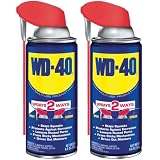
- Drives out moisture and quickly dries out electrical systems to eliminate moisture-induced short circuit
- Acts as a corrosion inhibitor to shield against moisture and other corrosive elements to prevent rust
- Frees sticky mechanisms, loosens rust-to-metal bonds and helps release stuck, frozen or rusted metal parts
- Helps life grease, grime, gunk, gum, tar, sap, super glue, sticker residue, and other sticky stuff from multiple surfaces
- Lubricates moving parts such as hinges, wheels, pulleys, rollers, chains, and gears
Myth 3: WD-40 is safe on every plastic, including headlight lenses
Verdict: false. WD-40’s material-compatibility guidance says to avoid polycarbonate plastics, including headlight lenses, as well as clear polystyrene.
A hazy headlight may have removable surface grime, but persistent yellowing or cloudiness is usually oxidation or coating damage. Do not treat a temporary surface-cleaning result as a restoration. Use a headlight product or headlight restoration kit specifically labeled for the lens material and follow its sanding, polishing, sealing, and UV-protection instructions. If the lens is cracked, internally damaged, or badly deteriorated, replacement may be the correct repair.
Never generalize from one plastic part to another. Interior trim, instrument lenses, under-hood plastics, polycarbonate lamps, clear polystyrene, and aftermarket coatings may react differently.
Myth 4: Spray WD-40 on brake rotors or pads to stop a squeak
Verdict: unsafe and unacceptable. Brake pads and rotor friction surfaces must remain free of oil and lubricants. A spray intended to free a hinge or displace moisture has no place on an installed brake’s friction interface.
Free tools Windows power users keep installed
One-click scans. No signup required.
WD-40 materials discuss rust removal from disassembled cast-iron brake rotors with Specialist Rust Remover. That is a parts-cleaning or restoration context; it is not permission to spray the original Multi-Use Product on installed rotors or pads.
If friction material or a rotor has been contaminated, do not try to “burn it off” through driving or assume that a quick wipe has made the brakes safe. Use an appropriate brake-cleaning procedure only if you understand the product and the vehicle’s service requirements. Contaminated pads or shoes may need replacement, and the brake system should be professionally inspected when there is any doubt. A brake squeak should be diagnosed for wear, hardware problems, glazing, contamination, corrosion, or caliper issues.
Myth 5: WD-40 can revive a serpentine belt or cure belt squeal
Verdict: false. Do not spray the belt. Belt squeal can indicate contamination, wear, incorrect tension, misalignment, a failing tensioner, or a pulley bearing problem. Adding an oily film can worsen contamination and hide the symptom temporarily.
Gates’ preventive-maintenance guidance identifies excessive oil or chemical contamination as a belt problem and advises against belt dressing. Inspect the belt, pulleys, tensioner, alignment, and tension according to the vehicle or belt manufacturer’s procedure. Replace worn or contaminated components rather than trying to lubricate the belt.
Do these 3 things before closing this tab:
1Scan for outdated or missing drivers - takes under a minute2Clear out junk files and repair common Windows errors3Fix the driver behind crashes, sound loss and screen glitchesMyth 6: WD-40 belongs on tires for shine or traction
Verdict: do not recommend it. Tire tread and sidewalls are safety-critical rubber surfaces. A general-purpose aerosol is not a tire-treatment product, and an oily or slippery residue near the tread, brakes, or pedals creates an unacceptable risk.
If appearance is the goal, use a tire-specific dressing according to its label. Keep any dressing off the tread, brake components, steering controls, and floor-pedal surfaces. Traction comes from the tire’s design, condition, inflation, temperature, and road contact—not from an improvised coating.
Myth 7: WD-40 is the same thing as electrical contact cleaner
Verdict: false. The original Multi-Use Product may displace moisture in certain situations, but it is not interchangeable with a cleaner designed for sensitive electrical and electronic parts.
WD-40 Specialist Contact Cleaner is formulated to dry quickly and leave no residue. That is the relevant product category for suitable connectors, switches, controls, and other sensitive electrical parts, subject to the vehicle and component manufacturer’s instructions. Disconnect power where appropriate, never spray an aerosol onto an energized or hot component, provide ventilation, and avoid flooding sealed modules or connectors.
Quick wins for a faster PC:
Fix the driver behind crashes, sound loss and screen glitchesFind Drivers →Clear out junk files and repair common Windows errorsFree Scan →Scan for outdated or missing drivers - takes under a minuteDriver Scan →Electrical faults still need diagnosis. Contact cleaner will not repair a broken wire, failed sensor, corroded terminal that needs replacement, water-damaged control module, or low battery.
Myth 8: WD-40 can replace engine oil, brake fluid, transmission fluid, coolant, or bearing grease
Verdict: categorically false. The original product is marketed as a penetrant, moisture displacer, light lubricant, and corrosion protector—not as a vehicle operating fluid.
Also popular on Amazon

- Cleans grease, grime and dirt
- Removes adhesives, bugs, tar and more
- Protects tools and equipment from rust and corrosion
- Displaces moisture, restoring wet tools and equipment
Never pour it into an engine, transmission, brake reservoir, cooling system, power-steering system, differential, or other fluid reservoir. Do not use it as a substitute for engine oil, brake fluid, transmission fluid, coolant, hydraulic fluid, or manufacturer-specified bearing grease. A spray penetrant is also not automatically suitable for sealed bearings, wheel bearings, high-load pivots, high-temperature parts, or components that require a particular grease or lubricant rating. Use the owner’s manual and service information.
Independent reader supportYour contribution helps us test, update, and keep practical guides available for everyone.Which WD-40 product fits the job?
Choosing the right product matters more than choosing the most familiar can. Product names and availability can vary by country, so read the label on the can available in your market and confirm compatibility before application.
PC Slower Than It Used to Be?
A free scan shows the junk files, broken settings and background clutter dragging Windows down - then fixes them in one click.Free scan · Windows 10 & 11Crashes, No Sound, or Screen Glitches?
Random freezes, missing sound and display glitches usually trace back to one bad driver. Find and replace yours safely.Free scan · under a minute| Product category | Good candidates for | Do not confuse it with |
|---|---|---|
| WD-40 Multi-Use Product | Freeing rusty fasteners, displacing moisture, light lubrication, corrosion protection, and removing certain grime or adhesive residue from compatible painted metal. | A durable grease, electrical contact cleaner, brake cleaner, operating fluid, or tire product. |
| Specialist Penetrant | Stubborn corrosion where a dedicated penetrating formulation is the better fit. | A long-term grease or a replacement for mechanical repair. |
| WD-40 Specialist Silicone | Water-resistant lubrication for compatible cables, pulleys, guide rails, valves, linkages, hinges, locks, plastics, rubbers, vinyl, and door or weather seals. | The original formula, a tire dressing, or a cure for a damaged seal. |
| WD-40 Specialist White Lithium Grease | Longer-lasting metal-to-metal lubrication for suitable hinges, gears, latches, cables, pulleys, and guide rails. | A universal grease for every material, temperature, or load. |
| WD-40 Specialist Contact Cleaner | Suitable sensitive electrical and electronic parts where a quick-drying, no-residue cleaner is appropriate. | The original Multi-Use Product or a remedy for a failed electrical component. |
| Specialist Degreaser/Cleaner | Grease, oil, and grime on compatible equipment and automotive surfaces. | A reason to spray sensors, alternators, air intakes, hot exhaust parts, or energized electrical areas indiscriminately. |
| Specialist Rust Remover | Rust treatment on compatible parts when removed from the vehicle and used according to the product instructions. | A product to spray on installed brake friction surfaces. |
For the original product, WD-40 Multi-Use Product is the sensible choice when the task is freeing, moisture displacement, light lubrication, corrosion protection, or compatible exterior cleanup. For rubber seals, locks, and water-resistant lubrication, compare the application with WD-40 Specialist Silicone. For a more persistent metal-to-metal film, choose WD-40 Specialist White Lithium Grease if the component and label call for it. For electronics, choose WD-40 Specialist Contact Cleaner rather than assuming the familiar blue-and-yellow can is appropriate.
WD-40 publishes a list of more than 2,000 uses, but its 2,000+ uses PDF explains that many entries were submitted by end users, do not constitute company recommendations, and have not been tested by WD-40 Company. Treat user-submitted or anecdotal uses as ideas to investigate—not as validated automotive procedures. Current product pages, the can label, the owner’s manual, and component-specific service instructions should take priority.
A safe way to use WD-40 on a car
- Identify the component and the actual problem. Is it corrosion, moisture, dirt, squeaking, a failed part, or a fluid leak? A spray can help with the first three in limited situations; it cannot repair worn bearings, broken wires, bad seals, misalignment, or failed hydraulics.
- Choose the formulation. Select Multi-Use, silicone, lithium grease, contact cleaner, degreaser, rust remover, or another product based on the material and required performance.
- Read the can label and safety information. Follow the product-specific directions, warnings, ventilation requirements, and material restrictions. Do not rely on the product name alone.
- Switch the engine off and let components cool. Unless the instructions specifically say otherwise, work on a cool, stationary vehicle. Keep aerosol products away from flames, sparks, hot exhaust parts, and other ignition sources.
- Protect safety-critical surfaces. Cover or avoid brake rotors and pads, tire tread, serpentine belts, pedals, steering-wheel controls, and any surface where a slippery film could cause loss of control or grip.
- Apply a small, controlled amount. Use the straw or a cloth where practical. More product is not more effective and creates more overspray, residue, and contamination.
- Allow penetration time when freeing corrosion. Use the correct tool and stop if the fastener begins to round, shear, or damage the surrounding component.
- Wipe away excess. Residue can attract dust and grit. Wash exterior panels after a cleaning job, and remove any overspray from nearby surfaces using a compatible method.
- Check the result before driving. Test doors and latches carefully. For brakes, steering, tires, belts, pedals, and other safety-critical systems, do not accept a temporary symptom change as proof of a repair.
When not to spray—and when to get help
- Do not spray brake rotors, brake pads, drums, shoes, or other friction surfaces.
- Do not spray serpentine belts, timing belts, tire tread, or any surface whose grip is essential.
- Do not use WD-40 to mask a belt squeal, brake squeal, steering noise, fluid leak, or failing bearing.
- Do not substitute it for engine oil, brake fluid, coolant, transmission fluid, hydraulic fluid, or bearing grease.
- Do not assume it is compatible with every plastic, rubber, clear coat, wrap, lens, or aftermarket finish.
- Do not spray indiscriminately into sensors, alternators, air intakes, fuse boxes, control modules, hot exhaust components, or energized electrical equipment.
- Do not drive a vehicle after a safety-critical component has been contaminated until the contamination has been properly addressed.
Seek professional help when corrosion affects structural or safety-critical hardware, when a seized fastener is part of the braking, steering, or suspension system, when an electrical module has suffered water intrusion, or when the correct cleaning or replacement procedure is unclear. A can of spray is a maintenance aid, not a substitute for diagnosis.
A sensible small car-maintenance kit
You do not need every product in the WD-40 catalog. A practical kit might include a penetrating spray for corroded fasteners, an appropriate contact cleaner, silicone lubricant for compatible seals and locks, white lithium grease for suitable metal-to-metal joints, microfiber cloths, nitrile gloves, eye protection, and a torque wrench for reassembly where the vehicle’s service procedure specifies a torque value.
Add brake-specific cleaning products only for jobs you understand, and keep them separate from general-purpose sprays. Do not buy a product in order to perform an unsafe application: no WD-40 on brakes, belts, or tire tread.
Frequently Asked Questions
Can I use WD-40 on car door hinges?
Yes, the original Multi-Use Product can help free or lightly lubricate suitable exposed metal hinge points. Apply sparingly, operate the hinge, and wipe away excess. For a longer-lasting metal-to-metal film, a suitable white lithium grease may be better if the vehicle manufacturer permits it.
Can WD-40 be used on a car’s plastic parts?
Not universally. WD-40’s compatibility guidance says to avoid polycarbonate plastics, including headlight lenses, and clear polystyrene. Spot-test unknown plastics and use a product specifically labeled for the material.
What should I use instead of WD-40 on electrical connectors?
Use an appropriate quick-drying, no-residue electrical contact cleaner, such as WD-40 Specialist Contact Cleaner, when compatible with the component and allowed by the manufacturer. Disconnect power where appropriate and do not spray energized or hot equipment.
Can WD-40 stop a serpentine-belt squeal?
No. Do not spray the belt. Squeal can indicate contamination, wear, incorrect tension, misalignment, or a failing pulley or tensioner. Diagnose the belt system and follow the vehicle or belt manufacturer’s inspection and replacement guidance.
Is WD-40 safe for brake rotors?
Do not spray the original WD-40 Multi-Use Product on installed brake rotors or pads. Brake friction surfaces must remain free of oil. If they are contaminated, stop driving until the correct cleaning, inspection, or replacement procedure has been completed.
The Bottom Line
Bottom line: WD-40 is useful when the job is freeing corrosion, displacing moisture, providing light lubrication, protecting compatible exposed metal, or removing certain grime from painted metal. It is the wrong tool for brakes, belts, tire tread, sensitive electronics, plastics such as polycarbonate headlight lenses, and all vehicle operating fluids. Choose the formulation for the component, follow the label and owner’s manual, and treat any safety-critical problem as a repair—not a spray-and-hope shortcut.




