The Tool Desk
Outbyte PC Repair FREEClear out junk files and repair common Windows errorsFree Scan →Outbyte Driver Updater FREEFix the driver behind crashes, sound loss and screen glitchesFind Drivers →Short answer: Toyota’s hybrid e-CVT uses a planetary power-split gearset and two motor-generators to vary the relationship between engine speed and wheel speed electronically. It does not use a conventional CVT belt. The same architecture is found in many 2026 Toyota hybrids, but not in Hybrid MAX or i-FORCE MAX models that use conventional multi-speed automatics.
Toyota’s hybrid e-CVT is not a belt-and-pulley CVT. It is an electronically controlled hybrid transaxle built around a planetary power-split gearset, two motor-generators, a battery, and power electronics. The planetary gears provide the mechanical connection between the engine and wheels; MG1 and MG2 control the effective ratio and route power electrically. That is why the vehicle can accelerate without conventional gear changes.

In the U.S. 2026 Toyota lineup, this architecture is used by hybrids such as the Camry, Prius, Corolla Hybrid, RAV4 Hybrid, Sienna, Highlander Hybrid, and several others. However, Toyota’s Hybrid MAX and i-FORCE MAX systems generally use conventional multi-speed automatic transmissions instead, so a Toyota having a hybrid badge does not automatically mean it has an e-CVT.
What Toyota’s e-CVT actually is
The name e-CVT means electronically controlled continuously variable transmission. The continuously variable behavior comes mainly from controlling the speed and electrical load of the motor-generators, not from moving a belt between variable-diameter pulleys.
Windows Errors? Fix Them Before They Spread
Repair common Windows errors and clear accumulated junk for a smoother, more stable PC - no reinstall needed.Free scan · no reinstallCrashes, No Sound, or Screen Glitches?
Random freezes, missing sound and display glitches usually trace back to one bad driver. Find and replace yours safely.Free scan · under a minuteThe central mechanical component is a planetary power-split device. In the common Toyota Hybrid System arrangement, the planetary gearset couples:
- the gasoline engine, typically through the planet carrier;
- MG1, the smaller motor-generator, through the sun gear; and
- MG2 and the wheel-side reduction gearing, through the ring gear.
The exact packaging, gear ratios, motor outputs, battery, and control strategy vary by generation and model. The important principle is consistent: the planetary gearset maintains a fixed mechanical relationship among its members, while the electrical system continuously changes how engine power is divided between the wheels, MG1, MG2, and the battery.
The major parts
| Component | What it does |
|---|---|
| Gasoline engine | Provides mechanical power when its operating range is efficient. It can shut off during stops, low-load driving, and some low-speed conditions. |
| Planetary power-split device | Divides engine torque between a mechanical route to the wheels and an electrical route through MG1. |
| MG1 | Starts the engine, generates electricity from engine power, and regulates the speed relationship within the planetary gearset. |
| MG2 | Acts as the primary traction motor, assists the engine during acceleration, and becomes a generator during regenerative braking. |
| Hybrid battery | Stores recovered energy and supplies electrical power to the motor-generators. Battery size and chemistry differ by model and generation. |
| Power-control unit | Uses the inverter and related electronics to control voltage, current, and motor-generator operation. |
| Rear motor on many AWD hybrids | Provides electric rear-wheel drive without requiring a conventional mechanical driveshaft from the front transaxle. |
How the power-split device creates continuously variable operation
A conventional automatic transmission chooses among several fixed gear ratios. A belt CVT changes its mechanical ratio by moving a belt or chain between pulleys of different effective diameters. Toyota’s hybrid e-CVT does neither.
Its planetary gearset has fixed teeth and therefore fixed internal relationships. But a planetary gearset can distribute speed and torque among its three members. By controlling MG1’s speed and electrical load, the hybrid control computer changes how fast the engine must rotate relative to the wheel-side output. MG2 then supplies or absorbs torque as needed.
Recommended Free Tools
In practical terms, the controller can:
- hold the engine near an efficient operating range while vehicle speed changes;
- send some engine power mechanically to the wheels;
- send another portion through MG1 to produce electricity;
- use that electricity immediately in MG2, store it in the battery, or divide it between both destinations; and
- use MG2 to add torque or recover energy without selecting a traditional gear.
This is why the e-CVT is best described as a planetary power-split hybrid transmission. Calling it simply a CVT can lead readers to expect a belt, pulley, and conventional CVT fluid service procedure that do not apply to this design.
What happens in normal driving?
1. Pulling away and low-speed driving
When the engine would be inefficient, the vehicle can move using MG2 alone. The battery sends power through the power-control unit to MG2, which turns the wheel-side gearing and drives the vehicle smoothly from a stop.
There is no need for a conventional torque converter to multiply engine torque or for an automatic transmission to shift from first gear to second gear. The motor produces useful torque from zero speed, which is one reason Toyota hybrids can pull away quietly and smoothly.
The engine may start shortly afterward if the battery state of charge, cabin heating or cooling demand, acceleration request, or other operating conditions require it. “Electric launch” does not mean the engine will remain off for a fixed distance or speed in every situation.
2. Engine starting
MG1 can function as the engine starter. Rather than using a conventional starter motor and a separate starting gear, the control system commands MG1 to rotate the appropriate member of the planetary gearset. The engine is then spun to starting speed and fueled by the engine-management system.
Rank #2

- How to Build & Modify High-Performance Manual Transmissions Cartech Manual - Softcover
This arrangement also allows the engine to stop and restart frequently without the driver feeling a conventional starter-motor engagement each time.
3. Steady cruising
At cruise, the engine can operate in an efficient range while the planetary device divides its output. Some power can travel mechanically from the engine through the gearset to the wheels. Another portion can turn MG1, producing electricity for MG2, the battery, or both.
The system is not always operating as a purely mechanical drive or a purely electric drive. It continuously balances mechanical power, electrical conversion losses, battery state of charge, engine efficiency, road speed, grade, temperature, and driver demand.
4. Acceleration
During acceleration, the engine can provide mechanical power while MG2 adds electric torque from the battery. MG1’s speed and electrical load help control the planetary gearset’s effective relationship between engine speed and wheel speed.
There are no ordinary upshifts for the driver to feel. Instead, engine speed may rise to the level needed to produce power, while the electric motor fills in torque immediately. Under hard acceleration, engine rpm can increase before road speed catches up. This is the familiar high-rpm or “rubber-band” sensation associated with many continuously variable powertrains.
Newer Toyota Hybrid System calibrations, including THS 5 applications, have been tuned to make engine sound and vehicle acceleration feel more synchronized. That can reduce the impression that the engine is racing independently of the car, but it does not turn the e-CVT into a stepped automatic transmission.
5. Coasting and regenerative braking
When the driver lifts off the accelerator or applies the brakes, MG2 can change from a motor into a generator. The vehicle’s kinetic energy spins MG2, and the resulting electrical energy is sent through the power-control unit to the hybrid battery.
The friction brakes remain available. The vehicle blends regenerative braking with friction braking according to the requested deceleration, battery acceptance, vehicle speed, temperature, traction conditions, and other limits. Regeneration cannot absorb every bit of braking energy, particularly during hard braking or when the battery cannot accept more charge.
6. Reverse
Reverse is normally produced by commanding the traction motor to rotate in the opposite direction. The gasoline engine does not need a separate reverse gear in the usual Toyota hybrid power-split arrangement.
Rank #3

- Step-by-step procedures written from a complete teardown and rebuild, giving you the confidence to tackle repairs at any skill level.
- Over 700+ clear photos and diagrams that simplify complex systems, helping you complete jobs faster and with fewer mistakes.
- Comprehensive troubleshooting and fault-finding guides to quickly diagnose problems and reduce costly downtime.
That does not mean the transaxle has no gears. It contains planetary gears and reduction gearing; it simply uses electric-motor direction control instead of a conventional reverse gearset for normal backing. Exact control logic varies by generation and model.
Why the e-CVT feels different from a regular automatic
A traditional automatic transmission changes engine speed through discrete gear ratios. You usually hear and feel the engine rise, shift, drop in rpm, and rise again. Toyota’s hybrid e-CVT can keep changing the relationship between engine speed and wheel speed without those fixed-ratio shifts.
Quick wins for a faster PC:
Scan for outdated or missing drivers - takes under a minuteDriver Scan →Repair Windows errors before they cause bigger problemsFix Now →Fix the driver behind crashes, sound loss and screen glitchesFind Drivers →The result is usually:
- smooth takeoff from a stop;
- little or no shift shock during ordinary acceleration;
- frequent engine stop-start operation; and
- an engine note that may not rise in the same pattern as road speed, particularly under heavy throttle.
The e-CVT’s behavior is not a fault simply because the engine holds a relatively steady high rpm during a hill climb or hard acceleration. However, a new whine, grinding noise, vibration, warning light, loss of propulsion, or abnormal shudder should not be dismissed as normal e-CVT behavior. Diagnosis must separate the transaxle from the engine, inverter, battery, motor-generators, wheel bearings, tires, and other possible sources.
Toyota e-CVT versus a belt CVT
| Feature | Toyota hybrid e-CVT | Conventional belt or chain CVT |
|---|---|---|
| Main ratio-control method | Motor-generator speed and electrical power flow through a planetary power-split system | Variable-diameter pulleys connected by a belt or chain |
| Electric motors | Integral to the hybrid transaxle and used for propulsion, generation, engine starting, or control | Usually not part of the transmission itself |
| Battery required? | Yes, along with a high-voltage power-control system | No high-voltage hybrid battery is required for the transmission |
| Conventional CVT belt? | No | Yes, a belt or chain is a central wear component |
| Reverse | Normally provided electrically by reversing the traction motor | Usually provided through a reverse gear or alternate pulley control arrangement |
| Service implications | Hybrid-transaxle fluid, gears, bearings, seals, electric machines, high-voltage components, and model-specific procedures | CVT fluid, pulleys, belt or chain, hydraulic controls, bearings, and model-specific procedures |
For example, the 2026 gasoline Corolla uses Toyota’s Dynamic-Shift CVT/CVT-i-S architecture, while the Corolla Hybrid uses an ECVT. The two may feel similarly smooth from the driver’s seat, but they are not the same transmission design.
Which 2026 Toyota models use an e-CVT?
The following list applies to Toyota’s U.S. model-year 2026 information available on August 12, 2026. It identifies hybrid powertrain applications, not necessarily every trim, engine, or drivetrain sold under a model name. Toyota’s terminology varies among specifications: you may see ECVT, electronically controlled Continuously Variable Transmission, or planetary-type continuously variable transmission.
| Model | 2026 e-CVT application | Qualification |
|---|---|---|
| Camry | All hybrid Camry powertrains, with front-wheel drive or Electronic On-Demand AWD | Uses Toyota Hybrid System 5 and an electronically controlled CVT. |
| Corolla Hybrid | Hybrid LE and Hybrid SE | The gasoline Corolla has a different Dynamic-Shift CVT; the hybrid uses an ECVT. |
| Corolla Cross Hybrid | All hybrid grades | Uses fifth-generation Toyota Hybrid EV technology, three electric motors, standard electronic AWD, and an ECVT. |
| Toyota Crown | THS versions, including XLE, Limited, and Nightshade-type grades | Crown Hybrid MAX is excluded because it uses a Direct Shift six-speed automatic. |
| Crown Signia | All 2026 grades | Uses Toyota Hybrid System, standard electronic AWD, and an electronically controlled CVT. |
| Highlander Hybrid | XLE, Limited, and Platinum Hybrid | Uses two motor-generators and Electronic On-Demand AWD. Gas Highlander models use an eight-speed automatic. |
| Grand Highlander Hybrid | 2.5-liter Hybrid grades | The Hybrid MAX version is excluded because it uses a Direct Shift six-speed automatic. |
| Prius | All 2026 Prius trims | THS 5 connects the 2.0-liter engine and two motor-generators through a planetary-type continuously variable transmission. |
| Prius Plug-in Hybrid | All 2026 Prius Plug-in Hybrid grades | Retains the planetary hybrid transmission architecture. |
| RAV4 Hybrid | 2026 hybrid-electric grades | Uses two front motor-generators through a planetary-type continuously variable transmission. AWD versions add a dedicated rear motor. |
| RAV4 Plug-in Hybrid | 2026 plug-in hybrid grades | Uses the related Toyota plug-in hybrid transaxle architecture with front motor-generators and a dedicated rear motor. Verify the final trim-specific technical brochure before labeling every version “ECVT.” |
| Sienna | All 2026 grades | Sienna is hybrid-only and uses an ECVT. AWD versions add a separate rear motor. |
Which Toyota hybrids do not use this e-CVT?
Toyota also sells hybrid systems designed around conventional automatic transmissions. The main exceptions are the performance-oriented Hybrid MAX and i-FORCE MAX families.
Free tools Windows power users keep installed
One-click scans. No signup required.
- 2026 Crown Hybrid MAX: uses a Direct Shift six-speed automatic, not the planetary e-CVT used by the regular THS hybrid versions.
- 2026 Grand Highlander Hybrid MAX: uses a Direct Shift six-speed automatic.
- Tundra i-FORCE MAX: uses a 10-speed electronically controlled automatic.
- Land Cruiser i-FORCE MAX: uses an eight-speed automatic.
- 4Runner, Sequoia, and Tacoma i-FORCE MAX applications: also use the i-FORCE MAX engine-mounted motor-generator arrangement with a conventional multi-speed automatic rather than the familiar Prius-style e-CVT.
In these systems, the motor-generator is integrated with an engine-mounted automatic-transmission layout. They can still provide hybrid assistance, regenerative braking, and electric torque, but they should not be described as using Toyota’s planetary power-split e-CVT merely because they are hybrids.
How AWD fits into Toyota’s e-CVT system
Many Toyota hybrid AWD models use an electric rear axle. A separate rear motor drives the rear wheels when the control system determines that additional traction or propulsion is useful. This arrangement is often called electronic or electric AWD.
With this design, the front planetary e-CVT remains responsible for the front hybrid powertrain, while the rear motor provides rear-wheel assistance. There is generally no conventional propeller shaft connecting the front transaxle to a mechanical rear differential.
Rank #4

- Complete Repair Coverage: Step-by-step repair procedures specific to your vehicle — from routine maintenance like oil changes and air filter replacement to complex engine and transmission repairs
- 700+ Photos & Illustrations: Every procedure is visually supported with clear, close-up photography taken during an actual vehicle teardown and rebuild — no guesswork required
- Beginner to Advanced: Written in plain language so a DIY owner with basic tools can tackle most repairs confidently, while still serving as a valuable reference for experienced mechanics
- Full Troubleshooting Section: Quickly diagnose problems with dedicated troubleshooting guides for engine, electrical, brakes, and drivetrain systems
- Time-Saving Tips Throughout: Pro shortcuts and notes highlight common pitfalls, helping you avoid costly mistakes and get your vehicle back on the trail faster
That distinction matters because “AWD” does not identify the transmission architecture. A Toyota can have:
- a front planetary e-CVT with a separate rear electric motor;
- a hybrid system paired with a conventional multi-speed automatic and mechanical AWD; or
- a different drivetrain altogether, depending on model, powertrain, trim, and market.
The Corolla Cross Hybrid, for example, uses three electric motors and standard electronic AWD. RAV4 Hybrid, Sienna, Highlander Hybrid, Crown Signia, and other applications have their own model-specific motor and AWD arrangements. Do not assume their battery, rear motor output, gear ratios, or control logic are interchangeable.
Independent reader supportYour contribution helps us test, update, and keep practical guides available for everyone.What does an e-CVT mean for maintenance?
The most important service point is that Toyota’s hybrid e-CVT is not a belt-CVT maintenance item. There is no conventional CVT belt to replace. The transaxle still contains mechanical gears, reduction gearing, bearings, seals, electric machines, and dedicated lubricating fluid, while the wider hybrid system includes high-voltage cables, an inverter, a battery, sensors, and control modules.
That does not make the unit maintenance-free or universally indestructible. Fluid specifications, inspection points, replacement intervals, diagnostic procedures, isolation steps, and repairability depend on the exact Toyota model and year. Use the vehicle’s owner information and Toyota’s model-specific service information rather than applying a generic belt-CVT guide.
Further reading for technical owners
If you want more detail than a general explainer provides, a Toyota hybrid system repair manual can be useful as a reference for the planetary power-split layout and model-specific terminology. A manual is not permission to open a high-voltage battery, inverter, transaxle, or orange high-voltage cable without the required training, equipment, and service procedures.
High-voltage safety is separate from ordinary transmission service
The e-CVT is part of a high-voltage propulsion system. Do not remove covers, disconnect orange cables, probe hybrid circuits, or attempt internal motor-generator or inverter repairs based only on a generic transmission tutorial. Proper work may require isolation procedures, insulated equipment, electrical measurements, fault-code data, and model-specific Toyota documentation.
A scan tool can help identify fault codes, but reading a code is not the same as proving that the e-CVT itself has failed. A hybrid warning may originate in the battery, inverter, motor-generator, wiring, cooling system, engine, or control software. For most owners, a Toyota dealer or technician trained in the specific hybrid system is the appropriate choice for high-voltage diagnosis.
Common misconceptions about Toyota’s e-CVT
“It has no gears.”
It has gears, including a planetary gearset and reduction gearing. What it generally lacks is a set of driver-selected forward gears that shift through fixed ratios during normal acceleration.
“It is the same as every other CVT.”
No. The driver may experience similarly smooth power delivery, but Toyota’s hybrid e-CVT uses motor-generators and a planetary power-split device rather than a belt-and-pulley mechanism.
What’s actually slowing this PC down?
Pick the symptom - the matching free tool is one click away.
Best Value
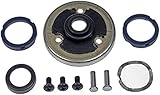
- Convenient solution - this transmission shifter repair kit allows for direct replacement of failed original shifter
- Cost-effective fix - inexpensive alternative to buying entire new shifter assembly from dealership
- Complete kit - includes cover, gasket, pins, bushing and spring for a complete repair
- Quality engineering - designed and tested in the United States
- Ensure fit - to make sure this part fits your exact vehicle, input your make, model and trim level into the garage tool
“The engine and wheels are never mechanically connected.”
They can be mechanically connected through the planetary gearset. The system is a power split: some engine output can reach the wheels through a mechanical path while another portion is converted to electricity.
“Every Toyota hybrid has an e-CVT.”
No. Hybrid MAX and i-FORCE MAX applications use conventional six-, eight-, or ten-speed automatic transmissions, depending on the vehicle.
“All Toyota e-CVTs are identical.”
No. Toyota uses the same broad operating concept across multiple generations and vehicles, but motor outputs, batteries, gear ratios, packaging, software, cooling systems, AWD hardware, and service requirements vary.
The simplest accurate explanation
Think of Toyota’s e-CVT as a power-management system built into a transaxle:
Do these 3 things before closing this tab:
1Scan for outdated or missing drivers - takes under a minute2Clear out junk files and repair common Windows errors3Fix the driver behind crashes, sound loss and screen glitches- The planetary gearset connects the engine, MG1, and the wheel-side output.
- MG1 controls the planetary relationship and converts part of engine power into electricity when needed.
- MG2 drives the wheels, adds electric torque, or recovers energy during braking.
- The battery and power-control unit balance electrical energy between the motor-generators and storage.
- The computer continuously adjusts engine operation and motor-generator speed instead of selecting conventional shift gears.
That combination produces a smooth, continuously managed ratio without a conventional CVT belt. It also explains why the same basic Toyota hybrid can start under electric power, run the engine at an efficient speed, regenerate energy while braking, reverse without a normal reverse gear, and provide electric AWD on selected models.
Frequently Asked Questions
Does Toyota’s e-CVT have a belt?
No. Toyota’s hybrid e-CVT does not use the belt or chain found in a conventional belt CVT. It uses a planetary power-split gearset and motor-generators to control the effective ratio.
Does a Toyota e-CVT have gears?
Yes. It contains planetary gears and reduction gearing, but it generally does not shift through a set of conventional forward gears during normal driving. Motor-generator speed and electrical power flow create the continuously variable behavior.
Does Toyota hybrid AWD use a mechanical driveshaft?
Many Toyota hybrid AWD models use a separate electric rear motor instead of a mechanical driveshaft. The exact arrangement depends on the model and trim, so the AWD label alone does not identify the transmission design.
Do all Toyota hybrids use an e-CVT?
No. The 2026 Crown Hybrid MAX and Grand Highlander Hybrid MAX use Direct Shift six-speed automatics. Tundra i-FORCE MAX uses a 10-speed automatic, while Land Cruiser i-FORCE MAX uses an eight-speed automatic. Similar i-FORCE MAX applications include the 4Runner, Sequoia, and Tacoma.
Does a Toyota e-CVT need maintenance?
Do not assume that no belt means no service. The transaxle still has gears, bearings, seals, electric machines, and dedicated fluid, and the vehicle has high-voltage components elsewhere. Follow the exact owner and service information for the vehicle rather than a generic CVT guide.
The Bottom Line
Toyota’s hybrid e-CVT is a planetary power-split transaxle, not a belt CVT. MG1 regulates the system and generates electricity, MG2 provides traction and regeneration, and the battery and power electronics continuously balance the power flow. In the 2026 U.S. lineup it appears in models such as Camry Hybrid, Prius, Corolla Hybrid, RAV4 Hybrid, Sienna, Highlander Hybrid, Crown Signia, and others; Hybrid MAX and i-FORCE MAX models are important exceptions because they use conventional multi-speed automatics.
Quick Recap
Product prices and availability are accurate as of the date/time indicated and are subject to change. Any price and availability information displayed on Amazon at the time of purchase will apply.