Some links on this page are affiliate links: if you buy through them we may earn a commission, at no extra cost to you.
“Lifetime” coolant is usually long-life coolant with a manufacturer-defined service interval, not fluid guaranteed to last forever. Whether it must be replaced—and when—depends on the vehicle, model year, coolant specification and cooling circuit. For example, Toyota’s 2023 RAV4 Hybrid guide schedules engine-coolant replacement at 100,000 miles or 120 months, then every 50,000 miles or 60 months. Its inverter coolant follows a different schedule. Those figures apply to that RAV4 Hybrid maintenance guide, not to every modern car.
What does “lifetime coolant” actually mean?
“Lifetime” is a marketing and maintenance term that generally describes an extended-drain formulation. Coolant still protects against freezing, boiling and corrosion through a package of chemicals that can deplete or become unsuitable over time. The vehicle maker defines what “long life” means for a particular system and sets the replacement interval in the owner’s manual or maintenance schedule.
As an Amazon Associate I earn from qualifying purchases.
Toyota’s consumer guidance explains that replacement timing varies with both the coolant type and the vehicle. A label such as “long-life” is therefore not a universal maintenance promise. The manual for the exact car remains the controlling source.
Why can modern coolant last longer than older formulations?
Coolant chemistry has changed. Extended-drain products use corrosion-inhibitor packages designed to remain effective longer than some older formulations, reducing scheduled service frequency. Toyota’s maintenance material describes its Super Long-Life Coolant and qualifying equivalents as ethylene-glycol coolants using long-life hybrid organic acid technology.
Popular on Amazon

- 5 year/150, 000 mile . Silicate-free, long-life, phosphate Hybrid Organic Acid Technology chemistry
- Formulated to replace the OEM fluid in Asian make vehicles such as Honda, Nissan, KIA, Hyundai and others requiring a blue, silicate free HOAT antifreeze/coolant
- The long life formula provides protection for all cooling system metals from rust and corrosion. The silicate free, borate free formula helps protect against harmful scale and deposits
- Meets the following OEM and industry specifications: Hyundai/KIA MS 591-08, Mitsubishi ES-64217, JIS K 2234-1994, Ford WSS-M97B55-A, ASTM 3306, ASTM D4985, Federal Specification A-A-870A
- Contains 30 – 50 ppm of denatonium benzoate as a bittering agent
That chemistry only supports the interval when the correct specification is used. Toyota warns that switching to another coolant type can change the applicable replacement timing. Mixing or substituting based only on a color or a generic “universal” claim can leave you following the wrong schedule.
How often should coolant be changed?
There is no industry-wide interval. Use the maintenance schedule for your vehicle, engine and market, and verify that the coolant in the system meets the listed specification.
What’s actually slowing this PC down?
Pick the symptom - the matching free tool is one click away.
Example: 2023 Toyota RAV4 Hybrid
| Cooling circuit | Initial replacement | Later replacements | Condition attached to the schedule |
|---|---|---|---|
| Engine coolant | 100,000 miles or 120 months | Every 50,000 miles or 60 months | Toyota Super Long-Life Coolant or a qualifying similar long-life coolant |
| Inverter coolant | 150,000 miles or 180 months | Every 50,000 miles or 60 months | The interval is specific to the RAV4 Hybrid guide and its specified coolant |
The mileage and month limits are “whichever comes first” maintenance-style limits in practical use: a low-mileage car can still reach the time limit. Do not transfer these numbers to another Toyota, another hybrid or a non-Toyota vehicle without checking its documentation.
Also popular on Amazon

- Contains Alugard Plus for compatibility with all ethylene glycol-based coolants in automobiles and light duty trucks
- Fights corrosion, scaling and rust while protecting all cooling system metals (including aluminum)
- High-quality additives protect against leaks and won’t harm gaskets, hoses, plastics or original vehicle finish
- Pre-mixed yellow formula is ready-to-use in a 50/50 ratio with deionized water to protect all modern engine components from winter freezing (-34F) and summer boiling (265F).
- Contains 30 – 50 ppm of denatonium benzoate as a bittering agent
Why do hybrids have more than one coolant schedule?
Many hybrids have separate thermal circuits. The engine loop removes heat from the combustion engine, while an inverter or power-control loop manages heat from high-voltage electronics. Different components, coolant volumes and operating conditions can produce separate service intervals. The RAV4 Hybrid example shows why a single “change the coolant” reminder can be incomplete.
When reading a hybrid maintenance chart, identify the circuit named in the line item. An engine-coolant interval does not automatically cover inverter coolant.
Which coolant should I buy?
Choose by the vehicle’s stated specification, not by a color, bottle slogan or the word “lifetime.” Toyota documentation identifies Toyota Super Long-Life Coolant or a qualifying equivalent for the cited RAV4 Hybrid applications and states that another coolant type may require a different interval.
Windows Errors? Fix Them Before They Spread
Repair common Windows errors and clear accumulated junk for a smoother, more stable PC - no reinstall needed.Free scan · no reinstallOutdated Drivers Are Slowing You Down
One free scan finds every outdated or missing driver and matches the right update for your exact hardware.Free scan · exact hardware matchAlso popular on Amazon
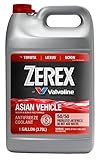
- Formulated to replace the OEM fluid in Asian make vehicles such as Toyota , Lexus , Scion and others requiring a red, silicate free HOAT antifreeze/coolant
- 5 year/150, 000 mile . Silicate-free, long-life, phosphate Hybrid Organic Acid Technology chemistry
- The long life formula provides protection for all cooling system metals from rust and corrosion. The silicate free, borate free formula helps protect against harmful scale and deposits
- Meets the following OEM and industry specifications: JIS K 2234-1994, Hyundai/KIA MS 591-08, Mitsubishi ES-64217, Ford WSS-M97B55-A, ASTM 3306, ASTM D4985, Federal Specification A-A-870A
- Note: Please check the vehicle specification before purchasing the item.
The 2024 RAV4 Hybrid owner manual also illustrates why market matters: its premix proportions differ by country. The U.S. specification is 50% coolant and 50% deionized water; the Canadian specification is 55% coolant and 45% deionized water. Those figures describe the specified premix for those vehicles and markets, not a general home-mixing recipe. Follow the manual supplied with your car.
How can I find the correct replacement interval?
- Identify the exact vehicle. Record model year, model, engine or hybrid powertrain and market (for example, U.S. or Canada).
- Open the correct maintenance schedule. Use the owner’s manual or the manufacturer’s maintenance guide for that exact configuration, rather than a generic chart.
- Separate cooling circuits. On a hybrid, look for distinct engine, inverter or power-control coolant entries.
- Read the coolant requirement. Note the named specification or chemistry and whether the schedule assumes the manufacturer’s long-life product or a qualifying equivalent.
- Check both limits. Record the mileage and time interval and plan service at whichever limit is reached first.
- Escalate uncertainty. If records are missing or the coolant specification cannot be identified, have a qualified service provider verify the application instead of guessing.
What if the coolant level keeps dropping?
A falling level is not proof that the coolant has reached its scheduled replacement date. It can indicate a leak or another cooling-system problem, and the sources for these maintenance intervals do not establish a diagnosis from that symptom alone. Check the applicable manual and seek qualified service help, particularly if the vehicle overheats or displays a temperature warning.
Independent reader supportYour contribution helps us test, update, and keep practical guides available for everyone.Can I extend the interval because the coolant still looks clean?
Appearance is not a substitute for the manufacturer’s schedule or specification. A fluid can look acceptable while its corrosion protection or concentration is no longer appropriate, and a different formulation can invalidate the interval on which the schedule was based. Use documented maintenance history and the vehicle-specific instructions rather than visual judgment.
Also popular on Amazon

- Unsurpassed freeze protection and anti-boil performance outperforms industry standards
- Organic Acid Technology resists corrosion, scale and rust while protecting all cooling system metals (including aluminum)
- High-quality additives protect against leaks and won’t harm gaskets, hoses, plastics or original vehicle finish
- Pre-mixed orange formula is ready-to-use in a 50/50 ratio with deionized water to protect all modern engine components from winter freezing (-34F) and summer boiling (265F).
- 5 year/150,000 mile guarantee protects against engine failure caused by freeze-ups or boil-overs
What does “lifetime” mean when a car is sold?
Manufacturers generally use the term in relation to the expected service plan for the vehicle, not a promise that the original fill will never be disturbed. A vehicle may still require replacement at a long mileage or time limit, and repairs that open a cooling circuit can require correct refilling or bleeding. For a used car, request service records and confirm the schedule in the current manual.
Frequently Asked Questions
Does “lifetime” coolant mean I never need a coolant flush?
No. “Lifetime” normally indicates a long service interval defined for a particular vehicle and coolant specification. The owner’s manual can still call for replacement at a mileage or time limit, or after cooling-system work.
Is coolant color enough to identify the right replacement fluid?
No. Color is not a reliable specification identifier across manufacturers and formulations. Match the product to the exact chemistry or approval listed in your vehicle documentation.
Do electric vehicles use the same coolant schedule as hybrids?
Not necessarily. Electric and hybrid vehicles can have different thermal circuits and component requirements, so an electric vehicle’s schedule must be checked separately rather than inferred from a hybrid example.
What should I do if I cannot prove which coolant is already in my car?
Do not assume that a generic long-life product is compatible. Give the vehicle identification and any service records to a qualified technician, who can follow the manufacturer’s specification and determine the appropriate service plan.
Recommended Free Tools




