Some links on this page are affiliate links: if you buy through them we may earn a commission, at no extra cost to you.
Hypoid differential oil is not interchangeable with engine oil or most manual-transmission fluids. A hypoid ring-and-pinion set offsets the pinion below the ring gear, creating unusually high sliding contact as torque passes through the teeth. The combination of sliding, shock loading and concentrated pressure requires a gear lubricant with extreme-pressure (EP) chemistry, the correct axle viscosity and, where specified, limited-slip friction control.
Engine oils are formulated for combustion by-products, bearings and valvetrains. Synchromesh manual transmissions generally need a different friction balance, commonly represented by API GL-4. Hypoid axles commonly call for API GL-5, but GL-5 is not a universal approval: the vehicle or axle maker’s specification, SAE viscosity grade and limited-slip requirement control.
As an Amazon Associate I earn from qualifying purchases.
What makes a hypoid differential so demanding?
In a hypoid gearset, the ring gear and pinion axes do not intersect. That offset improves packaging and can lower a vehicle’s floor, but it also makes the tooth surfaces slide substantially while they roll. The teeth must transmit high torque, often under impact loads during acceleration, towing or wheel shock.
SAE J2360 (revised 2025) describes hypoid service as high-speed/shock-load and low-speed/high-torque operation with substantial sliding. Its guidance explains that these applications typically require EP additives “to prevent the adhesion and subsequent tearing away of material from the loaded gear flanks.”
Popular on Amazon

- SATISFIES REQUIREMENTS - for gear oil viscosity of SAE 75W80, 75W, 80W and 85W, as well as SAE 30 and SAE 10W30 motor oil
- APPLICATIONS - include differential oil, final drive oil, gear oil and transfer case fluid, this product is not designed for use in most manual transmissions or transaxles with synchronizers, as extreme slipperiness may cause shifting problems
- CONTAINS - additional friction modifiers for suitability with clutch-type limited slip differentials - for most LSDs, no additional friction modifiers are required, known formerly as LightWeight Gear Oil
- POPULAR GEAR OIL FOR - in many late model BMW, Dodge, Ford, GM, Jeep, Lexus, Mercedes-Benz, Ram, Toyota, also popular in many Formula racing transaxles, including Hewland LD-200 and FTR sequential
- WHY RED LINE - Established in 1979, Red Line Products perform & protect better than any on the market. No compromises
What EP additives do
Under severe pressure and temperature, sulfur-phosphorus EP agents react at the contact zone to form protective films. Those films reduce metal-to-metal welding, scuffing and tearing of the loaded tooth surfaces. Toyota describes the same purpose as adding “sulphur-phosphorus-based extreme pressure agents” to withstand impact loads at high sliding speeds.
A complete axle lubricant also needs antiwear protection, rust and corrosion control, oxidation stability and foam control. The exact chemistry and concentration vary by formulation; there is no universal sulfur or phosphorus percentage that makes a product suitable.
Outdated Drivers Are Slowing You Down
One free scan finds every outdated or missing driver and matches the right update for your exact hardware.Free scan · exact hardware matchPC Slower Than It Used to Be?
A free scan shows the junk files, broken settings and background clutter dragging Windows down - then fixes them in one click.Free scan · Windows 10 & 11Why can’t engine oil be used in a differential?
Engine oil and hypoid gear oil are designed around different contamination and load environments. Engine oil must keep soot, acids and other combustion contaminants suspended while protecting bearings, pistons and valve-train parts. Nulon describes detergents and dispersants for that job and uses engine-service classifications such as API SM or CF.
Differential oil instead is selected by gear-lubricant categories such as API GL-5 and by an axle’s viscosity requirement. It must maintain a durable EP film on sliding gear teeth rather than manage combustion contamination. Similar-looking viscosity numbers do not change those additive and performance differences.
Also popular on Amazon
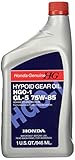
- genuine oem factory part
- exact fit
- durable
- best in quality
- this is not an aftermarket part
Using engine oil can therefore leave the ring-and-pinion contact without the required severe-service protection. It may also introduce an additive balance that was never validated for axle seals, bearings and gear metallurgy. If a differential has been filled with the wrong fluid, drain it and refill it with the exact specified product rather than trying to correct the mixture with an additive.
Is GL-5 the same as manual-transmission oil?
No. GL-4 and GL-5 identify different gear-lubricant service categories, and the equipment maker’s approval matters more than the word “transmission” on a bottle.
The Tool Desk
Outbyte PC Repair FREEClear out junk files and repair common Windows errorsFree Scan →Outbyte Driver Updater FREEScan for outdated or missing drivers - takes under a minuteDriver Scan →| Fluid | Designed environment | Key chemistry or friction target | Typical use |
|---|---|---|---|
| Hypoid gear oil, commonly API GL-5 | High torque, shock load and high sliding contact | EP, antiwear, rust/corrosion and foam control | Ring-and-pinion differentials and final drives |
| Manual-transmission oil, commonly API GL-4 | Synchronizer-equipped gearboxes | Low, controlled friction and material compatibility | Synchromesh manual transmissions |
| Engine oil | Combustion contamination, bearings, pistons and valvetrain | Detergents, dispersants and engine-service performance ratings | Internal-combustion engines |
| Limited-slip differential oil | Hypoid gears plus clutch-pack operation | GL-5 EP protection with a specified friction modifier | Limited-slip axles when required by the manufacturer |
Toyota specifies low dynamic friction for synchronizer mechanisms, while differentials require high EP resistance. Castrol warns that GL-5 may be unsuitable for synchromesh transmissions because its EP chemistry can attack yellow-metal synchronizer components. A GL-5 label therefore does not authorize use in a manual gearbox.
What oil does a hypoid differential take?
Use the exact axle or vehicle specification: API GL category or OEM approval, SAE viscosity grade and any limited-slip designation. SAE 80W-90 GL-5 is a common hypoid application, and John Deere lists 80W-90 among GL-5 grades for specified equipment. That does not make 80W-90 universal; temperature range, axle design and the manufacturer’s approval still govern.
Also popular on Amazon

- Edwards Bundle contain: 6 bottles of Honda Shaft Drive Hypoid Gear Oil SAE 80W90
- Edwards Funnel and Shop Rag
How to choose the fluid
- Identify the axle. Record the vehicle, model year, drivetrain and, if relevant, the axle code.
- Read the owner or service manual. Note the required API category or proprietary approval, SAE grade, fill quantity and change interval.
- Check for limited slip. A clutch-type limited-slip axle may require a GL-5 LS product or a separately approved friction modifier. An open differential does not automatically need LS oil.
- Verify the bottle’s claims. Confirm the exact grade and application approval; do not rely on “gear oil” or “transmission oil” alone.
- Use the specified fill level. Overfilling can aerate oil and raise temperature, while underfilling deprives bearings and the upper tooth contact of lubricant.
Do limited-slip differentials need special gear oil?
Often, yes. A clutch-type limited-slip unit needs the gears protected under GL-5 conditions while its clutch packs achieve the specified static and dynamic friction balance. Too much friction can cause chatter or binding; too little can reduce locking action.
Toyota describes this separate friction requirement, and John Deere lists GL-5 LS products for wet multi-disc limited-slip differentials. Use an LS-labeled fluid only when the axle documentation calls for it, and do not assume every “limited-slip compatible” claim covers every clutch material or preload.
Quick wins for a faster PC:
Scan for outdated or missing drivers - takes under a minuteDriver Scan →Clear out junk files and repair common Windows errorsFree Scan →Can different lubricant types be mixed?
Mixing is best avoided. John Deere cautions that even small amounts of another lubricant can create antagonistic reactions between additive chemicals and reduce gear protection. Mixing engine oil, GL-4 fluid, GL-5 oil or an unapproved friction modifier can also change viscosity and synchronizer or clutch behavior.
If an emergency top-up is unavoidable, treat it as temporary: obtain the correct lubricant promptly, inspect for leaks, and replace the complete fill according to the service procedure. The correct quantity and interval cannot be stated without the specific axle.
Also popular on Amazon

- SATISFIES REQUIREMENTS - for gear oil viscosity of SAE 75W80, 75W, 80W and 85W, as well as SAE 30 and SAE 10W30 motor oil
- APPLICATIONS - include differential oil, final drive oil, gear oil and transfer case fluid, this product is not designed for use in most manual transmissions or transaxles with synchronizers, as extreme slipperiness may cause shifting problems
- CONTAINS - additional friction modifiers for suitability with clutch-type limited slip differentials - for most LSDs, no additional friction modifiers are required, known formerly as LightWeight Gear Oil
- POPULAR GEAR OIL FOR - in many late model BMW, Dodge, Ford, GM, Jeep, Lexus, Mercedes-Benz, Ram, Toyota, also popular in many Formula racing transaxles, including Hewland LD-200 and FTR sequential
- WHY RED LINE - Established in 1979, Red Line Products perform & protect better than any on the market. No compromises
What does “80W-90” actually tell you?
80W-90 is an SAE viscosity grade, not a complete suitability statement. It describes how the oil flows across standardized temperature conditions; it does not prove API GL-5 performance, an OEM approval or limited-slip compatibility. Two 80W-90 products can have different additive systems and application approvals.
Choose “80W-90 API GL-5” only when that is what the axle maker specifies. A separate 80W-90 GL-5 LS product belongs in the axle only when a confirmed limited-slip requirement exists.
Free tools Windows power users keep installed
One-click scans. No signup required.
What problems indicate the wrong differential oil?
- Whine, rumble or growling that changes after a fluid service can indicate incorrect viscosity, level or gear damage; diagnose the axle rather than masking noise with additives.
- Clutch-type limited-slip chatter during tight turns can indicate an incorrect friction characteristic or missing approved modifier.
- Scuffed, pitted or discolored tooth surfaces found during inspection can reflect inadequate EP protection, contamination, overheating or an incorrect fill.
- Foamy oil, leaks or metallic debris require finding the mechanical or sealing cause; changing brands alone is not a repair.
There is no reliable universal percentage for wear reduction or service-life extension. The defensible basis for selecting hypoid oil is the applicable SAE guidance, API category and OEM instruction.
Frequently Asked Questions
Can I use engine oil in my differential for a short trip?
It is not a normal substitute, even temporarily, because engine oil is not selected for hypoid tooth sliding and shock-load EP performance. Arrange the correct GL-rated axle oil instead; if the wrong oil was installed, replace the fill rather than adding an improvised treatment.
Also popular on Amazon
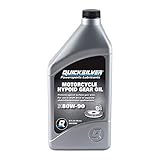
- Used in shaft drive or separate clutch transmissions for optimum performance and gear longevity
- Provides maximum gear protection against wear, corrosion, and oxidation all while maintaining optimum performance
- Meets or exceeds API GL-5 / MT-1 & SAE J236
- For use in shaft drive or separate clutch transmission applications
What happens if I put GL-5 in a manual transmission?
Some synchromesh units can suffer poor engagement or yellow-metal corrosion because their synchronizers need a different friction and material-compatibility balance. Drain it and use the manual’s specified GL-4 or OEM-approved fluid.
How do I know whether my differential is limited slip?
Check the axle identification, build sheet or service manual; exterior badges are not definitive. The manual should state whether clutch packs are fitted and whether an LS lubricant or additive is required.
Is synthetic gear oil always better for a hypoid axle?
Synthetic base oil does not override the required API category, SAE grade or OEM approval. Select by the specification first, then consider synthetic or conventional construction if both are approved for the axle.




