Some links on this page are affiliate links: if you buy through them we may earn a commission, at no extra cost to you.
“2-stroke” and “2-cylinder” describe different parts of an engine. A two-stroke engine completes its operating cycle in two piston strokes—one crankshaft revolution. A two-cylinder engine has two working cylinders, regardless of whether each cylinder uses a two-stroke or four-stroke cycle. An engine can therefore be both two-stroke and two-cylinder, or two-cylinder and four-stroke. The distinction matters because cycle type affects lubrication, fuel, emissions and power delivery, while cylinder count mainly describes layout, smoothness and total displacement.
What does “2-stroke” mean?
A two-stroke cycle completes its sequence in two successive piston strokes and one crankshaft revolution. The upward stroke generally compresses the fresh charge while the downward stroke combines expansion (the power event) with exhaust and scavenging. Intake, compression, combustion, expansion and exhaust therefore overlap instead of occupying four separate strokes.
As an Amazon Associate I earn from qualifying purchases.
The Tool Desk
Outbyte Driver Updater FREEScan for outdated or missing drivers - takes under a minuteDriver Scan →Outbyte PC Repair FREERepair Windows errors before they cause bigger problemsFix Now →Because a power event can occur every crankshaft revolution, a two-stroke can produce substantial power for its size and weight. In common small engines, ports in the cylinder wall control gas flow, and the crankcase often helps pump the incoming charge. Fresh air or mixture entering the cylinder pushes burned gases out, a process called scavenging.
How is a four-stroke different?
A four-stroke cycle spreads intake, compression, power and exhaust over four piston strokes and two crankshaft revolutions. Each cylinder produces a power event once every two revolutions. This arrangement gives the engine more time to control gas exchange and combustion, generally improving efficiency and reducing unburned-hydrocarbon emissions, although the engine may be heavier for a given output.
Popular on Amazon

- ✅【FOUR-STROKE TWIN-CYLINDER ENGINE KIT】The OTTO MOTOR FS-L200AC features an inline two-cylinder configuration with an SOHC valve system and four-stroke operation. This functional miniature engine kit offers a hands-on mechanical assembly experience
- ✅【ELECTRIC STARTING & IGNITION SYSTEM】Designed for electric starting, this model engine features a high-torque starter motor and includes an ignition power module with an F-type four-stroke glow plug. Operates with a 7.4V 2S Li battery (not included)
- ✅【ENGINE KIT WITH ESSENTIAL COMPONENTS】Includes one engine model kit, ignition power module, F-type glow plug, fuel tank, oil pipe, and instructions. The engine and ignition components form the core of the set, with supporting accessories for assembly and setup
- ✅【CNC-MACHINED METAL CONSTRUCTION】Built with CNC-machined aluminum components, this 535g miniature engine features dual synchronous belt pulleys, a short rocker arm, and an adjustable carburetor. Its compact 11.2 × 9 × 9.2cm design showcases detailed mechanical construction
- ✅【DIY ASSEMBLY & MECHANICAL LEARNING】Designed for hobbyists ages 15 and up, this functional model engine offers hands-on exploration of four-stroke mechanics. Suitable for mechanical demonstrations, educational projects, and display
What does “2-cylinder” mean?
“Two-cylinder” refers only to architecture: the engine contains two cylinders that each house a piston. It does not specify the stroke cycle, fuel system or lubrication method. Two cylinders may be arranged in parallel, a V configuration, a boxer layout or another design, and they may operate on either two-stroke or four-stroke cycles.
Two cylinders can provide more total displacement and smoother torque than a comparable single-cylinder engine, but cylinder count alone does not establish power, fuel economy or emissions. Those outcomes also depend on displacement, tuning, speed, cooling and load.
Outdated Drivers Are Slowing You Down
One free scan finds every outdated or missing driver and matches the right update for your exact hardware.Free scan · exact hardware matchPC Slower Than It Used to Be?
A free scan shows the junk files, broken settings and background clutter dragging Windows down - then fixes them in one click.Free scan · Windows 10 & 11Can an engine be both 2-stroke and 2-cylinder?
Yes. A two-cylinder two-stroke has two cylinders, with each cylinder completing a two-stroke cycle. A two-cylinder four-stroke is equally possible and is common in motorcycles, utility engines and other applications. Saying “two-stroke” answers how the cycle works; saying “two-cylinder” answers how many cylinders work.
Also popular on Amazon
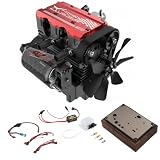
- 🛠️【Hands-On Mechanical Assembly】Assemble the TOYAN FS-L200GC from individual engine components and examine the structure of a miniature four-stroke gasoline motor. The KIT format offers an engaging building project for experienced hobbyists.
- 🔩【Detailed Engine Architecture】The 7.0cc inline twin-cylinder engine features an SOHC valve mechanism, 16.6 mm cylinder bore and 17.0 mm stroke. CNC-machined metal parts highlight the compact mechanical structure and detailed engine layout.
- ⚙️【Visible Mechanical Movement】When properly assembled and operated, the timing belt, crankshaft and cooling fan move together. These coordinated parts help demonstrate engine timing, rotational motion and the principles of four-stroke operation.
- 🔥【Gasoline Engine Specifications】Designed for the specified 92 or 95 grade gasoline, the engine has a rated speed range of 4,000–16,000 RPM and output of 0.6 PS. Proper lubrication, fuel delivery and compatible ignition equipment are required.
- 📦【KIT Version with Basic Tools】Includes engine components, a basic assembly tool kit, an instruction manual, fuel tank, fuel lines, ignition accessories, mounting base, and starting power supply, providing a complete set of essential components for engine assembly, installation, and operation.
| Term | What it counts or describes | What it does not tell you |
|---|---|---|
| Two-stroke | Two piston strokes and one crankshaft revolution per cycle | Number of cylinders, displacement or engine layout |
| Four-stroke | Four piston strokes and two crankshaft revolutions per cycle | Number of cylinders or total power |
| Two-cylinder | Two working cylinders | Whether the engine is two-stroke or four-stroke |
Do two-stroke engines need mixed gas?
Many small gasoline two-strokes use lubricant mixed with the fuel, while others use a separate oil-injection system. The required oil type and fuel-to-oil ratio are engine-specific; use the equipment manual rather than a generic ratio. Yamaha describes two-stroke fuel as containing a small amount of oil, and MTD uses “two-cycle” and “two-stroke” interchangeably for equipment that uses an oil-and-gasoline mixture.
What happens if the mixture is wrong?
- Too little oil: inadequate lubrication can cause overheating, scuffing or seizure.
- Too much oil: excess smoke, fouled spark plugs and poor running are likely.
- Wrong oil: an oil intended for another application may not mix or burn correctly.
- Oil-injection model: adding oil to fuel when the system already meters oil can create an over-rich mixture.
Never assume that a two-cylinder engine needs premix. A two-cylinder four-stroke normally keeps engine oil in a crankcase and uses gasoline without adding two-stroke oil, but its manufacturer’s instructions control.
Why do manufacturers still use two-strokes?
Two-strokes can deliver high power-to-weight because they produce a power event every revolution and use fewer valve-train components. Their compactness suits chainsaws, lightweight hand-carried lawn and garden tools, motorcycles and some outboard motors. The National Academies identifies chainsaws and outboards among common uses; LSU AgCenter reports that most small hand-carried lawn and garden tools use two-strokes, while larger equipment commonly uses four-strokes.
What’s actually slowing this PC down?
Pick the symptom - the matching free tool is one click away.
Also popular on Amazon

- 1. You can choose to only purchase starter kits , or only FS-L200AC Engine , or choose to purchase engine kits . If you only purchase Starter Kits, you will end up with only accessories.
- 2. Due to factors such as the environment, lighting, and the color tone of the product during shooting, there is a slight color difference between the image and the actual product. We hope you can understand. Thank you!
The trade-off is difficult gas exchange. Some fresh charge can escape with the exhaust, and incomplete scavenging can raise unburned-hydrocarbon emissions. EPA guidance says four-strokes tend to be slightly more efficient and usually emit fewer pollutants, especially unburned hydrocarbons. Yamaha also notes better fuel economy and less exhaust smoke from four-strokes. Low-speed operation, cooling and lubrication can be challenging in two-stroke designs, as Kubota explains.
Which is better: 2-stroke or 2-cylinder?
That comparison is not technically like-for-like. One option describes cycle type and the other describes cylinder count, so neither is inherently “better.” Compare complete engine specifications and the job the engine must perform.
Use these comparison points
- Cycle type: two-stroke or four-stroke.
- Cylinder count and arrangement.
- Displacement, rated power and torque curve.
- Total engine and equipment weight.
- Fuel system, oil-injection or premix requirements.
- Fuel economy, exhaust smoke and applicable emissions certification.
- Noise, vibration, cooling and maintenance access.
- Duty cycle, operating speed and manufacturer’s intended application.
A two-cylinder two-stroke and a two-cylinder four-stroke may therefore differ substantially in power delivery, fuel handling, maintenance and emissions even though both have two cylinders.
Also popular on Amazon
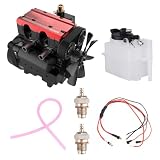
- High Simulation 2-Cylinder 4-Stroke Design: This mini engine model kit features a highly realistic appearance, meticulously crafted using aluminum CNC processing and oxidation coloring. The compact structure and lightweight body, combined with red sport elements, make it look like a real engine.
- Dual Synchronous Belt Pulley & Enhanced Valve Functionality: The dual synchronous belt pulley timing structure significantly reduces the risk of gear jumping during high-speed operation. The short rocker arm design ensures more accurate valve switch operations, enhancing overall performance.
- DIY Assembly Fun: Enjoy the process of assembling this desktop engine model while learning about its internal structure and mechanical operation principles. It's a perfect blend of education and entertainment, making it an ideal project for enthusiasts.
- Advanced Carburetor & Convenient Electrical Starting: Equipped with a brand-new signal carburetor, this engine model offers easier adjustment and more sensitive throttle response. Power up with ease using the high-torque 480 brush DC motor ensures a smooth and convenient start every time.
- Wide Applications & Compatibility: This mini engine kit is compatible with a gearbox, making it a versatile mechanical art piece. It's an excellent gift for mechanical engine enthusiasts and a superb teaching aid for physical and mechanical classes.
How can you identify which engine you have?
- Read the model plate and owner’s manual for “two-stroke,” “two-cycle,” “four-stroke” or “four-cycle.”
- Look for explicit fuel instructions: premix or a dedicated two-stroke oil reservoir indicates a two-stroke design.
- Check whether the engine has a crankcase oil sump and an oil-change schedule, features normally associated with four-strokes.
- Count the spark plugs, cylinders or exhaust outlets only to establish cylinder count; those clues do not establish the cycle by themselves.
- If labels conflict, stop and confirm the exact model with the manufacturer before fueling. Incorrect lubrication can damage the engine.
What are the common misconceptions?
- “Two-cylinder means two-stroke.” False: cylinder count and cycle count are independent.
- “Two-strokes always have two cylinders.” False: many are single-cylinder; others have two or more.
- “More cylinders automatically means more power.” False: displacement, tuning and operating conditions determine output.
- “One fuel ratio works for every two-stroke.” False: oil grade, injection design and the manufacturer’s specification vary.
What evidence supports the broad trade-offs?
ISO terminology separates the two-stroke cycle definition from single- and multi-cylinder arrangements. EPA explains the one-revolution cycle and the tendency toward higher emissions from two-strokes. National Academies, Yamaha, MTD, Kubota and LSU AgCenter describe the fuel, lubrication, application and operating trade-offs. No universal fuel-economy or emissions percentage applies: results vary with displacement, tuning, load, speed, fuel system and regulatory configuration.
Frequently Asked Questions
Is a 2-cylinder engine smoother than a single-cylinder engine?
Usually, two cylinders can spread firing events and reduce the large torque pulses of a single-cylinder engine. Smoothness still depends on crankshaft layout, firing order, balance shafts, mounting and engine speed.
Are two-stroke engines legal for every vehicle or tool?
Legality depends on the application, location and emissions rules. Road-vehicle and marine requirements can differ from those for portable equipment, so check the engine’s certification and local regulations.
Also popular on Amazon

- ✅【FOUR-STROKE TWIN-CYLINDER ENGINE KIT】The OTTO MOTOR FS-L200AC features an inline two-cylinder configuration with an SOHC valve system and four-stroke operation. This functional miniature engine kit offers a hands-on mechanical assembly experience
- ✅【ELECTRIC STARTING & IGNITION SYSTEM】Designed for electric starting, this model engine features a high-torque starter motor and includes an ignition power module with an F-type four-stroke glow plug. Operates with a 7.4V 2S Li battery (not included)
- ✅【ENGINE KIT WITH ESSENTIAL COMPONENTS】Includes one engine model kit, ignition power module, F-type glow plug, fuel tank, oil pipe, and instructions. The engine and ignition components form the core of the set, with supporting accessories for assembly and setup
- ✅【CNC-MACHINED METAL CONSTRUCTION】Built with CNC-machined aluminum components, this 535g miniature engine features dual synchronous belt pulleys, a short rocker arm, and an adjustable carburetor. Its compact 11.2 × 9 × 9.2cm design showcases detailed mechanical construction
- ✅【DIY ASSEMBLY & MECHANICAL LEARNING】Designed for hobbyists ages 15 and up, this functional model engine offers hands-on exploration of four-stroke mechanics. Suitable for mechanical demonstrations, educational projects, and display
Can I convert a four-stroke engine to run as a two-stroke?
No practical bolt-on conversion changes the cycle; ports, crankcase, lubrication, timing and gas-exchange hardware are fundamentally different. Replacement with an engine designed and certified for the application is the normal solution.
Why does a two-stroke sometimes smoke more after storage?
Oil can collect in the crankcase or exhaust, and a rich mixture or oil-injection issue can increase visible smoke on restart. Follow the storage and starting procedure for that model and investigate persistent smoke rather than changing the fuel ratio at random.
Free tools Windows power users keep installed
One-click scans. No signup required.




