Do these 3 things before closing this tab:
1Fix the driver behind crashes, sound loss and screen glitches2Clear out junk files and repair common Windows errors3Scan for outdated or missing drivers - takes under a minuteSome links on this page are affiliate links: if you buy through them we may earn a commission, at no extra cost to you.
If the seller will not sign over the title, do not sign for them, alter the document, or assume a bill of sale solves the problem. Keep every record of the sale, then contact the motor-vehicle agency in the state where you must title the vehicle and ask for its exact process for a missing, refused, defective, or lien-encumbered title. Some states offer an administrative no-title or bonded-title route; others may require a court order. The correct remedy depends on your state, the vehicle, the name on the title, and the transaction facts.
Why the seller’s signature usually matters
A vehicle title is an ownership record, not merely a receipt. In a normal private sale, the seller named on the ownership document completes the assignment to the buyer, records the buyer’s information, and signs the transfer section. New York’s instructions expressly require the seller whose name appears on the proof of ownership to record the buyer and sign. Delaware’s described title process also requires the seller’s signature.


As an Amazon Associate I earn from qualifying purchases.
Free tools Windows power users keep installed
One-click scans. No signup required.
You generally cannot create the missing signature or replace the seller’s assignment with your own paperwork. If the person who sold the vehicle is not the person named on the title, the problem is an ownership-chain issue rather than a simple signature dispute. Tell the agency exactly what happened before paying for a bond, inspection, replacement title, or lawsuit.
Step 1: Stop and preserve evidence
Before making another trip to the seller or DMV, assemble a complete file. Keep the originals in a safe place and make readable copies or scans.
Popular on Amazon

- Bill of sale forms
- Safely and legally transfers ownership
- Suitable for transferring ownership of a car motorcycle, boat, furniture or other property
- Step by step instructions
- 8.5 x 11 inch package size
- Bill of sale, purchase contract, or written agreement.
- Proof of payment, such as a receipt, bank record, money-transfer confirmation, or cancelled check.
- Text messages, emails, letters, marketplace messages, and call records concerning the vehicle or title.
- The advertisement, listing, photographs, and any statement about clear title, liens, mileage, or ownership.
- Every title, registration, temporary permit, inspection document, and photocopy you received.
- The vehicle identification number (VIN), license-plate number, make, model, year, and odometer information.
- The seller’s name, address, telephone number, email address, and any identification details available to you.
Oregon DMV specifically recommends retaining the seller’s contact and identification information. A thorough file helps the agency distinguish a cooperative seller who lost a document from a seller who was never entitled to sell the vehicle.
Step 2: Ask the correct vehicle agency for a transaction-specific remedy
Contact the DMV, department of motor vehicles, secretary of state, county tag office, or equivalent agency where the vehicle must be titled. Do not rely only on the agency in the state where you met the seller; titling rules are controlled by the jurisdiction handling your application.
Explain the facts in one sentence: “I bought this vehicle on [date], the seller will not complete the title assignment,” or “The seller never delivered the title,” followed by any ownership or lien complication. Ask the agency to identify the exact form, evidence, inspection, fee, bond, and deadline that apply.
Questions to ask the agency
- Can I apply when the seller refuses to sign, or only when the title was lost or unavailable?
- What proof of purchase and payment will you accept?
- Must the vehicle be inspected, appraised, or physically verified?
- Is a surety bond or cash deposit available, and how is its amount calculated?
- What happens if the title lists a different owner or an unreleased lien?
- Can the agency contact the titled owner, and is a certified demand or notice required?
- What is the filing deadline after the purchase?
- May I register, insure, or legally operate the vehicle while the application is pending?
- If the agency cannot complete the transfer, what court order or self-help procedure does it recognize?
Ask for the name of the office or unit handling unusual title cases and write down the date, representative, instructions, and document list. Requirements vary substantially by state and by vehicle type.
Also popular on Amazon

- Essential Vehicle Purchase Agreement Forms for Auto Sales:Designed for car dealerships and private sales these 2 part carbonless forms clearly document vehicle purchase details with white and yellow copies for buyer and seller.Additional terms and conditions are printed on the back
- 2 Part Carbonless Copy Book with White and Yellow Duplicate Sheets:Each book includes 100 sets 200 sheets total with a white original and yellow duplicate copy allowing both buyer and seller to retain a professional printed copy of the sale agreement without the need for carbon paper or scanning
- Easy to Use Tear Off Design with Built In Backing Board:Featuring a clean perforated tear line at the top for easy sheet removal and a firm chipboard backing for stable writing this design ensures efficiency and ease of use even in mobile or outdoor environments such as car lots or private meetings
- Professional Single Color Blue Printing on Both Sides of Each Sheet:All forms are printed front and back in clear blue ink Ideal for car dealerships vehicle sellers and private auto transactions to record buyer seller details and vehicle purchase agreements
- Standard Letter Size 8.5 x 11 Inches:Sized for convenience and compatibility these forms match standard letter dimensions making them easy to file scan and store
Step 3: Confirm the titled owner and look for a lien
Compare the seller’s identity with the name printed on the title. A mismatch can mean the seller was an intermediary, an heir, a dealer, or someone who never obtained title. Do not assume a signed bill of sale from that person gives you a complete ownership chain; ask the agency what additional assignment or court documentation it accepts.
Check whether a lienholder is listed. A lender, finance company, or other lienholder may still have a legal claim even after you paid the seller. Minnesota warns that an unpaid lien can expose a buyer to collection efforts or repossession. Contact the lienholder through its documented payoff and release process, and give the DMV any official lien-release document it requires.
PC Slower Than It Used to Be?
A free scan shows the junk files, broken settings and background clutter dragging Windows down - then fixes them in one click.Free scan · Windows 10 & 11Crashes, No Sound, or Screen Glitches?
Random freezes, missing sound and display glitches usually trace back to one bad driver. Find and replace yours safely.Free scan · under a minuteIf the seller says the loan was paid, request proof that the lienholder released it in the form your state accepts. A seller’s verbal assurance is not the same as an agency-recorded release.
Step 4: Find out whether your state has a no-title or bonded-title procedure
Some jurisdictions let an eligible buyer seek title without a completed seller assignment. The names differ: no-proof-of-ownership, bonded title, surety bond, indemnity bond, or a cash deposit. Eligibility may depend on how you acquired the vehicle, the age and value of the vehicle, whether a lien exists, and whether the agency can identify the last titled owner.
Also popular on Amazon
Alaska example: a specific bond formula
Alaska describes a process for an eligible purchaser who did not receive a title: a three-year non-cancelable surety bond or a cash deposit equal to 1.5 times the vehicle’s appraised value. That is an Alaska rule, not a national standard. You must confirm whether your state offers anything similar and how it calculates value, term, cancellation, and premium.
Do not purchase a bond first and hope it will be accepted. Obtain written or clearly documented instructions from the titling agency about eligibility, the required appraisal, the bond wording, and where the bond must be filed.
Step 5: Consider a court order only after checking administrative options
If the title cannot be transferred through the certificate-of-title process or an available agency alternative, ask whether your state allows a court-ordered transfer. Minnesota Judicial Branch guidance states: “If the transfer of title cannot be completed using the Certificate of Title document, the buyer or the seller may ask for a court order to transfer the title.” Minnesota also directs people to try applicable Department of Vehicle Services procedures in relevant cases.
A court filing is not an automatic shortcut. It takes time, effort, and money, and you must prove the transaction and identify anyone whose legal interest could be affected. Gather your contract, payment evidence, communications, VIN information, title copies, lien information, and evidence of your attempts to resolve the matter. Ask a state court self-help center or qualified attorney which court has jurisdiction, whom you must serve, and whether a judgment will be accepted by the DMV.
Also popular on Amazon
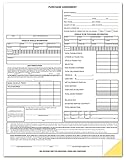
- 8.5" x 11" standard letter size
- 2-part, edge glued, carbonless - White, Canary
- Printed in black ink - front and back
- Additional terms and conditions are printed on the back
- Packaged 100 per pack
Do not file merely because the seller is inconvenient to reach if the agency has a simpler correction, replacement, or bonded procedure. Conversely, if the seller is deliberately withholding the title and no administrative route is available, ask promptly about court deadlines; waiting can make witnesses, records, and the vehicle’s condition harder to document.
Step 6: Use dealer and regulator channels when a dealer was involved
If you bought through a licensed dealer, return to the dealer in writing with a copy of the contract and a clear request for the title or a lawful resolution. If the dealer closed, refuses to respond, or delivered a title problem, ask the DMV whether it has a dealer complaint process or dealer unit. Minnesota identifies its Dealer Unit as a contact in a closed-dealership title situation.
The Tool Desk
Outbyte Driver Updater FREEFix the driver behind crashes, sound loss and screen glitchesFind Drivers →Outbyte PC Repair FREERepair Windows errors before they cause bigger problemsFix Now →Keep the dealer issue separate from any private-party dispute. The agency may require different forms, notices, or evidence for a dealer transaction.
Is a bill of sale enough when the seller refuses?
Usually, a bill of sale is evidence of the transaction, not a universal replacement for a required certificate of title. Indiana says a bill of sale cannot transfer ownership when state law requires a certificate of title, subject to its listed exceptions. New York says a bill of sale alone is not acceptable proof without a title or transferable registration.
Also popular on Amazon
Submit the bill of sale because it can establish the purchase date, price, vehicle description, and seller identity. Ask the agency how it can be used in the specific no-title, bonded, correction, or court process. Do not represent the bill of sale as a title when applying for insurance, registration, financing, or resale.
Independent reader supportYour contribution helps us test, update, and keep practical guides available for everyone.What to do if the seller claims the title was lost or filled out incorrectly
Lost title
Ask the titled owner to obtain a duplicate title through the issuing state and then complete the assignment correctly. If the seller will not cooperate, ask your DMV whether it can request a duplicate directly or whether you must use a no-title or court procedure.
Wrong information or an improper erasure
Do not erase, overwrite, white-out, backdate, or otherwise alter the title. A correction may require a replacement title or a formal correction form. California, for example, lists formal replacement and correction forms rather than treating an altered document as valid. Follow the issuing agency’s instructions for a rejected or damaged title.
Seller will not respond
Send one concise written request using contact information you can document. Identify the vehicle and sale date, state exactly what signature or document is missing, and ask for a response by a reasonable date. Keep the message and delivery record. Do not threaten, impersonate an official, or sign the seller’s name.
Protect yourself while the title is unresolved
- Registration: You may be unable to register the vehicle until the ownership record is corrected.
- Insurance: Tell your insurer that title transfer is unresolved and ask whether coverage is available before registration. Do not assume a policy makes an unregistered vehicle lawful to drive.
- Resale: A buyer, lender, or dealer may reject the vehicle until you can provide transferable title.
- Liens: An unreleased lien can lead to collection activity or repossession even if you paid the seller.
- Operation: Avoid driving an unregistered or uninsured vehicle. Delaware’s described procedure says the vehicle may not be operated until a new title is issued in the buyer’s name; your state may impose a different rule, so confirm before driving.
- Evidence: Keep the vehicle available for any inspection or VIN verification and do not remove identifying plates, labels, or parts.
The seller’s separate report-of-sale responsibility
A seller may be able to file a report of sale or notice of transfer with the state even when the buyer’s title application is incomplete. Oregon explains that its report-of-sale notation does not remove the seller from the owner record until the buyer transfers title. That notice can document the seller’s report, but it does not create a title in the buyer’s name.
Uncompleted transfer can also expose the seller to vehicle-related problems. Minnesota describes possible liability and towing or storage costs for a seller who remains connected to the vehicle record. These seller protections and the buyer’s title process are separate; completing one does not automatically complete the other.
Recommended Free Tools
What different state guidance shows
| Jurisdiction | Officially described point | What it means for this problem |
|---|---|---|
| New York | The seller named on proof of ownership must record the buyer and sign the transfer; a bill of sale alone is not acceptable without a title or transferable registration. | A buyer cannot substitute a bill of sale for the required title assignment. |
| Delaware | The described process requires the seller’s signature, and the vehicle may not be operated until a new title is issued in the buyer’s name. | Confirm both signature and lawful-operation requirements before driving. |
| Indiana | A bill of sale cannot transfer ownership when state law requires a certificate of title, subject to listed exceptions. | Use the bill of sale as evidence while asking about an exception or alternate procedure. |
| Alaska | An eligible purchaser without a title may use a three-year non-cancelable surety bond or cash deposit equal to 1.5 times appraised value. | Bonded-title remedies can have specific eligibility, duration, and dollar requirements. |
| Minnesota | A buyer or seller may ask for a court order when the certificate-of-title transfer cannot be completed; an unpaid lien may create collection or repossession risk. | Try agency procedures first, then evaluate court relief and lien resolution. |
| Oregon | DMV recommends keeping seller contact and identification information; a report of sale does not remove the seller from the owner record until the buyer transfers title. | Preserve seller details and treat a report of sale as distinct from buyer title transfer. |
| California | Formal replacement-title and correction forms are listed for title problems. | Use the agency’s correction process instead of altering a defective document. |
A practical decision path
- Seller is willing but lost the title: Ask the titled owner to obtain a duplicate and complete the assignment, or ask your DMV whether it can accept a different proof route.
- Seller refuses to sign but is the titled owner: Preserve proof, make a documented written request, and ask the DMV about a no-title or bonded process and any required notice.
- Seller is not the titled owner: Tell the DMV about the mismatch and ask what ownership-chain evidence or court remedy it requires.
- A lien is listed: Stop treating the matter as only a signature dispute; obtain the lienholder’s official payoff and release documentation.
- A dealer is involved: Contact the dealer and ask about the DMV’s dealer complaint or dealer-unit channel.
- No administrative route works: Ask a court self-help center or attorney about an order directing transfer, service requirements, cost, and timing.
The safest sequence is evidence first, agency instructions second, lien resolution or bonded procedure third, and court relief only when the available administrative paths cannot complete the transfer.




