Some links on this page are affiliate links: if you buy through them we may earn a commission, at no extra cost to you.
Before buying a 1970 Dodge Charger R/T, prove what the car was built as, inspect its unibody structure on a lift, and have the engine, transmission, axle and paperwork checked by an independent classic-Mopar specialist. An “R/T” badge, a replacement 440 or a seller’s numbers-matching claim is not authentication.
The safest sequence is to screen the VIN and records before traveling, decode the fender tag and stampings, inspect rust-prone structural areas, test the mechanical systems, then compare the written findings with recent sales of genuinely comparable cars. Missing records do not prove fraud, but they create an unresolved identity risk that must affect both price and whether you proceed.
As an Amazon Associate I earn from qualifying purchases.
Recommended Free Tools
1. Establish exactly what the car is before discussing price
A 1970 Charger’s identity is a chain of evidence, not a single code. Compare the 13-digit VIN, fender tag, broadcast sheet if one survives, title history and the physical stampings on the drivetrain. For an expensive or disputed example, use a recognized Mopar marque specialist; secondary decoding guides are useful for research but are not factory authentication.
Read the 13-digit VIN as a starting point
Period buyer guides describe the 1970 VIN as 13 digits that identify the vehicle line, price class, body type, engine, model year and assembly plant. Photograph the entire VIN plate clearly and compare every character with the title and registration. Look for altered rivets, damaged edges, mismatched fonts or a plate that appears newer than the surrounding dash. These clues warrant further inspection, but they do not by themselves establish a stolen or fraudulent car.
Popular on Amazon

- HIGH ACCURACY — READY TO USE FOR CAR INSPECTION: Professional paint thickness gauge with factory-calibrated accuracy for automotive inspection. Delivers precise measurements immediately after battery installation — no calibration required for car body checks. Resolution 0.1 μm (0.01 mils), range 0–1500 μm (0–59.1 mils).
- EASY & FAST OPERATION — NO SETUP REQUIRED: Automatic substrate detection and pre-set factory calibration allow instant use out of the box. Large backlit LCD and intuitive controls make this coating thickness meter ideal for both professionals and first-time users.
- AUTOMATIC Fe / NFe / Fe+Zn SUBSTRATE DETECTION: Automatically recognizes steel (Fe), aluminum (NFe), and galvanized steel (Fe+Zn). Fe+Zn detection helps identify replaced or non-original car body panels during used car inspection.
- DESIGNED SPECIFICALLY FOR AUTOMOTIVE INSPECTION: Accurately evaluates paint thickness, repainting, and filler presence on metal car panels. Ideal for used car buyers, vehicle appraisers, body shops, and detailing professionals.
- DUAL MEASURING TECHNOLOGY FOR METAL SURFACES: Uses magnetic induction for ferrous metals and eddy current technology for non-ferrous metals, ensuring stable and repeatable measurements on steel, aluminum, and copper substrates.
Do not assume a modern online decoder or a current recall form will authenticate this car. Contemporary Mopar recall tools describe a 17-character VIN, while a 1970 Charger uses a different-era identifier; acceptance of a 1970 number is not established.
Confirm the R/T body and engine claim
One inspection guide identifies an R/T body prefix as XS29 and lists engine-code examples of R for a Hemi, U for a 440 Magnum and V for a 440 Six Pack. Treat those mappings as leads to verify, not as a substitute for an expert decoding of the actual car. A specialist should check the VIN, fender tag, partial VIN on the engine and the relevant casting and stamping details before you pay a rare-engine premium.
The Tool Desk
Outbyte PC Repair FREEClear out junk files and repair common Windows errorsFree Scan →Outbyte Driver Updater FREEScan for outdated or missing drivers - takes under a minuteDriver Scan →Decode the fender tag rather than relying on a generic list
The fender tag can identify paint, trim, axle, transmission, build week and option groups. Registry lists show that axle codes can represent different ratios and axle types, so an online list cannot prove that a particular differential is original to this car. Photograph both sides of the tag, record every code and have the complete tag decoded for this body and build period.
Collect the records that connect the claims
- Current title, previous titles and any available ownership history.
- Clear VIN-plate photographs and close images of the fender tag.
- Original or reproduced broadcast sheet, if present.
- Restoration invoices, old registration photographs and documented engine, transmission and axle work.
- Close photographs of engine, transmission and axle stampings before parts are cleaned or removed.
Identifiers and claimed equipment should agree across the records and the car. A missing broadcast sheet does not automatically disqualify a Charger, but it removes one useful piece of corroboration. Be especially cautious when a seller asks collector-level money for a Hemi or Six Pack claim without documentation; that is a market warning, not proof of wrongdoing.
2. Inspect the unibody structure, not just the shiny panels
Arrange an inspection on a lift or with the vehicle safely supported by a qualified shop. A flashlight and magnet are useful screening tools, but the goal is to determine whether corrosion has weakened load-bearing metal and whether repairs were executed correctly.
Also popular on Amazon
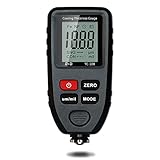
- Auto-Detection for Steel and Aluminum Coatings:This Coating Thickness Gauge utilizes advanced dual technology to automatically recognize ferrous and non-ferrous substrates, making it easy to measure coating thickness on both steel and aluminum without any guesswork
- Ideal for automotive paint inspection, powder coating checks, and metal surface finishing. Commonly used on used cars, anodized aluminum, bathroom fittings, bike frames, stadium seats, lockers, appliances, and more. (Note: Designed for metallic surfaces only.)
- A Must-Have for Used Car Buyers:Don't let hidden repairs catch you off guard. This tool lets you check the paint thickness on each car panel, helping you spot any previous accidents or repairs before buying a used vehicle
- Save Money on Used Car Purchases:When buying used cars, this paint thickness gauge helps you identify potential issues by ensuring the paint thickness is consistent across all panels. Great for detecting accident repairs and verifying if the car has been in a heavy crash
- Important Note: Please note that this gauge is specifically designed to measure coating thickness on metal substrates. It cannot be used on non-metallic materials such as plastic, fiberglass, or wood.
Start underneath at the rear
- Examine the trunk-floor extensions and drop-offs, the main trunk floor and the rear frame rails behind the rear wheels.
- Inspect lower quarter panels and wheel arches, especially the areas behind the rear wheels where mud and moisture collect.
- Probe suspicious seams for soft metal and look for perforation, layered patches or fresh undercoating that obscures the original surface.
Surface scale can sometimes be repaired; perforated rails, distorted metal or inaccessible layered repairs can turn a cosmetic project into a structural rebuild. Photograph each area from several angles, including the transition between original metal and any patch.
Do these 3 things before closing this tab:
1Scan for outdated or missing drivers - takes under a minute2Repair Windows errors before they cause bigger problems3Fix the driver behind crashes, sound loss and screen glitchesCheck the center structure and front suspension mounts
- Inspect both floor pans and the surrounding braces from above and below.
- Pay particular attention to the front torsion-bar crossmember and its mounting areas.
- Look at rocker panels, firewall and inner fenders for corrosion, cracking or poorly fitted replacement sections.
On a unibody car, sound floors and suspension mounts are part of the chassis. A car can have straight outer quarters while still needing major structural work underneath.
Inspect the cowl, firewall and glass openings
- Use the cowl plenum and firewall as water-intrusion checkpoints; leaves and blocked drains can rust hidden metal.
- Inspect window channels and the A-pillar/cowl seams for bubbling, perforation and previous windshield work.
- If the roof wears vinyl, inspect the metal beneath and around the trim rather than accepting the covering as evidence of soundness.
Water stains, damp insulation or fresh seam sealer should be documented. Ask the shop to distinguish active leaks from old repairs and to identify whether corrosion extends into inaccessible cavities.
Look for collision damage and poor alignment
Compare door, hood, trunk and fender gaps from side to side. Uneven gaps, ripples in the inner structure, mismatched bumper alignment or doors that require lifting to latch can indicate previous collision work or a distorted shell. Inspect underbody welds for short, irregular beads, excessive grinding, burn-through or patches welded over rust. A neat paint finish can conceal an incorrect repair, so the underside and inner panels matter more than shine.
3. Use paint and magnet checks only as screening tools
A magnet can reveal steel areas where filler interrupts attraction, and a digital automotive paint-thickness gauge can flag panels with unusually thick or inconsistent coatings. Take readings on multiple points of each panel and compare left and right sides. Record the numbers rather than relying on one spot.
Quick wins for a faster PC:
Repair Windows errors before they cause bigger problemsFix Now →Scan for outdated or missing drivers - takes under a minuteDriver Scan →Also popular on Amazon

- 【MEASURES STEEL & ALUMINUM PANELS ONLY】This car paint thickness gauge reads coatings on magnetic steel and iron (Fe) plus non-ferrous aluminum and copper (NFe), auto-detecting the substrate with no mode switching. Will NOT read plastic, fiberglass, carbon fiber, wood or drywall. A reliable paint depth gauge for hoods, doors, roofs, fenders and aluminum body panels.
- 【0.1μm RESOLUTION READS PRIMER TO CLEAR COAT】Digital paint thickness gauge with 0-2000μm (0-78.7 mils) range: 0.1μm resolution from 0-99.9μm and 1μm from 100-2000μm, accuracy ≤±(3% of reading + 2μm) per the factory spec sheet. Film thickness gauge for primer, base coat and clear coat. Zero-calibrate on the included bare substrate before first use and verify with the calibration foils; keep the probe flat and vertical, and avoid convex curves under 5mm, concave curves under 25mm, weld seams, rust and dirt.
- 【ONE-BUTTON: SINGLE VS CONTINUOUS SCAN】Power on, place flat, read — the paint guage is easy to use. Long-press the ↻ button to enter Continuous mode — this coating thinkness meter refreshes readings every 0.3 seconds as you slide across the panel, showing the average, maximum and minimum of the last 10 measurements, so uneven clear coat, spot repairs and repainted panels show up in one swipe. Press again to return to Single mode and lock each individual reading.
- 【HOLD, STORE 30 SETS, EXPORT VIA USB-C】Data Hold freezes each reading in deep engine bays and tight gaps; 30 groups stay in memory and transfer to a Windows PC over USB Type-C — ready for dealer inspection sheets and QC logs. A paint meter for cars trusted by used-car buyers, car dealers, bodyshop technicians, detailing studios, coating applicators and manufacturing quality control.
- 【AUTO-ROTATION & USER-FRIENDLY DESIGN】This automotive paint thickness gauge has a 2.0-inch large color screen with auto-rotation, so the reading is always right side up however you hold it. Unit switching (μm / mm / mil) makes it a flexible mil gauge for paint, with language selection, time setting, sound adjustment, low-battery reminder, auto-shutdown, factory reset and formatting all built in — covering DIY enthusiasts and professional quality inspectors alike.
Neither tool proves structural integrity or originality. Nonferrous filler, fiberglass, double-skinned repairs and extensive replacement metal can defeat a magnet, while factory variations and multiple paint layers can produce confusing meter readings. Have a body specialist interpret the pattern, expose a questionable repair where appropriate and provide a written scope of work.
4. Verify the mechanical configuration and condition
Mechanical inspection should be performed with the seller’s permission by a technician familiar with classic Mopar systems. Start the engine cold when possible; a warmed-up engine can hide smoke, hard starting and excessive noise.
Engine and cooling system
- Match the engine casting, pad stampings and partial VIN to the claimed engine and the available documentation.
- Check cold-start behavior, exhaust smoke, oil pressure, leaks, abnormal valve-train or bottom-end noise and charging output.
- Inspect radiator condition, hoses, belts, fan, shroud, water pump area and signs of overheating or repeated coolant loss.
- Confirm carburetion and induction hardware against the claimed engine package; an aftermarket carburetor or intake may make the car run well but does not prove factory configuration.
Compression or leak-down testing can help quantify engine condition, but numbers should be interpreted for the specific engine and test method. A clean idle is not evidence that an engine is numbers-matching.
Transmission, clutch and driveshaft
Identify the transmission and compare it with the fender-tag equipment and the seller’s description. The inspection guide discusses A833 manual and 727 automatic applications; verify the exact unit rather than assuming every R/T used the same transmission. Check clutch engagement or automatic shift quality, delayed engagement, fluid leaks, universal joints and driveshaft vibration. Photograph identification numbers before accepting a replacement unit as original.
Free tools Windows power users keep installed
One-click scans. No signup required.
Rear axle and ratio
Confirm axle type, housing markings and ratio against the fender-tag code and any build documentation. The Registry’s code lists include multiple axle packages and ratios. Verify the actual ratio by approved shop methods and inspect the housing, mounts, seals, bearings and differential noise. A desirable axle installed later may improve performance but does not establish factory originality.
Also popular on Amazon

- Coating Thickness Gauge:This device uses a two-in-one probe that automatically identifies ferrous and non-ferrous substrates to measure the surface coating thickness.
- Used Car Purchases:Used for non-destructive measurement of automotive paint thickness, it helps inspect the car's paint to determine if it has been in an accident before when buying a used car.
- 0.1μm Resolution:This paint coating gauge has an ultra-precise resolution of 0.1μm, a measurement range of 0~1300μm, accuracy of ±(3%+2μm), and units in μm and mils.
- Non-Destructive Measurement:The probe is designed with a V-shaped groove, allowing measurements on surfaces of any shape (concave, rough, and convex) without scratching the paint. It also offers the option for spot or continuous measurements.
- Easy to Use:The digital thickness gauge is user-friendly, with a simple power-on-and-measure operation. It also includes an auto-shutdown feature after 5 minutes of inactivity, making it suitable for both professionals and non-professionals.
Brakes, steering and suspension
- Inspect master cylinder, lines, hoses, wheel cylinders or calipers, drums or rotors and parking-brake operation.
- Check steering play, steering-box leaks, tie-rod ends, ball joints, bushings, shocks and torsion-bar condition.
- Look for cracked or repaired suspension mounts and for uneven ride height that may indicate weakened structure or incorrect parts.
Road-test only when the car is legal and safe. During a controlled drive, note pull under braking, wandering, vibration, overheating, transmission behavior and unusual driveline noises. If brakes, tires, steering or structure are doubtful, stop with a static inspection and repair recommendations instead of risking a test drive.
Electrical and fuel systems
Check battery mounting, charging voltage, wiring modifications, fuse protection, lighting, gauges, horn, wipers and heater operation. Inspect fuel lines, tank, sender, pump and carburetor for leaks or improvised hoses. A restored engine bay can still contain brittle wiring or unsafe fuel-system work.
5. Treat trim and options as corroboration, not proof
Compare the cabin with the claimed build: instrument cluster, tachometer or clock, console, shifter, upholstery, dash VIN plate and other option equipment. These parts help identify how the car is equipped today, but they are easily swapped. Use them to support the fender-tag and broadcast-sheet evidence, never to override contradictory identifiers.
PC Slower Than It Used to Be?
A free scan shows the junk files, broken settings and background clutter dragging Windows down - then fixes them in one click.Free scan · Windows 10 & 11Crashes, No Sound, or Screen Glitches?
Random freezes, missing sound and display glitches usually trace back to one bad driver. Find and replace yours safely.Free scan · under a minuteCheck that option controls work and that replacement parts are documented. An apparently complete interior may hide missing brackets, incorrect wiring or reproduction trim that will be expensive to replace. Record every non-original component, including wheels, brakes, exhaust, ignition, gauges and air-conditioning parts, because modifications affect both value and restoration cost.
6. Follow a disciplined pre-purchase sequence
- Screen the listing remotely. Request VIN, title, fender-tag and broadcast-sheet photographs, plus close images of engine, transmission and axle stampings, before arranging travel.
- Have the identifiers decoded. Ask a marque specialist to compare the VIN, XS29 or other claimed body information, engine code, fender tag and records. Resolve discrepancies before treating an R/T or rare-engine claim as established.
- Book a lift inspection. Give the shop the specific rust list: trunk extensions and drop-offs, rear rails, quarters and arches, cowl, firewall, floors, torsion-bar crossmember, lower front fenders, rockers, window channels and A-pillars.
- Document repairs. Require close photographs and written findings that separate surface rust, perforation, patch panels, distorted structure, concealed undercoating and poor welds.
- Test the mechanical systems. Inspect cold-start behavior, engine and drivetrain identification, cooling, charging, brakes, steering, suspension, electrical systems and road behavior where safe.
- Obtain an independent valuation. Use the inspection report, repair scope and documentation quality to compare the car with recent sales of similarly documented projects, drivers, restored cars or rare-engine examples.
- Confirm parts before budgeting. If repairs are part of the decision, check exact year and body fitment, availability and current pricing. Mopar identifies Classic Industries as a licensed restoration-parts partner, but a catalog listing is not confirmation that a part fits your specific Charger.
7. Compare the car on the factors that actually change value
Do not compare a rusted project with a documented restoration simply because both wear R/T badges. Build your comparison around the following dimensions:
Also popular on Amazon

- High-Precision & Fast Measurement: Accurately measures automotive paint and coating thickness in seconds with instant digital readout. Ideal for checking factory paint thickness, identifying repainted body panels, concealed accident damage, body filler (Bondo), and uneven clear coats on automotive metal surfaces.
- Essential Tool for Used Car Buyers & Detailers: Avoid buying accident-damaged vehicles by uncovering hidden collision repairs before you purchase. Perfect for car buyers, dealership inspectors, automotive painters, and professional auto detailers to ensure safe compounding and polishing without burning through clear coats.
- Backlit LCD Screen & Multi-Unit Switching: Features a clear digital LCD screen with bright backlighting for effortless reading in dim garages, outdoor sunlight, or nighttime inspections. Easily switch between metric and imperial units (mils / µm) at the touch of a button to suit your inspection preferences.
- Ergonomic Anti-Slip Grip & Simple 2-Button Operation: Designed with side anti-slip grooves for a secure, comfortable single-handed hold during multi-angle car body tests. The intuitive two-button layout (Power/Clear and Backlight/Unit) ensures zero learning curve—just power on, place the probe flat on the surface, and get instant readings.
- Compact, Portable & Battery Efficient: Lightweight and pocket-sized, this coating thickness gauge fits effortlessly into your pocket, glove box, or tool kit for on-the-go vehicle inspections at car auctions and dealerships. Features a clear battery indicator and automatic shutoff function to extend battery life.
| Comparison factor | Questions to answer | Why it matters |
|---|---|---|
| Identity and documentation | Do VIN, fender tag, broadcast sheet and stampings agree? | Determines how confidently the claimed model and engine can be represented. |
| Structural condition | Are rails, floors, crossmember, rockers and glass channels original, repaired or perforated? | Structural metal drives safety, restoration complexity and cost. |
| Originality | Which engine, transmission, axle, trim and options are factory, period-correct replacements or modern additions? | Changes collector appeal and the cost of returning the car to a documented configuration. |
| Mechanical condition | What do cold-start, leak, pressure, brake, steering and road-test findings show? | A running car can still need a complete drivetrain or chassis rebuild. |
| Restoration quality | Are invoices, photographs and repair methods documented? | Visible paint quality alone cannot show what is beneath it. |
| Transmission, axle and options | Do the specific units and equipment match the build documentation? | Different factory combinations are not interchangeable for valuation. |
No current valuation figure is established here. The available buyer guides contain conflicting, time-sensitive price opinions rather than a transparent market dataset. Obtain a current appraisal and compare recent transactions for cars with the same documentation, body condition, drivetrain and restoration standard. Treat asking prices as seller expectations, not market proof.
8. Know when to pause or walk away
- The seller will not provide VIN, title or fender-tag photographs before a deposit or long trip.
- Rare-engine or R/T claims depend only on badges, repainting or verbal assurances.
- Fresh undercoating prevents inspection of rails, floors or suspension mounts.
- VIN, tag, title and physical stampings conflict and the seller cannot explain the discrepancy.
- Structural rust is hidden behind layered patches, distorted metal or inaccessible repairs without a defined repair scope.
- The seller refuses an independent lift inspection or limits the shop to a visual walk-around.
- The asking price assumes documented originality that the records and inspection do not support.
Any one issue may have a solution, but the solution must be priced and documented before you commit. A lower offer is not a substitute for knowing whether the shell is structurally sound or whether the claimed drivetrain belongs to the car.
9. What your inspection report should contain
Ask for a dated report that identifies the vehicle inspected and includes photographs, measured or observed symptoms, and a clear distinction between confirmed facts and items that could not be verified. At minimum, require:
- Identity and documentation findings, including every identifier checked.
- Structural rust map with photographs of each critical area.
- Descriptions of patch panels, weld quality, filler, undercoating and collision evidence.
- Engine, transmission, axle and option-equipment observations.
- Brake, steering, suspension, cooling, charging, fuel and electrical results.
- Road-test conditions and limitations, or the reason a road test was not safe.
- Immediate safety defects, recommended repairs and an estimated repair sequence.
Give that report to an independent appraiser or experienced buyer before negotiating. The report’s value is not a pass/fail label; it gives you evidence to separate a sound, documented car from an attractive shell carrying unsupported claims.




