The Tool Desk
Outbyte PC Repair FREEClear out junk files and repair common Windows errorsFree Scan →Outbyte Driver Updater FREEScan for outdated or missing drivers - takes under a minuteDriver Scan →Some links on this page are affiliate links: if you buy through them we may earn a commission, at no extra cost to you.
The first Lexus LS 400 was quiet because Toyota treated noise, vibration and harshness (NVH) as engineering problems to prevent at their sources, not merely sounds to hide with extra insulation. The programme combined a deliberately smooth V8, unusually tight control of manufacturing variation, a carefully aligned and balanced propeller shaft, vibration-damping body steel, and exterior details that reduced turbulent airflow. Extensive prototyping and road testing were used to find unwanted vibration and correct its cause.
That explains the car’s refined character without requiring an unsupported claim that it was a specific number of decibels quieter than every Mercedes-Benz or BMW of the period. The published Toyota and Lexus material documents the design decisions, but it does not provide a controlled, like-for-like cabin-noise test against contemporary rivals.
As an Amazon Associate I earn from qualifying purchases.
A source-first approach to NVH
Noise in a luxury car can reach occupants through several paths: combustion and valve-train sounds through the engine bay, vibration through mounts and the body structure, rotating imbalance in the driveline, and turbulent air around the body. Toyota’s official history describes the LS 400 development philosophy as reducing noise and vibration “at the source.” In practice, that means reducing the force that creates a vibration, controlling the path it travels through, and only then using barriers or damping where necessary.
This approach matters because insulation alone can make a car heavier without eliminating a low-frequency shake or a tonal whine. The LS 400’s engineering story is therefore a chain of small controls rather than one magic component. Lexus later summarized the ambition as “Very quiet, yet lightweight,” a useful description of why the car did not depend solely on adding mass.
Popular on Amazon

- COLLECTIBLE SERIES: Part of the 1994 Matchbox lineup, numbered 26 out of 100 in the collection series
- AUTHENTIC DESIGN: Precision-crafted miniature replica of the luxurious Lexus LS 400 in sleek black finish
- SCALE DETAILS: Expertly reproduced at 1:64 scale with authentic body styling and proportions
- DISPLAY QUALITY: Die-cast metal construction with detailed exterior features and classic Matchbox craftsmanship
- VEHICLE SPECS: Features rolling wheels, black paint scheme, and distinctive Lexus LS 400 luxury sedan body style
Why the V8 felt smooth
A naturally well-balanced layout
Lexus’s UK launch material from 1990 says engineers selected a V8 because it was inherently well-balanced. The same document says they reduced unbalanced masses, tightened clearances between internal parts, and reduced variation in the weights of moving components. Those are manufacturer claims from period launch material, not independent laboratory measurements, but they identify the specific sources Lexus was trying to control.
Reducing mass variation helps keep reciprocating and rotating forces consistent from cylinder to cylinder. Tighter clearances can limit impact and mechanical noise, provided the parts are manufactured and lubricated accurately. Together with the V8’s firing order and crankshaft design, these measures were intended to produce a smoother excitation before vibration reached the mounts or body.
Valve-train and belt details
The engine was a 4,000 cc DOHC 32-valve V8. Toyota’s vehicle-history entry lists it at 260 PS, while the 15 May 1989 US production announcement describes a 4-liter V8 rated at 250 hp. Those figures come from different market documents and use different units; they should not be treated as contradictory dyno results.
Also popular on Amazon

- ✅ 【CUSTOM FIT FOR LEXUS LS (1990-2026)】 Expertly designed to fit Lexus LS models including LS 400, LS 430, LS 460, LS 500, and LS 600h across all generations. NOTE: Designed for factory standard dimensions. This cover may NOT fit vehicles with aftermarket body kits, roof rail systems, side skirts, front lip spoilers, rear diffusers, or non-factory mirror housings.
- ✅【UPGRADED DRIVER DOOR ZIPPER FOR EASY ACCESS】 Features a heavy-duty full-length driver-side zipper, so you can open the driver’s door directly to grab items, adjust seats or clean the interior without removing the entire cover, saving time and avoiding getting wet in rain/snow.
- ✅【2000MM 100% WATERPROOF ALL-WEATHER PROTECTION】 Made of high-density tear-resistant polyester with an industry-leading 2000mm waterproof rating, heat-sealed seams fully prevent leaks. UPF 50+ UV resistance blocks sun fading, and it shields against snow, frost, dust, tree sap and bird droppings for year-round indoor/outdoor use.
- ✅【WINDPROOF SNUG FIT & HIGH-VISIBILITY SAFETY】 Equipped with 3 pairs of heavy-duty bottom windproof straps that lock securely to wheel hubs, paired with a full elastic hem to stay tight even in level 6 winds, no slipping or paint scratching. 6 high-brightness reflective strips are visible 300m away at night to avoid collisions.
- ✅【12-MONTH WARRANTY & WHAT YOU GET】 Your package includes 1x Custom Car Cover, 1x foldable waterproof storage bag for easy portability and space-saving trunk storage. We offer a 12-month full warranty for all quality issues, 24/7 customer service responds within 24 hours.
The period UK pack also identifies a toothed camshaft belt reinforced with Aramid fibre cord and aluminum valve lifters. The belt specification was part of a design intended to provide durable, accurately timed camshaft drive. The lighter lifters reduced valve-train inertia, which can reduce the force required to accelerate the components and help limit mechanical noise at high engine speed. Lexus says the engine programme balanced power, weight, efficiency, durability, smoothness and quietness rather than optimising only one of those targets.
Manufacturing consistency was part of the refinement
Luxury-car smoothness depends on how closely parts match their design values. Lexus’s description of reduced weight variation and tighter internal clearances shows that the target was repeatability as much as peak specification. A perfectly balanced design can still feel coarse if one piston, bearing, pulley or rotating assembly differs materially from the others. The LS 400 programme therefore treated precision manufacturing as an NVH feature, not just a quality-control exercise.
How the propeller shaft and driveline were quietened
Straight-line layout and flexible connections
The UK launch pack describes a two-piece propeller shaft arranged in a straight line. A high-precision universal joint was used at the centre, with flexible couplings at both ends, and the balancing process received additional attention. Toyota’s later corporate history separately records the development of a high-precision propeller-shaft manufacturing method to reduce noise and vibration.
What’s actually slowing this PC down?
Pick the symptom - the matching free tool is one click away.
Also popular on Amazon

- Product size: 6.3*2.4*1.8 inches Weight: 0.5 pounds Outer packaging: exquisite color translucent packaging box.
- Material: Die-cast car model, made of zinc alloy, with plastic parts, rubber tires, detailed interior and exterior decoration.
- Function: Press the two wheels of the front car to trigger the sound of the engine and lights. The interior details are realistic. Put the car on the flat ground, press the body and pull it back, and the car will move forward. (Back pull function)
- This LS500H 1/32 car model pull back car is very suitable for children to play with. The paint is exquisite and feels good, and it is heavy to hold. It is also very suitable for car model enthusiasts as a decoration.
- Accessories and collections: This product is very suitable for static accessories and can be used as an accessory next to a computer. For those who are passionate about collecting model car models, this is a great art collection.
Every rotating shaft can generate a vibration if it is out of balance, misaligned or not perfectly round. A two-piece shaft adds another potential source at the centre bearing and joint, so alignment and balance become critical. Keeping the shaft on a straight path reduces angular complications, while the centre joint and flexible couplings allow the driveline to articulate and isolate some transmitted disturbance without letting the shaft run inaccurately.
Finding the actual source of a vibration
A Lexus engineering retrospective gives a concrete example. A drivetrain noise rose with shaft rotational speed and was eventually traced to an irregular driveshaft shape. The corrective lesson was diagnostic rather than cosmetic: follow the noise to the component creating it and fix that component. This example does not prove that every LS 400 refinement issue was solved in the same manner, but it illustrates the source-focused method Toyota describes.
Body structure and wind noise
Damping vibration in the body
Toyota’s 75 Years history identifies vibration-damping steel sheet in the body as one of the LS 400’s measures. Damping material converts some structural vibration into a small amount of heat, reducing the tendency of large panels to act like loudspeaker diaphragms. Placing damping where the structure is excited can be more efficient than adding thick insulation everywhere, helping the car remain comparatively light for its class.
Also popular on Amazon

- SCALE: Authentic 1:64 scale die-cast model of the luxurious Lexus LC 500, perfect for collectors and enthusiasts
- DETAILS: Precision-crafted exterior features with stunning red finish and accurate body styling of the iconic sports car
- DESIGN: Part of the Matchbox 2021 collection, featuring meticulous attention to detail and premium quality construction
- COLLECTIBLE: Number 44 out of 125 in the series, making it a valuable addition to any Matchbox or automotive collection
- DISPLAY READY: Compact size perfect for showcasing alongside other die-cast models in your collection
Smoother airflow at speed
Toyota reports a drag coefficient of 0.29 and notes that the window glass and door handles were designed flush with the body. Flush surfaces reduce protrusions that can separate airflow and create turbulence. Lexus later connected the low drag figure with quietness at high speed, so the cautious conclusion is that the shape reduced one contributor to wind disturbance.
Quick wins for a faster PC:
Repair Windows errors before they cause bigger problemsFix Now →Scan for outdated or missing drivers - takes under a minuteDriver Scan →Clear out junk files and repair common Windows errorsFree Scan →A drag coefficient is not a cabin sound-level measurement. It does not tell us how many decibels the occupants heard, nor does it isolate the contribution of the glass and handles from mirrors, seals, tyres, underbody airflow or the body’s acoustic treatment. The available material supports a plausible aerodynamic contribution, not a quantified wind-noise advantage.
Development effort behind the result
Toyota says first-generation LS 400 development began in 1984. Its historical account reports roughly six years of development, approximately 450 prototypes and more than 3.5 million kilometres of driving tests. Those figures show the scale of validation used to locate durability, vibration and ride problems across many conditions.
Also popular on Amazon
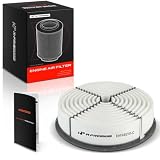
- [Vehicle Fitment]: Compatible with Lexus LS400 1990-2000
- [Reference Number]: CA6821, 46058, AF7827, 1780150010
- [Specifications]: ① Location: Front; ② Length: 4.02 inch; ③ Width: 4.02 inch; ④ Height: 1.02 inch; ⑤ Shape: Rectangular; ⑥ Washable: No; ⑦ Reusable: No; ⑧ Package Quantity: 1; ⑨ Packaging Type: Box
- [Enhanced Performance]: A-Premium Engine Air Filter uses fine filtration media to capture all kinds of debris without obstructing airflow, removing dangerous particles, improving engine performance and increasing engine efficiency.
- [Replacement Suggestion]: To ensure that the engine air filter provides your engine with clean air, recommended replacement every 12 months, 12,000 miles or as specified by the vehicle manufacturer.
The testing figures are not acoustic laboratory results. Toyota’s 15 May 1989 production announcement says new LS 400s would be tested at speeds up to 100 mph on a factory track, then receive further inspection and a test drive in the United States before dealer delivery. A high-speed track check can expose vibration, wind rush or driveline faults, but the announcement does not say that microphones or a standardised decibel protocol were used.
Independent reader supportYour contribution helps us test, update, and keep practical guides available for everyone.Launch context and market specifications
The LS 400 was announced at the Detroit motor show in January 1989. Toyota’s US production release set the Lexus launch for 1 September 1989, while the Japanese-market Celsior reached its home market in October 1989. Equipment, calibration and published power ratings can differ by market, which is why period UK, US and Toyota global-history documents should be read in context.
| Item | Documented figure or detail | Qualification |
|---|---|---|
| Engine in Toyota vehicle history | 4,000 cc DOHC 32-valve V8, 260 PS | Toyota vehicle-history entry; market context is not identical to the US launch specification |
| US launch announcement | 4-liter V8, 250 hp | Toyota production announcement dated 15 May 1989 |
| Aerodynamics | Drag coefficient 0.29 | Toyota historical account; not a cabin-noise measurement |
| Development scale | About six years, around 450 prototypes, over 3.5 million km | Toyota retrospective; driving-test totals, not acoustic test totals |
| Pre-delivery testing | Track speeds up to 100 mph, followed by US inspection and test drive | Toyota announcement; a quality and roadworthiness check, not a stated decibel test |
Was it quieter than a Mercedes-Benz or BMW?
The documented engineering decisions explain why the LS 400 was designed to be exceptionally quiet, but they do not establish a controlled numerical advantage over a particular Mercedes-Benz or BMW. A fair comparison would need the same model year and market specification, identical tyres, the same road surface and speed, calibrated microphones in equivalent cabin positions, and a stated averaging method.
| Comparison axis | What a valid test would control | What the LS 400 sources establish |
|---|---|---|
| Cabin sound level | Same speed, surface, weather and measurement equipment | No like-for-like decibel result is provided |
| Engine smoothness | Engine speed, load, gear and vibration measurement | V8 balance, mass variation and tighter clearances were design targets |
| Driveline vibration | Shaft speed, alignment, joint condition and measured vibration | Straight two-piece layout, precision joint, flexible couplings and added balancing were documented |
| Wind noise | Wind speed, direction, body configuration and tyre condition | Flush exterior details and a reported 0.29 drag coefficient were documented |
| Ride isolation | Identical bumps, loads and suspension condition | The cited material does not provide a controlled comparative result |
Accordingly, “quieter than every rival” is broader than the evidence allows. The defensible statement is that Toyota and Lexus engineered the LS 400 around multiple, source-level NVH controls and validated the car extensively.
Why the combination mattered
Each measure addressed a different path. The V8 controls reduced excitation from combustion and moving parts. Propeller-shaft alignment and balancing reduced rotating disturbances that could otherwise become a speed-related hum or floor vibration. Damping steel limited structural amplification. Flush glass and handles reduced airflow disruption. Extensive road work gave engineers opportunities to encounter faults that a stationary inspection could miss.
The refinement passengers noticed was therefore a systems result. Removing a small amount of vibration at several stages can prevent the body, mounts, trim and cabin air from reinforcing it later. That is also why a single specification—engine output, drag coefficient or insulation thickness—cannot explain the LS 400’s character by itself.
Crashes, No Sound, or Screen Glitches?
Random freezes, missing sound and display glitches usually trace back to one bad driver. Find and replace yours safely.Free scan · under a minuteWindows Errors? Fix Them Before They Spread
Repair common Windows errors and clear accumulated junk for a smoother, more stable PC - no reinstall needed.Free scan · no reinstallQuick Recap
What the evidence does—and does not—support
- Supported: Toyota and Lexus documented a source-focused NVH strategy, vibration-damping body steel and precision propeller-shaft manufacture.
- Supported: Period Lexus material tied engine smoothness to V8 balance, reduced unbalanced mass, tighter clearances, controlled moving-part weights, belt drive and lighter valve-train components.
- Supported: The driveline received specific attention to shaft layout, joints, couplings and balancing, with a later account describing an irregular shaft shape being traced as a noise source.
- Supported: Flush exterior details and a 0.29 drag coefficient were intended to support aerodynamic efficiency and lower wind disturbance at speed.
- Not established: A universal decibel margin over contemporary Mercedes-Benz, BMW or any other rival.
- Not established: That the reported kilometres, prototypes or 100-mph track checks were acoustic laboratory measurements.




