Some links on this page are affiliate links: if you buy through them we may earn a commission, at no extra cost to you.
Most modern electric vehicles use active liquid thermal management to keep their battery packs within a useful temperature range. A pump moves water-glycol coolant through plates, channels or jackets beside the cells; a radiator or refrigerant chiller removes the heat, while a heater, heat pump or recovered powertrain heat can warm a cold pack. Designs vary by vehicle, and “liquid cooled” does not usually mean coolant flows directly over the battery cells.
Why does an EV battery need thermal management?
Battery cells generate heat while charging and discharging. Temperature also affects how much power a pack can deliver and accept, and extreme temperatures can affect performance and lifespan. Thermal management is therefore about more than preventing overheating: it helps keep cells in a suitable operating range and their temperatures more even across the pack.
As an Amazon Associate I earn from qualifying purchases.
What’s actually slowing this PC down?
Pick the symptom - the matching free tool is one click away.
The system uses energy to run pumps, compressors and heaters, so some battery energy is not available for driving. The National Renewable Energy Laboratory’s 2018 BEV thermal-management paper reported that thermal-subsystem loads had reduced drive range by as much as 45% in studies at ambient temperatures below -10°C. That is a reported maximum under the cited cold-weather conditions, not a typical range loss for every EV or a universal prediction.
How does a liquid-cooled EV battery system work?
In a common indirect liquid system, coolant carries heat away from the cells without touching them. Sensors and control software monitor temperatures and coordinate the pump, valves, cooling hardware, heating and, when necessary, charging power.
Popular on Amazon
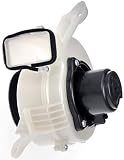
- Direct replacement - this hybrid battery cooling fan matches the fit and function of the original fan on specific vehicle years, makes and models
- Restores operation - replacement keeps hybrid battery pack cool and functioning properly
- Thoroughly tested -vehicle try-on, air flow and life-cycle testing ensures product meets performance standards
- Trustworthy quality - backed by team of product experts and engineers in the United States
- Ensure fit - to make sure this part fits your exact vehicle, input your make, model and trim level into the garage tool
- Measure temperature. Sensors in or around battery cells or modules report conditions to the battery-management and vehicle-control systems.
- Move heat into coolant. An electric pump circulates water-glycol coolant through channels, cooling plates or a jacket beside the cells. Heat passes from the cells into the nearby structure and then into the fluid.
- Reject heat through a radiator when conditions allow. A valve can route warmed coolant through a low-temperature radiator. Outside air carries heat away; Nissan describes using airflow generated during driving for lighter cooling loads.
- Use refrigerant-assisted cooling when more capacity is needed. A chiller transfers heat from the coolant into the vehicle’s refrigerant circuit. The refrigerant system then moves that heat toward the condenser and outside environment.
- Adjust the system to stay within limits. The controller can change pump speed, valve position and compressor operation, and can reduce charging power if temperatures approach operating limits.
In September 2026, Tesla described liquid cooling and heating channels running through its battery pack to manage cell temperatures during charging, discharging and while the vehicle is parked. That description illustrates one manufacturer’s approach; it is not a specification shared by every EV.
Does the car’s air conditioner cool the battery?
In some vehicles, the battery thermal system can use the vehicle’s refrigerant circuit, but that does not mean cabin air is simply blown across the cells. In a refrigerant-assisted liquid system, the chiller transfers heat from the battery coolant into refrigerant; the refrigerant circuit then carries the heat away. The battery and cabin systems may share or coordinate thermal hardware, depending on the vehicle’s design.
Free tools Windows power users keep installed
One-click scans. No signup required.
Are EV batteries liquid cooled or air cooled?
There is no single design across all EVs, but active liquid thermal management is the dominant modern architecture described by manufacturers and suppliers. “Air cooled” can refer to air cooling a radiator that carries battery-loop coolant; that is different from passing air directly over cells.
Also popular on Amazon

- Includes 1 (One) Drive Motor Battery Pack Cooling Fan Assembly
- Fits list of vehicles in image gallery fitment chart
- Exceptional Quality and Performance: This OE replacement drive motor battery pack cooling fan assembly is designed to meet, if not exceed, the performance and quality standards of the original equipment installed on your vehicle. Experience the same high-level performance as your original parts with this drive motor battery pack cooling fan assembly.
- Direct Replacement, No Fuss: This OE replacement drive motor battery pack cooling fan assembly is meticulously designed for your specific vehicle's make and model, promising a direct fit. Installation is as straightforward as it gets - no fuss, no complications. Experience a seamless replacement process, made to match the original part perfectly.
- Perfect Compatibility: Compatibility is key. Make sure to check our product specifications (in image gallery) to confirm that this OE replacement drive motor battery pack cooling fan assembly matches your vehicle's requirements. Get the perfect fit and optimal performance every time with our replacement parts.
| Approach | Heat-transfer path | Where it can help | Key consideration |
|---|---|---|---|
| Radiator-cooled liquid loop | Cells transfer heat to coolant; a radiator releases it to outside air. | When ambient conditions and radiator capacity are sufficient. | Cooling depends on the system’s ability to reject heat to outside air. |
| Refrigerant-assisted liquid loop | A chiller transfers heat from coolant into the refrigerant circuit. | When a radiator alone cannot provide enough cooling, such as under greater thermal load. | Requires coordination between coolant and refrigerant systems. |
| Direct refrigerant cooling | Refrigerant flows through battery cooling plates. | Where the pack is designed around refrigerant as the battery heat-transfer fluid. | Requires refrigerant plumbing and control hardware in the battery thermal path. |
| Direct air cooling | Air passes across or through the battery area. | The available sources do not establish a fleet-wide prevalence or quantify its use. | Do not confuse it with radiator airflow cooling a separate liquid loop. |
HELLA distinguishes direct cooling, in which refrigerant flows through battery cooling plates, from indirect cooling, in which coolant carries heat and may use a chiller when the radiator is insufficient. Indirect systems keep refrigerant and high-voltage cells separated and can allow a coolant loop to serve other components. Direct refrigerant cooling can provide substantial cooling capacity, but neither approach is established as universally superior: pack design, safety requirements and service strategy matter.
How are EV batteries heated in winter?
Cold batteries can have reduced available power and charging performance, so thermal-management systems may warm the pack as well as cool it. Depending on the vehicle, heat can come from an electric coolant heater, a heat pump or recovered powertrain heat. Bosch describes coordinated coolant and refrigerant circuits that move heat where it is needed; Tesla service documentation lists an inline coolant heater, and a MathWorks model includes both a heater and a mode that uses motor heat to warm the battery.
Some EVs can precondition the battery before a fast-charging stop. This means bringing the pack toward a suitable temperature before charging begins, rather than relying on the charger to do all the work after the vehicle arrives. The feature and how it is activated vary by vehicle.
Also popular on Amazon

- 【Other part numbers】G923047080,G9230 47080,G923002030,G9230 02030.The part number I gave you may not be the same as the part number on your car, but the part is the same
- 【Package included】1X Battery Cooling Blower Fan Motor
- 【Check whether the accessories are applicable before buying】Ensure that the parts are suitable for your exact vehicle, which can be clearly confirmed by the vehicle identification number, car model and OEM number.If you are not sure if it applies to your car, please send me your VIN number and I will confirm it for you.
- 【Product attributes】Brand new, quality guaranteed. The appearance is slightly blemished due to friction between storages.
- 【outer packaging】The outer packaging of all our products is just a simple paper box or plastic foam bag. Please confirm that you are aware of and can accept this situation before purchasing.
Why does fast charging make battery cooling important?
High-current DC fast charging generates heat quickly, placing additional demands on the thermal system. The Southwest Research Institute identifies that extra stress, while Bosch describes efficient battery cooling as an enabler of fast charging at high temperatures. When the pack heats up, the vehicle may increase coolant flow, engage a chiller or limit charging power to remain within its temperature limits.
That is why charging speed can depend on battery temperature as well as the charger’s rated output. A thermal system that can move heat away effectively helps the vehicle manage charging without treating the charger’s maximum power as a guarantee of what the pack can accept in every condition.
What other battery-cooling approaches are being developed?
Radiator-cooled and refrigerant-assisted liquid loops are established approaches, while direct refrigerant cooling changes the fluid path through the cooling plates. Other approaches include immersion cooling, which places cells or modules in a thermally suitable dielectric fluid, and phase-change materials, which absorb heat as they melt. SwRI identifies immersion cooling as an active research area, and a 2025 Wiley reference covers phase-change materials as a battery thermal-management approach.
Also popular on Amazon

- Includes 1 (One) Drive Motor Battery Pack Cooling Fan Assembly
- Fits list of vehicles in image gallery fitment chart
- Exceptional Quality and Performance: This OE replacement drive motor battery pack cooling fan assembly is designed to meet, if not exceed, the performance and quality standards of the original equipment installed on your vehicle. Experience the same high-level performance as your original parts with this drive motor battery pack cooling fan assembly.
- Direct Replacement, No Fuss: This OE replacement drive motor battery pack cooling fan assembly is meticulously designed for your specific vehicle's make and model, promising a direct fit. Installation is as straightforward as it gets - no fuss, no complications. Experience a seamless replacement process, made to match the original part perfectly.
- Perfect Compatibility: Compatibility is key. Make sure to check our product specifications (in image gallery) to confirm that this OE replacement drive motor battery pack cooling fan assembly matches your vehicle's requirements. Get the perfect fit and optimal performance every time with our replacement parts.
These alternatives are not interchangeable on cooling capacity alone. Relevant design questions include temperature uniformity, fast-charge performance in hot weather, cold-weather warm-up, energy use, packaging, manufacturing cost, leak containment, electrical isolation and serviceability. The evidence does not establish one emerging approach as a universal replacement for liquid loops.
Windows Errors? Fix Them Before They Spread
Repair common Windows errors and clear accumulated junk for a smoother, more stable PC - no reinstall needed.Free scan · no reinstallCrashes, No Sound, or Screen Glitches?
Random freezes, missing sound and display glitches usually trace back to one bad driver. Find and replace yours safely.Free scan · under a minuteFrequently Asked Questions
Can I see what battery cooling system my EV has?
The owner’s manual or manufacturer’s technical information is the best vehicle-specific source. A general description such as “liquid cooled” may not say whether the system uses a radiator alone, a refrigerant chiller or another arrangement.
Does battery cooling keep working when an EV is parked?
Thermal management can operate while a vehicle is parked; Tesla’s September 2026 description explicitly includes managing temperatures in that state. Whether and when a particular car runs its system depends on its control strategy and conditions.
Also popular on Amazon
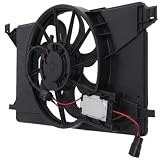
- 【Compatible with Cars】:Fits for 2012-2015 Ford Focus BATTERY EV (EV/BEV) for 2012-2018 Ford Focus L4 2.0L
- 【Replaces Part Number】:621-606, 621606, BV6Z8C607K, CV6Z8C607R, 622800, 76274
- 【Features】:Your car's radiator fan is crucial for preventing overheating. Replace it immediately if you notice it not spinning, making loud grinding/clicking noises, causing weak airflow, or if your engine temperature gauge rises, especially in traffic. Ignoring these signs risks severe engine damage
- 【WARM TIPS】Please confirm your car model and product part number, and check your car model in the Amazon accessories system in the upper left corner before taking an order, calculate the year and model and check the compatibility label, or send us a message to make sure it is an exact match. After confirming that it is correct, please rest assured to place an order
- 【CUSTOMER WARRANTY】Got questions or concerns about your product? We've got you covered. Reach out to us
Is immersion cooling standard in electric cars?
No evidence here establishes immersion cooling as a standard production design. SwRI identifies it as an active research area, so it is better understood as an approach under development than as the default EV battery system.
Does every EV precondition its battery for fast charging?
No universal feature set is established: preconditioning availability and activation vary by vehicle. Check the specific owner’s manual or charging guidance for whether the car can warm its pack before a fast-charge stop.
Recommended Free Tools




