Waymo is preparing for a possible future robotaxi service in the Seattle metropolitan area—but it has not announced an immediate public launch or a firm launch date. In a September 2, 2025 announcement, the company said it was beginning work in the region and “laying the groundwork for future commercial service.”
For now, Seattle residents should not assume that a Waymo vehicle sighting means fully driverless, paid rides are available. Within Seattle city limits, the city’s permit information identifies Waymo’s listed activity as manual data collection, with a human driver required and the automated driving system inactive during that activity.
As an Amazon Associate I earn from qualifying purchases.
What Waymo announced about Seattle
Waymo said on September 2, 2025, that it was heading into the Pacific Northwest and beginning work in the broader Seattle metropolitan area. The company described the effort as “laying the groundwork for future commercial service”, not as the launch of a bookable robotaxi network.
Do these 3 things before closing this tab:
1Fix the driver behind crashes, sound loss and screen glitches2Clear out junk files and repair common Windows errors3Scan for outdated or missing drivers - takes under a minuteWaymo’s announcement pointed to the region’s distinctive conditions, including roads and communities around Lake Washington and wet weather. Those conditions matter because an autonomous vehicle must account for changing lane markings, construction, hills, dense traffic, unusual intersections, curb activity and reduced visibility on wet roads.
#1 Best Overall

- REAL-WORLD ROBOTICS: Embark on an exciting journey by building your very own self-driving robot car! This DIY kit introduces beginners aged 11+ to the world of robotics, AI, and coding in a fun and engaging way.
- INTERACTIVE LEARNING EXPERIENCE: Control your robot via Wi-Fi or Bluetooth using the included custom-built controller. Drive it around, explore its autonomous driving capabilities, and interact with its sensors to understand how AI perceives the world.
- STEM FUN: Enhance creativity, problem-solving, and critical thinking through hands-on learning. Assembling and programming the robot introduces users to electromotors, sensors, computer vision, and machine learning, providing a comprehensive STEM education experience.
- THE PERFECT GIFT FOR YOUNG INNOVATORS: Ideal for kids who are passionate about robotics and technology, this DIY self-driving car kit offers a hands-on learning experience that makes it a standout gift for any occasion.
However, the announcement did not identify a public launch date. It also did not establish a final passenger-service boundary covering Seattle, Bellevue, the Eastside or other communities in the metro area. “Seattle area” should therefore be understood as a broad expansion target—not a confirmed map of where customers will eventually be able to request rides.
Are Waymo cars driverless in Seattle now?
Not according to Seattle’s current testing information. The Seattle Department of Transportation’s autonomous-vehicle testing permit page says testing in the city requires a human driver who monitors the automated system and is ready to take control. The page lists Waymo’s activity as manual data collection and says the automated driving system is inactive during that activity.
That distinction is important:
- Manual mapping or data collection: A human drives while the vehicle gathers road and environmental information.
- Supervised autonomous testing: The automated system operates under defined conditions while a trained human safety operator monitors it.
- Employee or invited-rider pilot: Limited passengers may ride during a testing program, which is not the same as general public availability.
- Commercial robotaxi service: Paying customers can request rides through a service open to the public.
- Fully driverless service: The vehicle operates without a human driver inside, subject to its operating limits and the company’s support procedures.
A Waymo-branded vehicle on a Seattle street proves only that the vehicle is present. It does not by itself prove that the car is operating autonomously, carrying passengers or accepting public bookings.
What “laying the groundwork” can involve
Waymo has not publicly confirmed that it has completed every item below in Seattle, but preparation for a future autonomous ride-hailing operation generally involves several separate workstreams:
- Collecting detailed road and environmental data.
- Studying construction zones, temporary lane markings, transit interactions, curb uses and complex intersections.
- Evaluating rain, glare, wet pavement and other local operating conditions.
- Coordinating with city agencies, state officials and first responders.
- Developing procedures for emergency scenes, vehicle failures and road closures.
- Training test drivers and documenting operating practices.
- Planning fleet maintenance, charging, cleaning and local support operations.
- Determining where the vehicle’s operating design domain is sufficiently capable for service.
- Addressing accessibility, customer support, dispatch, pickup and drop-off logistics.
Seattle’s permit framework specifically addresses areas such as first-responder coordination, public outreach, insurance, test-driver training, visible vehicle identification and reporting of collisions or moving violations. These requirements help explain why street testing is only one part of preparing for a commercial service.
What Seattle requires for autonomous-vehicle testing
Companies testing autonomous vehicles on Seattle streets need a Street Use permit. According to SDOT, the city’s requirements include:
Rank #2

- BUILD, CODE & DRIVE YOUR OWN ROBOT CAR: Turn coding, electronics and engineering into a working programmable robot car you can assemble, program and drive; ideal for weekend family projects, STEM classrooms, coding clubs, robotics lessons and maker challenges
- EXPLORE FPV, LINE TRACKING & OBSTACLE AVOIDANCE: Control the robot with the ELEGOO app or IR remote, view live FPV video through the onboard camera, follow black lines, avoid obstacles with the ultrasonic sensor and explore multiple interactive driving modes
- BEGINNER-FRIENDLY BUILD WITH GUIDED WIRING: Keyed XH2.54 connectors help reduce wiring mistakes, while the illustrated tutorial and example programs guide beginners step by step from chassis assembly and module connection to programming and the first successful run
- GO BEYOND ASSEMBLY WITH CREATIVE CODING: Program with Arduino IDE to explore movement, sensors and control logic, then modify example code to create custom routes, reactions and robotics experiments that develop coding, problem-solving and engineering skills
- COMPLETE RECHARGEABLE STEM ROBOTICS KIT: Includes an ELEGOO UNO R3 controller board, ESP32-WROVER-based camera and Wi-Fi module, line-tracking and ultrasonic sensors, motors, IR remote and a 2000 mAh rechargeable lithium-ion battery; recommended for ages 8+ with adult guidance for first-time builders
- Advance notification of testing.
- Clearly visible company logos on testing vehicles.
- Certification of a test-driver training program.
- Public contact information and outreach events.
- Information for first responders about interacting with the vehicles.
- Reporting of collisions, moving violations and other reportable events.
- Proof of insurance.
- Compliance with Washington state requirements.
Seattle’s broader autonomous-vehicle policy also identifies goals involving community involvement, fair pricing, accessibility—including wheelchair-accessible service—and transparency around safety data. Those are policy goals, not confirmation that a future Waymo service will already meet every goal or offer every feature.
Free tools Windows power users keep installed
One-click scans. No signup required.
Seattle’s policy and permit information are available through the city’s autonomous-vehicle approach page and testing permit page.
What Washington state allows
Washington has a separate statewide framework. The Washington Department of Licensing says companies testing or operating autonomous vehicles on state roads must self-certify.
For testing with a human operator, the operator must be trained and authorized by the technology developer, monitor the vehicle, be able to direct it when assistance is needed, hold a valid U.S. driver license and carry proof of valid insurance.
Washington’s framework also describes testing without a human operator. In that case, the automated driving system must perform all driving tasks within its operational design limits, the vehicle must be able to reach a safe condition after a system failure, and the vehicle must comply with applicable motor-vehicle laws. Proof of insurance is required. The current DOL program description lists insurance of at least $5 million per occurrence and lists Waymo LLC among self-certified companies.
State permission to conduct certain autonomous-vehicle testing does not automatically authorize a company to run a paid, public robotaxi service throughout Seattle or the wider region. City permits, transportation regulation, insurance, vehicle operations, passenger protections and the company’s own deployment decisions remain separate considerations.
Rank #3
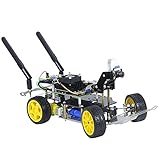
- [DONKEY CAR] This car is an open source DIY self-driving platform, focusing on providing enthusiasts and students with high-speed experiments and deep learning Tensorflower, object detection and autonomous driving, and is designed to create possible self-supporting AI for enthusiasts and students. (without jetson nano motherboard)
- [Object Detection] Camera Vision Automatic Line Tracking: When the camera detects a line in the picture, it automatically patrols the line and the correct direction according to the unique algorithm.
- [Automatic Driving] Train the neural network pilot to let your car drive on different tracks. Self-driving is recording images and your input while driving, then uses Tensorflow to learn from you. So you taught the car to drive like you!
- [High resolution camera] 720P HD camera, support APP to manually control the car to practice driving on the track, view data, record images, steering angles, etc.
- [Detailed Tutorial] Contains about the robot car assembly method and all necessary programs and codes. In addition, when purchasing the donkey car kit, a customized training map (300*200cm)
Why testing authorization is not a robotaxi launch
An autonomous-vehicle company can have permission to test while still lacking the approvals or operational capability needed for regular commercial rides. The path from testing to public service may involve:
- State self-certification and vehicle compliance. The company must meet Washington’s applicable requirements for the type of testing or operation it conducts.
- Local street-testing permission. Seattle requires a Street Use permit for testing within city limits. Other jurisdictions in the metropolitan area may have different processes.
- Commercial transportation authorization. Washington law generally requires a permit to operate for-hire vehicles unless the service falls under local regulation. The relevant statute is RCW 46.72.020.
- Operational readiness. The company must establish safe pickup and drop-off procedures, fleet support, remote assistance and responses to emergencies or road closures.
- Deployment decisions. Waymo must decide which roads, neighborhoods, weather conditions and trip types fall within the service’s operating design domain.
Airport and port access, accessibility procedures, fares, dispatch arrangements and the treatment of passengers who need assistance may also require separate decisions or approvals. A testing permit is therefore evidence of testing activity—not proof that a customer can open an app and book a driverless ride.
Could Washington’s 2026 legislation change the path?
Washington Senate Bill 6243, introduced during the 2026 legislative session, proposed a statewide framework for autonomous motor vehicles and on-demand autonomous-vehicle networks. The bill text addressed issues including operation, insurance and limits on additional local restrictions, and specified a proposed effective date of October 1, 2026.
What’s actually slowing this PC down?
Pick the symptom - the matching free tool is one click away.
That date should not be treated as proof that the bill became law. The available information establishes the proposal and its text, not final enactment. The legal situation may change on or after October 1, 2026, so the bill’s status must be distinguished from both Seattle’s current testing rules and Waymo’s commercial launch plans.
The proposed legislation is available in the Washington Legislature’s bill text and PDF version.
Independent reader supportYour contribution helps us test, update, and keep practical guides available for everyone.Why Seattle is a significant expansion target
Seattle offers Waymo a large metropolitan market with major employment centers, dense urban streets and extensive Eastside connections. It also presents a different operating environment from the dry, mostly Sun Belt conditions associated with many established autonomous-ride-hailing deployments.
Rank #4

- 【EggTailz Smart Robot Car】This is an educational STEM toys for kids to get experience about electronics assembling and robotics knowledge. DIY assembly and construction will help to cultivate children's concentration and hands-on ability. It is a great combination of challenge and excitement, learning and fun
- 【Multi-functional STEM Toys for Ages 8-13】Equipped with ultrasonic radar allows the car to detect and avoid obstacles in real-time. Headlights for illumination, Taillights for warning, recreating the authentic driving experience. Plus an additional top ring-light, a dazzling light show is about to begin!
- 【Excellent Robot Toys for Children】Featuring advanced self-balancing technology, this 2WD toy car for kids can stays upright and self-corrects its angle. Built-in a rechargeable battery, eco-friendly and convenient—fully charges in 2 hours for 1-4 hours of playtime. Note : Remote control requires 2 AA batteries (Included)
- 【Double Modes, Double the Fun】Auto-Go Mode: the toy car autonomously explores and cruises around the room; Remote Control Mode: you can steer the toy car to forward, backward, turn left, turn right, and 360-degree rotation. Both modes feature radar obstacle avoidance capabilities, offering dual playstyles for twice the enjoyment
- 【Awesome Gift for Kids 8-12】Surprise your child with this awesome robotics kit. Great entertainment away from screens—get kids moving and thinking while reducing their reliance on electronic devices. Perfect educational toy gift for birthdays, Children's Day, Christmas, party, summer camps, back-to-school season, or family fun time
Rain, wet pavement, hills, bridges, construction, transit vehicles, temporary traffic controls and complicated curbside behavior can all affect autonomous driving. Waymo’s announcement indicates that the company is preparing for local conditions, but it does not establish that the system has been proven safe in every type of Seattle weather or road situation.
Waymo’s broader company updates describe continued expansion and large-scale autonomous driving. Those figures and performance claims should be understood as Waymo’s own claims unless independently validated; they do not establish that Seattle service has launched.
When will Seattle residents be able to ride?
The defensible answer is that there is no confirmed public launch date in the cited official information.
Waymo has announced preparation for future commercial service. Seattle’s current city testing information requires a human driver for testing within city limits, and SDOT identifies Waymo’s listed activity as manual data collection. A future service would depend on regulatory authorization, safety validation, local fleet and support operations, an appropriate service area and Waymo’s decision to begin accepting riders.
Several practical details also remain unconfirmed:
- Whether the first passengers would be employees, invited testers or the general public.
- Whether rides would be paid from the outset.
- Which Seattle-area neighborhoods and Eastside communities would be included.
- Whether Seattle-Tacoma International Airport or other major facilities would be served.
- Which app or booking system would handle requests.
- How fares, wheelchair access, service animals, minors and riders needing assistance would be handled.
Until Waymo or the relevant authorities provide those details, Seattle residents should not interpret “laying groundwork” as “service is available now.”
The Tool Desk
Outbyte Driver Updater FREEScan for outdated or missing drivers - takes under a minuteDriver Scan →Outbyte PC Repair FREEClear out junk files and repair common Windows errorsFree Scan →Bottom line
Waymo’s Seattle move is a preparation and testing phase. It signals a potential future robotaxi service, but the available official information does not establish that fully driverless public rides are already operating or provide a confirmed launch date.
Quick Recap
Product prices and availability are accurate as of the date/time indicated and are subject to change. Any price and availability information displayed on Amazon at the time of purchase will apply.




