Do these 3 things before closing this tab:
1Repair Windows errors before they cause bigger problems2Fix the driver behind crashes, sound loss and screen glitches3Clear out junk files and repair common Windows errorsSome links on this page are affiliate links: if you buy through them we may earn a commission, at no extra cost to you.
Neither engine type is automatically better. A turbocharged engine can make more power from the same displacement and may improve fuel economy when a smaller engine replaces a larger one. A naturally aspirated (NA) engine avoids the turbocharger system and delivers its performance without exhaust-driven boost. The right choice depends on the exact vehicle, engine calibration, transmission, weight, fuel requirement, warranty and service schedule.
For a buying decision, compare complete vehicles rather than judging the aspiration label alone. Check official fuel-economy ratings, torque and power curves, required octane, purchase price, warranty coverage and scheduled maintenance for the specific model.

As an Amazon Associate I earn from qualifying purchases.
What naturally aspirated and turbocharged mean
A naturally aspirated engine draws air into its cylinders using atmospheric pressure and the vacuum created as the pistons move down. It has no turbocharger or supercharger pressurizing the intake charge.
A turbocharged engine uses exhaust gas to spin a turbine. The turbine is connected to a compressor that raises intake-air pressure, allowing the cylinders to receive a denser charge. With more oxygen available, the engine can burn more fuel and produce more power than an identically sized naturally aspirated engine. The U.S. Energy Information Administration describes this exhaust-driven turbine and increased intake pressure in its technical overview of turbocharged engines: EIA, March 9, 2016.
Popular on Amazon

- We have been the best quality cooling water pump manufacturer. All our products are made from the finest quality raw materials. We have the most advanced laboratory equipment for testing, and the product quality can completely replace OE parts. This engine water pump is a direct replacement for the original factory water pump and will match, work and look like the original engine water pump.
- Compatible vehicle:2013 Encore Water Pump 2014 Encore Water Pump 2015 Encore Water Pump 2016 Encore Water Pump 2017 Encore Water Pump 2018 Encore Water Pump 2019 Encore Water Pump 2020 Encore Water Pump.2011 Cruze Water Pump 2012 Cruze Water Pump 2013 Cruze Water Pump 2014 Cruze Water Pump 2015 Cruze Water Pump 2016 Cruze Water Pump.
- Compatible vehicle:2012 Sonic Water Pump 2013 Sonic Water Pump 2014 Sonic Water Pump 2015 Sonic Water Pump 2016 Sonic Water Pump 2017 Sonic Water Pump 2018 Sonic Water Pump 2019 Sonic Water Pump 2020 Sonic Water Pump,2013 Trax Water Pump 2014 Trax Water Pump 2015 Trax Water Pump 2016 Trax Water Pump 2017 Trax Water Pump 2018 Trax Water Pump 2019 Trax Water Pump 2020 Trax Water Pump.
- Reference OE number:US6662 AW6662,WPK819 DP291 43080 W2274M 252996 251776 1302140 SK1302140 19357963 25192709, 55579016, 22519445, 55486344, 55484625, 55486342, 55561623, 55587345, 55595610, 55599494.GM0712937 85993 902808 730221 TE7250103J TM36103 V40991098 131180 25200455 55565336,55579010,55593034,34709,902-808,730-221
- Notice: Please use Amazon's partfinder to check whether this mounts are compatible with your vehicle
Turbocharging is therefore a method of increasing an engine’s specific power, not a guarantee of better economy or durability. The vehicle around the engine determines how those characteristics translate into ownership.
How a turbocharger changes engine output
- Exhaust energy spins a turbine. Instead of leaving all exhaust energy unused, the turbocharger routes part of the exhaust flow through a turbine wheel.
- The turbine drives a compressor. A shared shaft connects the turbine to a compressor on the intake side.
- The compressor raises intake pressure. Pressurized air is denser than air at atmospheric pressure, so more oxygen enters each cylinder.
- The engine can burn more fuel per cycle. The additional air-and-fuel mixture raises torque and power, provided the fuel system, cooling system and calibration are designed for the load.
- Boost is controlled by the engine system. Electronic controls and waste-gate or related hardware regulate pressure across different speeds and loads. The exact components and service requirements vary by engine.
The result is usually more potential power from a given displacement. NHTSA identifies increased airflow and specific power as the basis for reducing displacement while maintaining desired performance in its 2018 light-duty vehicle CAFE and CO2 technical support document.
Quick wins for a faster PC:
Clear out junk files and repair common Windows errorsFree Scan →Fix the driver behind crashes, sound loss and screen glitchesFind Drivers →Repair Windows errors before they cause bigger problemsFix Now →Turbocharged engines: main advantages
More power from a smaller engine
Forced induction lets a smaller engine approach the output of a larger naturally aspirated engine. That can provide strong torque and acceleration without using as much displacement. The comparison only makes sense when the engines are matched for vehicle weight, gearing and calibration; a turbocharged engine is not inherently faster than every larger NA engine.
Downsizing can reduce light-load losses
A smaller turbocharged engine may operate with lower friction and pumping losses than a larger engine when the driver is using modest power. EPA presents replacing a larger engine with a smaller turbocharged engine as one possible route to fuel savings while retaining power when it is needed: EPA, Advanced Gasoline and Diesel Vehicles.
This is a design opportunity, not a promised result. A vehicle that frequently operates under boost can consume more fuel than its laboratory rating suggests, especially when driven aggressively.
Strong torque without a large displacement increase
Because the compressor supplies additional air, engineers can tune a small engine for substantial torque. That can make a vehicle feel responsive in everyday driving and reduce the need for a larger engine solely to obtain passing or climbing performance.
Free tools Windows power users keep installed
One-click scans. No signup required.
Also popular on Amazon

- HIGH-CAPACITY PARTICLE FILTRATION – Advanced filter media captures dust, dirt, pollen, and road particles before they enter the engine’s intake system.
- SUPPORTS ENGINE RESPONSE & FUEL EFFICIENCY – Engine air flow management helps support efficient engine operation, contributing to consistent power and performance between service intervals.
- RECOMMENDED SERVICE INTERVAL – Designed for replacement every 12,000 miles (or as recommended by your vehicle manufacturer) to help maintain optimal engine operation.
- COMPATIBLE WITH Mazda CX-9, CX-5, 6
- REPLACES ACDelco A3405C|Champ filters AF5272|ECOGARD XA10597|LUBER-FINER AF5272|Mazda PY8W-13-3A0, SH01-13-3A0A|NAPA 209790|Parts Plus AF572. Always check fitment using the Vehicle Filter Lookup
Useful performance flexibility
A turbo engine can be calibrated to deliver ordinary-load efficiency and additional output when the accelerator demands it. The balance depends on boost pressure, gearing, vehicle mass, emissions controls and the manufacturer’s calibration.
Turbocharged engines: main disadvantages
Boost can increase fuel consumption
Higher boost allows more power, but producing that power requires more fuel. NHTSA modeling notes that higher boost levels can increase power while also increasing fuel consumption; the modeled economy pathway combines turbocharging with engine downsizing rather than treating boost by itself as an efficiency improvement. See the discussion in the NHTSA Federal Register analysis published September 30, 2026.
A turbocharged vehicle can therefore be economical during light-load driving and relatively thirsty when driven hard. Compare the official combined, city and highway ratings for the exact vehicle, then consider whether your normal driving will keep the engine out of boost or frequently demand maximum torque.
More hardware and control systems
A turbocharged powertrain adds the turbocharger, compressor plumbing and associated controls. Those parts do not prove that the vehicle will be unreliable or expensive to repair, but they create additional components whose condition and service requirements are model-specific. Follow the manufacturer’s maintenance schedule and use the specified fluids, filters and inspection intervals.
Crashes, No Sound, or Screen Glitches?
Random freezes, missing sound and display glitches usually trace back to one bad driver. Find and replace yours safely.Free scan · under a minutePC Slower Than It Used to Be?
A free scan shows the junk files, broken settings and background clutter dragging Windows down - then fixes them in one click.Free scan · Windows 10 & 11Greater knock-management demands in gasoline engines
Pressurizing the intake raises cylinder pressure and can increase knock risk. EIA explains that gasoline turbo engines use additional design and operating measures to control knock, and that higher-octane fuel can help offset the risk: EIA’s 2016 explanation. Do not assume every turbocharged vehicle requires premium gasoline. Use the octane grade printed in the owner’s manual or fuel-filler label; some engines are designed for regular fuel, while others specify or recommend a higher grade.
Response characteristics vary by design
Turbo response is affected by turbine sizing, boost control, transmission gearing and software calibration. Some engines build boost quickly, while others deliver power progressively. Do not infer how an engine will feel from displacement or cylinder count alone; drive the exact vehicle or consult a road test that identifies the same engine and transmission.
Also popular on Amazon
Naturally aspirated engines: main advantages
Simple airflow path
An NA engine omits the turbocharger and its pressurized intake plumbing. That does not make the entire vehicle simple, and it does not establish a universal reliability or repair-cost advantage, but it removes one forced-induction subsystem from the powertrain.
Predictable, direct response
Torque follows the engine’s natural airflow and throttle response without waiting for exhaust flow to build boost. The exact feel still depends on displacement, camshaft design, throttle mapping, gearing and transmission behavior.
No turbo-specific boost requirement
An NA engine has no turbo boost pressure to manage. Fuel grade remains vehicle-specific, however; the absence of a turbo does not mean every NA engine can use the cheapest available gasoline.
Potentially straightforward service planning
With no turbocharger system to inspect, the scheduled service list may be more straightforward for a comparable engine. Maintenance intervals, oil specifications and repair costs are set by the particular model, so an NA badge alone is not a cost forecast.
Naturally aspirated engines: main disadvantages
More displacement may be needed for the same output
Without pressurized intake air, an engine may need greater displacement, higher operating speed or more aggressive tuning to produce the output of a smaller turbocharged engine. A larger engine can add mass and may consume more fuel at light loads, although vehicle design determines the actual result.
Power can fall more noticeably as demand rises
An NA engine cannot increase intake pressure with exhaust energy. To make substantially more power, engineers generally rely on displacement, engine speed or other design changes. Whether that matters depends on the vehicle’s intended use and the driver’s expectations.
The Tool Desk
Outbyte PC Repair FREEClear out junk files and repair common Windows errorsFree Scan →Outbyte Driver Updater FREEScan for outdated or missing drivers - takes under a minuteDriver Scan →Also popular on Amazon

- For use in all turbocharged engines
- Reduces low-speed pre-ignition (LSPI) engine knock
- Revitalizes worn-out engine oils
- Extends oil life and protects engines from wear
- Protects engines from wear and cold starts
Efficiency is not automatically better
A well-designed NA engine can be efficient, and a poorly matched turbo engine can use more fuel. Aspiration type alone does not determine an official fuel-economy rating.
Fuel economy: when turbocharging helps and when it does not
The strongest efficiency case for turbocharging is downsizing: a smaller engine handles routine loads with potentially lower friction and pumping losses, then uses boost for occasional higher output. EPA describes this as a possible fuel-saving strategy, not a universal outcome.
The benefit narrows or disappears when the engine spends much of its time producing high torque. Boost raises airflow and fuel delivery, so hard acceleration, towing, steep grades and high-speed driving can produce consumption well above the light-load advantage. NHTSA’s technical modeling similarly treats fuel economy as dependent on the combination of boost, displacement and operating load.
| Question | Turbocharged engine | Naturally aspirated engine |
|---|---|---|
| Can it make more power from the same displacement? | Generally yes, because intake air is pressurized. | It lacks turbo boost; comparable output may require different displacement or tuning. |
| Can it save fuel? | Potentially, when downsized and driven at modest loads; not guaranteed. | Can be efficient in a well-designed vehicle; aspiration alone does not set the rating. |
| What happens under heavy load? | Higher boost can increase power and fuel consumption. | Fuel use also rises with load, without turbo boost pressure. |
| What fuel should be used? | Use the exact octane specified by the vehicle; knock-control needs vary. | Use the exact octane specified by the vehicle. |
| How complex is the system? | Adds a turbocharger, compressor plumbing and related controls. | Does not include a turbocharger system. |
| Does the aspiration label prove reliability? | No. | No. |
Are turbo engines less reliable?
There is no blanket conclusion that all turbocharged engines are less reliable or more expensive to maintain than naturally aspirated engines. The available technical sources establish how turbocharging affects airflow, power, fuel use and knock management, but they do not provide a universal durability ranking.
Recommended Free Tools
Assess reliability at the engine-and-vehicle level. Look for the exact engine code, the manufacturer’s warranty, required oil and filter intervals, cooling-system requirements, documented service campaigns and model-specific reliability data. Two turbo engines can have very different maintenance records, just as two NA engines can.
Turbocharged ownership rewards careful adherence to the service schedule. Use the specified oil viscosity and quality, keep intake and cooling components in good condition, and investigate warning lights, unusual noises, smoke or loss of power promptly. These are sensible practices for any modern engine, not evidence that every turbo engine is fragile.
Also popular on Amazon
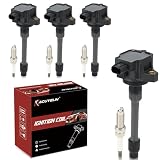
- FITMENT:1)Compatible with Honda:2018-2021 Accord 1.5 L Turbocharged GAS / 2018-2021 Accord 2.0 L Turbocharged GAS / 2016-2021 Civic 1.5 L Turbocharged GAS / 2017-2021 CR-V 1.5 L Turbocharged GAS; 2)Compatible with Acura:2019-2021 RDX 2.0 L Turbocharged GAS / 2021 TLX 2.0 L Turbocharged GAS;Please note: Not suitable for naturally aspirated cars and FULL HYBRID EV-GAS (FHEV)
- Ignition Coil: German-imported high-purity copper windings, silicon steel core and high temperature resistant epoxy resin and other high quality materials provide efficient power transmission, anti-oxidation and corrosion resistance to ensure stable high voltage output from coil pack,reduce ignition failure. OE number:UF-781 UF781 3052059B013 CM11122
- Double Iridium Spark Plug:1)center electrode adopts 360°continuous laser welding and cold extrusion process to produce more concentrated and stronger sparks;2)Iridium content up to 90%,stronger resistance to ablation and rust,life time up to 80,000-120,000 miles;3)High alumina ceramics (95 ceramic),high temperature resistance and good insulation;4)More accurate ignition,optimized MPG,fit turbocharged engine high-performance cars,extreme weather or frequent high RPM scenarios
- Spark plugs and coil packs kit optimize engine of fuel efficiency up 15%-20%,reduce engine failures such as lack of power,start-up failures,increased fuel consumption etc,reduces exhaust emissions, meets EPA standards;Precisely matches OEM specifications,direct plug-and-play.When purchasing coil,please pay attention to input your car information such as Year, Brand, SubModel,Liter and Aspiration into "amazonconfirmedfit" navigation bar to ensure that you match correct product
- KacuYelin is manufacturer with mature and modernized parts production line, manufactured in TS16949 certified facilities. After layers of research and development and testing, insisting on good products to serve public and upholding principle that users are happy to use and drive with peace of mind. If you have any questions, welcome to communicate with us, we will be happy to help you solve your problems
Fuel grade, knock and real-world operating cost
Knock is uncontrolled combustion that can damage an engine if it is severe or persistent. Higher intake pressure raises the challenge for gasoline engines, so manufacturers use compression-ratio choices, ignition control, combustion-chamber design and other strategies to manage it. EIA’s explanation of turbocharged engines and octane provides the technical context at eia.gov.
- Read the owner’s manual for the minimum octane and any premium-fuel recommendation.
- Do not assume a premium requirement from the presence of a turbocharger.
- Do not assume an NA engine can use any fuel grade without checking its specification.
- Include fuel-price differences in your ownership estimate if the vehicle requires a higher grade.
The Department of Energy discusses fuel effects on efficiency, emissions and performance in turbocharged spark-ignition engines in its 2020 technical article.
How common turbocharging has become
Turbocharging is now widespread in new light-duty vehicles, but published statistics use different measures and should not be treated as interchangeable.
| Measure | Figure | What it represents |
|---|---|---|
| EIA, 2016 | 3.3% in model year 2009 and 17.6% in model year 2014 | Shares of new gasoline-fueled light-duty vehicle sales reported as turbocharged. |
| EPA, 2025 report | More than 44% in model year 2024 | Share of vehicle production with gasoline turbocharged engines, including hybrids and plug-in hybrids. |
The historical EIA sales shares and the EPA production share describe different years and denominators. The EIA figures are reported in its March 9, 2016 article; the EPA figure appears in the 2025 EPA Automotive Trends Report.
How to compare two specific vehicles
Use this checklist when both vehicles meet your size, safety and budget requirements:
- Match the powertrains. Record engine displacement, cylinder layout, turbo or NA configuration, transmission and drivetrain. A turbo engine paired with a different transmission is not an apples-to-apples comparison.
- Compare torque and power curves. Peak horsepower alone does not show when torque arrives or how much of the operating range uses boost. Use the manufacturer’s specifications for the exact model year.
- Check official fuel-economy ratings. Compare city, highway and combined values from the same testing authority and model year. Treat them as standardized comparisons, not a promise of your personal consumption.
- Verify fuel requirements. Record the minimum octane, premium recommendation and any difference in fuel cost for your driving pattern.
- Read the warranty and service schedule. Check oil grade, change intervals, spark-plug intervals, cooling-system service and any turbocharger inspection instructions.
- Price the complete vehicle. Include purchase price, insurance, fuel, scheduled maintenance and the warranty terms rather than assigning a repair penalty from the turbo label.
- Consider your load pattern. Frequent short trips and gentle commuting may favor the downsizing efficiency case; towing, mountain driving or repeated hard acceleration will use more of either engine’s fuel, with turbo boost adding power and fuel flow.
- Drive the exact combination. Test the same engine, transmission and trim when possible. Response, noise and gearing can change substantially between versions.
Which type fits common driving priorities?
| Priority | What to look for | Why the label alone is insufficient |
|---|---|---|
| Maximum power from a small engine | Turbocharged engine with strong torque and an appropriate transmission. | A larger NA engine may still produce more total power. |
| Lowest fuel use | Official ratings, vehicle weight, gearing and your typical load; a downsized turbo may help. | Boost use can erase the light-load advantage. |
| Simple powertrain layout | An NA engine omits the turbocharger subsystem. | Other vehicle systems still determine service cost and reliability. |
| Predictable throttle response | Drive the exact vehicle and assess calibration. | Turbo response varies by design; NA response varies by displacement and tuning. |
| Lowest long-term risk | Model-specific reliability data, warranty and documented maintenance. | No source establishes a universal turbo-versus-NA durability winner. |
Practical ownership habits
For a turbocharged vehicle
- Use the manufacturer-specified oil, filter and change interval.
- Use the required fuel grade; do not downgrade octane because a cheaper fuel is available.
- Keep intake, charge-air plumbing and cooling components inspected as directed.
- Investigate loss of boost, warning lights, unusual whistling, smoke or new oil consumption instead of continuing to drive normally.
- Follow any manufacturer instructions for severe-service use, towing or high-temperature operation.
For a naturally aspirated vehicle
- Follow the specified oil, filter, spark-plug and coolant intervals.
- Use the required fuel grade even without a turbocharger.
- Monitor overheating, misfires and oil-consumption changes promptly.
- Judge operating cost from the complete vehicle’s fuel rating and service schedule, not displacement alone.
Bottom line for buyers
Choose a turbocharged engine when its smaller displacement, torque delivery and official efficiency make sense for your vehicle and driving pattern. Choose a naturally aspirated engine when its response, packaging and service profile better match your priorities. Neither choice is a universal reliability, economy or cost winner. The defensible comparison is always between complete vehicles with their exact ratings, fuel requirements, warranties and maintenance schedules.




