The Tool Desk
Outbyte Driver Updater FREEScan for outdated or missing drivers - takes under a minuteDriver Scan →Outbyte PC Repair FREERepair Windows errors before they cause bigger problemsFix Now →Some links on this page are affiliate links: if you buy through them we may earn a commission, at no extra cost to you.
For street driving, set your GR86 to the tire size and cold pressure printed on that car’s tire-and-loading label. Toyota documents several factory combinations—205/55R16, 215/45R17 and 215/40R18 depending on market, grade and equipment—and the cited standard pressure is 240 kPa (35 psi) cold. Wheel and alignment decisions must be matched to the specific model year and any suspension changes; there is no single Toyota-approved modified street alignment number that applies to every GR86.
Start with the car’s own tire label
The label on the driver’s door area (or the location specified in your owner’s manual) is the controlling reference for your individual GR86. It identifies the approved tire size and the recommended cold inflation pressure for that vehicle. Use it ahead of a generic internet size chart because GR86 fitment varies by model year, trim, market and optional equipment.
As an Amazon Associate I earn from qualifying purchases.
Recommended Free Tools
- Read the size, load index and speed symbol together. A nominally identical width and diameter can still be unsuitable if its load or speed rating is lower than Toyota’s requirement.
- Use the pressure shown for normal street operation, not the maximum pressure molded into the tire sidewall.
- If the car has aftermarket wheels, tires, springs, dampers or spacers, ask a qualified shop to confirm that the new combination remains safe and compatible; the door label still documents the factory configuration.
Toyota’s published material gives 240 kPa (2.4 kgf/cm², 35 psi) cold for the listed standard configurations. That figure is a manufacturer specification for those configurations, not permission to apply 35 psi blindly to every GR86 variant.
Factory GR86 tire and wheel sizes
Toyota Japan’s GR86 owner documentation lists three standard combinations. Equipment differs by grade and option, and the Japanese list should not be treated as a universal North American fitment table.
Popular on Amazon

- Product Overview: The Evoluxx Capricorn UHP are 215/40R18 89Y XL-Extra Load, 4 Ply Rated High Performance Tires Manufactured For Passengers
- Driving Conditions: All Season Traction, 40,000 miles Treadwear, UTQG 480AA
- Styling and Construction: Two Black Sidewall, Radial Construction, 18 Inch Tires
- Load Index and Speed Rating: Load Index 89 Supports up to 1279 lbs Per Tire and Speed Rating Y Certified to 186 mph
- Additional Note: Tires Only - Rims/Wheels Not Included
| Configuration in Toyota documentation | Tire | Wheel | Cited cold pressure |
|---|---|---|---|
| Japan-market standard configuration | 205/55R16 91V | 16 × 6.5J | 240 kPa (2.4 kgf/cm²) |
| Japan-market standard configuration | 215/45R17 87W | 17 × 7.5J | 240 kPa (2.4 kgf/cm²) |
| Japan-market standard configuration | 215/40R18 85Y | 18 × 7.5J | 240 kPa (2.4 kgf/cm²) |
| Applicable versions in the 2025 US brochure | Michelin Primacy HP summer tire, 215/45R17 | Confirm the wheel in the exact trim documentation | Use the vehicle’s tire label |
The 205/55R16 entry is documented for Japan and may not be offered on your market. Likewise, the US brochure’s 215/45R17 specification applies only to the versions covered by that brochure. Before ordering replacement tires or wheels, compare the sidewall markings and the label on your car.
How to choose replacement tires without changing the car’s baseline
Match the complete sidewall marking
A marking such as 215/45R17 87W contains more information than width and wheel diameter: 215 is the nominal section width in millimetres, 45 is the aspect ratio, R identifies radial construction, 17 is the rim diameter in inches, 87 is the load index and W is the speed symbol. Toyota’s listed 16-inch and 18-inch combinations likewise include their own load and speed ratings. Select a replacement that meets or exceeds the vehicle requirement shown on the label and in the owner’s manual.
What’s actually slowing this PC down?
Pick the symptom - the matching free tool is one click away.
Keep the rolling dimensions consistent on all four corners
For an ordinary street setup, use the same approved size on all four wheels unless Toyota specifically documents a staggered arrangement for your car. Mixing diameters or substantially different rolling circumferences can affect handling and electronic systems. If a previous owner installed a non-standard size, have a tire professional verify clearance, load capacity and rolling circumference before replacing only one axle.
Account for season and construction
The 2025 US brochure identifies a summer tire for applicable versions. A summer tire’s compound and temperature range differ from an all-season or winter tire. Changing category can alter wet grip, cold-weather traction, steering response and braking distance even when the size remains 215/45R17. Choose a tire category suited to your climate, then preserve the label’s size and required ratings.
Also popular on Amazon

- Product Overview: The Goodride Sport SA-77 is a 215/40R18 89W XL-Extra Load, 4 Ply Rated High Performance Tire Manufactured For Passengers
- Driving Conditions: All Season Traction, 50,000 miles Treadwear, UTQG 460AA
- Styling and Construction: One Black Sidewall, Radial Construction, 18 Inch Tire
- Load Index and Speed Rating: Load Index 89 Supports up to 1279 lbs Per Tire and Speed Rating W Certified to 168 mph
- Additional Note: Tire Only - Rim/Wheel Not Included
Check wheel compatibility beyond diameter
Wheel diameter alone does not establish fitment. Confirm the wheel’s width, bolt pattern, offset, centre bore, brake-caliper clearance and load rating for the specific GR86. Toyota’s cited tables provide widths for the listed factory wheels—6.5J for the 16-inch configuration and 7.5J for the 17- and 18-inch configurations—but they do not make every aftermarket wheel of those diameters compatible.
Set and check cold tire pressure correctly
What “cold” means
Check pressure before driving, while the tires have not been warmed by speed, sun or heavy braking. Pressure rises as air and the tire warm, so adjusting a hot tire down to the label value can leave it underinflated when cold. Use a reliable gauge and record the reading for each wheel.
PC Slower Than It Used to Be?
A free scan shows the junk files, broken settings and background clutter dragging Windows down - then fixes them in one click.Free scan · Windows 10 & 11Outdated Drivers Are Slowing You Down
One free scan finds every outdated or missing driver and matches the right update for your exact hardware.Free scan · exact hardware matchHow often to check
Toyota’s Japan guidance calls for checking low-profile tires every two weeks, at least monthly, and before a long trip. The two-week interval is sensible for a GR86 used frequently, because a small leak or temperature change can noticeably affect a short-sidewall tire. Inspect for nails, cuts, bulges and uneven wear at the same time.
- Park on a level surface and let the car sit until the tires are cold.
- Remove the valve-cap, press the gauge squarely onto the stem and note the reading for each tire.
- Adjust each tire to the pressure printed on your car’s label. For the cited standard configurations, that is 240 kPa (35 psi) cold, but verify your own label first.
- Replace the valve caps and check for a slow leak if one tire repeatedly loses pressure.
- Before a long journey, repeat the check and examine tread and sidewalls for damage.
Do not use a track-day pressure target, a tire maker’s maximum sidewall pressure or a number copied from another GR86 as a substitute for the vehicle label. A different tire construction may require professional advice, but any change should be deliberate and documented.
Also popular on Amazon

- Product Overview: The Arisun Aggressor ZS03 are 215/40R18 89W XL-Extra Load, 4 Ply Rated High Performance Tires Manufactured For Passengers
- Driving Conditions: All Season Traction, UTQG 460AA
- Styling and Construction: Two Black Sidewall, Radial Construction, 18 Inch Tires
- Load Index and Speed Rating: Load Index 89 Supports up to 1279 lbs Per Tire and Speed Rating W Certified to 168 mph
- Additional Note: Tires Only - Rims/Wheels Not Included
Wheel installation and torque
Toyota Japan’s online maintenance data lists 120 N·m as the standard wheel-nut torque for the relevant GR86 production-period manual beginning in August 2024. Because wheel hardware and production periods can differ, confirm the value in the manual for your car before tightening.
- Use the correct nuts for the wheel’s seat type; a conical-seat nut is not interchangeable with a ball-seat design.
- Clean the mating faces and make sure the wheel is fully seated against the hub. Do not paint, grease or place debris between the mating surfaces unless the vehicle documentation specifically instructs it.
- Install the nuts by hand, then tighten them in the vehicle’s specified cross pattern with a calibrated torque wrench.
- Apply the exact torque from the applicable Toyota manual. Do not substitute the 120 N·m figure if your model-year documentation specifies something else.
- If a wheel shop installed the wheels, ask for the torque value and hardware specification on the invoice so future servicing does not rely on guesswork.
Aftermarket wheels can change the required hardware, seating surface and clearance even when the tire size is unchanged. A wheel that contacts a brake caliper, suspension arm or inner body panel is not safe simply because it fits over the hub.
Quick wins for a faster PC:
Clear out junk files and repair common Windows errorsFree Scan →Scan for outdated or missing drivers - takes under a minuteDriver Scan →Repair Windows errors before they cause bigger problemsFix Now →What alignment setting should a street-driven GR86 use?
There is no single, universally applicable Toyota modified-street alignment target established for every GR86 year, trim and suspension configuration. Competition-rule limits and enthusiast forum numbers describe other purposes; they are not Toyota street specifications. For a stock car that tracks straight and wears its tires evenly, preserve the factory service settings for the exact model year.
When a factory-spec alignment is the right choice
- The car has original-height suspension and no collision or curb damage.
- The steering wheel is centred on a level road.
- It does not pull consistently to one side.
- Tread wear is even across each tire.
- No suspension component has recently been removed, replaced or adjusted.
Even in this case, a four-wheel alignment check can identify a bent component or a shifted adjustment before it destroys a new set of tires.
Also popular on Amazon
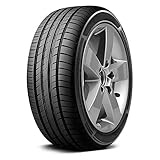
- Product Overview: The COSMO MuchoMacho are 215/40R18 89Y XL-Extra Load, 4 Ply Rated High Performance Tires Manufactured For Passengers
- Driving Conditions: All Season Traction, 30,000 miles Treadwear, UTQG 300AAA
- Styling and Construction: Two Black Sidewall, Radial Construction, 18 Inch Tires
- Load Index and Speed Rating: Load Index 89 Supports up to 1279 lbs Per Tire and Speed Rating Y Certified to 186 mph
- Additional Note: Tires Only - Rims/Wheels Not Included
When to schedule an alignment
- After installing springs, coilovers, control arms, eccentric bolts or other suspension parts.
- After a hard pothole strike, curb impact or collision.
- When the steering wheel is off-centre, the car pulls, or the vehicle feels unstable during braking.
- When the inside or outside shoulder wears faster than the centre or opposite side.
- When replacing tires after discovering irregular wear.
What to tell the alignment shop
Ask for a four-wheel alignment using the Toyota service information for your model year and market. Give the technician the exact tire size, wheel size, ride-height changes and suspension parts. Explain whether your priority is commuting comfort, long tread life, wet-road stability or occasional track use. Those goals can conflict: more aggressive camber or toe can sharpen response but may increase shoulder wear and make the car more sensitive to road ruts.
Request a printout showing the measurements before and after adjustment. If a value cannot be brought into the factory range, the shop should inspect for a bent wheel, damaged bushing, worn joint, shifted subframe or an aftermarket part with a different adjustment range rather than simply setting the opposite side to match.
Free tools Windows power users keep installed
One-click scans. No signup required.
Understanding the alignment angles
Toe
Toe describes whether the fronts of the tires point slightly toward or away from each other when viewed from above. Excessive toe is a common cause of rapid, feathered tread wear and a nervous or wandering feel. It also makes steering response sensitive to small measurement errors, so the steering wheel must be centred and the car settled before readings are taken.
Camber
Camber is the inward or outward tilt of the wheel viewed from the front. Unequal camber can make the car pull and can load one shoulder of the tire. Lowering the car or changing control arms may alter camber beyond the factory adjustment range; that is a reason to use model-year-specific service data and inspect hardware, not to copy a generic number.
Also popular on Amazon

- Designed for use on coupes, sedans, CUVs, and SUVs
- Backed by a 50,000 mile limited manufacturer tread life
- Built with rigid tread blocks that keep the tire stiff to improve grip when cornering
- Deep grooves within the tread lower rolling resistance to enhance fuel efficiency
- Multi-shape sipes bite into the road to increase traction and handling performance on wet roads
Caster
Caster is the steering-axis angle viewed from the side. It contributes to steering self-centring and straight-line stability. On many modern suspensions it is less directly adjustable than toe, so a large left-right difference can indicate a bent or displaced component. The shop should diagnose the cause before attempting to compensate with other settings.
Independent reader supportYour contribution helps us test, update, and keep practical guides available for everyone.Street setup decisions by situation
| Your situation | Appropriate next step | Avoid |
|---|---|---|
| Stock car, label-size tires, even wear and straight tracking | Maintain label pressure and factory service alignment; inspect periodically. | Adding track alignment numbers without a handling problem. |
| New tires or wheels | Verify size, load/speed rating, wheel clearance, hardware and cold pressure before driving. | Assuming diameter alone proves fitment. |
| Lowered suspension or replacement arms | Measure ride height and request a four-wheel alignment from the correct Toyota data; document final readings. | Using factory numbers without checking the modified adjustment range. |
| Pull, off-centre steering or uneven wear | Inspect tires, wheels and suspension, then align after the cause is corrected. | Masking a bent or worn part by adjusting only toe. |
| Occasional track use with street tires | Ask a performance-oriented alignment shop for a separate, reversible track plan and return to street settings afterward. | Leaving competition settings on the car for daily mileage without accepting the wear and road-behavior trade-offs. |
Common mistakes and how to correct them
Using a universal “GR86 pressure”
Different trims and markets use different sizes. Correct it by photographing the label and setting pressure from that information every time the tire is cold.
Choosing a tire by width alone
A 215-mm tire can have a different load index, speed symbol, construction and approved rim-width range. Correct it by matching the complete marking and checking the wheel manufacturer’s specifications.
Copying forum alignment numbers
Owner recommendations often reflect a particular ride height, tire, climate and driving style. Correct it by asking for the applicable Toyota service range and stating your use case to the technician.
Ignoring pressure changes after a wheel swap
A new wheel and tire can have a different air volume and sidewall stiffness. Correct it by setting the cold pressure from the vehicle label, then checking regularly for leaks and abnormal wear.
Overlooking hardware compatibility
Aftermarket wheels may require different nuts or studs. Correct it by confirming the seat type, thread engagement, torque and clearance before installation.
A practical inspection routine
- Read the vehicle label and record the approved size, load/speed rating and cold pressure.
- Compare those markings with every tire currently fitted.
- Check cold pressure at least monthly, every two weeks for low-profile tires, and before long trips.
- Inspect tread depth, shoulder wear, cracks, bulges, embedded objects and valve stems.
- After wheel or suspension work, verify nut hardware, torque and clearance, then arrange a four-wheel alignment using the correct Toyota service information.
- Keep the alignment printout and note the tire brand, size, installation date and any ride-height change. This record makes future diagnosis much easier.
Key specifications at a glance
| Item | Published figure or instruction | Qualification |
|---|---|---|
| Cold pressure | 240 kPa (35 psi) for the cited standard configurations | Verify the individual vehicle label; pressure is cold and market/configuration sensitive. |
| Japan-listed 16-inch fitment | 205/55R16 91V on 16 × 6.5J | Toyota Japan documentation; not a universal market or trim specification. |
| Japan-listed 17-inch fitment | 215/45R17 87W on 17 × 7.5J | Toyota Japan documentation; applicable US versions are also identified in the 2025 brochure. |
| Japan-listed 18-inch fitment | 215/40R18 85Y on 18 × 7.5J | Toyota Japan documentation; confirm local availability and label data. |
| Wheel-nut torque | 120 N·m | Toyota Japan maintenance data for the manual covering production beginning August 2024; confirm the value and hardware for your car. |
| Alignment target | Use the exact Toyota service specification | No universal modified-street number was established across GR86 versions. |
Bottom line for a street GR86
Keep the setup anchored to the car, not to a generic GR86 chart: read the label, match the complete tire rating, set pressure cold, and use the applicable wheel-hardware torque. For alignment, factory service settings are the defensible baseline for a stock car; suspension changes or symptoms call for a documented four-wheel alignment based on the correct year-specific Toyota data. Treat any more aggressive setting as a deliberate trade-off in tire wear, ride and road behavior rather than a universal upgrade.




