The best engine is not automatically the largest or most powerful option. It is the one that matches your vehicle, intended work, available parts, fitment, condition and total installed cost. A smaller engine can be the smarter daily-driver choice, while a larger or hybrid powertrain may be justified by towing, payload or onboard-power needs.
Start with the job, not the displacement
Engine choice should follow how the vehicle is used. Define the real workload before comparing horsepower, torque or engine size.
As an Amazon Associate I earn from qualifying purchases.
Daily driving and occasional light work
For commuting, family use and occasional light hauling, start with the smallest engine that comfortably handles the vehicle’s normal load. It generally reduces purchase and operating costs, and avoids paying for capability you rarely use. “Smallest” does not mean underpowered: leave a margin for passengers, cargo, hills, heat and the vehicle’s actual gearing.
Quick wins for a faster PC:
Clear out junk files and repair common Windows errorsFree Scan →Fix the driver behind crashes, sound loss and screen glitchesFind Drivers →Repair Windows errors before they cause bigger problemsFix Now →Frequent heavy towing
Choose from the vehicle’s loaded trailer weight, tongue weight, passengers, cargo, hitch equipment and axle ratio—not from a maximum tow figure alone. The configuration must remain within both trailer and payload limits. A powertrain that can move a trailer may still exceed the truck’s payload or rear-axle rating once people and tongue weight are added.
#1 Best Overall
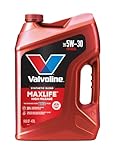
- Formulated for engines with 75,000 miles or more, Valvoline MaxLife High Mileage synthetic blend is formulated with seal conditioners to help prevent oil leaks and reduce oil consumption
- Delivers 20% better wear protection and 15% better sludge defense than industry standards to help prevent engine breakdown
- Extra detergents safeguard against friction, corrosion and deposits to keep high-mileage engines clean
- Advanced friction-fighting additives help maximize performance and improve fuel efficiency
- Provides performance benefits for high mileage, new and re-built engines alike
Specialized or commercial work
Repeated high loads, long grades, off-road use, auxiliary equipment or extended idling can justify a larger engine or a hybrid system. Reliability under the duty cycle, cooling capacity, service access and parts support matter as much as peak output.
How the 2026 Ford F-150 choices illustrate the decision
Crescent Ford’s 2026 F-150 guidance presents three different answers rather than one universal winner:
Rank #2
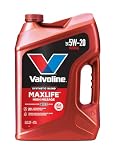
- Formulated for engines with 75,000 miles or more, Valvoline MaxLife High Mileage synthetic blend is formulated with seal conditioners to help prevent oil leaks and reduce oil consumption
- Delivers 20% better wear protection and 15% better sludge defense than industry standards to help prevent engine breakdown
- Extra detergents safeguard against friction, corrosion and deposits to keep high-mileage engines clean
- Advanced friction-fighting additives help maximize performance and improve fuel efficiency
- Provides performance benefits for high mileage, new and re-built engines alike
| Powertrain | Best fit | Why it makes sense |
|---|---|---|
| 2.7L EcoBoost | Daily driving and lighter towing | A sensible balance when maximum towing is not the priority. |
| 3.5L EcoBoost | Maximum-towing applications | The choice when the truck’s configured towing capability is central to the purchase. |
| PowerBoost hybrid | Hybrid operation and onboard power | Useful when fuel-saving potential and available onboard electrical power are important requirements. |
These descriptions are application guidance, not a substitute for checking the exact truck’s published ratings. Compare the loaded combination, payload and axle ratio for the specific build you are considering.
The Tool Desk
Outbyte PC Repair FREERepair Windows errors before they cause bigger problemsFix Now →Outbyte Driver Updater FREEScan for outdated or missing drivers - takes under a minuteDriver Scan →Fitment is an engine-code problem
Two engines can share a name or look similar while using incompatible sensors, wiring, mounts or internal dimensions. Before ordering a replacement or swap, confirm all of the following:
Rank #3

- Advanced protection against the four main causes of engine breakdown: wear friction heat and deposits
- Delivers 40% stronger wear protection than industry standards to reduce friction and improve fuel economy
- Provides 15% better deposit defense vs. industry standards, keeping engines cleaner for smoother performance and longer-lasting protection
- Up to 2.5X better heat protection vs. industry standards to fight harmful sludge formation and thermal breakdown
- Engineered for excellent low-temperature flow, reducing metal-to-metal contact during cold starts — when most engine wear typically occurs
- Exact engine code and generation
- Vehicle model year, market and emissions configuration
- Drivetrain and transmission pairing
- Crankshaft and bellhousing dimensions
- Sensor types, connectors and wiring harness compatibility
- Engine-control unit (ECU) requirements and immobilizer integration
- Intake, exhaust and emissions equipment
- Mounts, oil pan, accessory brackets and cooling connections
- Which accessories are included with the assembly
Ask the seller to identify the assembly as a long block, dressed long block or complete engine. Clarify whether the manifolds, injectors, turbochargers, alternator, air-conditioning compressor, starter, sensors, wiring, ECU, mounts and brackets are included. Air-cleaner height, connector changes and application-specific hardware can make a supposedly compatible engine impractical without additional parts or fabrication.
Replacement engine: compare the installed result
A low headline price can become expensive after shipping, transferred accessories, wiring, ECU work, cooling changes, exhaust adaptation, fluids, labor and troubleshooting. Compare candidates using the complete installed budget:
Rank #4
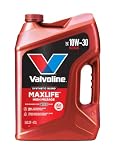
- Formulated for engines with 75,000 miles or more, Valvoline MaxLife High Mileage synthetic blend is formulated with seal conditioners to help prevent oil leaks and reduce oil consumption
- Delivers 20% better wear protection and 15% better sludge defense than industry standards to help prevent engine breakdown
- Extra detergents safeguard against friction, corrosion and deposits to keep high-mileage engines clean
- Advanced friction-fighting additives help maximize performance and improve fuel efficiency
- Provides performance benefits for high mileage, new and re-built engines alike
| Cost or risk area | Questions to ask |
|---|---|
| Engine assembly | Is it a long block or complete engine? What mileage and application does it have? |
| Transferred parts | Will your intake, exhaust manifolds, injectors, sensors and accessories be reused? |
| Installation hardware | Are mounts, oil pan, flexplate or flywheel and fasteners correct for your vehicle? |
| Electronics | Will the existing harness and ECU work, or is programming or replacement required? |
| Cooling and exhaust | Do hoses, radiator capacity, downpipes and emissions equipment match? |
| Labor and commissioning | Does the estimate include fluids, priming, diagnostics and post-installation checks? |
| Warranty exposure | What parts and labor are covered, for how long, and what installation conditions void coverage? |
Inspect a used or imported engine before installation
Do not treat a mileage claim or a compression number as a complete health report. Before the engine goes into the vehicle:
- Obtain the exact engine code, donor vehicle details and included-parts list in writing.
- Request documented compression results, or perform a compression check with a suitable tester and record each cylinder.
- Compare cylinder readings for consistency and investigate abnormal variation before accepting the engine.
- Inspect for oil or coolant contamination, external leaks, damaged threads, corrosion and missing sensors or brackets.
- Verify crankshaft, transmission, mounts, wiring and emissions compatibility against the recipient vehicle.
- Confirm the seller’s return and warranty conditions before installation; some warranties require proof of professional installation or replacement of specified ancillary parts.
Compression testing provides a baseline for cylinder sealing. It cannot establish the condition of bearings, oil pump, timing components, turbocharger, cooling system or every electronic component, and it does not prove that the engine fits your vehicle.
Best Value

- Designed for vehicles with 75,000 miles or more, Valvoline MaxLife Full Synthetic High Mileage Motor Oil helps maximize engine life and performance for the many miles still ahead
- Formulated with seal conditioners to help prevent oil leaks, reduce oil consumption, and improve fuel economy
- Delivers 50% stronger wear protection than industry standards for superior defense against friction and wear
- Provides 20% stronger sludge defense than industry standards to protect against harmful buildup and deposits
- Offers 2.5X better heat protection than industry standards to safeguard engines in extreme conditions
When a bigger engine is actually the better choice
Choose the larger option when the vehicle will regularly operate near its limits, when the required trailer weight leaves little performance margin, or when the drivetrain’s cooling, axle and transmission package is designed around that engine. The extra capability can reduce strain and improve drivability under load.
Do not choose it solely for an occasional peak number. A larger engine can bring higher purchase, fuel, insurance, maintenance and installation costs. If most miles are unloaded commuting, those costs may outweigh its benefit.
When a smaller or hybrid engine is the better choice
A smaller engine is often the rational choice when loads are modest, parts are plentiful and the vehicle’s ratings comfortably exceed the real task. A hybrid can be preferable when onboard electrical power, low-speed torque or fuel-use priorities are more important than maximum conventional towing capacity. Confirm the exact model’s ratings, available equipment and service support before deciding.
A practical decision checklist
- Write down typical and worst-case passengers, cargo, trailer weight and tongue weight.
- Check the specific vehicle’s payload, tow rating, axle ratio and transmission configuration.
- Rank your priorities: towing margin, fuel economy, purchase price, parts availability, power, onboard power or ease of installation.
- For a replacement, identify the exact engine code before comparing mileage or price.
- Price the complete installation, including transferred parts, electronics, cooling, exhaust, labor and warranty requirements.
- Inspect and document the engine’s condition before installation.
- Choose the candidate that meets the workload with the lowest credible total risk—not the one with the biggest displacement.
What “best” means in practice
The best engine is the one that matches the vehicle, the available parts and the intended use. That principle from the JDM Racing Motors buying guide is more useful than a universal ranking because engines are installed in different vehicles, driven under different loads and supported by different parts networks. Treat engine size as one input to the decision, then verify ratings, fitment, condition and installed cost before committing.
Quick Recap
Product prices and availability are accurate as of the date/time indicated and are subject to change. Any price and availability information displayed on Amazon at the time of purchase will apply.




