The Tool Desk
Outbyte PC Repair FREERepair Windows errors before they cause bigger problemsFix Now →Outbyte Driver Updater FREEScan for outdated or missing drivers - takes under a minuteDriver Scan →Tesla’s “We, Robot” event was less a conventional vehicle launch than a presentation of the company’s long-term autonomy plan. Held on October 10, 2024, at the Warner Bros. Discovery studio in Burbank, California, it introduced the two-seat Cybercab, revealed the larger Robovan, and used Optimus robots to illustrate Tesla’s broader “autonomous fleet” vision.
The important distinction is between what Tesla demonstrated, what Elon Musk projected, and what was actually available. The Cybercab rides took place on a private film-studio lot rather than Los Angeles streets, the Robovan remained a concept, and many Optimus interactions were later reported to have involved remote human assistance.

As an Amazon Associate I earn from qualifying purchases.
What was Tesla’s “We, Robot” event?
Tesla livestreamed the event from the Warner Bros. studio lot in Burbank. Its central argument was that transportation could move from privately owned cars controlled by drivers to a fleet of autonomous vehicles summoned when needed. Tesla presented the Cybercab as the purpose-built robotaxi for that future, while the Robovan represented a larger option for passengers or cargo.
The presentation also connected Tesla’s vehicle business with Optimus, its humanoid-robot project. The demonstrations were designed to show a future in which autonomous machines could provide transportation, delivery and household assistance.
#1 Best Overall

- Detailed Vehicle Toy: Features a NYC Ford Escape Taxi 1/43 Scale design made for interactive play and vehicle enthusiasts.
- Authentic Design: Features officially licensed logos and markings for a recognizable and authentic vehicle design.
- Interactive Play: Promotes interactive play and encourages children to create their own vehicle-themed adventures.
- Daron Quality: From Daron, a brand offering a variety of transportation and aviation toys for children, collectors, and enthusiasts.
- Ages 3+: Recommended for children ages 3 and up, making it a fun choice for playtime, collecting, or gifting.
Cybercab: the headline reveal
The Cybercab was the event’s main product reveal. Tesla showed approximately 20 prototypes, and guests could take demonstration rides around the controlled studio property.
| Cybercab detail | What Tesla presented |
|---|---|
| Configuration | Two seats |
| Controls | No steering wheel or pedals |
| Doors | Gull-wing doors |
| Charging | Inductive, or wireless, charging |
| Target price | Less than $30,000, according to Musk |
| Target production timing | 2026 or before 2027, according to Musk |
| Projected operating cost | Approximately $0.20 per mile, according to Tesla’s projection |
The cabin layout was a clear departure from Tesla’s existing cars. With no driver controls, the Cybercab was shown as a vehicle intended to operate as part of an autonomous ride service rather than as a normal car that a customer drives home.
Musk said the vehicle could eventually cost under $30,000 and operate at roughly 20 cents per mile. Both figures were projections made at the event, not a confirmed retail price or an independently verified operating cost. Tesla also did not publish a complete production specification, range figure, battery size or final purchase process at the reveal.
What the Cybercab demonstration proved—and did not prove
The demonstration showed that Cybercab prototypes could carry passengers around a mapped, private property. It did not show a commercially deployed robotaxi handling ordinary public-road traffic in Los Angeles.
Rank #2

- Metal Cardbot S Sparkbeat Robot Car Figure — 2 Modes (Robot & Vehicle)
That setting matters. A film-studio lot offers a more controlled environment than a city street, with a defined operating area and fewer variables than public roads. The event therefore demonstrated a prototype ride experience, not regulatory approval, nationwide availability or the ability to handle every emergency a driverless vehicle might encounter.
It is also important not to equate the Cybercab with Tesla’s existing Full Self-Driving (Supervised) system. Tesla’s owner documentation says drivers using that system must remain attentive and ready to take control. A supervised driver-assistance system is not the same as a vehicle with no steering wheel or pedals that operates without a human driver.
Robovan: Tesla’s unexpected larger vehicle
Tesla also unveiled the Robovan, a much larger autonomous vehicle intended for group transportation or goods movement. Musk said it could carry up to 20 people. Tesla’s event material suggested possible uses ranging from shared passenger transport to cargo service.
Quick wins for a faster PC:
Repair Windows errors before they cause bigger problemsFix Now →Fix the driver behind crashes, sound loss and screen glitchesFind Drivers →Unlike the Cybercab, the Robovan did not receive a meaningful commercialization plan. Tesla did not announce a production date, price, detailed dimensions, range, battery specifications or factory schedule for it at the event.
Rank #3
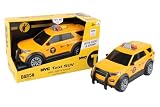
- Detailed Vehicle Toy: Features a NYC Taxi Ford SUV design made for interactive play and vehicle enthusiasts.
- Authentic Design: Features officially licensed logos and markings for a recognizable and authentic vehicle design.
- Interactive Play: Promotes interactive play and encourages children to create their own vehicle-themed adventures.
- Daron Quality: From Daron, a brand offering a variety of transportation and aviation toys for children, collectors, and enthusiasts.
- Ages 3+: Recommended for children ages 3 and up, making it a fun choice for playtime, collecting, or gifting.
| Question | Status after the event |
|---|---|
| Was it a production vehicle? | No. It was presented as a concept or prototype. |
| How many people could it carry? | Musk said up to 20. |
| When would production begin? | Tesla did not provide a date. |
| What would it cost? | Tesla did not provide a price. |
| What were its exact specifications? | They were not disclosed in practical detail. |
The Robovan was therefore best understood as a design direction rather than a product available for ordering. Calling it a production vehicle or giving it a firm release date would go beyond what Tesla announced.
Optimus demonstrations
Optimus robots danced, interacted with guests and served drinks during the event. Tesla used those scenes to reinforce its argument that robots could eventually perform useful work in homes, workplaces and public environments.
However, the demonstrations should not all be described as autonomous. Subsequent reporting said humans remotely assisted many of the robots’ interactions, although the prototypes could walk without external control. The event showed an ambitious prototype demonstration; it did not establish that Optimus could independently perform all the tasks shown.
Outdated Drivers Are Slowing You Down
One free scan finds every outdated or missing driver and matches the right update for your exact hardware.Free scan · exact hardware matchPC Slower Than It Used to Be?
A free scan shows the junk files, broken settings and background clutter dragging Windows down - then fixes them in one click.Free scan · Windows 10 & 11Musk estimated that Optimus could eventually sell for between $20,000 and $30,000. Tesla did not announce a retail product, delivery date or production schedule for the humanoid robot.
Other promises made at the event
Musk said Tesla expected unsupervised driving for Model 3 and Model Y vehicles in California and Texas during 2025. This was a forward-looking company promise, not a description of what ordinary Tesla owners could use at the time of the event.
The event also presented autonomous transportation as potentially cheaper than conventional public transit. Musk cited an eventual average cost of about $0.20 per mile for Cybercab operation. That estimate depends on assumptions about vehicle utilization, maintenance, charging, insurance, remote assistance and regulatory requirements. It was not the price of a Tesla ride available to the public in October 2024.
What Tesla’s event left unanswered
The “We, Robot” presentation supplied striking prototypes and ambitious targets, but relatively few operational details. The main unanswered questions included:
- Regulatory approval: Tesla did not explain which approvals would be required before a car without pedals or a steering wheel could carry paying passengers on public roads.
- Safety validation: The event did not provide a safety record, disengagement data or a detailed explanation of how the Cybercab would handle unusual road situations.
- Manufacturing scale: Tesla did not explain how quickly it could build Cybercabs in large numbers or where production would occur.
- Remote assistance: The presentation did not spell out when a human operator might intervene, how many vehicles one operator could supervise or what would happen if communications failed.
- Service economics: The $0.20-per-mile estimate did not come with a full breakdown of energy, repairs, cleaning, insurance, software and fleet-management costs.
- Robovan commercialization: No production timetable or business plan was provided for the larger vehicle.
What happened after the reveal?
Tesla’s later Robotaxi service information separates the current service from the Cybercab’s promised future role. Tesla says autonomous rides are being offered using Model Y vehicles, with service listed in Miami, Florida, and Austin, Dallas and Houston, Texas. The same information says the purpose-built Cybercab will offer rides in the future.
Tesla’s Q1 2026 filing said it had begun pilot production of the Cybercab and expected volume production in 2026. “Pilot production” is not the same as broad customer availability, and it does not mean the Cybercab had already become the ordinary vehicle carrying Tesla Robotaxi passengers.
Independent reader supportYour contribution helps us test, update, and keep practical guides available for everyone.How to recap the event accurately
A reliable recap should separate confirmed demonstrations from targets and later developments:
- Start with the setting and date: Tesla held the event on October 10, 2024, at the Warner Bros. studio in Burbank.
- Describe the Cybercab precisely: It was a two-seat prototype with no steering wheel or pedals, shown operating on private studio roads.
- Label projections as projections: The under-$30,000 price, 2026-or-earlier production target and $0.20-per-mile estimate came from Tesla and were not confirmed consumer specifications.
- Keep the Robovan’s status clear: It was a concept for passenger or cargo transport, not a production vehicle with a launch date.
- Qualify Optimus footage: The robots were prototypes, and later reporting indicated that humans remotely assisted many interactions.
- Do not confuse FSD Supervised with driverless operation: Tesla’s current owner guidance requires an attentive driver for that system.
- Use current status separately: Model Y vehicles are identified as the initial Tesla Robotaxi fleet, while Cybercab service is described as future deployment.
Cybercab, Robovan and Optimus compared
| Project | Role shown at “We, Robot” | What was confirmed | What remained uncertain |
|---|---|---|---|
| Cybercab | Small purpose-built robotaxi | Two seats, no driver controls, prototype rides on a private lot | Final price, approvals, public-road deployment and delivery timing |
| Robovan | Large passenger or cargo vehicle | Concept capable of carrying up to 20 people, according to Musk | Production, specifications, price and launch date |
| Optimus | Humanoid robot for possible household and commercial tasks | Walking and staged interactions were demonstrated | Independent operation, product release, price and production schedule |
FAQ
When and where was Tesla’s “We, Robot” event held?
Tesla held the event on October 10, 2024, at the Warner Bros. Discovery studio in Burbank, California. It was livestreamed on Tesla’s website and X.
Do these 3 things before closing this tab:
1Clear out junk files and repair common Windows errors2Fix the driver behind crashes, sound loss and screen glitches3Repair Windows errors before they cause bigger problemsWhat is the Tesla Cybercab?
The Cybercab is Tesla’s proposed two-seat autonomous vehicle. The prototype shown at the event had no steering wheel or pedals, used gull-wing doors and was intended for robotaxi service.
Was the Robovan available to buy?
No. Tesla presented the Robovan as a concept or prototype for group passenger or cargo transport and did not announce a price, production date or detailed commercialization plan.
Did Tesla demonstrate a driverless robotaxi on Los Angeles roads?
No. Cybercab demonstration rides took place on the controlled Warner Bros. studio property in Burbank, not on Los Angeles public roads.
The Bottom Line
“We, Robot” was a preview of Tesla’s autonomy ambitions, not a full launch of a ready-to-buy robotaxi fleet. The Cybercab was the clearest product concept: a two-seat, control-free vehicle aimed at future ride service. The Robovan was an intriguing but lightly specified larger concept, while Optimus demonstrations illustrated a still-developing robotics program. The event’s prices, operating-cost estimates and timelines should be treated as Tesla projections until production vehicles, approvals and public service availability substantiate them.
Recommended Free Tools
Quick Recap
Product prices and availability are accurate as of the date/time indicated and are subject to change. Any price and availability information displayed on Amazon at the time of purchase will apply.




