What’s actually slowing this PC down?
Pick the symptom - the matching free tool is one click away.
Some links on this page are affiliate links: if you buy through them we may earn a commission, at no extra cost to you.
As of October 26, 2026, CapMetro is charging buses on two Austin Rapid routes with end-of-line overhead pantographs. Rapid 800 Pleasant Valley and Rapid 837 Expo Center fully launched with this opportunity-charging system on June 7, 2026. At each terminus, a conductive arm lowers onto a bus roof during a scheduled layover, adding energy without requiring the bus to return to a depot. The new Goodnight Ranch and Expo Center Park & Ride facilities complement depot plug-in equipment and a solar-powered pantograph installation at North Operations.
How is Austin charging its electric buses?
CapMetro now uses a mix of overnight depot charging and route-end opportunity charging. Depot equipment supplies the fleet between operating days, while overhead pantographs at selected endpoints add energy during service. This combination lets buses carry less energy for a day’s work while remaining in operation longer.
As an Amazon Associate I earn from qualifying purchases.
Free tools Windows power users keep installed
One-click scans. No signup required.
Both Rapid 800 Pleasant Valley and Rapid 837 Expo Center received full service on June 7, 2026. Their endpoint facilities are designed around passenger parking, bus circulation and charging rather than a return to the operating garage after every trip.
Goodnight Ranch and Expo Center facilities
| Facility | Parking spaces | Bus bays with overhead charging | Role |
|---|---|---|---|
| Goodnight Ranch | 64 | 4 | Endpoint charging for Rapid 800 Pleasant Valley |
| Expo Center Park & Ride | 159 | 8 | Endpoint charging for Rapid 837 Expo Center |
The endpoint chargers are part of a wider network. CapMetro lists North Operations with 30 electric-bus chargers, 90 pantographs and a 267,000-square-foot solar canopy. South Operations provides high-power overnight charging for buses assigned to the depot.
Popular on Amazon

- Flex Level 1 EV Charger - The EVDANCE Level 1 electric car charger is compatible with J1772 electric vehicles and plug-in hybrid vehicles (North American Standard). *Tesla requires a SAE J1772 adapter.
- Convenient to Use - This charger has both NEMA 6-20 plug for 16A 240V charging (3.68kW, 10-12 mi/h) and a NEMA 6-20 to 5-15 plug adapter for 12A 120V charging (1.44kW, 2-5 mi/h). The included bag makes it easier to carry on the go. It also has a 25ft cable length, you can use it flexibly from anywhere in the garage or driveway.
- Check Your Outlet Type -This charger works with standard 120V NEMA 5-15/5-20 outlets (2-5 mph charging speed) and 240V NEMA 6-20 outlets (10-12 mph) . It's not compatible with NEMA 6-15/10-30/14-30/14-50/6-50 outlets – you'll need a NEMA 14-50/14-30/10-30/6-50 to 6-20 adapter (sold separately) to connect.
- Compatible EV Models -This EV charger works with most major electric vehicles, including Ford, Chevrolet, Hyundai, Audi, Nissan Ariya, Rivian R1S, Kia, and others. However, it's not compatible with Mini Cooper Electric Hardtop,Toyota Prus Prime/Z4X/RAV4Prime, Porsche Taycan Base/4S/Turbo/Turbo S or Tesla models (Tesla requires a J1772 to Tesla Adapter, sold separately). For a full list of compatible models, check out the Full Compatibility List on our product page.
- Indication Displays - LED display that can tell you the status as well as indicate errors while charging your electric vehicle.
What is overhead pantograph charging?
A pantograph charger makes a conductive connection from infrastructure above the bus to a contact point on its roof. When the bus is correctly positioned, the arm connects during a layover; it retracts before the bus leaves. Because the charger is fixed at a route endpoint, drivers do not have to plug in a cable.
CapMetro chief operating officer Andy Skabowski described the operational effect this way: “Instead of a typical bus holding 8 hours of charging, on-route charging takes that out to 20 to 22 hours.” The statement describes the time a bus can remain in its daily operating cycle with route-end charging, not a published measurement of battery range or energy consumption.
The Tool Desk
Outbyte Driver Updater FREEScan for outdated or missing drivers - takes under a minuteDriver Scan →Outbyte PC Repair FREERepair Windows errors before they cause bigger problemsFix Now →Which CapMetro routes have overhead charging?
The two routes publicly identified with end-of-line overhead charging are Rapid 800 Pleasant Valley and Rapid 837 Expo Center. Their endpoint infrastructure opened with the routes’ full launches on June 7, 2026.
Also popular on Amazon

- [2026 INTELLIGENT CHARGING UPGRADE — PRECISION CONTROL MEETS SMART SCHEDULING] After surveying 100K+ U.S. EV owners, the Raylix R&D team found that nearly all drivers recognized the necessity of adjustable current and scheduled charging. Our upgraded J1772 charger features 4-level adjustable current (8A/10A/12A/16A) and a 1–12 hour smart delay timer. Whether you're charging overnight or during off-peak hours, enjoy smarter energy use, lower costs, and total convenience—on your schedule.
- [ONE CHARGER, ALL J1772 EVs/PHEVs READY!] Compatible with all SAE J1772 electric vehicles and plug-in hybrids—whether it’s Ford, GM, Nissan, Audi, BMW, Kia, Hyundai, Honda, Chevy, or more. Perfect for home or on-the-road charging, our 16A Level 1 & 2 charger ensures your EV is always powered and ready for any journey.
- [CHARGE 4× FASTER — NO MORE WAITING] In a rush? Our 16A Level 1 & 2 charger delivers charging speeds up to 4× faster than standard 8A Charger Level 1. Whether it's an early commute, a spontaneous trip, or last-minute errands, your EV will be ready when you are.
- [LEVEL 1 & 2 PORTABLE CHARGER — CHARGE ANYWHERE, ANYTIME] Designed for maximum flexibility, Raylix Level 1 & 2 EV charger features both 5-15 and 6-20 plug compatibility. Whether you're charging in your garage, at a friend's house, or at a roadside motel. NEMA 6-20 plug for Level 2 ev charging (240V, 16A, 3.68kW, 9-12 miles/hr) and a NEMA 5-15 adapter for Level 1 ev charging (120V, 12A, 1.44kW, 3-5 miles/hr) NOTE: In compliance with North American electrical safety standards, the charger automatically limits current to 12A when using a 5-15 outlet—protecting both your vehicle and your home’s electrical system.
- [AT-A-GLANCE CHARGING COMMAND: TOTAL CONTROL, INSTANTLY] While most ev chargers solutions confine vital data to in-car screens, the Raylix tesla charger breaks free with its enhanced TFT color display. This Raylix-exclusive feature delivers crystal-clear, real-time updates—voltage, current, power load, AND critical charging temperature—directly on the unit. Just one glance gives you complete charging insight. It’s not just information; it's the empowering peace of mind and satisfying control that transforms every charge into a masterfully managed experience.
- Rapid 800 Pleasant Valley: uses the Goodnight Ranch endpoint, which has four overhead-charging bays.
- Rapid 837 Expo Center: uses Expo Center Park & Ride, which has eight overhead-charging bays and 159 parking spaces.
CapMetro’s published material does not report post-launch charger uptime, missed charging sessions, ridership, on-time performance or route-level energy savings for either line.
How does end-of-line charging differ from depot charging?
Depot charging concentrates high-voltage equipment at an operating base and normally replenishes buses between shifts. End-of-line charging spreads smaller charging events across the timetable, allowing a bus to top up while it is already waiting at a terminal.
| Factor | Depot plug-in charging | End-of-line opportunity charging |
|---|---|---|
| Connection | Plug-in dispensers connected while buses are parked | Overhead pantograph contacts the bus roof at a terminal |
| Typical use | Overnight or extended layovers | Short, scheduled route-end dwell periods |
| Infrastructure location | Operating garage | Route endpoints such as park-and-ride facilities |
| Battery strategy | Supports carrying energy for a shift | Allows regular top-ups and can reduce the energy needed onboard for the full duty cycle |
| Grid and site needs | High-capacity service, switchgear, transformers and many parking connections | High-power equipment, a precisely aligned bus bay and electrical service at the endpoint |
| Operational risk | A failed overnight session can affect the next day’s pull-out | A failed endpoint session can reduce energy available before the next trip |
The two approaches are complementary rather than interchangeable. A bus still needs a dependable depot plan for charging, maintenance and dispatch, while endpoint equipment must be available at the times built into the schedule.
Do these 3 things before closing this tab:
1Fix the driver behind crashes, sound loss and screen glitches2Clear out junk files and repair common Windows errors3Scan for outdated or missing drivers - takes under a minuteAlso popular on Amazon
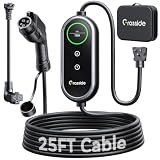
- Universal J1772 Compatibility: Designed with a standard J1772 connector, this J1772 charger works with most J1772 electric vehicles and PHEVs, including BMW, Mercedes-Benz, Hyundai, Kia, Nissan, Rivian, Ford, Chevy, Volkswagen, Toyota and more. Note: Tesla vehicles require a J1772 to Tesla adapter (not included)
- Flexible Outlet Compatibility: This portable EV charger comes with a NEMA 6-20 plug and a NEMA 5-15/5-20 to 6-20 adapter. Supports Level 1 (8–12A) and Level 2 (16A). Max 12A (1.44kW) on 120V NEMA 5-15/5-20 outlets, and full 16A (3.84kW) with a 240V NEMA 6-20 outlet. One charger is designed to cover home, garage, and travel charging needs with reliable performance
- Adjustable Smart Charging Control: Customize charging safely with adjustable current settings (8A/10A/12A/16A) to match different circuits. The 0–12 hour delay timer helps schedule overnight charging during lower electricity rates. Integrated LCD display shows real-time voltage, current, power, and charging status for clear monitoring without apps. Note: Press 'A' or 'T' for 3s to set and confirm.
- Home Charging & Travel Backup: For daily home use while remaining fully portable for travel. This level 1 ev charger includes a durable 25FT ev charging cord, providing flexible reach for garage or driveway charging. Charge overnight to take advantage of lower utility rates—potentially saving up to $500 annually on electricity costs. The included carrying case makes storage easy and keeps a dependable backup charger available in your trunk for road trips or visiting friends
- Engineered For Safety & Durability: Built for dependable daily use, this electric car charger features an IP65 waterproof rating for all weather operation. Equipped with a UL-listed cable, fully rubberized connector, and advanced protection against overcurrent, overheating, and electrical faults. Designed to ensure safe, stable, and long-term charging performance in demanding environments
How much charging capacity does CapMetro have?
South Operations depot
At 2910 E. Fifth Street, South Operations has two 1.44-megawatt chargers and 48 plug-in dispensers. The reported installation totals 2.9 MW and is designed to charge up to 48 buses at once overnight. The site also uses two switchboards and two high-capacity transformers to distribute power to the charging equipment.
North Operations solar-and-pantograph site
CapMetro’s March 26, 2025 technical presentation lists 30 chargers rated at 1.44 MW each, 90 Schunk SLS_301 pantographs, a training charger and one Schunk SLS_201 pantograph at North Operations, 9315 Old McNeil Road. The presentation identifies Holt Renewables as the contractor for the solar array, charging system and microgrid project. CapMetro lists a 267,000-square-foot solar canopy at the site.
How large is CapMetro’s electric-bus program?
Electric buses entered CapMetro service in 2020. The board approved nearly 200 electric buses in 2021, and construction of the North Austin electric-fleet facility began in 2024. CapMetro says the completed facility is planned to accommodate 214 buses, with charging capacity for 187 battery-electric buses.
Also popular on Amazon

- Road-Trip Ready & Apartment-Friendly: Comes with a 20ft heavy-duty cable that easily spans a standard parking space, plus a NEMA 5-15 adapter for plug and play convenience. Whether you're charging at home or hitting the highway, this portable EV Charger is your ultimate travel companion for weekend getaways and camping trips
- Delay Timer & Adjustable Current: Use the built-in timer to delay your start by 1-12 hours and easily harvest off-peak energy savings. Then pick from 6/8/10/12/16A (Level 2) to match your garage grid. It automatically locks in your favorite setting and never forces you to re-adjust. No complicated apps or Wi-Fi needed, just straightforward, reliable control
- Tactile Buttons & LED Screen: No glitchy smartphone apps or finicky touchscreens that lag, freeze, and misfire in winter. Our EV charger is engineered with a high-definition LED display that tracks critical real-time data, including live voltage and current. Tactile buttons deliver direct, satisfying click feedback that remains highly responsive even when wearing heavy winter gloves or operating in torrential downpours—conditions where standard touchscreens completely fail
- ETL Certified Safety & IP65 All-Weather Shield: ETL certified to meet US safety standards for charging. Engineered with a certified IP65 dust-and-waterproof enclosure and a heavy-duty TPE cable that operates reliably across a wide -22°F to 130°F range. An intelligent multi-protection defense system (GFCI, over-voltage, over-current, surge, short-circuit, and over-temp) keeps a 24/7 watch for 100% safe, unattended overnight charging in any weather
- J1772 Compatible + Dual-Level Charging: Works with all J1772 EVs (Tesla requires a separate J1772 adapter). Level 2: built-in NEMA 6-20 plug. Level 1: included NEMA 5-15 adapter fits any standard outlet. Please confirm your outlet is NEMA 6-20 or 5-15 before purchase
Those figures describe long-term capacity, not the number of buses simultaneously assigned to the two Rapid routes. A March 2025 CapMetro presentation listed 104 battery-electric buses and four Metro Rapid pantograph chargers at that point in the program.
Who supplied and maintains the charging equipment?
CapMetro authorized Camber Operating Company to provide charging equipment, installation-related work, commissioning, testing and training under a not-to-exceed contract valued at $46,465,995. The contract term runs from September 23, 2024, through October 27, 2026.
Charging responsibilities moved to Camber after Phoenix Motor’s role changed following Proterra’s bankruptcy. Camber Charging is also reported as supplying and installing the depot systems, preventive maintenance, charger and energy-management software, and remote diagnostics across the three described locations.
Also popular on Amazon

- 【Delay Timer - Adjustable Current】Ev charger can adjust the current (8A/10A/12A/16A) through the physical button of level 1 ev charger. Charging power can reach up to 3.68KW (240V/16A). One-touch switch for ev charger operation. Built-in 2–8 hour delay timer for off-peak charging to save on electricity bills.
- 【NEMA 6-20 Plug & NEMA 5-15 Adapter】Nema 6-20 plug for 240V outlets and 5-15 adapter for standard 120V realize plug-and-charge (With 5-15 adapter, need to adjust the current to 12A or below, otherwise the charger may be demeged). Overall length of ev charger level 2 is 27FT, providing enough charging distance across garages at home or outdoor. Portable storage bag supports you take portable EV Charger during travel, business trip, electric vehicle charging stations anywhere.
- 【ETL/FCC and IP67 Safety】J1772 charger is equipped with advanced safety functions such as overvoltage, overheating, and short-circuit automatic shutdown. IP67 waterproof and dustproof, extreme temperature protection level for withstanding harsh weather conditions from -40°F to 131°F in sunny, rain, snow and sandstorm. Electric car charger has ETL certified, FCC listed, meets UL safety standards. Industrial-grade construction with high-strength TPU-coated cables and 99.95% oxygen-free copper cores.
- 【J1772 Connector】J1772 charger works for all J1772 standard electric vehicles, Ford, GM, Nissan, Audi, Kia, Honda, BMW, Hyundai, Gmc, Chevy, Mercedes, and all PHEV/BEV. [Not fits Tesla cars/Nacs connector]
- 【One-Touch Charging Operation】16A electric car charger supports plug-and-charge functionality and features one-touch scheduled charging and current adjustment. Its intuitive and user-friendly operation allows flexible customization of personalized charging plans. Level 1 ev charger automatically shuts off when your car is fully charged.
Commissioning and training matter because pantographs require accurate stopping position, software coordination and safe high-voltage operation. The published contract establishes those responsibilities, but CapMetro has not released a post-launch reliability rate or maintenance-cost series.
What remains unknown about the new system?
CapMetro has announced the infrastructure and launch dates, but the available public material does not yet establish whether overhead charging has changed ridership, on-time performance, energy use, emissions or charger uptime on Rapid 800 or Rapid 837. Those outcomes require operating data collected after launch. Solar generation, battery charging schedules and grid conditions can also vary by season, so a single operating period would not represent every future result.
Frequently Asked Questions
Can any CapMetro bus use the overhead chargers?
The published facilities are associated with specific Rapid route endpoints and operating plans. CapMetro has not stated that every bus type or route can use every pantograph, so compatibility depends on the vehicle’s roof interface, bay alignment and dispatch assignment.
Does opportunity charging eliminate overnight depot charging?
No. Route-end charging adds energy during service, while depot equipment remains necessary for overnight replenishment, fleet staging and recovery when a bus misses a scheduled top-up.
Why build charging at a park-and-ride facility?
A park-and-ride terminal provides a predictable layover location with room for bus bays and electrical infrastructure. It can serve both passenger access and repeatable charging stops without sending buses back to a garage between trips.
What does a 1.44 MW charger rating mean for one bus?
It is the rated power of the charging equipment, not a guaranteed power level delivered continuously to one bus. Actual power depends on the charger configuration, bus battery state, site load management and the time available for charging.




