Free tools Windows power users keep installed
One-click scans. No signup required.
Some links on this page are affiliate links: if you buy through them we may earn a commission, at no extra cost to you.
For most shoppers, a lightly used EV is now the cheaper way into electric driving. The federal new- and previously-owned clean-vehicle credits are unavailable for vehicles acquired after September 30, 2025, so the first owner generally absorbs the largest depreciation without that help. A new EV can still be the better financial choice when a dealer discount, promotional APR, warranty coverage, insurance quote, charging cost or state and utility incentive offsets its higher price.
The right comparison is not a new sticker price against a used listing. Compare two similar vehicles using out-the-door price, financing, battery and warranty risk, operating costs and the value you expect to recover when you sell.
As an Amazon Associate I earn from qualifying purchases.
The Tool Desk
Outbyte Driver Updater FREEFix the driver behind crashes, sound loss and screen glitchesFind Drivers →Outbyte PC Repair FREEClear out junk files and repair common Windows errorsFree Scan →What changed when the federal EV credits ended?
IRS guidance says the federal new clean-vehicle and previously-owned clean-vehicle credits are unavailable for vehicles acquired after September 30, 2025. That cutoff applies to the acquisition date; do not assume a vehicle is eligible merely because it was manufactured earlier or listed before the deadline.
With the federal credit removed, your effective purchase price is:
Popular on Amazon

- Flex Level 1 EV Charger - The EVDANCE Level 1 electric car charger is compatible with J1772 electric vehicles and plug-in hybrid vehicles (North American Standard). *Tesla requires a SAE J1772 adapter.
- Convenient to Use - This charger has both NEMA 6-20 plug for 16A 240V charging (3.68kW, 10-12 mi/h) and a NEMA 6-20 to 5-15 plug adapter for 12A 120V charging (1.44kW, 2-5 mi/h). The included bag makes it easier to carry on the go. It also has a 25ft cable length, you can use it flexibly from anywhere in the garage or driveway.
- Check Your Outlet Type -This charger works with standard 120V NEMA 5-15/5-20 outlets (2-5 mph charging speed) and 240V NEMA 6-20 outlets (10-12 mph) . It's not compatible with NEMA 6-15/10-30/14-30/14-50/6-50 outlets – you'll need a NEMA 14-50/14-30/10-30/6-50 to 6-20 adapter (sold separately) to connect.
- Compatible EV Models -This EV charger works with most major electric vehicles, including Ford, Chevrolet, Hyundai, Audi, Nissan Ariya, Rivian R1S, Kia, and others. However, it's not compatible with Mini Cooper Electric Hardtop,Toyota Prus Prime/Z4X/RAV4Prime, Porsche Taycan Base/4S/Turbo/Turbo S or Tesla models (Tesla requires a J1772 to Tesla Adapter, sold separately). For a full list of compatible models, check out the Full Compatibility List on our product page.
- Indication Displays - LED display that can tell you the status as well as indicate errors while charging your electric vehicle.
negotiated vehicle price + taxes and fees − incentives for which you actually qualify
State, local and utility programs can still change the result. Their eligibility may depend on income, residence, vehicle price, battery specifications, registration location, purchase versus lease structure and funding availability. Verify the current rules with the relevant state or utility agency before treating an incentive as part of your budget. There is no universal replacement for the federal credit.
What the market prices show
Kelley Blue Book and Cox Automotive reported these 2026 snapshots:
| Measure | Amount | Date and qualification | How to use it |
|---|---|---|---|
| Average new-EV transaction price | $54,754 | August 2026; average transaction price | Indicates what buyers paid for new EVs, not a guaranteed quote for a particular model. |
| Average used-EV listing price | $37,441 | July 2026; average listing price | Indicates advertised prices, not final sale prices or identical vehicle specifications. |
| Used-EV sales change | 14.7% year over year | August 2026 | Shows stronger demand for used EVs; local inventory and model mix still vary. |
The two averages differ by $17,313, but they are not an apples-to-apples price spread: one is a completed new-vehicle transaction measure and the other is a used-vehicle listing measure from a different month. A specific vehicle, trim, mileage, condition, location and dealer fee can produce a much smaller or larger gap.
Also popular on Amazon

- [2026 INTELLIGENT CHARGING UPGRADE — PRECISION CONTROL MEETS SMART SCHEDULING] After surveying 100K+ U.S. EV owners, the Raylix R&D team found that nearly all drivers recognized the necessity of adjustable current and scheduled charging. Our upgraded J1772 charger features 4-level adjustable current (8A/10A/12A/16A) and a 1–12 hour smart delay timer. Whether you're charging overnight or during off-peak hours, enjoy smarter energy use, lower costs, and total convenience—on your schedule.
- [ONE CHARGER, ALL J1772 EVs/PHEVs READY!] Compatible with all SAE J1772 electric vehicles and plug-in hybrids—whether it’s Ford, GM, Nissan, Audi, BMW, Kia, Hyundai, Honda, Chevy, or more. Perfect for home or on-the-road charging, our 16A Level 1 & 2 charger ensures your EV is always powered and ready for any journey.
- [CHARGE 4× FASTER — NO MORE WAITING] In a rush? Our 16A Level 1 & 2 charger delivers charging speeds up to 4× faster than standard 8A Charger Level 1. Whether it's an early commute, a spontaneous trip, or last-minute errands, your EV will be ready when you are.
- [LEVEL 1 & 2 PORTABLE CHARGER — CHARGE ANYWHERE, ANYTIME] Designed for maximum flexibility, Raylix Level 1 & 2 EV charger features both 5-15 and 6-20 plug compatibility. Whether you're charging in your garage, at a friend's house, or at a roadside motel. NEMA 6-20 plug for Level 2 ev charging (240V, 16A, 3.68kW, 9-12 miles/hr) and a NEMA 5-15 adapter for Level 1 ev charging (120V, 12A, 1.44kW, 3-5 miles/hr) NOTE: In compliance with North American electrical safety standards, the charger automatically limits current to 12A when using a 5-15 outlet—protecting both your vehicle and your home’s electrical system.
- [AT-A-GLANCE CHARGING COMMAND: TOTAL CONTROL, INSTANTLY] While most ev chargers solutions confine vital data to in-car screens, the Raylix tesla charger breaks free with its enhanced TFT color display. This Raylix-exclusive feature delivers crystal-clear, real-time updates—voltage, current, power load, AND critical charging temperature—directly on the unit. Just one glance gives you complete charging insight. It’s not just information; it's the empowering peace of mind and satisfying control that transforms every charge into a masterfully managed experience.
For context, Kelley Blue Book reported an average new-EV incentive package exceeding $9,000, equal to 16% of transaction price, in August 2025. After the federal incentives expired, it reported a $59,125 average new-EV transaction price in October 2025. These figures show why a large manufacturer or dealer discount can matter, but they are historical market averages rather than a promise that a current buyer will receive the same deal.
Why a used EV usually starts cheaper
The first owner takes the steepest depreciation
Kelley Blue Book estimates that new EVs can lose 35% to 40% of their value in the first year. It estimates that a typical EV retains about 45% to 50% of its original value after five years, with battery warranty coverage among the factors affecting the result. Depreciation varies substantially by model, mileage, equipment, supply and resale demand.
Quick wins for a faster PC:
Scan for outdated or missing drivers - takes under a minuteDriver Scan →Clear out junk files and repair common Windows errorsFree Scan →That first-year drop is the central used-EV advantage. Buying a two- or three-year-old vehicle can let you purchase after much of the initial loss has already occurred while retaining useful range and modern charging hardware. Chris Hardesty, a Kelley Blue Book senior advice editor, put the trade-off this way: “EVs can depreciate quickly, which can make a lightly used EV a great value for the second owner. But that depreciation is something new-car buyers should consider if they expect to trade or sell within a few years.”
Used pricing reflects more than age
A used EV’s price also reflects mileage, accident history, tire condition, software and charging updates, remaining battery warranty, regional demand and whether the seller is a dealer or private party. A low listing price can be misleading if it excludes a dealer processing fee, needs expensive tires or has an inconvenient charging configuration.
Also popular on Amazon
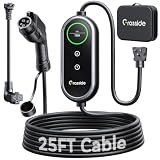
- Universal J1772 Compatibility: Designed with a standard J1772 connector, this J1772 charger works with most J1772 electric vehicles and PHEVs, including BMW, Mercedes-Benz, Hyundai, Kia, Nissan, Rivian, Ford, Chevy, Volkswagen, Toyota and more. Note: Tesla vehicles require a J1772 to Tesla adapter (not included)
- Flexible Outlet Compatibility: This portable EV charger comes with a NEMA 6-20 plug and a NEMA 5-15/5-20 to 6-20 adapter. Supports Level 1 (8–12A) and Level 2 (16A). Max 12A (1.44kW) on 120V NEMA 5-15/5-20 outlets, and full 16A (3.84kW) with a 240V NEMA 6-20 outlet. One charger is designed to cover home, garage, and travel charging needs with reliable performance
- Adjustable Smart Charging Control: Customize charging safely with adjustable current settings (8A/10A/12A/16A) to match different circuits. The 0–12 hour delay timer helps schedule overnight charging during lower electricity rates. Integrated LCD display shows real-time voltage, current, power, and charging status for clear monitoring without apps. Note: Press 'A' or 'T' for 3s to set and confirm.
- Home Charging & Travel Backup: For daily home use while remaining fully portable for travel. This level 1 ev charger includes a durable 25FT ev charging cord, providing flexible reach for garage or driveway charging. Charge overnight to take advantage of lower utility rates—potentially saving up to $500 annually on electricity costs. The included carrying case makes storage easy and keeps a dependable backup charger available in your trunk for road trips or visiting friends
- Engineered For Safety & Durability: Built for dependable daily use, this electric car charger features an IP65 waterproof rating for all weather operation. Equipped with a UL-listed cable, fully rubberized connector, and advanced protection against overcurrent, overheating, and electrical faults. Designed to ensure safe, stable, and long-term charging performance in demanding environments
Higher used demand can narrow discounts
Used-EV sales rose 14.7% year over year in Kelley Blue Book/Cox Automotive’s August 2026 data. Stronger demand can reduce negotiation room for popular used models, so the average used-market advantage should not be treated as an automatic discount on every vehicle.
When a new EV can be the cheaper choice
A discount changes the effective price
Compare the actual out-the-door quote, including destination, documentation, accessories, taxes and registration. A new vehicle with a substantial dealer or manufacturer discount can approach the price of a used example with higher mileage. Ask for the discount to be shown separately from financing, trade-in value and optional products so you can compare offers.
Recommended Free Tools
Low-rate financing can offset a higher price
Two vehicles with the same price do not have the same cost if their APRs differ. A promotional new-car APR may reduce total interest enough to offset part of a used vehicle’s lower sticker price. Conversely, a used-car loan with a longer term or higher APR can erase much of the apparent savings.
Compare the same down payment and term, then calculate total interest. Do not evaluate a payment alone: a low monthly payment can result from a larger down payment, a longer term or a balloon balance.
Also popular on Amazon

- Road-Trip Ready & Apartment-Friendly: Comes with a 20ft heavy-duty cable that easily spans a standard parking space, plus a NEMA 5-15 adapter for plug and play convenience. Whether you're charging at home or hitting the highway, this portable EV Charger is your ultimate travel companion for weekend getaways and camping trips
- Delay Timer & Adjustable Current: Use the built-in timer to delay your start by 1-12 hours and easily harvest off-peak energy savings. Then pick from 6/8/10/12/16A (Level 2) to match your garage grid. It automatically locks in your favorite setting and never forces you to re-adjust. No complicated apps or Wi-Fi needed, just straightforward, reliable control
- Tactile Buttons & LED Screen: No glitchy smartphone apps or finicky touchscreens that lag, freeze, and misfire in winter. Our EV charger is engineered with a high-definition LED display that tracks critical real-time data, including live voltage and current. Tactile buttons deliver direct, satisfying click feedback that remains highly responsive even when wearing heavy winter gloves or operating in torrential downpours—conditions where standard touchscreens completely fail
- ETL Certified Safety & IP65 All-Weather Shield: ETL certified to meet US safety standards for charging. Engineered with a certified IP65 dust-and-waterproof enclosure and a heavy-duty TPE cable that operates reliably across a wide -22°F to 130°F range. An intelligent multi-protection defense system (GFCI, over-voltage, over-current, surge, short-circuit, and over-temp) keeps a 24/7 watch for 100% safe, unattended overnight charging in any weather
- J1772 Compatible + Dual-Level Charging: Works with all J1772 EVs (Tesla requires a separate J1772 adapter). Level 2: built-in NEMA 6-20 plug. Level 1: included NEMA 5-15 adapter fits any standard outlet. Please confirm your outlet is NEMA 6-20 or 5-15 before purchase
Warranty value has a monetary benefit
A new EV normally offers full vehicle warranty coverage from the first owner, while a used EV may have only part of its basic warranty remaining. Battery warranties often last longer than general vehicle warranties, but coverage limits, mileage caps and transfer rules differ by manufacturer and model. The value of predictable coverage is higher if an unexpected repair would strain your budget or if you plan to keep the vehicle beyond the used car’s remaining basic warranty.
New technology may reduce other costs
A newer model may deliver more range, faster DC charging, improved thermal management, a more efficient heat pump or better driver-assistance hardware. Those features can reduce charging stops or improve convenience, but they should be assigned a value based on your use rather than assumed to pay for themselves.
What’s actually slowing this PC down?
Pick the symptom - the matching free tool is one click away.
Build an apples-to-apples cost comparison
Choose two vehicles in the same class with comparable range, charging capability, equipment and seating. Then fill in the following categories for the period you expect to own them.
| Cost or benefit | New EV | Used EV | What to verify |
|---|---|---|---|
| Out-the-door purchase | Actual negotiated price plus taxes and fees | Actual negotiated price plus taxes and fees | Window sticker, buyer’s order, destination, documentation and registration charges |
| Incentives | Only current programs for which buyer and vehicle qualify | Only current programs for which buyer and vehicle qualify | Acquisition date, income, location, price cap and program funding |
| Financing | APR, term, down payment and total interest | APR, term, down payment and total interest | Written lender offer; do not rely on monthly payment |
| Depreciation | Largest early value loss | Usually lower remaining loss, but model dependent | Conservative resale estimate at your planned sale date |
| Battery and vehicle warranty | Full new-vehicle coverage and battery terms | Remaining coverage and transferability | In-service date, mileage, exclusions and service records |
| Charging | Home installation, electricity and public charging | Same categories, plus possible cable or adapter replacement | Your utility rate, charging schedule and access to reliable public stations |
| Insurance | Quote for the exact trim and driver profile | Quote for the exact vehicle and driver profile | Premium, deductible, comprehensive and collision limits |
| Maintenance and repairs | Scheduled service and wear items | Scheduled service, wear items and age-related repairs | Tires, brakes, suspension, cabin climate system and inspection results |
A useful ownership-cost formula is:
total cost = out-the-door price + financing interest + charging + insurance + maintenance and repairs − resale proceeds − eligible incentives
Also popular on Amazon

- 【Delay Timer - Adjustable Current】Ev charger can adjust the current (8A/10A/12A/16A) through the physical button of level 1 ev charger. Charging power can reach up to 3.68KW (240V/16A). One-touch switch for ev charger operation. Built-in 2–8 hour delay timer for off-peak charging to save on electricity bills.
- 【NEMA 6-20 Plug & NEMA 5-15 Adapter】Nema 6-20 plug for 240V outlets and 5-15 adapter for standard 120V realize plug-and-charge (With 5-15 adapter, need to adjust the current to 12A or below, otherwise the charger may be demeged). Overall length of ev charger level 2 is 27FT, providing enough charging distance across garages at home or outdoor. Portable storage bag supports you take portable EV Charger during travel, business trip, electric vehicle charging stations anywhere.
- 【ETL/FCC and IP67 Safety】J1772 charger is equipped with advanced safety functions such as overvoltage, overheating, and short-circuit automatic shutdown. IP67 waterproof and dustproof, extreme temperature protection level for withstanding harsh weather conditions from -40°F to 131°F in sunny, rain, snow and sandstorm. Electric car charger has ETL certified, FCC listed, meets UL safety standards. Industrial-grade construction with high-strength TPU-coated cables and 99.95% oxygen-free copper cores.
- 【J1772 Connector】J1772 charger works for all J1772 standard electric vehicles, Ford, GM, Nissan, Audi, Kia, Honda, BMW, Hyundai, Gmc, Chevy, Mercedes, and all PHEV/BEV. [Not fits Tesla cars/Nacs connector]
- 【One-Touch Charging Operation】16A electric car charger supports plug-and-charge functionality and features one-touch scheduled charging and current adjustment. Its intuitive and user-friendly operation allows flexible customization of personalized charging plans. Level 1 ev charger automatically shuts off when your car is fully charged.
Use the same ownership period for both vehicles. A three-year comparison highlights the new car’s early depreciation; a five-year comparison gives more time for the used car’s age-related repairs and for the new car’s warranty coverage to provide value.
Independent reader supportYour contribution helps us test, update, and keep practical guides available for everyone.Step-by-step method for deciding
- Pick comparable vehicles. Match body style, usable range, charging speed, drivetrain, winter capability and important equipment. Comparing a base used model with a fully equipped new one can create a false price conclusion.
- Collect written out-the-door prices. Request a buyer’s order for each vehicle. Include destination, dealer fees, taxes, registration, accessories and any required financing or trade-in conditions.
- Check incentives independently. Apply only incentives that are active on the acquisition date and that match your location, income and vehicle. Federal consumer credits do not apply to acquisitions after September 30, 2025.
- Obtain financing offers before negotiating payment. Record APR, term, amount financed, down payment and total interest. Compare the dealer’s offer with an outside lender without allowing either quote to hide fees.
- Estimate energy cost from your actual driving. Use your annual miles, the vehicle’s realistic efficiency, your home electricity rate and expected public-charging use. Include demand charges or time-of-use rates where they apply.
- Quote insurance before purchase. EV premiums can vary with repair costs, trim, driver history and location. A quote for a different model or VIN is not a reliable substitute.
- Inspect a used vehicle’s battery and history. Confirm the in-service date, battery warranty, service records, accident history, title status, recall completion, charging cable and adapters. Request a battery-health report or an independent inspection that can measure usable capacity when available.
- Model resale conservatively. Test at least three and five years. For a new EV, account for the estimated 35% to 40% first-year depreciation range and avoid assuming the best case. For a used EV, use current comparable listings and allow for additional mileage and age.
- Make a risk-adjusted choice. Choose new if its all-in cost is lower or the warranty and technology are worth the remaining premium. Choose used if the depreciation-adjusted price gap remains large after financing, insurance, charging and inspection costs.
How to evaluate a used EV before purchase
Battery condition
- Ask for the battery state-of-health reading, not merely the dashboard’s estimated range.
- Compare the reported usable capacity with the model’s original specification, allowing for temperature and software-calculation differences.
- Check whether the battery warranty covers capacity loss, what threshold triggers coverage and whether the warranty transfers to you.
- Look for warning messages, unusually rapid range loss, charging interruptions or a history of repeated fast charging. None alone proves a failing battery, but each justifies professional diagnosis.
Charging hardware and software
- Verify that the included portable cable, adapters and charge-port door operate correctly.
- Confirm the vehicle can use the connector types and charging networks available on your regular routes.
- Check software-update history and whether important updates require a dealer visit.
Mechanical and ownership history
- Inspect tires for uneven wear and confirm tread depth; EV torque and vehicle weight can accelerate replacement costs.
- Check brakes, suspension, underbody panels, climate-control operation and 12-volt battery condition.
- Obtain a vehicle-history report and an independent inspection. A clean report does not replace an in-person examination.
Running costs: savings are real, but not unlimited
Kelley Blue Book identifies electricity and maintenance savings as EV advantages, while listing higher transaction prices and depreciation as disadvantages. Charging at home can be materially cheaper than gasoline per mile when your electricity rate is moderate, but public fast charging may cost more and can narrow the gap. Installation of a dedicated home circuit or charger is an additional ownership cost.
Maintenance is usually simpler because an EV has no engine oil or conventional exhaust system. You still pay for tires, brake and suspension wear, cabin filters, coolant service where specified, inspections and collision repairs. Insurance can be higher or lower than a comparable gasoline vehicle depending on the model’s parts prices, repair network and your location; obtain quotes rather than assuming a universal EV premium.
Calculate energy and maintenance savings separately from purchase economics. A vehicle that saves money to operate can still be more expensive overall if its purchase price and depreciation are substantially higher.
Three-year versus five-year ownership
If you may sell after three years
New is exposed to the steepest depreciation period. The 35% to 40% first-year estimate makes resale assumptions especially important, and a market shift in range, charging standards or new-vehicle pricing can further affect value. A lightly used EV often has a smaller remaining depreciation burden, although its warranty reserve and financing rate may be less favorable.
If you expect to keep the car five years
The original depreciation gap still matters, but repair risk, battery coverage, insurance and charging equipment have more time to accumulate. A new EV may justify a premium if its warranty covers the period in which you expect the most use and if its efficiency or charging speed materially fits your routine. A used EV can remain the lower-cost choice when its battery health is documented and the price gap is large enough to fund likely repairs.
Do these 3 things before closing this tab:
1Clear out junk files and repair common Windows errors2Fix the driver behind crashes, sound loss and screen glitches3Repair Windows errors before they cause bigger problemsCommon mistakes and how to avoid them
- Comparing averages as if they were quotes: The $54,754 new transaction average and $37,441 used listing average come from different measures and months. Use them as market direction, then obtain vehicle-specific prices.
- Counting an expired federal credit: Remove federal consumer credits for acquisitions after September 30, 2025. Confirm any remaining state or utility program before signing.
- Using the monthly payment as the price: Compare total amount paid and total interest at the same term and down payment.
- Ignoring resale: Depreciation is often the largest cost difference. Model when you will sell, not just what you pay today.
- Assuming battery warranties are identical: Read the exact mileage, years, capacity threshold, exclusions and transfer rules.
- Forgetting public charging and insurance: A low home-charging estimate is not realistic if your routine depends on expensive fast charging, and insurance can vary sharply by trim.
- Buying on a low used price without inspection: Require battery, title, accident, tire, charging-equipment and warranty checks before treating the price as a bargain.
- Overvaluing a new-car discount: Separate discount, trade-in allowance, financing incentive and add-on products. A discount that requires costly financing or accessories may not reduce the true price.
Decision guide
| Your situation | Likely direction | Reason |
|---|---|---|
| You want the lowest purchase price and can verify battery health | Lightly used EV | It has usually absorbed much of the first owner’s depreciation. |
| You plan to trade or sell within three years | Used deserves priority | The new buyer bears the largest early value drop. |
| A new vehicle has a large discount and subsidized APR | Compare both; new may win | Price and financing advantages can offset the sticker premium. |
| You need maximum warranty certainty and cannot absorb repairs | New may be worth more | Full vehicle coverage can reduce financial risk, even if it costs more. |
| You have a reliable home charger and low electricity rate | Either can work | Operating savings help both; they do not decide purchase price alone. |
| You rely mainly on public fast charging | Compare actual charging rates carefully | Higher public-charging prices can reduce the expected operating advantage. |
| The used car lacks battery records or has unclear warranty status | New or another used vehicle | Unknown battery condition can erase the apparent discount. |
What to bring to the final comparison
- Written out-the-door quotes for both vehicles.
- APR, term, down payment and total-interest figures.
- Current incentive eligibility and expiration dates.
- Insurance quotes for the exact vehicle identification numbers or trims.
- Home and public-charging prices based on your normal driving.
- Battery-health evidence, warranty documents and an inspection report for the used vehicle.
- Three-year and five-year resale estimates using conservative assumptions.
Once those inputs are on one worksheet, the answer is usually clear. If the used EV remains thousands of dollars cheaper after financing, inspection, insurance and charging, it is the lower-cost entry point. If a new EV’s discount, APR and warranty reduce its all-in cost to the used vehicle’s level, buying new can be rational even without a federal purchase credit.




