Quick wins for a faster PC:
Clear out junk files and repair common Windows errorsFree Scan →Scan for outdated or missing drivers - takes under a minuteDriver Scan →Repair Windows errors before they cause bigger problemsFix Now →Some links on this page are affiliate links: if you buy through them we may earn a commission, at no extra cost to you.
For most buyers, a properly inspected used car offers the lower purchase price and avoids the steepest depreciation. A new car can still be the better value when its warranty, newer safety equipment, favorable financing, and predictable condition outweigh the extra price over the years you will keep it. There is no universal break-even age or price. Compare the exact vehicles over your planned ownership period, including taxes, financing, insurance, fuel or charging, maintenance, repairs, depreciation and resale value—not just the advertised price or monthly payment.
What does “better value” mean when comparing new and used cars?
Value is the total cost and risk you accept for the transportation, safety and features you need. A low sticker price is not automatically a bargain if the car needs tires, brakes, deferred maintenance or major repairs. Conversely, a higher-priced new car may cost less to own predictably if it receives a much lower interest rate, includes a meaningful warranty and is kept long enough to spread its initial depreciation.
As an Amazon Associate I earn from qualifying purchases.
Recommended Free Tools
Use the same assumptions for both candidates: purchase date, annual mileage, ownership period, insurance coverage, fuel or electricity price and expected resale date. Ask for an out-the-door price in writing, then compare annualized cost and cost per mile when your mileage estimate is reliable.
How much money do you usually save by buying used?
The largest potential saving is usually avoided depreciation, not simply the difference between two advertised prices. The U.S. Bureau of Labor Statistics estimated average annual depreciation of 12.1% for new automobiles and 10.3% for used automobiles in 2024. Its analysis also found that new automobiles lose almost 40% of their original value during the first three years. These are broad averages, not a prediction for a particular model, trim, mileage or region.
Popular on Amazon
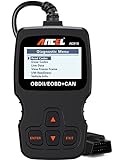
- CEL Doctor: The ANCEL AD310 is one of the best-selling OBD II scanners on the market and is recommended by Scotty Kilmer, a YouTuber and auto mechanic. It can easily determine the cause of the check engine light coming on. After repairing the vehicle's problems, it can quickly read and clear diagnostic trouble codes of emission system, read live data & hard memory data, view freeze frame, I/M monitor readiness and collect vehicle information
- Sturdy and Compact: Equipped with a 2.5 foot cable made of very thick, flexible insulation. It is important to have a sturdy scanner as it can easily fall to the ground when working in a car. The AD310 OBD2 scanner is a well-constructed mechanic tool with a sleek design. It weighs 12 ounces and measures 8.9 x 6.9 x 1.4 inches. Thanks to its compact design and light weight, transporting the device is not a problem. The buttons are clearly labelled and the screen is large and displays results clearly
- Accurate Fast and Easy to Use: The AD310 scanner can help you or your mechanic understand if your car is in good condition, provides exceptionally accurate and fast results, reads and clears engine trouble emission codes in seconds after you fixed the problem. This device will let you know immediately and fix the problem right away without any car knowledge. No need for batteries or a charger, get power directly from the OBDII Data Link Connector in your vehicle
- OBDII Protocols and Car Compatibility: Many cheap scan tools do not really support all OBD2 protocols. AD310 scanner as it can support all OBDII protocols such as KWP2000, J1850 VPW, ISO9141, J1850 PWM and CAN. This device also has extensive vehicle compatibility with 1996 US-based, 2000 EU-based and Asian cars, light trucks, SUVs, as well as newer OBD2 and CAN vehicles both domestic and foreign. Pls confirm with our customer service whether it is compatible with your vehicle before purchasing
- Home Necessity and Worthy to Own: This is an excellent code reader to travel or home with as it weighs less and it is compact in design. You can easily slide it in your backpack as you head to the garage, or put it on the dashboard, this will be a great fit for you. The AD310 is not only portable, but also accurate and fast in performance. Moreover, it covers various car brands and is suitable for people who just need a code reader to check their car
Depreciation is the value the car loses while you own it. A new vehicle absorbs the first owner’s highest-dollar loss. A two- or three-year-old vehicle may have already taken much of that hit, leaving a lower purchase price and a smaller amount to lose before your planned resale. Popular models with scarce supply, unusually strong reliability or high demand can depreciate differently; so can unpopular trims, accident history and high mileage.
Do not treat the used discount as guaranteed savings. Subtract the cost of an inspection, likely age-related work and a repair reserve. If the used car has an uncertain title, incomplete records or a condition problem, the apparent discount may be compensation for risk rather than a bargain.
What’s actually slowing this PC down?
Pick the symptom - the matching free tool is one click away.
How should I calculate the total cost of a new versus used car?
Build a five-year worksheet, or use the exact period you expect to keep the vehicle:
Total cost = purchase price + taxes and fees + financing interest + insurance + fuel or energy + scheduled maintenance + expected repairs − resale value
For a new car, include the larger initial capital outlay and the steepest early depreciation. For a used car, include inspection expense, a realistic reserve for tires, brakes, fluids, battery and age-related repairs, and the value of any remaining warranty. Keep the same mileage and operating assumptions for both vehicles.
| Cost item | How to model a new car | How to model a used car |
|---|---|---|
| Out-the-door price | Use the written selling price plus sales tax, registration and every dealer fee. | Use the written selling price plus the same categories of tax and registration; include an inspection fee where applicable. |
| Depreciation | Estimate the value at your planned sale date; the first years generally carry the largest loss. | Estimate resale from the vehicle’s age, mileage, condition, history and local demand. |
| Financing | Enter APR, term, down payment, finance charge and total of payments. Promotional rates may have restrictions. | Use the actual used-car APR and term; a lower price can be offset by a higher rate or shorter loan. |
| Warranty and repairs | Verify what the factory warranty covers, its duration and exclusions; budget for items it excludes. | Verify any remaining factory or certified warranty, then add a repair reserve based on age, mileage and records. |
| Running costs | Estimate insurance, fuel or charging, tires and scheduled service for the exact powertrain and trim. | Use the same operating assumptions, while allowing for sooner replacement of wear items. |
| Resale value | Use a conservative estimate because the car will still be relatively new when sold. | Account for additional age and mileage, and for how an accident, flood or title event affects resale. |
Divide the resulting total by the years or miles you expect to own the car. This is a decision framework, not a published universal break-even figure: model, geography, credit, insurance, condition and holding period can change the result.
When does buying a new car make more sense?
New is more defensible when the used alternative is only modestly cheaper or when the new vehicle solves a specific cost or risk problem.
Also popular on Amazon
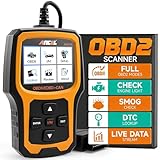
- Understand Your Check Engine Light – The ANCEL AD410 OBD2 scanner helps everyday drivers quickly read and clear engine-related fault codes, view code definitions, and understand why the check engine light is on before visiting a repair shop. With 42,000+ built-in DTC lookups, this car code reader helps reduce guesswork and makes basic vehicle diagnostics easier for beginners and DIY users
- Full OBD2 Diagnostics Made Simple – More than a basic engine code reader, this OBD2 scanner diagnostic tool supports key OBDII functions including reading/clearing codes, live data, freeze frame, I/M readiness, O2 sensor test, EVAP test, vehicle information, and MIL status. It helps you check your car’s condition, verify repairs after the issue is fixed, and communicate with mechanics more confidently
- Live Date & Real-time Vehicle Insights – View real-time engine data such as RPM, coolant temperature, fuel trim, oxygen sensor readings, and other available OBD2 parameters directly on the screen. These live data readings help you better understand how your vehicle is running, spot abnormal patterns, and make more informed repair decisions instead of relying only on a warning light
- Smog Check Readiness At A Glance – Use the I/M readiness function before a smog check or emissions inspection to see whether your vehicle’s monitors are ready. This OBD2 code scanner helps you confirm if recent repairs have brought the system back to a ready state, reducing the chance of failed inspections, retests, wasted trips, and unnecessary inspection fees
- Works With Most OBD2 Vehicles – Compatible with most 1996 and newer U.S.-based OBD2 cars, SUVs, and light trucks, as well as many 2000 and newer EU/Asian OBD2 vehicles. Supports major OBDII protocols including CAN, ISO9141, KWP2000, J1850 VPW, and J1850 PWM. This automotive diagnostic scanner is designed for wide vehicle coverage; please check compatibility with your vehicle before purchase
Warranty-backed predictability matters
A factory warranty can reduce the chance of a large surprise bill during the coverage period. Verify the actual warranty booklet, start date, mileage and time limits, powertrain coverage, roadside assistance and exclusions. Routine maintenance, wear items, damage and some components may not be covered. A warranty has economic value only if its coverage matches the failures you are trying to avoid.
Financing or incentives narrow the price gap
A manufacturer incentive or materially lower APR can make a new car’s total payments competitive with a used car. The Consumer Financial Protection Bureau notes that 0% APR promotions may be limited to borrowers with high credit scores or shorter terms. Compare the complete contract, and check whether accepting a promotional rate means giving up a cash rebate.
You will keep the car for a long time
Keeping a new vehicle well beyond the early depreciation period spreads that initial loss over more years. Long ownership also reduces the frequency of transaction costs and lets you benefit from the full warranty period. This advantage disappears if you usually trade in after a short interval.
Do these 3 things before closing this tab:
1Repair Windows errors before they cause bigger problems2Scan for outdated or missing drivers - takes under a minute3Clear out junk files and repair common Windows errorsYou need current safety or technology
Choose new when a used substitute lacks a safety system, driver-assistance feature, charging capability, emissions equipment or other requirement that is important to you. Compare the exact model years and trims; “new” alone does not guarantee every desired feature.
Reliability uncertainty is unaffordable
If a breakdown would prevent you from working or create a debt problem, paying more for a known condition and warranty can be rational. It is still important to maintain an emergency reserve: new cars have uncovered costs such as tires, glass, collision damage and routine service.
When is a used car likely to be the better value?
Used is more defensible when the price is materially lower, early depreciation has already been absorbed and the individual car’s condition is documented.
The model has a strong reliability record
Research reliability for the exact generation, engine, transmission and model year. A reliable design with complete service records is a different proposition from a cheap example with warning lights, missing history or a history of neglect.
The Tool Desk
Outbyte PC Repair FREEClear out junk files and repair common Windows errorsFree Scan →Outbyte Driver Updater FREEScan for outdated or missing drivers - takes under a minuteDriver Scan →Also popular on Amazon
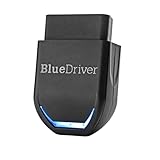
- [Diagnose Like a Pro] BlueDriver Pro is a professional OBD2 scanner and diagnostic tool that helps you scan, understand, and clear vehicle trouble codes with confidence. Turn your phone into a powerful car diagnostic scanner—no guesswork, no unnecessary repairs.
- [Read and Clear More Codes Than Ever] Read and clear more codes than basic car code readers. Access enhanced diagnostics for Check Engine, ABS, SRS, Airbag, TPMS, Transmission, and more on supported vehicles, including expanded coverage on newer model years.
- [Verified Fixes and Real-Time Data] Get unlimited, technician-verified repair reports matched to your VIN, with definitions, causes, and confirmed fixes. Monitor live vehicle data as you drive, view freeze frames, check smog readiness, and analyze Mode 6 test results.
- [Expanded Make & Model Coverage] Optimized for today's vehicles with strong support for GM, Ford, Stellantis (RAM, Jeep, Chrysler), Toyota, Honda, Nissan, Mazda, Subaru, Hyundai, Mercedes-Benz, BMW, and VW. Enhanced communication on select 2024+ Nissan and Mazda models (see compatibility chart).
- [Gas Vehicles 1996+ & Select Light-Duty Trucks] Works with all gas-powered vehicles made in 1996 or newer, plus select light-duty trucks and diesels, including F-250, RAM 2500, Silverado, and Sierra. Built for daily drivers, family vehicles, and real-world truck use.
An independent inspection finds no major defects
Pay an independent mechanic to inspect the vehicle before purchase. The Federal Trade Commission states that a vehicle history report is not a substitute for an independent inspection. A history report may list accidents or flood damage but typically does not list mechanical problems.
You have budgeted for normal age-related work
Set aside money for tires, brakes, fluids, a battery and scheduled services. Older cars can need suspension, cooling, air-conditioning or seal repairs even when they pass a test drive. The U.S. Department of Energy advises prompt inspection when the check-engine light appears; diagnosing a fault early can prevent additional fuel and repair costs.
You can buy at a cash-flow-friendly price
A lower out-the-door price can reduce the amount financed and the interest paid. Check the used car’s APR rather than assuming that a lower principal guarantees a lower total cost.
Should I buy a two- or three-year-old car instead of new?
A two- or three-year-old car is often the strongest middle option when it retains the safety and features you need, has a clean history and costs substantially less than the equivalent new trim. It may have absorbed much of the first owner’s depreciation while still offering remaining factory coverage.
Check the exact in-service date, not only the model year: warranty time may have started when the first owner registered it. Compare mileage, tires, brake life, service intervals and any upcoming major maintenance with the new car’s coverage. A lightly used car priced close to new may offer little value after you account for a higher used-car APR, missing incentives or an expiring warranty.
Use the same inspection and history checks as for an older used car. “Low mileage” does not prove good care; time can still age tires, batteries, fluids and seals.
Is certified pre-owned the best compromise?
Certified pre-owned (CPO) programs can combine a used-car price with a manufacturer-backed inspection or limited warranty, but there is no single nationwide CPO standard. Read the program’s written inspection list, warranty duration, deductible, roadside benefits, transfer rules and exclusions. Confirm whether the certification covers the specific vehicle identification number and whether a dealer can provide the inspection report.
Also popular on Amazon

- 【Find Out Why Your Check Engine Light Is On】 The FOXWELL NT301 OBD2 scanner diagnostic tool helps you read engine trouble codes (DTCs), view code definitions, and understand what may be causing your check engine light. Simply connect this car scanner to your vehicle's 16-pin OBD2 port to start diagnosing. Whether you're a first-time car owner or a DIY mechanic, this OBD2 scanner helps you identify potential issues before deciding on your next repair step
- 【Read & Clear & Check Engine Codes with Confidence】 After completing a repair, use this car code reader to clear eligible engine trouble codes and turn off the check engine light. If the underlying problem remains, the light may return. Permanent DTCs cannot be erased directly and clear only after the vehicle completes the required checks. This code reader for cars and trucks helps you check repair results without making an unnecessary trip to the shop
- 【Check Your Vehicle's Readiness Status at a Glance】 Get a clearer picture of your vehicle's readiness status with the NT301's one-click I/M Readiness hotkey. Red, yellow, and green LED indicators, along with audible alerts, make it easy to check monitor status before a scheduled vehicle inspection. Readiness results help you understand your vehicle's status
- 【See What's Happening with Live Data】 Go beyond basic fault codes with this car scanner diagnostic tool featuring real-time engine data and graphing. Monitor supported parameters such as engine RPM, coolant temperature, fuel trims, and ox-ygen sensor readings to help investigate performance issues. The NT301 also provides supported OBD2 functions such as O-2 sensor and EVAP-related tests, with availability depending on your vehicle
- 【Broad OBD2 Compatibility for Everyday Diagnostics】 The FOXWELL NT301 vehicle code reader supports standard OBD2 protocols, including CAN, ISO9141, KWP2000, and J1850. This auto scanner works with most OBD2-compliant 1996 and newer US-market cars, SUVs, and light trucks, including supported gasoline and diesel vehicles. Coverage and available functions vary by vehicle. Please confirm compatibility before purchase
Price the CPO car against both an ordinary used example and a new equivalent. The certification premium may be worthwhile if it buys meaningful warranty coverage and a better-documented condition; it may not be worthwhile if the CPO vehicle is only slightly cheaper than new or carries a high financing rate.
Windows Errors? Fix Them Before They Spread
Repair common Windows errors and clear accumulated junk for a smoother, more stable PC - no reinstall needed.Free scan · no reinstallOutdated Drivers Are Slowing You Down
One free scan finds every outdated or missing driver and matches the right update for your exact hardware.Free scan · exact hardware matchWhat checks should I complete before buying a used car?
Complete these checks before committing money or accepting financing:
- Get a vehicle history report. Confirm the vehicle identification number, title status, recorded mileage, ownership history, accidents and flood damage. Treat the report as one input, not a mechanical diagnosis.
- Check open safety recalls. Search the VIN through the relevant government recall system and ask how, when and where any repair will be completed.
- Arrange an independent pre-purchase inspection. Use a mechanic who is not financially tied to the seller. Ask for a written report and an estimate for urgent and near-term work.
- Scan diagnostic trouble codes. A code scan can reveal stored faults that are not obvious during a short drive; it does not replace a mechanical inspection.
- Review service records. Look for consistent oil changes, required fluid services, recall completion and evidence that mileage is credible.
- Test drive in normal conditions. Include cold start, stop-and-go traffic, highway speed, parking maneuvers, braking, climate control and every major electrical feature.
- Price ownership before negotiating. Obtain insurance quotes and estimate fuel or charging, tires, brakes, scheduled service and a repair reserve.
- Request the complete out-the-door price. Get taxes, registration, dealer fees, documentation charges and optional products in writing before comparing loans.
Consumer.gov recommends obtaining a history report, asking about recalls, reviewing service records, test-driving, getting an inspection and requesting the total price including all costs and fees.
How can financing change the value calculation?
Get a written out-the-door price before discussing dealer financing. Then compare:
- Annual percentage rate (APR)
- Loan term and number of payments
- Down payment and trade-in credit
- Finance charge and total of payments
- Required insurance or lender conditions
- Optional warranties, service contracts and other add-ons
The Federal Trade Commission warns that a lower monthly payment can simply reflect a longer term or higher rate. A bank or credit-union pre-approval gives you a comparison point, but still evaluate the dealer’s complete contract. Do not compare a new-car payment with a used-car payment unless the financed amount, APR, term and fees are equivalent.
How do insurance, fuel and maintenance affect the answer?
Insurance can be higher for a newer, more expensive vehicle because collision and comprehensive claims cost more to settle; obtain quotes for the exact VIN or trim before deciding. A used car may have lower replacement-value premiums but can still be expensive to insure if it is highly stolen or costly to repair.
Fuel or electricity efficiency matters over every mile. Compare the official ratings for the exact powertrain and your driving pattern, then use your local prices. The Department of Energy and EPA estimate that using the manufacturer-recommended motor-oil grade can improve fuel economy by about 1%–2%. Correct oil does not eliminate the need for scheduled service.
Also popular on Amazon

- Multi-Functions - Practical Multi-Functions OBD2 code reader features built-in OBD2 DTC lookup library, which help you to determine the cause of the engine light, read code, erase code, view freeze frame, I/M ready, vehicle information, data flow, real-time curve, get vehicle speed information, calculate load value, engine coolant temperature, get engine speed.
- Wide Capability - Supports 9 protocols compatible with most 1996 US-Based, 2000 EU-Based and Asian cars, and newer OBD II & CAN domestic or import vehicles. Supports 6 languages - English,German, Dutch, Spanish, French, Italian.
- 2.8" LCD Display - Designed with a clear display 2.8" Large LCD screen - white backlight and contrast adjustment. No need any battery or charger, OBD reader gets the power directly from your vehicle through the OBDII Data Link Connector.
- Compact Design - Car diagnostic scanner is equipped with a 2.5 feet long cable and made of a very thick flexible insulator.There are 6 buttons on OBD2 Scanner:scroll up/down,enter/exit and buttons that quick query VIN vehicle number& the DTC fault code.
- ABS / Airbag codes NOT Supported - It is able to read and clear check engine information which is part of OBDII system, but it cannot work with non-OBDII systems, including ABS / Airbag / Oil Service Light, etc.
Maintenance timing often differs more than the annual average suggests. A new vehicle may have years before major wear items are due; a used vehicle may need several items soon after purchase. Ask the mechanic what is due now, within 12 months and within the rest of your ownership period, and put those amounts in the worksheet rather than treating them as surprises.
What does the current ownership-cost data show?
AAA’s 2026 analysis gives a new-vehicle benchmark of $12,863 per year to own and operate, with $4,422 in weighted-average annual depreciation and a $39,376 sales-weighted average MSRP for new vehicles. AAA says its 2026 methodology changed, so the result is not directly comparable with its 2025 estimate. This is a new-vehicle benchmark, not an average cost for used cars.
The benchmark illustrates why sticker price alone is inadequate: depreciation, finance charges, fuel and fees all contribute, and depreciation was the largest cost category in AAA’s 2026 analysis. Your vehicle, mileage, financing, insurance and region can produce a very different total.
Which option fits different buyer situations?
| Buyer situation | Usually more defensible | What to verify |
|---|---|---|
| Lowest possible purchase price and a repair reserve available | Used | History, inspection, records, recalls and near-term maintenance. |
| Little ability to absorb an unexpected repair | New or well-supported CPO | Warranty exclusions, deductible, financing rate and emergency savings. |
| Vehicle will be kept for many years | Either; new gains an advantage if kept long enough | Five-year or longer depreciation, warranty period and maintenance schedule. |
| Newest safety or technology is essential | New or a recent used model year | Exact trim equipment, software support and recall status. |
| Used alternative is only slightly cheaper | New | Incentives, APR, total interest and the value of full warranty coverage. |
| Documented, reliable two- or three-year-old example at a large discount | Used or CPO | Remaining warranty, tire and brake life, accident history and loan terms. |
What are the most common mistakes?
- Comparing monthly payments. Compare total payments and total ownership cost instead.
- Assuming a history report is an inspection. Mechanical faults can be absent from the report.
- Ignoring the out-the-door price. Taxes, registration, documentation fees and add-ons can materially change the deal.
- Using average depreciation as a guarantee. BLS figures describe broad averages, not your car’s resale value.
- Leaving repairs out of a used-car budget. Include a reserve for predictable wear and plausible failures.
- Assuming 0% APR is universal. Confirm eligibility, term limits and any rebate you surrender.
- Overlooking holding period. A short ownership cycle exposes you to early depreciation; a long cycle spreads it.
How do I make the final decision?
- Choose one new vehicle and the closest used or CPO alternatives by size, powertrain, safety equipment and condition.
- Collect written out-the-door prices and realistic financing offers for each.
- Estimate insurance, fuel or charging, scheduled service, tires, brakes and repairs for your intended ownership period.
- For used candidates, obtain the history report, recall status, service records and independent inspection before treating the price as firm.
- Estimate resale value conservatively, subtract it from total spending and calculate annual and per-mile cost.
- Select the option with the lowest acceptable total cost and risk—not automatically the lowest sticker price.
The practical rule is simple: buy used when the discount is large enough to pay for its remaining risk and the car’s condition is independently verified. Buy new when warranty-backed predictability, current equipment, long ownership or genuinely better financing closes or reverses that gap.
Frequently Asked Questions
How should I compare a 0% APR offer with a cash rebate?
Calculate the total of payments under the promotional loan, then compare it with the price after taking the cash rebate and using your best outside financing. Check the required term, credit tier and any fees; a nominal 0% rate can be less valuable if the qualifying price is higher or the term is unusually short.
Does a low-mileage used car always provide better value?
No. A low odometer reading does not prove complete maintenance, and age can still degrade tires, batteries, fluids and seals. Review time-based service records and have an independent mechanic assess condition.
Free tools Windows power users keep installed
One-click scans. No signup required.
Can a dealer charge more for a certified pre-owned car without adding real value?
Yes. Certification programs differ in inspection scope, warranty, deductible and exclusions. Ask for the written program terms and inspection report, then compare the premium with a new car’s incentives and the cost of an ordinary used vehicle.
Why might two identical model years have very different resale values?
Mileage, accident or flood history, title status, service documentation, trim, local demand and remaining warranty all affect resale. A broad depreciation average cannot account for those vehicle-specific differences.




