Some links on this page are affiliate links: if you buy through them we may earn a commission, at no extra cost to you.
The M20 is Muncie’s wide-ratio four-speed, the M21 is a standard close-ratio four-speed, and the M22 is a heavy-duty close-ratio version commonly called the “Rock Crusher.” The M21 and M22 share the same published gear ratios; the M22 is distinguished by its shallower gear-tooth mesh angle, different gear construction and characteristic whine. Because cases, shafts and gears are often swapped during rebuilds, accurate identification requires several clues—ideally the casting, spline counts, input-shaft grooves, stamped code and internal tooth counts.
What is the difference between an M20, M21 and M22?
The practical difference is ratio spread and gear construction. An M20’s lower first gear gives more launch multiplication and larger rpm drops between shifts. The M21 keeps the engine in a narrower rpm band with a higher first gear. The M22 uses that same close-ratio set but is built for higher loads and uses a shallower tooth angle that reduces thrust loading while producing more gear noise.
As an Amazon Associate I earn from qualifying purchases.
| Model | Ratio family | Typical published ratios | Typical use | Main distinction |
|---|---|---|---|---|
| M20 | Wide | 1963–1965: 2.56/1.91/1.48/1.00 1966–1974: 2.52/1.88/1.46/1.00 |
Street cars needing stronger launch multiplication | Different input and cluster gears from the close-ratio units |
| M21 | Close | 2.20/1.64/1.28/1.00 | Performance applications with smaller rpm drops | Standard close-ratio gearset |
| M22 | Close, heavy duty | 2.20/1.64/1.28/1.00 | High-performance and high-load applications | Shallower mesh angle and stronger gear construction; familiar whine |
The ratios above are published figures reported by D.M.E. Transmissions and the Camaro Research Group. Fourth gear is direct (1.00:1) in all three, so the M22’s audible difference is mainly present in first through third.
How do the gear ratios change driving behavior?
First-gear ratio and rear-axle ratio multiply together. A numerically higher first gear gives more torque at the tires but increases the rpm drop on the next shift; a close-ratio box sacrifices some launch multiplication to keep shifts closer together.
Popular on Amazon
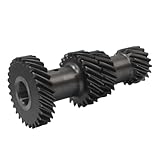
- MUNCIE Model 20
- Manual transmission cluster
- 2.56 Ratio
- 7/8" Cluster Pin
- Cluster Gear Tooth Counts: 29-22-19-17
When the M20 makes sense
The early 2.56 first gear and later 2.52 first gear help a street car pull away with a moderate rear axle, tall tires or a torque-sensitive engine. The 1963–1965 and 1966–1974 M20 sets are not identical, so replacement parts and calculations must use the correct production generation.
When the M21 makes sense
The 2.20 first gear and tighter 1.64-to-1.28 progression suit an engine that operates over a relatively narrow power band or a car driven hard through several gears. It is a close-ratio transmission, but it does not automatically have M22-strength internals.
Do these 3 things before closing this tab:
1Clear out junk files and repair common Windows errors2Fix the driver behind crashes, sound loss and screen glitches3Repair Windows errors before they cause bigger problemsWhat the M22 changes
An M22’s ratios do not provide a shorter or taller shift pattern than an M21. Its distinction is the gear-tooth geometry and metallurgy. The shallower mesh angle reduces thrust load and heat, while the tooth design and material support higher-load use. That geometry also causes the well-known whine; noise alone is not proof that a transmission is an M22.
Also popular on Amazon
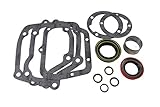
- Our transmission bushing seal & gasket kits are of the highest quality and meet all standards set by professional installers.
- Kit includes: Gaskets, 3 shifter shaft seals, speedometer fitting O Ring, rear seal and bronze bushing.
Is an M22 stronger than an M21?
Generally, yes: the M22 was intended as the heavy-duty close-ratio option, with stronger gear construction and lower thrust loading. That does not make every M22 indestructible, nor does an M21 case prove that its current internals are original. A rebuild can replace gears, shafts and synchronizers, so strength depends on the parts actually inside the unit and on clutch adjustment, lubrication, rear-axle loading and driving technique.
How do I identify a Muncie transmission accurately?
Use several identifiers together. Any single external clue can be misleading after a swap, service replacement or rebuild.
- Read the main-case casting. Common numbers include 3831704 (1963), 3851325 (1964–1965), 3885010 (1965–1967), 3925660 (1968–1970) and 3925661 (1970–1974). Production ranges overlap, so a casting is date evidence, not a complete model identification.
- Count the input and output splines. Earlier units commonly use a 10-spline input and 27-spline output. Later production commonly changed to a 26-spline input and 32-spline output. Applications and replacement shafts vary, so count the actual shafts before ordering a clutch, yoke or related part.
- Inspect input-shaft grooves. A common pattern is two grooves for M20, one for M21 and none for M22. Early 1963–1965 M20 units also have no grooves, and replacement shafts may have no identifying grooves. Treat this as supporting evidence only.
- Find the stamped production code. Later units normally carry a code beginning with P on the passenger side just ahead of the tailhousing. From 1969 onward, cited references use suffix A for M20, B for M21 and C for M22. Confirm the year and decoding scheme for the specific transmission.
- Count the internal teeth. With the cover removed, common M20 cluster patterns are 25-22-19-17, or 29-22-19-17 in early units. M21 and M22 commonly use 27-22-19-17. Tooth counting is the strongest confirmation when external parts have been changed.
- Inspect the tooth angle. M22 teeth have a visibly shallower mesh angle than M20 or M21 teeth. This is more meaningful than sound, drain-plug appearance or spline count.
What do spline counts mean for fitment?
Spline count determines compatibility with the clutch disc and driveshaft yoke. A 26-spline input requires a matching clutch disc, while a 32-spline output requires the corresponding slip yoke. Because Muncie production changed over time and service parts are common, measure the transmission in front of you rather than relying on the car’s model year.
Windows Errors? Fix Them Before They Spread
Repair common Windows errors and clear accumulated junk for a smoother, more stable PC - no reinstall needed.Free scan · no reinstallOutdated Drivers Are Slowing You Down
One free scan finds every outdated or missing driver and matches the right update for your exact hardware.Free scan · exact hardware matchAlso popular on Amazon
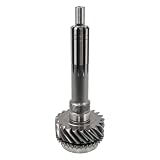
- Manual transmission input
- Model 20
- MUNCIE
- 21-Tooth Coarse
- 2.52 Ratio
Which rear axle ratio works with each Muncie?
Period application guidance linked numerically higher rear axles such as 3.73 with close-ratio units and lower ratios such as 3.55 with the wide-ratio M20. That is historical guidance, not a universal modern rule: tire diameter, engine torque curve, intended speed and use can change the best choice. Calculate overall first gear (transmission first gear multiplied by axle ratio) and highway rpm before selecting a gearbox.
When were the M20, M21 and M22 produced?
GM introduced the M20 and M21 in 1963 as replacements for the T10. The M22 appeared later, initially in limited 1965 applications, and continued into early-1970s applications depending on vehicle and production change. GM production ended in 1974, although some early 1975 cars used transmissions assembled in 1974. There is no single universal M22 year list; identify the application and casting range.
Be careful with the label “M21” in later vehicles. Muscle Car DIY notes that the designation can also refer to a close-ratio Super T10, so “M21” alone does not prove that a gearbox is a Muncie.
Also popular on Amazon

- 2.52 Ratio
- MUNCIE Model 20
- Manual transmission cluster
- 1" Cluster Pin
- Cluster Gear Tooth Counts: 25-22-19-17
What parts change between early and late Muncies?
Interchangeability changed with production updates, especially synchronizers and blocking rings between 1963–1965 and 1966-on units. Input shafts, cluster gears, bearings and other rebuild parts are fitment-sensitive. Match the part to the tooth count, spline count, case generation and synchronizer design instead of ordering by the M20, M21 or M22 name alone.
Which Muncie is best for a Camaro or Corvette?
Choose the M20 when launch multiplication and relaxed street gearing matter most, the M21 when keeping the engine in its power band matters more, and the M22 when a heavy-duty close-ratio design is justified by engine output and load. Verify the original application, bellhousing pattern, clutch spline, output spline, driveshaft length and rear axle before purchase. A correctly identified and rebuilt M21 is preferable to a misidentified “Rock Crusher” assembled from mismatched parts.
Independent reader supportYour contribution helps us test, update, and keep practical guides available for everyone.Frequently Asked Questions
Why does an M22 make more noise than an M21?
Its shallower tooth mesh angle produces the characteristic whine in first through third gears. Fourth gear is direct, so it is normally quieter there; noise level still varies with wear, bearings, lubricant and setup.
Also popular on Amazon
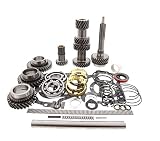
- Our Parts are of the highest quality and meet all standards set by professional installers
- Transparts Warehouse, Inc. Quality parts, Informative Sales team, Value you can trust.
- Input- 26 Tooth 10 Spline Close Ratio, Countershaft R27-22-19-17 7/8"Pin Close Ratio, 1st Gear 36 Tooth, 2nd Gear 30 Tooth, 3rd Gear 27 Tooth, Rev Idler M21
Can I identify an M22 without removing the transmission?
You can narrow it down with the case casting, stamped code, shaft splines and input-groove pattern, but none is conclusive by itself. If the unit has been rebuilt or swapped, removing the cover and counting teeth and inspecting the angle is the dependable confirmation.
Does a 26-spline input shaft prove a transmission is an M22?
No. Later M20, M21 and M22 applications can use 26-spline inputs, and replacement shafts can change the original configuration. Count the output splines and verify the internal gearset as well.
Quick wins for a faster PC:
Repair Windows errors before they cause bigger problemsFix Now →Fix the driver behind crashes, sound loss and screen glitchesFind Drivers →Clear out junk files and repair common Windows errorsFree Scan →What rear axle should I use with an M20?
There is no single correct axle ratio. Start with the M20’s actual first gear, tire diameter, engine torque curve and desired cruising speed; then compare overall first-gear multiplication and highway rpm. Period guidance often paired the wide-ratio M20 with a numerically lower axle than close-ratio units.




