Replacing a confirmed bad engine mount is usually worth it when the vehicle is otherwise sound. In the U.S., a typical single-mount repair often costs about $500–$900 installed. RepairPal’s current national estimate, updated June 18, 2026, is $630–$779 before taxes and fees, including approximately $315–$462 in labor and $315–$317 in parts: RepairPal’s engine-mount estimator.
The repair becomes less attractive when the car also has severe rust, an unsafe structure, a failing engine or transmission, or several expensive repairs due soon. Before approving the job, make sure the mount has actually failed, find out whether one or several mounts need replacement, and compare the complete quote with how long you expect to keep the vehicle.
Quick answer: should you replace a bad engine mount?
Repair it now if the diagnosis is supported by torn or collapsed rubber, hydraulic-fluid leakage, abnormal engine movement, a damaged bracket, or contact between the powertrain and nearby components—and the rest of the vehicle is in reasonable condition.
Get a second diagnosis or quote if the only evidence is that the car vibrates, if the shop recommends replacing every mount without explaining why, or if the estimate is well above the normal range.
#1 Best Overall

- [Vehicle Fitment-1]: Compatible with Cadillac Escalade/Escalade ESV 2007-2014, Escalade EXT 2007-2013; Compatible with GMC Sierra 1500 2007-2013, Sierra 2500 HD 2008-2010, Sierra 3500 HD 2007-2010, Yukon 2007-2013, Yukon XL 1500 2007-2014, Yukon XL 2500 2007-2012
- [Vehicle Fitment-2]: Compatible with Chevrolet Avalanche/Silverado 1500 2007-2013, Silverado 1500 Classic 2007, Silverado 2500 HD 2008-2010, Silverado 3500 HD 2007-2010, Suburban 1500/Tahoe 2007-2014, Suburban 2500 2007-2013;
- [Reference Number]: A5365HY, 3211W, EM5583, 15837373, 15837375, 15854939, 15854940, 15854941, 15878845
- [Package Included]: 1x Front Left Motor Mount(A5365HY), 1x Front Right Motor Mount(A5365HY)
- [Buy with Confidence]: A-Premium offers a one-year unlimited-mileage guarantee on our meticulously crafted engine mount kit. We offer a wide variety of automotive accessory categories, ensuring that you can hit the road with peace of mind.
Drive only to a shop if the mount is clearly worn but the engine is stable, there is no metal-on-metal contact, and shifting and acceleration remain predictable. Tow the vehicle if the engine jumps dramatically, a mount or bracket is separated, or the engine is striking the radiator, fan, exhaust, body, or another component.
Defer temporarily only when a professional has determined that the mount is not severely damaged and has given you a short-term monitoring plan. A mount that is deteriorating can place extra load on the remaining mounts and may lead to secondary damage. Decline the repair only after considering the vehicle’s complete condition, not simply because the repair costs more than a simplistic percentage of the car’s book value.
What an engine mount does
An engine mount—also called a motor mount—is a structural component that attaches the engine or powertrain to the vehicle’s body, frame, or subframe. It performs several jobs at once:
- Supports the weight of the engine.
- Controls powertrain movement during acceleration, braking, shifting, and cornering.
- Reduces engine vibration and noise transmitted into the cabin.
- Helps keep the engine and transmission correctly aligned.
- Prevents the engine or transmission from contacting nearby wiring, hoses, exhaust parts, cooling fans, body panels, or other components.
Mount designs vary. A vehicle may use solid rubber, hydraulic or fluid-filled, polyurethane, metal, vacuum-controlled, electronically controlled, or active mounts. The replacement must match the original mount’s height, stiffness, damping, and control method. A part that physically fits can still produce excessive vibration if its characteristics are wrong. AutoZone explains common mount types.
Engine mount, transmission mount, and torque strut are not always the same part
- Engine mount: Supports and locates the engine.
- Transmission mount: Supports the transmission and can create symptoms that feel exactly like an engine-mount failure.
- Torque strut, roll restrictor, or dogbone mount: Limits fore-and-aft or rotational movement of the powertrain.
- Mount bracket: The metal structure, stud, or subframe attachment that holds the insulator. The rubber or hydraulic portion may fail while the bracket remains reusable, but brackets can also crack, bend, corrode, or pull loose.
How many mounts does a car have?
Many passenger vehicles use two to four mounts, although the exact number depends on the engine, transmission, drivetrain layout, and vehicle design. One failed mount does not automatically mean every mount must be replaced. However, all mounts should be inspected because they are often the same age, and a failed mount may have forced the others to carry more of the powertrain’s load. Firestone discusses mount count and the effect of one failed mount on the others.
Symptoms of a failing engine mount
No single symptom proves that an engine mount is bad. The strongest diagnosis combines the complaint with an inspection and a controlled movement test.
| Symptom or finding | How strongly it points to a mount | What else to check |
|---|---|---|
| Cracked, separated, or collapsed rubber | Strong evidence | Check the bracket, fasteners, and mounting point for separate damage. |
| Hydraulic fluid leaking from the mount | Strong evidence | Make sure the fluid is coming from the mount rather than an engine or coolant leak above it. |
| Engine visibly lifts, leans, or shifts under load | Strong evidence | Inspect every mount and the brackets before assuming only one component failed. |
| Clunk, thud, bang, or lurch when shifting, starting, accelerating, braking, or reversing | Moderate to strong | Check the transmission mount, torque strut, exhaust, driveline, and suspension. |
| More vibration at idle or when shifted into Drive or Reverse | Moderate | Rule out a misfire, rough idle, vacuum leak, throttle problem, and transmission mount. |
| Vibration that changes when the air conditioner loads the engine | Moderate | Verify engine idle quality and ignition, fuel, and air-delivery systems. |
| Vibration mainly at highway speed | Weak by itself | Inspect tires, wheels, balance, alignment, steering, and suspension first. |
| Contact marks near the engine, exhaust, fan, radiator, or body | Strong and urgent evidence | Do not continue normal driving until the cause and extent of the movement are known. |
Other common signs include an engine sitting unusually low, unusual engine-bay movement, and vibration or noise that changes with acceleration or gear selection. Firestone’s symptom guide and AutoZone’s overview describe these symptoms and causes.
What else can cause the same vibration or clunk?
A vibration does not prove that a mount has failed. A shop should consider at least these alternatives:
Free tools Windows power users keep installed
One-click scans. No signup required.
- An engine misfire caused by ignition, fuel, air-delivery, or compression problems.
- A vacuum leak, throttle problem, or other uneven-idle issue.
- An imbalanced wheel, damaged tire, or alignment problem.
- Worn suspension or steering components.
- An exhaust pipe touching the body or subframe.
- A loose heat shield or underbody panel.
- A worn CV joint, driveshaft component, or other driveline part.
- A failed transmission mount, torque strut, or roll restrictor rather than the main engine mount.
- A mount that is intact but incorrectly positioned, incorrectly torqued, or binding after prior work.
Firestone specifically notes that alignment, suspension, and wheel-balance problems can cause vibration. AutoZone also warns that a misfiring cylinder can create severe vibration that resembles a mount failure. If the engine runs unevenly, has a check-engine light, or the vibration follows engine speed rather than vehicle speed, diagnosis of the engine itself matters before replacing a mount.
How a reliable diagnosis is made
- Visual inspection: The technician looks for torn or separated rubber, a collapsed insulator, hydraulic leakage, loose fasteners, cracked brackets, corrosion, and contact marks.
- Engine-position inspection: The powertrain is checked for abnormal leaning, sagging, or height relative to the body and surrounding parts.
- Controlled loaded movement test: With the vehicle secured and the area kept clear, a technician may load the drivetrain in Drive and Reverse while observing movement and listening for a clunk. This should not be improvised by an untrained owner standing near moving components.
- Related-system checks: The shop should check engine misfire data and idle quality, the exhaust, transmission mount, torque struts, brackets, driveline, tires, wheels, and suspension as appropriate.
- Vehicle-specific service information: The manufacturer’s procedure determines acceptable movement, support points, alignment, torque values, fastener reuse, and whether a mount must be neutralized after installation.
There is no universal movement limit for every vehicle. One model-specific service procedure uses approximately 24 mm, or 0.945 inch, as an inspection threshold, but that figure must not be applied to other vehicles. The correct limit comes from the vehicle’s service information. A Chevrolet service bulletin also demonstrates how driveline loading may be used when investigating vibration after mount replacement: NHTSA-hosted manufacturer bulletin and model-specific inspection example.
Rank #2
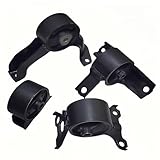
- 【Complete Set of 4 Engine Motor Mount Kit Compatible with 2007-2017 Jeep Compass & Patriot】 Specially designed for 2007-2017 Jeep Compass (2.0L, 2.4L), 2007-2017 Jeep Patriot (2.0L, 2.4L), and 2007-2012 Dodge Caliber (2.0L, 2.4L). Use Amazon's "Your Garage" tool to verify exact compatibility before ordering.
- 【Direct OE Replacement Parts & Cross-Reference Numbers】 Compatible with OEM-style part numbers: 3130, 3131, 3145, 3134. Also matches aftermarket numbers: A5415, A5416, A5417, A5418, EM3130, EM3131, EM3145, EM3134.
- 【OE-Grade Quality & Performance Tested】 Engineered to meet original equipment standards. Each mount undergoes comprehensive testing for vibration control, durability, and reliable long-term performance.
- 【Complete 4-Piece Mounting System】 The kit includes: Front Engine Mount, Rear Engine Mount, and Transmission Mounts as required for full replacement.
- 【Broad Compatibility - From DIY to Professional Use】 Fully compatible with DIY repairs, mechanic installations, and daily driving needs. For optimal results without experience, we recommend professional installation. Questions about compatibility? Our team provides support before and after purchase.
What to ask for as proof
Ask the shop to identify the exact mount—left, right, front, rear, transmission, or torque strut—and explain what failed. A photograph of a torn mount, a description of visible leakage or separation, or an explanation of abnormal loaded movement is more useful than simply being told that the car vibrates.
Engine-mount replacement cost in 2026
As of August 10, 2026, RepairPal’s national estimate for engine-mount replacement is approximately $630–$779 installed, with about $315–$462 in labor and $315–$317 in parts. The estimate excludes taxes and fees and does not account for local labor rates, vehicle-specific access problems, or related repairs. See the current RepairPal estimator for a vehicle-specific range.
| Repair situation | Planning guidance |
|---|---|
| Simple, accessible rubber mount | Often several hundred dollars installed. |
| Typical single-mount repair | Approximately $500–$900 in many U.S. markets. |
| Difficult-access mount, hydraulic mount, truck, luxury vehicle, or dealer repair | $900–$1,500 or more is possible. |
| Several mounts | Vehicle-specific; parts increase, but labor may overlap. |
| More than $1,500 | Possible when subframes, major assemblies, special mounts, severe rust, damaged brackets, or extensive disassembly are involved. |
AutoZone gives broad parts guidance of roughly $10–$150 for simpler mounts and approximately $50–$200 or more for hydraulic or active designs, with labor around $100–$450 per mount. Those figures are general retail and labor guidance, not a quote for a particular vehicle: AutoZone’s cost overview.
Examples of vehicle-specific estimates
| Vehicle | RepairPal range |
|---|---|
| Ford F-150 | $801–$1,069 |
| Toyota Camry | $634–$724 |
| Chevrolet Silverado 1500 | $550–$733 |
| Honda Accord | $595–$647 |
| Honda Civic | $575–$652 |
| Toyota Corolla | $667–$791 |
| Nissan Altima | $479–$538 |
| Honda CR-V | $738–$827 |
These examples show why a national average cannot determine whether your estimate is fair. Vehicle layout, mount position, labor rates, part design, rust, and required hardware all matter.
A 2023 J.D. Power article cited an older average of $446–$498. That number should not be used as the current 2026 national benchmark because published averages change with the date, data set, vehicle mix, and repair market: J.D. Power’s older cost discussion.
What makes the price unusually high?
- The failed mount is difficult to access.
- The mount is hydraulic, vacuum-controlled, electronically controlled, or active.
- The engine or transmission must be supported while a subframe, intake, exhaust, axle, or other assembly is removed.
- Rust has seized fasteners or damaged the mounting point.
- New bolts, nuts, studs, brackets, inserts, or other companion parts are required.
- More than one mount is being replaced.
- The repair includes a leaking oil or coolant source, a transmission mount, or other related damage.
- The vehicle is a truck, luxury model, performance car, hybrid, or uncommon configuration with higher parts or labor costs.
Should you replace one mount or all of them?
Do not automatically replace every mount because one has failed, but do not replace only one without inspecting the others. Replacing one mount is often the right repair when the remaining mounts are intact, correctly positioned, and not showing comparable deterioration.
Recommended Free Tools
Replacing several mounts may make sense when:
- Several mounts are cracked, collapsed, leaking, or excessively soft.
- The mounts are the same age and show similar deterioration.
- Access overlaps enough that the additional labor is relatively small.
- The vehicle’s service procedure calls for a set or a related companion part.
- A failed mount has overloaded another mount or damaged its bracket.
Ask the shop:
- Which mount failed, and what evidence proves it?
- Which other mounts were inspected?
- What evidence supports replacing each additional mount?
- Does the estimate include transmission mounts, torque struts, brackets, or one-time-use hardware?
- What is the incremental labor cost of doing the additional mounts now rather than later?
Is it safe to drive with a bad engine mount?
Safety depends on the severity of the failure. A mildly worn mount may allow a short, cautious trip to a repair shop, but that does not make continued normal driving a good idea. As the mount deteriorates, powertrain movement can increase and stress the remaining mounts or nearby components. Firestone recommends addressing the problem promptly even though an immediate tow is not required in every case: Firestone’s drivability guidance.
Tow or stop driving when:
- The engine visibly jumps, lifts, or shifts dramatically.
- The rubber or hydraulic mount is completely separated or collapsed.
- There is loud metal-on-metal banging.
- The engine contacts the radiator, cooling fan, exhaust, body, wiring, or hoses.
- A bracket, stud, subframe attachment, or mounting point is cracked or loose.
- Shifting, acceleration, or braking has become unpredictable.
- A major oil or coolant leak may have contaminated or destroyed the mount.
If none of those conditions is present, avoid hard acceleration, towing, heavy loads, and unnecessary trips until the vehicle is inspected. Do not crawl under a running vehicle or attempt to restrain a moving engine yourself.
How long do engine mounts last?
There is no dependable universal replacement interval. J.D. Power says mounts commonly last around five to seven years, while Firestone says they may last the life of the vehicle. Those statements are not necessarily contradictory: service life varies substantially with mount design, heat, oil contamination, road impacts, engine torque, climate, driving style, and vehicle use. Replace a mount based on its condition and the manufacturer’s service information—not an arbitrary age alone. J.D. Power and Firestone provide the differing lifespan guidance.
What causes an engine mount to fail?
- Rubber ages, hardens, cracks, and separates.
- Hydraulic fluid leaks out of a fluid-filled mount.
- Engine oil or coolant contaminates the rubber.
- A collision, pothole, curb strike, or other road incident damages the mount or bracket.
- Excessive engine torque or aggressive driving increases loading.
- A fastener is loose, incorrectly torqued, or reused when it should have been replaced.
- A bracket, stud, subframe, or mounting point is cracked, bent, or corroded.
- Incorrect installation or misalignment places constant stress on the replacement.
If oil or coolant is the reason a mount became contaminated, replacing the mount without repairing the leak can produce another premature failure. Firestone identifies age, fluid leaks, road incidents, and aggressive driving as common contributors.
Crashes, No Sound, or Screen Glitches?
Random freezes, missing sound and display glitches usually trace back to one bad driver. Find and replace yours safely.Free scan · under a minuteWindows Errors? Fix Them Before They Spread
Repair common Windows errors and clear accumulated junk for a smoother, more stable PC - no reinstall needed.Free scan · no reinstallRank #3
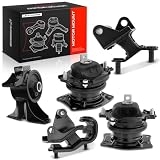
- [Vehicle Fitment]: Compatible with Honda Odyssey EX-L/EXL/Touring 2007 V6 3.5L --- It Fits the Model with Automatic Transmission, i-VTEC; It Comes with Electrical Connector
- [Reference Number]: A4557, A4558, A4583EL, A4587, A65026EL, EM9427, EM9530, EM5795, EM9415, EM5840, 9427, 9530, 9657, 9415, 9689, 50806SHJA02, 50805SHJA01, 50810SHJ305, 50810SHJA62, 50820SHJA61, 50830SFY023
- [Package Included]: 1 x Front Motor Mount, 1 x Front Right Motor Mount, 1 x Rear Motor Mount, 1 x Front Transmission Mount, 1 x Rear Transmission Mount
- [Advantages]: A-Premium engine mount set supports the engine, absorbs vibrations and reduces noise effectively for a smoother and more comfortable driving. Made of outstanding materials, designed for the precise fit and long-lasting performance.
- [Buy with Confidence]: A-Premium offers a one-year unlimited-mileage guarantee on our meticulously crafted engine mount kit. We offer a wide variety of automotive accessory categories, ensuring that you can hit the road with peace of mind.
Are aftermarket engine mounts acceptable?
Yes, a reputable aftermarket mount can be suitable, but compatibility and quality matter more than the lowest price. A cheap mount may fit physically while having the wrong stiffness, damping, height, or hydraulic or active characteristics. That can leave the car vibrating even though the part is new.
- OEM is the conservative choice for active, electronically controlled, vacuum-controlled, luxury, performance, hybrid, or unusually vibration-sensitive mounts.
- High-quality aftermarket can be reasonable for ordinary rubber mounts when the manufacturer documents correct vehicle compatibility and specifications.
- Avoid used mounts unless the part is rare, structurally sound, and its condition can be verified.
- Confirm whether the repair requires new bolts, nuts, brackets, inserts, or other hardware.
RepairPal recommends OEM or high-quality aftermarket parts that meet the vehicle’s specifications: RepairPal’s parts guidance. Do not fill a mount with urethane, weld it, or improvise a support as a normal street-car repair. Such modifications can increase vibration and may not preserve the vehicle’s designed powertrain movement.
Is engine-mount replacement a realistic DIY job?
It is possible for an experienced DIY mechanic with the correct equipment and vehicle-specific instructions, but it is not a beginner-level repair. One of the engine’s structural supports must be removed while the engine or transmission is safely supported. If that support fails, the powertrain can fall or shift with enough force to cause severe crushing injuries.
A safe DIY repair requires:
- The vehicle-specific service procedure and correct support points.
- An appropriate engine brace, support beam, or other approved powertrain-support tool.
- Wheel chocks, a level work surface, and correctly rated jack stands if the vehicle must be raised.
- A torque wrench and the correct replacement hardware.
- Knowledge of torque-to-yield or other one-time-use fasteners.
- Understanding of the removal sequence, mount alignment, and any required neutralization procedure.
- A careful post-repair inspection and test drive.
Do not place a jack stand under the engine or use a floor jack under a small, unsupported point as a universal method. RepairPal specifically warns about the crushing hazard and recommends an appropriate engine brace or support tool: RepairPal’s DIY safety guidance. There is no universal torque value or support location; use the procedure for the exact year, engine, transmission, and drivetrain.
What’s actually slowing this PC down?
Pick the symptom - the matching free tool is one click away.
What a professional replacement normally involves
- Verify the vibration, clunk, or movement complaint.
- Identify the failed mount and inspect every other mount.
- Inspect brackets, studs, fasteners, subframe attachments, and nearby components.
- Check for oil or coolant leaks that could damage the replacement.
- Confirm the correct mount, hardware, and any required companion parts.
- Securely support the engine or powertrain with approved equipment.
- Remove components that obstruct access.
- Remove the failed mount and inspect the mounting surfaces.
- Install the replacement in the correct position.
- Align or neutralize the mount if the vehicle procedure requires it.
- Torque fasteners to the manufacturer’s specification and replace one-time-use hardware as required.
- Reinstall removed components.
- Verify that the engine sits correctly and that hoses, wires, exhaust parts, and fans are not under tension or contact.
- Test for vibration, noise, shifting, and abnormal movement.
RepairPal describes this general process, including top-side support, obstruction removal, alignment, torque verification, reassembly, and testing. The exact sequence varies by vehicle.
Why vibration can remain after the new mount is installed
A new mount does not guarantee that the original vibration will disappear. Possible explanations include:
- The wrong mount was installed.
- A required companion part or spacer was omitted.
- The mount was installed out of position.
- Fasteners were not torqued correctly.
- The mount was not neutralized and is binding.
- Another engine, transmission, or torque-strut mount is also worn.
- The original complaint came from a misfire, rough idle, exhaust contact, wheel or tire problem, driveline issue, or suspension fault.
- An oil or coolant leak was not repaired and has contaminated the new mount.
Manufacturer bulletins show why installation details matter. A 2023 Chevrolet/GMC bulletin warns that some replacement mounts require additional parts and that omitting them can allow the mount to ground out and create vibration, especially at idle: NHTSA-hosted bulletin. A Mazda bulletin warns that installing a mount out of its original position can increase noise and vibration: Mazda bulletin. Another manufacturer technical tip describes neutralizing a mount by allowing the drivetrain to settle through Drive and Reverse before final torque. That is a model-dependent procedure, not a universal instruction: NHTSA-hosted technical tip.
How to decide whether your car is worth repairing
Do not use a simple rule such as never spending more than the car’s resale value. You would still need transportation after selling or scrapping the vehicle, and another used car may bring unknown maintenance problems. Consumer Reports recommends considering the repair cost against the additional months you expect to keep the vehicle. For example:
- $700 spread over 24 expected months of ownership is about $29 per month.
- $1,500 spread over 12 expected months is $125 per month.
This calculation is a decision aid, not a promise that the vehicle will have no other repairs. Add a realistic allowance for maintenance and likely problems.
A mount repair is more attractive when the vehicle has:
- A reliable engine and transmission.
- Little or no severe structural rust.
- Good tires, brakes, and suspension.
- A manageable recent repair history.
- No known major repair due soon.
- A maintenance history you understand.
- An owner who plans to keep it for several more months or years.
Declining the repair may make sense when:
- The frame, subframe, or body has serious structural rust.
- The vehicle has an unsafe body or major accident damage.
- The engine or transmission is already failing.
- Several expensive repairs are imminent.
- The repair requires extensive disassembly and costs $1,500 or more on a vehicle with little remaining service life.
- You are already planning to sell or scrap the vehicle and the repair will not materially improve its safety or usability.
An older but reliable vehicle can still be worth repairing. A known car with a $700 mount repair may be a better financial choice than replacing it with another used vehicle of uncertain condition. Consumer Reports’ repair-versus-replace framework is more useful than comparing one repair with the vehicle’s entire book value.
Rank #4

- Tuned specifically to match your model vehicle
- Designed to function with all surrounding components to ensure that the mount bolts correctly and there is no interference with other parts on your vehicle
- Interlocks using steel that is sturdy enough to hold the largest mass (the engine) in your vehicle in case of a crash
- GM-recommended replacement part for your GM vehicle’s original factory component
- Offering the quality, reliability, and durability of GM OE
How to avoid overpaying
For a normal single-mount repair, a quote near the current national range is not automatically excessive. A higher quote can be justified by difficult access, an active or hydraulic mount, subframe work, rust, special hardware, a truck or luxury vehicle, or related repairs. A quote deserves more questioning when the shop cannot explain the diagnosis or the labor.
Before authorizing the repair, request:
- The exact failed mount and the evidence supporting the diagnosis.
- A visual explanation or photograph when practical.
- A list of all other mounts inspected and their condition.
- Parts and labor separated on the estimate.
- The part brand, whether it is OEM or aftermarket, and the warranty.
- Confirmation of new bolts, nuts, brackets, spacers, or companion parts.
- The labor hours and what must be removed for access.
- Any related oil, coolant, exhaust, bracket, subframe, or transmission-mount repair.
- The shop’s workmanship and parts warranty.
Get a second quote when the estimate exceeds about $1,000–$1,500, when the repair includes several mounts, or when the shop proposes extensive disassembly. Independent shops often have strong customer-satisfaction results and may offer more flexibility than dealers, while a brand specialist may be preferable for a complex or unusual vehicle. Consumer Reports offers repair-shop selection and cost-saving guidance at its repair-shop buying guide and repair-cost guide.
The Tool Desk
Outbyte PC Repair FREEClear out junk files and repair common Windows errorsFree Scan →Outbyte Driver Updater FREEScan for outdated or missing drivers - takes under a minuteDriver Scan →Dealer or independent shop?
A reputable independent repair shop is often a sensible choice for a conventional rubber engine mount, especially when the vehicle is outside its warranty. Use a dealer or brand specialist when:
- The mount is active, electronically controlled, vacuum-controlled, or unusually vibration-sensitive.
- The vehicle is under warranty.
- A technical service bulletin or revised part may apply.
- The repair requires proprietary diagnostic equipment or a special procedure.
- The vehicle is a luxury, performance, hybrid, or uncommon model.
Ask either type of shop whether the VIN has applicable service information and whether the replacement part supersedes the original design.
Check warranty coverage, recalls, and service campaigns first
Before paying, check:
- Your factory or extended warranty.
- The vehicle’s VIN for open safety recalls.
- Manufacturer technical service bulletins.
- Customer-satisfaction campaigns or special coverage extensions.
NHTSA’s recall lookup accepts a license plate or 17-character VIN. Open safety recalls are repaired free by the manufacturer’s dealer network: NHTSA recall lookup.
Some manufacturers specifically include engine mounts in powertrain coverage. Ford’s published powertrain page, for example, lists engine mounts and transmission mounts among covered components, subject to the vehicle’s warranty terms and the manufacturer’s diagnosis: Ford powertrain coverage. Do not assume another brand has the same coverage.
Quick wins for a faster PC:
Clear out junk files and repair common Windows errorsFree Scan →Scan for outdated or missing drivers - takes under a minuteDriver Scan →A technical service bulletin is not automatically a free repair. It may document a known symptom, revised part, required installation method, or possible goodwill assistance, but payment depends on warranty status and the manufacturer’s policy. Consumer Reports explains how service information and goodwill assistance can affect repair costs.
Decision guide: what should you do next?
| Your situation | Best next action |
|---|---|
| Visible separation, collapse, leakage, dramatic movement, or component contact | Repair now; tow if movement or contact is severe. |
| One mount is proven bad and the vehicle is otherwise healthy | Replace the failed mount and inspect the rest. |
| Only symptom is vibration, with no inspection evidence | Get a diagnosis or second opinion before authorizing parts. |
| Quote is in the normal range and you will keep the car | Repair is usually financially sensible. |
| Quote is $1,500 or more | Get a second quote and investigate access, mount type, hardware, and related repairs. |
| Vehicle has severe rust, major drivetrain trouble, or many imminent repairs | Compare the complete ownership outlook before repairing. |
| Mount is worn but stable and a shop confirms short-term deferral is reasonable | Limit driving, monitor for worsening symptoms, and schedule the repair. |
Frequently Asked Questions
Can I replace just one engine mount?
Yes, if inspection shows that only one mount has failed and the others remain in good condition. The shop should inspect every engine mount, transmission mount, torque strut, bracket, and fastener before recommending a one-mount repair.
How long can I drive with a bad engine mount?
There is no safe universal mileage or time limit. A mildly worn, stable mount may permit a short trip to a repair shop, but avoid normal use. Tow the vehicle if the engine moves dramatically, a mount is separated, metal parts are banging, or the engine is contacting nearby components.
Can a bad engine mount damage the engine?
The mount itself does not usually damage the engine internally, but excessive powertrain movement can stress other mounts, brackets, hoses, wiring, exhaust parts, cooling components, and driveline parts. A completely broken mount can also allow contact with surrounding components.
Do these 3 things before closing this tab:
1Scan for outdated or missing drivers - takes under a minute2Repair Windows errors before they cause bigger problems3Fix the driver behind crashes, sound loss and screen glitchesBest Value

- 【High quality】 We have always been the most high -quality engine and transmission bracket manufacturer. All of our products use the highest quality raw materials. I have the most advanced laboratory equipment to test their products. The quality can completely replace OE brackets, or even surpass them
- 【Compatible vehicle】 2012-2019 Nissan Versa/Versa Note 1.6L, 2014Nissan Note
- 【Notice】 Please use Amazon's partfinder to check whether this mounts are compatible with your vehicle
- 【Reference OE number】A7368 112101HS0A ,A7369 113601HC0B, 113601HC0D, A4361 112201HA0B "
- 【After sales service】Provide one-year warranty service. If you have any questions, please contact us at any time.
Do engine mounts have a maintenance interval?
Usually there is no universal replacement interval. Some sources cite five to seven years as a common lifespan, while others report that mounts can last the life of the vehicle. Condition, heat, contamination, road impacts, driving style, and the mount design matter more than age alone.
Are hydraulic engine mounts more expensive?
They can be. Hydraulic, vacuum-controlled, electronically controlled, and active mounts generally cost more than simple rubber mounts, and some require additional parts or special installation procedures. Confirm the exact mount design before comparing prices.
Is a transmission mount the same as an engine mount?
No. Both support and control the powertrain, and their symptoms can overlap, but they are separate components on many vehicles. A torque strut or dogbone mount is also a distinct part on many designs.
Are aftermarket engine mounts safe?
A reputable aftermarket mount that matches the vehicle’s specifications can be acceptable, especially for a conventional rubber mount. OEM or a documented high-quality equivalent is the safer choice for active, electronically controlled, vacuum-controlled, luxury, performance, hybrid, or vibration-sensitive applications.
Quick wins for a faster PC:
Scan for outdated or missing drivers - takes under a minuteDriver Scan →Repair Windows errors before they cause bigger problemsFix Now →Can a bad engine mount cause a check-engine light?
A mount failure does not normally create an engine fault code by itself. A rough-running engine or misfire can cause both vibration and a check-engine light, so the light should prompt engine diagnosis rather than automatic mount replacement.
Should I use a dealer for engine-mount replacement?
A reputable independent shop is often appropriate for a conventional mount outside warranty. Prefer a dealer or brand specialist when the mount is active or electronically controlled, a technical bulletin may apply, the vehicle is under warranty, or the vehicle requires proprietary procedures.
Does a technical service bulletin make the repair free?
No. A bulletin may identify a known issue, revised part, or required procedure, but it is not automatically a recall or warranty extension. Coverage depends on the vehicle’s warranty, mileage, time, campaign status, and manufacturer policy.
Is an engine mount covered by a powertrain warranty?
Sometimes. Coverage varies by manufacturer and warranty plan. For example, Ford lists engine and transmission mounts among covered powertrain components under specified terms. Check the exact warranty and have the dealer confirm coverage using the vehicle identification number.
Free tools Windows power users keep installed
One-click scans. No signup required.
The Bottom Line
A confirmed bad engine mount is usually worth replacing when the car’s engine, transmission, structure, and overall maintenance outlook are sound. Plan on roughly $500–$900 for many single-mount repairs in the U.S., while the current national RepairPal estimate is $630–$779 before taxes and fees. Hydraulic, active, difficult-access, truck, luxury, and multi-mount repairs can exceed $1,000.
Do not approve the repair from vibration alone. Ask which mount failed, what evidence supports the diagnosis, whether the other mounts were inspected, what parts and hardware are included, and whether warranty or manufacturer coverage applies. If the vehicle has severe structural rust or several major repairs due, judge the mount as part of the complete ownership decision—not by the mount quote alone.
Quick Recap
Product prices and availability are accurate as of the date/time indicated and are subject to change. Any price and availability information displayed on Amazon at the time of purchase will apply.