PC Slower Than It Used to Be?
A free scan shows the junk files, broken settings and background clutter dragging Windows down - then fixes them in one click.Free scan · Windows 10 & 11Outdated Drivers Are Slowing You Down
One free scan finds every outdated or missing driver and matches the right update for your exact hardware.Free scan · exact hardware matchYes, a car can provide limited emergency electricity, but only through equipment rated for that exact vehicle and load. The usual options are a vehicle-rated outlet, a properly matched DC-to-AC inverter, or a manufacturer-supported vehicle-to-load system. None makes it safe to run the engine in a garage, carport, or other enclosed or partly enclosed area. Vehicle exhaust contains carbon monoxide (CO), an odorless poison that can cause sudden illness and death. The Centers for Disease Control and Prevention (CDC) says never to run a vehicle in an attached garage, even with the garage door open.
For a short outage, plan around modest, compatible loads such as phone chargers, lights, or other equipment specifically approved by the vehicle and inverter manuals. A refrigerator, heater, pump, or medical device may require substantially more power at startup than while running, and you must not assume a normal 12-volt socket can operate it. Compare the outlet limit, inverter ratings, and appliance nameplate before connecting anything.
As an Amazon Associate I earn from qualifying purchases.
Start with the non-negotiable safety rule
Run a vehicle only where its exhaust cannot accumulate around people or enter a building. A garage is unsafe even when the main door is open; an attached garage is specifically called out by the CDC. The same rule applies to sheds, breezeways, tents, carports that can trap exhaust, and any location close to doors, windows, or vents. Keep the vehicle outdoors in a genuinely open area and position it so exhaust is carried away from the home.
Do not use a carbon-monoxide alarm as permission to run an engine indoors. A battery-powered or battery-backup CO detector is valuable outage equipment, but it cannot prevent exposure or make an enclosed space safe. The CDC also recommends having emergency lighting and appliance thermometers for refrigerators and freezers. Its generator guidance says generators should be more than 20 feet from windows, doors, and vents; that distance is not a license to idle a car near a dwelling, because a vehicle is not a generator and its exhaust pattern depends on the vehicle and surroundings. See the CDC’s outage guidance at What to Do to Protect Yourself During a Power Outage.
#1 Best Overall

- 〖Car power inverter〗This Car power converter is equipped with 2 U.S. standard AC outlets, 4 USB charging ports, DC 12V to AC 110V converter,perfect for charging electronic devices such as laptops, tablets, cell phones, Christmas gifts, light strings and so on.
- 〖Quiet and High Efficiency〗Our car charger adapter adopts high efficiency circuit design and advanced heat dissipation technology, which can effectively reduce energy consumption and heat dissipation noise.
- 〖Portable Design〗super compact and lightweight cigarette lighter adapter,same size as cellphone, 2.7*1.4*5 inches (8.5 oz+), space saving and easy to carry.
- 〖Multi-protection〗ABS shell is fully insulated to enhance the safety level. Safe charging technology can prevent the machine from overheating, undervoltage, overvoltage, overload, short circuit.
- 〖Excellent After-sales Service〗With heart and soul, we provide you with high quality inverters! We accept returns and exchanges and offer 24 hours consultation. Any problem can be solved within 24 hours, please feel free to contact us if you have any questions.
Recognize carbon-monoxide poisoning
Headache, dizziness, weakness, nausea, vomiting, chest pain, and confusion are common CO-poisoning symptoms, according to the CDC. If anyone develops symptoms or a detector sounds, leave for fresh air immediately, call emergency services, and seek medical help. Do not re-enter to investigate the vehicle or silence the alarm. More information is available in the CDC’s Carbon Monoxide Poisoning Basics.
Understand what a car can actually supply
A vehicle stores energy as low-voltage direct current (DC). A car power inverter converts that DC into alternating current (AC) for compatible AC equipment. Ford’s description of a vehicle power inverter explains that basic function, but it does not establish one universal wattage or compatibility list for every car. Read the exact owner’s manual, outlet label, and inverter documentation for your model year and configuration; the manufacturer listing is at Ford Power Inverter Voltage Converter.
Some vehicles have a factory AC outlet or a higher-output onboard-power feature. Others provide only a low-power 12-volt accessory socket. The connector shape alone does not tell you how much power is available. Limits can vary by vehicle, model year, trim, battery system, and whether the engine must be running. Treat every outlet as a separately rated circuit rather than assuming that an adapter increases its capacity.
| Power route | What it does | What you must verify | Appropriate starting use |
|---|---|---|---|
| 12-volt accessory outlet plus inverter | Changes the outlet’s vehicle DC into AC for compatible devices. | Outlet’s maximum rating; inverter continuous and surge ratings; vehicle instructions; appliance running and startup demand. | Small, compatible chargers or electronics when the documentation allows them. |
| Factory AC outlet | Provides AC directly from a vehicle-installed outlet. | Exact outlet rating, operating conditions, and permitted devices in the owner’s manual. | Devices within the stated outlet limit. |
| Manufacturer vehicle-to-load or onboard-power feature | Uses a purpose-designed vehicle system to supply external loads. | Exact model, configuration, outlet, accessories, and procedure approved by the vehicle maker. | Loads supported by that system, using the specified equipment. |
| Household transfer connection | Routes vehicle power to selected home circuits through compatible transfer equipment. | Manufacturer compatibility, listed transfer equipment, installation requirements, and local electrical rules. | Only a documented, professionally compatible setup; never an improvised cord or panel connection. |
Check the load before buying an inverter
Every appliance has an electrical requirement, usually printed on a nameplate or in its manual. Record the normal running requirement and any stated starting or surge requirement. Motors and compressors can demand more power when they start than they use after reaching operating speed. An inverter’s continuous rating must cover the running load, and its surge rating must cover the startup demand for the time specified by its manufacturer.
Rank #2
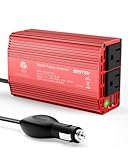
- BESTEK Advantage Upgraded: Bestek is power inverter patents owner, America's leading power inverter brand. Our inverter tech upgraded to 11-17V compatible with Tesla. It provides 300 Watts continuous DC to AC power and 700 Watts instantaneous power, featuring 2 AC outlets and 2 USB ports
- Fast Charging: Two 110V AC outlets for charging larger devices such as laptops and tablets, 2*4.8A USB charging ports for powering USB compatible devices, a good choice as requisite car accessories
- Ultra Compact and Lightweight: iPhone-sized design ideal for use on vacations, work trips, and camping. 32 inch cigarette lighter plug makes the power inverter can be plugged into almost any vehicle
- Multi-Protection: Bestek inverter 12v to 110v Built-in 40 amps fuse to protect your device. Safe charging design provides protection against, overheating, under and over voltage charging, short circuiting
- Durable Aerospace Aluminum Housing: Bestek car inverter provides advanced protection from drops and bumps.Smart cooling fan system makes the car power inverter very silent when operating,and the fan runs faster when the device gets warmer or output power exceeds 70W
There is no universal appliance wattage that can be promised for an unspecified car. A 12-volt socket in one vehicle may have a different limit from a socket that looks identical in another. The cited manufacturer material describes the inverter function but does not supply a single rating that applies to all vehicles, so use the numbers printed for your own vehicle and equipment.
A practical compatibility worksheet
- Write down the exact vehicle identity. Record make, model, model year, trim, engine or battery configuration, and the outlet you intend to use. Open the owner’s manual to the power-outlet or accessory-power section.
- Copy the outlet limit. Use the manual or outlet label, not a number from a different trim or an online discussion. Note whether the vehicle permits operation only with the ignition on or engine running.
- Record the appliance requirements. Capture voltage, running watts or amps, and startup or surge information. If the manual gives only amps, do not convert or guess without knowing the applicable voltage and power factor.
- Record the inverter requirements. Check its input voltage, continuous AC output, surge output, duty cycle, connector, and vehicle-approval instructions. The inverter must be compatible with the outlet and its continuous draw must not exceed the vehicle circuit.
- Reject uncertain combinations. If any rating is missing, contradictory, or lower than the appliance requirement, do not connect the appliance. Choose a smaller load or obtain clarification from the vehicle or equipment manufacturer.
What a car inverter may run—and what it may not
The safe answer to “What can a car power inverter run?” is “Only a device whose requirements fit the exact vehicle outlet and inverter ratings.” A phone charger, tablet charger, small lamp, or other modest device may fit a compatible outlet, but even these should remain within the stated limits. Using a power strip does not create more capacity; all connected devices add to the inverter’s load.
| Load category | How to decide | Reason for caution |
|---|---|---|
| Phone, camera, or laptop charger | Use only if the outlet and inverter ratings cover the charger and the vehicle manual permits it. | Several chargers together can exceed a small outlet; some adapters have their own limits. |
| Emergency lighting | Prefer battery lighting. If using an AC lamp, verify its nameplate against the available output. | Lighting is useful during an outage, but an inverter does not remove outlet limits. |
| Refrigerator or freezer | Connect only when the vehicle, inverter, and appliance documentation explicitly support both running and startup demand. | The compressor’s starting load can be much higher than its normal running load. |
| Heater, kettle, hot plate, or hair dryer | Do not assume compatibility; these are high-demand loads and require an explicitly adequate rated system. | Resistive heating equipment can consume substantial continuous power and quickly overload a small outlet. |
| Pump, power tool, or compressor | Check the motor’s starting requirement and the inverter’s surge specification. | Starting current can trip protection even when the running figure appears acceptable. |
| Medical equipment | Use only a power plan approved by the equipment maker or care provider for the exact device and vehicle setup. | A generic inverter recommendation cannot establish medical-device safety or required continuity. |
If an appliance is essential, arrange a purpose-built backup solution before an outage. Do not discover during an emergency that a vehicle socket, adapter, or inverter cannot start it.
Do these 3 things before closing this tab:
1Repair Windows errors before they cause bigger problems2Scan for outdated or missing drivers - takes under a minute3Clear out junk files and repair common Windows errorsStep-by-step: using a compatible inverter outdoors
- Read both manuals first. Confirm the vehicle outlet type, maximum rating, permitted operating state, inverter input requirements, and any warnings. If the manuals disagree, stop and obtain manufacturer guidance.
- Choose an open location. Park outdoors where exhaust cannot collect or flow toward people, windows, doors, vents, or neighboring occupied spaces. Never use a garage or partially enclosed shelter, regardless of door position.
- Inspect the equipment. Do not use a damaged cord, loose plug, melted socket, cracked inverter case, or wet equipment. Keep connectors dry and prevent cables from being pinched by doors or exposed to hot exhaust components.
- Start with the smallest necessary load. Disconnect or switch off appliances before making the connection. Follow the vehicle manual on whether the engine must be running or the ignition must be in a particular position.
- Connect in the manufacturer’s order. Plug the inverter into the specified vehicle outlet, then connect the appliance or charger to the inverter. Do not defeat a fuse, splice wiring, or substitute a household extension cord for a listed connection.
- Monitor during use. Watch for overload warnings, tripped protection, unusual heat, odor, buzzing, flickering, or a vehicle warning message. If any appears, turn off the load and disconnect it; do not repeatedly reset protection without finding the cause.
- Limit the outage load. Add devices one at a time only after checking their combined requirement. Keep ventilation around the inverter and follow its duty-cycle limits. The vehicle’s owner’s manual controls how long the outlet may be used.
- Shut down safely. Turn off or unplug the appliance, then disconnect the inverter as directed by its instructions. When the vehicle is no longer needed, follow the normal shutdown procedure and confirm no cable remains connected.
Using a vehicle’s built-in power system
A factory vehicle-to-load feature is different from plugging an inverter into an accessory socket. It may include dedicated outlets, software limits, battery-management controls, and approved accessories. Use only the procedure for the exact vehicle and configuration; do not infer capability from a similar-looking model.
Rank #3

- 【Pro Chaser Power Inverter Basics】: This inverter provides a steady 400W of DC to AC power with a peak output of 800W. Equipped with dual 110V AC sockets and two high-speed 3.1A USB ports, it's perfect for powering your devices on the go.
- 【Road Trip Ready】: Power up your journey with 4.8A dual USB ports for fast charging of phones, tablets, cameras, and more. The AC outlets easily handle 300W–400W devices like laptops, breast pumps, DVD players, and bottle warmers—making travel with tech and family a breeze.
- 【Portable and Flexible】: This compact, cellphone-sized inverter comes with a 30-inch (75cm) cord for maximum flexibility—ideal for travel, outdoor adventures, and everyday on-the-go charging.
- 【Safety You Can Trust】: Enjoy peace of mind with built-in protection against electrical risks like overloads, voltage issues, and overheating. The smart cooling fan kicks in at 113°F (45°C) to keep everything running smoothly. Comes with a 12-month worry-free warranty.
- 【Important Safety Notice】: Always use the inverter in a cool, dry environment to ensure reliable operation. It delivers powerful AC current comparable to home wall outlets—handle with caution.
One documented example is Ford’s GenerLink-compatible arrangement for specified F-150 PowerBoost Hybrid or F-150 Lightning configurations equipped with a 240-volt Pro Power Onboard outlet. The manufacturer describes the compatible transfer equipment and configurations in Ditch the Extension Cord Spaghetti: An Easier, More Affordable Way to Power Your Home. That example is not a general instruction to connect any car to a home panel. Confirm that your exact vehicle, outlet, transfer device, and installation meet the manufacturers’ requirements.
What not to do with household wiring
- Never backfeed a home through a wall outlet or a homemade “male-to-male” cord.
- Never connect an inverter to a breaker panel unless the vehicle and transfer-equipment manufacturers specifically support that configuration and the installation meets applicable electrical requirements.
- Never assume an extension cord, adapter, or transfer switch rated for a generator is automatically suitable for a car inverter.
- Never remove grounding, overcurrent protection, or interlocks to make a connection work.
Household transfer setups are a compatibility and installation question, not a shortcut for a portable outlet. If the exact documentation does not describe the connection, use direct device charging instead and consult a qualified electrician for a compliant backup-power design.
Prepare before the outage
The CDC’s Power Sources checklist includes car chargers and adapters for home-use equipment and devices, a battery-powered or backup CO detector, emergency lighting, and thermometers for refrigerators and freezers. Assemble and test those supplies before severe weather or an outage, when it may be difficult to read manuals or find replacement cables.
What’s actually slowing this PC down?
Pick the symptom - the matching free tool is one click away.
- Keep the vehicle owner’s manual, inverter manual, and appliance instructions together.
- Label each charger or adapter with the device it fits; do not rely on appearance alone.
- Check cables, plugs, fuses, and outlet covers for damage before storage and before every use.
- Maintain battery-powered lighting and a CO detector with fresh or charged batteries.
- List the essential loads in priority order so you do not overload the outlet by connecting everything at once.
- For food safety, use an appliance thermometer as recommended by the CDC rather than guessing how cold a refrigerator or freezer remains.
Troubleshooting an overload or shutdown
The inverter alarms or switches off
Disconnect the appliance and check its running and startup requirements against the inverter’s continuous and surge ratings. Reduce the load, allow equipment to cool if the manual permits, and reset it only according to the manufacturer’s instructions. A repeated shutdown means the combination is not suitable; do not bypass the protection.
Rank #4

- Portable Power Inverters For Vehicles: equipped with 4 USB-C/A 24W charging ports and Double 110V AC car outlet adapter to wall plug, providing ample power for smartphones, cameras, laptop, breast pump, nebulizer, game console, kindle, TV, DVD players, or other devices, ensuring that your devices are fully charged and ready to use during travel
- Camping and Outdoor Activities: In wilderness environments without access to traditional power sources, the Car Inverter can be connected to a vehicle's cigarette lighter adapter, and with 6 output ports, it can power lights, fans, small kitchen appliances, and more, making your outdoor life more comfortable and convenient
- Enhanced Cooling System: The upgraded intelligent cooling fan operates more stably and quietly, ensuring that the power inverter maintains good performance during prolonged use, extending the lifespan of the equipment and providing you with a smoother, quieter user experience
- Portability and Versatility: Measuring just 5.4×2.75×1.4 inches and weighing 9.17 oz, the design is highly rational, lightweight, and portable, taking up minimal space. Whether storing it in a car, taking it along on a camping trip, or using it as part of a mobile office, it is an ideal choice
- Warm Tips: DC 12V to 110V AC converter provides power up to 300W, Only for DC 12V and car,Do not use to power high-power electrical equipment, such as hair dryers, electric heaters, which may blow the fuse
The vehicle outlet fuse blows
Unplug the inverter and every connected device. Inspect for a short, damaged cable, wet connector, or load above the outlet rating. Replace a fuse only with the exact type and rating specified by the vehicle manual. If the replacement fails again, stop using the outlet and arrange service.
The appliance will not start
Verify that the vehicle outlet is energized in the required ignition or engine state, then compare the appliance’s startup demand with the inverter’s surge capability. A device that runs after startup may still fail to start if the initial demand is too high. Do not keep cycling power in an attempt to force it to start.
The vehicle displays a warning
Turn off the load and follow the vehicle manual’s warning procedure. A warning can indicate overload, low battery state, thermal protection, or another vehicle condition that a generic inverter guide cannot diagnose. Seek manufacturer or qualified service advice before reconnecting.
Answers to common outage questions
Can I run the car in a garage while using an inverter?
No. The CDC warns that a vehicle must not run in an attached garage even with the door open. Move the vehicle to a truly open outdoor location, with exhaust directed away from people and building openings.
Best Value
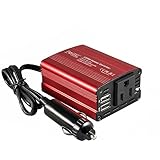
- Premium 150w car power inverter: Plug in the car cigarette lighter, offering 150 Watts of continuous 12V DC to 110V AC power output, this car adapter for plug outlet equipped with 2 USB ports and 1 AC outlets, easy charging multi charging devices in the vehicle
- Fast Charging: Dual USB ports can charge most phones and tablets simultaneously (Max 3.1A total output), while AC outlets for laptop, computer, Christmas gift, charging string lights, baby stuff, breast pump, CPAP machine, nebulizer, game console, kindle, TV, DVD players, lights, iPad, and other electronic devices
- Road Trip Essentials: Just about credit card size - 3.2 x 2.5 x 1.5 inches, space-saving and easy storage, with aluminum shell design, extremely portable and lightweight at only 8 oz+. To use for work, outdoor activities, road trips, van life or other mobile living situations
- Multi-Protection: Power inverters for vehicles built-in fuse to protect your device, stable charging design provides protection against, overheating, under and over voltage charging, short circuiting, overloads, and overcharging
- Intelligent Silent Use: Durable metal housing provides advanced protection from drops and bumps. Integrated very silent cooling fan helps reduce heat and prevents short-circuit
Will a battery-powered CO alarm make indoor operation safe?
No. The alarm is a warning device and an important preparedness item, but it does not prevent exhaust from entering the space or guarantee enough warning before dangerous exposure.
Can I power a refrigerator from a 12-volt socket?
Only if the exact vehicle outlet, inverter, and refrigerator documentation support the refrigerator’s running and startup requirements. No universal answer applies to every car or refrigerator.
Is a manufacturer-supported vehicle-to-load system the same as an inverter?
No. A built-in system may have dedicated hardware, controls, and approved transfer equipment. Follow the exact vehicle instructions rather than adapting a generic inverter or household cord.
Bottom line for a safe car-based backup
Use a car for carefully selected, documented loads—not as an improvised whole-home generator. Verify the exact outlet and appliance ratings, keep every running vehicle outdoors and away from openings, and use only manufacturer-supported transfer equipment for household circuits. When the ratings or installation requirements are unclear, do not connect the load.
Quick Recap
Product prices and availability are accurate as of the date/time indicated and are subject to change. Any price and availability information displayed on Amazon at the time of purchase will apply.




