A successful first drag-strip visit starts with the event rules, not a last-minute engine modification. Confirm the track’s current instructions and the governing rulebook, make the car easy for tech officials to approve, pack the few items you may need, and let officials direct every movement from the staging lanes to the exit.
The checklist below follows NHRA Street Legal guidance and its beginner material, while separating those general expectations from local or class-specific requirements. Rules change with the vehicle’s performance, event format, governing body and track, so verify the details with your venue before you leave.
As an Amazon Associate I earn from qualifying purchases.
1. Confirm exactly which rules apply
Drag strips do not use one universal inspection standard. Requirements can change according to the event, vehicle performance, competition class, governing organization and local track policy. A street-legal test-and-tune session may have different expectations from an eliminator, an index class or a high-speed competition event.
Do these 3 things before closing this tab:
1Clear out junk files and repair common Windows errors2Fix the driver behind crashes, sound loss and screen glitches3Repair Windows errors before they cause bigger problemsStart with the event page and the track office. Ask which rulebook governs the run, what documentation is required, whether the session is open to your vehicle, and what safety equipment is mandatory for its performance level. NHRA’s rules index lists a 2026 rulebook and amendments; use the current edition rather than relying on an old forum post or a previous visit.
#1 Best Overall

- PROCESS LEVEL ACCURACY: Each ETENWOLF’s digital tire pressure gauge is calibrated manually to ANSI B40.7 Grade 2A(plus-minus 1 PSI).Presta valve adapter not included, if used for bicycles, it must be purchased separately
- ACCURACY IN EXTREME PRESSURE RANGE: Whether tire pressure is below 12 PSI or above 140 PSI, ETENWOLF’s digital tire gauge is accurate as well
- ACCURACY IN EXTREME WEATHER: Built-in AI chip with thermal compensation inside, ETENWOLF’s tire gauge works normally even in extreme cold or hot weather(-4°F-130°F/-20°C-54°C)
- PRESSURE RANGE 3-200 PSI : ETENWOLF’s digital tire pressure gauge can measure pressure of all types of vehicles
- REPLACEABLE AAA BATTERIES: Batteries are easy to replace and helps to extend the tire pressure gauge’s life span, with LED light to illuminate dark areas for easy tire pressure reading
- Check the event date, registration deadline, arrival time and rain or cancellation policy.
- Confirm whether the car must be street legal, currently registered and insured.
- Ask whether your vehicle’s power, elapsed-time potential or modifications trigger additional equipment requirements.
- Verify helmet standards, roll-protection rules and any class-specific inspection specifications directly with the track or governing body. General Street Legal guidance does not establish those thresholds.
- Save the track’s phone number and event instructions offline in case cellular service is poor at the facility.
Treat technical inspection as an ongoing compliance requirement. NHRA’s 2026 inspection reminder says an inspection may occur before, during or after an event when directed by the technical department or a designated official. Passing the initial check does not authorize you to ignore a later request or a change in the car’s condition.
2. Make the car ready before you travel
Look for leaks and loose parts
Park the car on a clean surface and inspect it after it has sat. Look under the engine, transmission, differential, fuel system and cooling system for fresh fluid. Wipe suspect areas clean, find the source and repair it before attending; do not rely on adding fluid at the track. A leak is both a safety concern and a likely reason for a tech official to stop the car.
Perform a sensible walk-around of the body, suspension and engine bay. Check that panels, the hood, wheels and any aftermarket hardware are secured. This is a preparation precaution, not a substitute for a qualified mechanical inspection of a heavily modified car.
Quick wins for a faster PC:
Scan for outdated or missing drivers - takes under a minuteDriver Scan →Repair Windows errors before they cause bigger problemsFix Now →Fix the driver behind crashes, sound loss and screen glitchesFind Drivers →Secure the battery
Verify that the battery is firmly restrained and cannot move in any direction. NHRA’s beginner guidance identifies battery security as an item officials generally check. A factory hold-down in good condition may be adequate for a street car; a loose battery, improvised strap or corroded mount should be corrected before the trip.
Verify belts, lights and tires
Test the driver’s seat belt and inspect its latch and webbing. NHRA’s Street Legal checklist calls for working headlights and taillights, so operate every required lamp and repair failed bulbs, switches or wiring.
Rank #2

- Accurate, Dependable Readings: Factory‑calibrated to ±1 PSI, so you can confidently match your vehicle’s recommended PSI (check the door jamb sticker). Ideal for monthly checks and road trips — consistent results every time, cold or warm.
- Bright Backlit Display & Nozzle Light: The illuminated nozzle helps you find the valve stem in the dark, while the backlit LCD makes readings crystal clear in dim garages or at night. No more squinting or holding a flashlight.
- 4 Measurement Units, One Button: Quickly switch among PSI, Bar, Kgf/cm², and KPA with a single press. No complex settings — just press and cycle to your preferred unit. Perfect for drivers who need multiple scales.
- Broad Compatibility for Everyday Vehicles: 0–150 PSI covers cars, SUVs, motorcycles, and spare tires (often 60 PSI). Fits standard Schrader valves; just press on for a reading.
- Auto‑Off to Extend Battery Life: The gauge automatically powers down after 30 seconds of inactivity, so the included 2*AAA batteries last longer. Always ready for your monthly checks without surprise dead batteries.
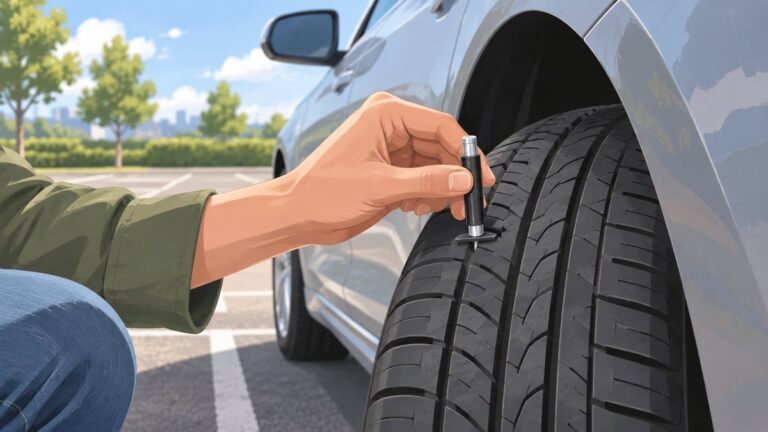
Inspect the tires for safe condition, adequate tread where applicable, damage, exposed cords and objects in the tread. NHRA’s general Street Legal guidance specifies safe DOT-approved tires in that context. That does not mean every event accepts every DOT tire, nor does it make a racing tire mandatory for a street-legal session; the event rules decide.
Check wheel fasteners and look for obvious wheel damage. Use the vehicle maker’s procedure for torque and pressure. The official material does not establish one drag-strip pressure that is safe for every tire, wheel, car or surface, so do not copy a number from another vehicle.
Free tools Windows power users keep installed
One-click scans. No signup required.
Check controls and driver position
Confirm that the steering, brakes, throttle and transmission controls operate normally and return to their intended positions. Adjust the seat and mirrors before entering the lanes so you are not trying to find a comfortable position while traffic is moving. Remove loose objects from the cabin and trunk; a phone, tool or bottle can become a projectile during acceleration or braking.
3. Pack for inspection and small adjustments
Bring the documents and equipment the event requests, plus a short list of practical items. NHRA specifically recommends a tire-pressure gauge, a helmet when the car’s performance requires one, and basic tools if you plan to make adjustments or repairs.
| Item | How to use it | Qualification |
|---|---|---|
| Event paperwork | Carry registration, insurance, driver’s license and any completed tech or entry forms requested by the organizer. | Requirements vary by event; confirm the exact list in advance. |
| Tire-pressure gauge | Measure pressures consistently before and after a run and compare changes with your vehicle and tire guidance. | NHRA recommends bringing one but does not prescribe a universal setting. |
| Helmet | Bring the approved helmet required for your vehicle’s performance level and event. | The applicable standard and threshold must come from the current rules and local track. |
| Basic tools | Use only for minor, permitted adjustments such as checking fasteners or making an approved setup change. | Do not begin repairs in an active lane or defeat a safety requirement. |
| Personal essentials | Pack water, weather-appropriate clothing, hearing protection and sunscreen for a long day outdoors. | These are comfort and risk-management measures, not a substitute for mandatory equipment. |
Carry a way to secure anything you bring. Tools, spare parts and containers should remain out of the passenger compartment and out of traffic lanes. If the facility has a designated paddock or work area, use it rather than stopping near the starting line.
Rank #3

- PROCESS LEVEL ACCURACY: This heavy duty tire pressure gauge is calibrated manually to ANSI B40.1 Grade A (±1% of span)
- PRESSURE RANGE 0-75 PSI: ETENWOLF’s tire gauge can measure pressure of pickup, motorcycle, truck, bike, SUV, RV or ATV
- EASY TO READ IN THE DARKNESS: The large glow dial helps you clearly read the pressure at night or in low light
- EASY TO USE: 360 degree swivel chuck allows you to measure and take a reading from a tire valve at any angle
- ACCURACY IN EXTREME WEATHER: PSI gauge works normally even in extreme cold or hot weather
4. Dress for the event
NHRA Street Legal guidance calls for long pants that are not nylon, a sleeved shirt, closed-toe shoes and socks. Local rules govern if they are stricter, so select clothing that meets the event’s written requirement rather than treating the NHRA list as a guarantee of acceptance everywhere.
Avoid loose clothing, open footwear and synthetic garments that can melt or ignite more readily. Choose shoes that let you feel and operate the pedals precisely. Bring a spare layer and rain protection if the forecast changes; a wet driver is more likely to rush or lose concentration.
5. What happens when you arrive
Registration and the tech card
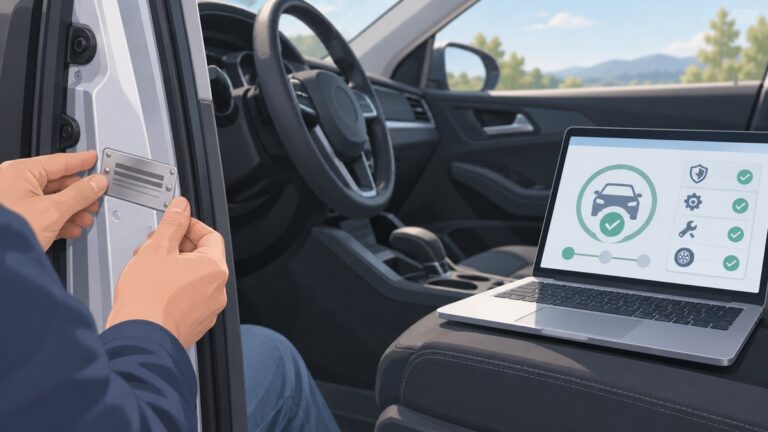
Follow the signs to registration, complete the tech card accurately and keep the vehicle available for inspection. Present the requested license, insurance, registration and event paperwork. Tell the inspector about significant modifications rather than hoping they will not be noticed. Questions about eligibility should be resolved before you enter a lane.
The official may look for leaks, battery security, a functioning seat belt, lights, tires and other items required by the event. Their inspection is not a complete engine, transmission or chassis rebuild assessment; you remain responsible for the car’s mechanical condition.
Staging lanes
After registration, enter the staging lanes only when directed. Keep a safe gap, stay in the assigned lane and listen for the starter or lane official. Do not make a last-second pressure change, open the hood or leave the car where another vehicle needs to pass without permission.
Rank #4

- HIGH ACCURACY: Every ETENWOLF's pencil tire gauge is calibrated to ANSI B40.1 Grade B, it is accurate to 2% of span in the middle 50% of range and 3% of span in the lower and upper 25% of range. Each ETENWOLF pencil tire pressure gauge is manually calibrated and has its unique calibration number printed on the pencil
- WIDER RANGE: ETENWOLF's tire gauge offers 2 pressure ranges: 10-50PSI, 20-120PSI for all types of vehicles
- ALL METAL: ETENWOLF tire gauges are made of all solid metal, zinc alloy head and stainless steel body, they are durable and can be used for many years unless you lose them
- DEFLATION: You can also use ETENWOLF's tire gauge to deflate tires when the tire pressure is overinflated
- 16 CAPS IN 2 CASES: ETENWOLF even offers 16 valve stem caps, so you won't worry about losing tire caps anymore
Watch the cars ahead so you understand the local signals. Different facilities may use signs, hand signals, radios or an announcer to release cars. When uncertain, stop in a safe position and ask an official rather than guessing.
Approaching the water box
NHRA’s general Street Legal sequence treats a burnout as optional. A driver may perform a short burnout or drive around the water box, depending on the track’s instructions and the car’s tires. Do not assume a burnout is required, and do not attempt one because another driver did.
Street tires generally use harder compounds or more tread than racing-specific tires. NHRA’s 2019 beginner guide says a short burnout is sufficient for most production street tires, but that is dated general advice, not a universal technique. Surface temperature, water depth, drivetrain, tire condition and event rules all matter. Follow the starter’s signal and use only the procedure you have been told to use.
Staging on the tree
Before the front wheels approach the staging beams, close the driver’s door, roll up the windows and fasten the seat belt. NHRA’s Street Legal guidance also notes that headlights may need to be on when the track lights are on. Check the local instruction rather than switching lights on or off based on a video from another venue.
Outdated Drivers Are Slowing You Down
One free scan finds every outdated or missing driver and matches the right update for your exact hardware.Free scan · exact hardware matchPC Slower Than It Used to Be?
A free scan shows the junk files, broken settings and background clutter dragging Windows down - then fixes them in one click.Free scan · Windows 10 & 11Move forward smoothly when directed. Do not roll through the beams, reverse unexpectedly or try to improve your position by racing the other lane to stage. The starter controls the sequence; wait for the signal and keep both hands and attention available for the launch.
Best Value

- RUGGED DESIGN: The stainless steel components prevent rust and corrosion while the precision-crafted nozzle seamlessly seals onto the valve stems for highly accurate readings (±2% span). We also provide 4 valve stem caps for convenient replacement.
- MEASURES PSI, kPa, BAR; Measurement range from 10-75 PSI, 70-550 kPa, 0.7-5.5 BAR. Attention! Do not exceed the maximum pressure of the gauge, doing so will permanently damage the device.
- UNIVERSAL APPLICATION: Not only are these gauges easy to use, but include an integrated deflator valve, chuck, and ABS indicator bar
- CONVENIENT DESIGN stows easily in a glove box, tool belt, workbench, or even a pocket; the pocket clip makes it easy to carry with you while on the job
- Further service provided by AstroAI, BATTERY FREE means no maintenance and total reliability under all weather conditions; a necessary tool for roadtrips and optimal safety
The run and the exit
Make the pass you have prepared for, not an improvised experiment. Keep the vehicle in its lane, use the controls normally and remain alert for a mechanical warning, unusual noise or change in direction. If something feels wrong, lift safely and follow the track’s shutdown procedure rather than continuing to prove a number.
After the finish, slow in the designated area, follow the return-road signs and obey the official directing traffic. Do not stop at the end of the strip to discuss the run unless you are in a marked safe area. Check your surroundings before re-entering the pits or staging lanes.
Independent reader supportYour contribution helps us test, update, and keep practical guides available for everyone.6. Street tires and racing-specific tires: choose by fit, not appearance
A racing tire is not automatically the correct choice for a first visit. The relevant questions are whether it fits the wheel and vehicle, is legal for the event, matches the intended use and can be operated safely by the driver. NHRA’s Street Legal checklist specifically allows safe DOT-approved tires in that context, while its beginner material notes the harder compounds and greater tread commonly found on production street tires.
| Consideration | Street-oriented tire | Racing-specific tire |
|---|---|---|
| Typical construction | Generally harder compound or more tread, designed for road use. | May use a compound and construction optimized for track traction. |
| Street Legal suitability | May meet the event’s DOT and safety requirements if in safe condition. | May or may not meet street-use or event requirements; verify before travel. |
| Driver decision | Often the least complicated option for an occasional, street-legal run. | Requires confirmation of fit, rules, setup and operating procedure. |
| Pressure and burnout | No universal pressure; a short burnout may be sufficient when officials permit it. | No universal pressure or technique; follow tire, vehicle and track guidance. |
Never lower pressure or extend a burnout simply to imitate a faster car. A change that is appropriate for one tire can damage another, overload a wheel or make the car unpredictable. Record the pressures you actually used and any handling change so your next decision is based on your own vehicle and the track’s advice.
7. A conservative first-run plan
Use the first pass to learn the facility
On an initial visit, prioritize a clean, repeatable run over a personal-best time. Learn where the staging beams are, how the starter signals, which lane leads to the return road and where officials want cars to stop. This orientation reduces surprises on later passes.
Change one thing at a time
If the event permits adjustments, make one documented change between runs and leave enough time to inspect the car. Changing pressure, launch technique, engine calibration and suspension settings together makes a problem difficult to diagnose. Do not tune past a safety concern because the queue is moving.
Stop when the car or conditions change
End the session if you see a new leak, smell fuel or coolant, notice smoke, lose a warning light, feel a soft brake pedal, detect a steering or drivetrain problem, or damage a tire. Report the issue to an official and move to a safe area. A track day is not a reason to continue operating a compromised vehicle.
What’s actually slowing this PC down?
Pick the symptom - the matching free tool is one click away.
8. Common reasons a first-timer is delayed or turned away
- Missing paperwork: Registration, insurance, license or the event’s tech card was left at home. Resolve the document list before departure.
- Unsafe or noncompliant tire: Damage, inadequate condition or an equipment specification outside the event rules can stop the car at tech.
- Loose battery: A factory-looking installation still fails if the restraint is broken or the battery can move.
- Fluid leak: Even a small fresh drip can create a traction hazard. Repair it rather than cleaning the surface and hoping it passes.
- Incorrect clothing or helmet: A valid driver may still be unable to run if clothing or head protection does not meet the current requirement.
- Unsafe lane behavior: Ignoring signals, opening doors near moving cars or stopping on the return road creates a track-control problem.
- Assuming a previous rule still applies: Amendments and local policies can change. Check the current rulebook and the specific event every time you attend.
9. Final departure checklist
Use this short check before leaving home:
- Read the current event instructions and confirm eligibility with the track.
- Identify the governing rulebook and any performance-based safety requirements.
- Inspect for leaks and secure the battery.
- Test the seat belt, headlights and taillights.
- Inspect the tires and wheels; use the vehicle and tire maker’s pressure guidance.
- Remove loose items from the cabin and trunk.
- Pack the required paperwork, tire-pressure gauge, helmet if required and basic tools if permitted.
- Wear long non-nylon pants, a sleeved shirt, closed-toe shoes and socks when the event follows NHRA Street Legal guidance.
- At the track, complete registration and tech before entering staging lanes.
- Follow officials through the water-box decision, staging, launch, shutdown and return road.
Preparation makes the first run predictable: the car arrives dry and secure, the equipment matches the event, and the driver knows when to ask an official instead of guessing. Use the local track’s current instructions as the final authority, especially when they differ from general Street Legal guidance.
Quick Recap
Product prices and availability are accurate as of the date/time indicated and are subject to change. Any price and availability information displayed on Amazon at the time of purchase will apply.