Windows Errors? Fix Them Before They Spread
Repair common Windows errors and clear accumulated junk for a smoother, more stable PC - no reinstall needed.Free scan · no reinstallOutdated Drivers Are Slowing You Down
One free scan finds every outdated or missing driver and matches the right update for your exact hardware.Free scan · exact hardware matchSome links on this page are affiliate links: if you buy through them we may earn a commission, at no extra cost to you.
A 1990s Japanese luxury sedan should be bought on documented maintenance and verified condition, not on a low odometer reading or a seller’s verbal assurances. Before you commit, match the car to its paperwork, inspect the body and undercarriage for corrosion or accident repairs, evaluate the engine and transmission from a cold start and road test, operate every electrical and comfort feature, and pay for an independent inspection by a mechanic who knows the exact model, engine and market version.
The checklist below works for cars such as a Lexus LS400, Infiniti Q45 or Acura Legend, but it is not a substitute for the factory service information for the particular year. A current Nissan certified-used checklist is useful for organizing inspection categories—engine, drivetrain, steering, brakes, tires, suspension, body and electrical equipment—but it was written for Nissan’s current certified vehicles, not for 1990s Lexus, Infiniti or Acura service standards.
As an Amazon Associate I earn from qualifying purchases.
Start with identity, ownership and records
Do this before spending time on cosmetic details. A clean-looking sedan with uncertain identity or missing history can become an expensive guessing exercise.
Match the car to its documents
- Read the vehicle identification number (VIN) from the body plate, windshield and registration or title. Every location should agree.
- Compare the odometer with inspection records, repair invoices, registration entries and ownership dates where those records are available.
- Check that the seller’s name and the title or registration documents are consistent with the transaction. Resolve liens, branding, import status or gaps in ownership before negotiating.
- Record the model year, engine, transmission, trim, drive configuration and market of origin. Suspension systems, emissions equipment and service intervals can differ between markets and model years.
A mileage or ownership gap is not proof that work was skipped; it means the work is unverified. Treat undocumented maintenance as an unknown that belongs in your risk and repair budget.
Popular on Amazon
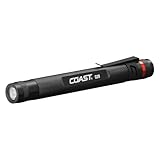
- Inspection Beam: Clear And Consistent Edge-To-Edge Brightness Capable Of Illuminating A Defined Area Up To 9 Meters (30 Feet)
- Adjustable Clip: Versatile Clip Allows For Easy Storage In A Pocket Or Tool Kit
- Specs: 22 Meter (72 Ft. ) Beam Distance And 10 Hour Runtime. Tested And Rated To Ansi/Fl1 Standards
- Tough & Reliable: Ipx4 Rated Design For Water Resistance And Durable Aluminum Body For 1-Meter Drop Protection
Ask for evidence of major work
Request dated invoices rather than accepting “recently serviced” as a specification. Look for parts, labor, mileage and the repair shop’s identity. Give priority to scheduled work that is expensive or difficult to verify later: timing-belt service where the engine uses one, water-pump replacement, transmission work, cooling-system repairs, suspension components, brake work and major electrical repairs.
For an LS400, the 2024 ClubLexus community buyer guide specifically urges buyers to verify timing-belt and water-pump records, inspect for fluid leaks, evaluate air suspension if fitted and look for aged suspension-bushing wear. Those are enthusiast observations, not a universal diagnosis or an official interval. Confirm the correct timing-belt schedule in the owner’s manual or manufacturer service information for that exact year, engine and operating conditions. The guide notes that enthusiasts commonly discuss 100,000 miles or 10 years, but that figure should not be applied blindly to every car.
Inspect the body, structure and undercarriage
Cosmetic polish can hide structural deterioration. View the car in daylight, with the body dry, and use a lift or inspection pit for the underside.
Look for corrosion and accident evidence
- Examine rocker panels, wheel arches, suspension pickup points, subframes, floor sections, brake and fuel lines, seams and drain holes for rust, swelling, perforation or fresh undercoating.
- Compare panel gaps, hood and trunk alignment, door fit and the texture of paint from panel to panel. Uneven gaps, overspray, sanding marks or a sharp paint transition can indicate repair.
- Inspect welds, crushed areas, distorted mounting points and repaired structural sections underneath. A mechanic should determine whether damage affects alignment or safety.
- Check glass markings, lamps and trim for mismatched dates or colors that may indicate replacement after a collision.
- Lift carpets and inspect the trunk, spare-wheel well and cabin floor for dampness, staining, mold or corrosion. Check door, trunk and sunroof drains where accessible.
Storage history matters. A sedan from a salted winter climate deserves a more aggressive corrosion inspection than one kept in a dry region, but a dry climate does not eliminate water leaks, battery damage or rubber deterioration.
Also popular on Amazon

- 【DUAL LIGHT SOURCE】 This rechargeable pen light combines an upgraded LED spot beam for focused, longer-range viewing with a side COB floodlight for broad close-up illumination during inspections, wiring, under-hood repairs or work at dark equipment panels.
- 【ULTRA-POWERFUL BRIGHTNESS & STEPLESS DIMMABLE】 Choose a 500-lumen spot beam, 600-lumen COB low or 800-lumen COB high, then press and hold for smooth 5%–100% dimming that helps reduce sudden glare during close work, repairs or short walks.
- 【CLIP AND MAGNETIC DESIGN】 The magnetic pen light attaches to metal toolboxes, cabinets or vehicle surfaces while the clip secures to a pocket, hat or backpack; aim the COB side light where needed for mechanic jobs, wiring or bench work.
- 【TYPE-C FAST CHARGING & LONG LASTING USE】 Fully charge this rechargeable pen flashlight in about 2.5 hours for approximately 3–8 hours of runtime. A flashing low-battery alert and red or green indicators show when it is charging or fully charged.
- 【SMART MEMORY POWER SETTING】 Stay in any mode for more than 5 seconds, then press once to turn the pen flashlight off without cycling through every mode. After using the COB floodlight, its afterglow makes the light easier to locate in the dark.
Check doors, seals and drainage
Open and close every door, hood and trunk. They should latch without lifting, dropping or excessive force. Inspect weather seals for shrinkage and tears, then look for water trails around the windshield, rear glass, sunroof, trunk seal and door panels. Water intrusion can damage wiring, control modules, carpets and seat structures long after the exterior dries.
Evaluate the engine and cooling system
Arrange to see the car before it has been warmed up. A cold start reveals battery, fuel, ignition, lubrication and control problems that may disappear after the seller runs the engine.
The Tool Desk
Outbyte PC Repair FREERepair Windows errors before they cause bigger problemsFix Now →Outbyte Driver Updater FREEFix the driver behind crashes, sound loss and screen glitchesFind Drivers →Under-hood checks before starting
- Look for fresh or dried engine oil, coolant, power-steering fluid, brake fluid and transmission fluid. Trace the highest wet point rather than assuming the visible drip is the source.
- Inspect belts, hoses, clamps, wiring insulation and connectors for cracking, swelling, fraying, corrosion or improvised repairs.
- Check coolant color and the expansion tank for oil contamination or an unexplained low level. A clean-looking engine bay can still conceal a leak, so inspect from below as well.
- Check the battery date, terminals and hold-down. Corrosion or a weak battery may be a symptom of charging or parasitic-drain problems, not merely an old battery.
Cold-start behavior
- Confirm that the engine is genuinely cold by feeling the upper radiator hose only when safe and by checking the gauge before start-up.
- Turn the key on and verify that the check-engine, oil-pressure, charging and other warning lamps illuminate for their self-test. Lamps that never light may have been removed or masked.
- Start the engine and note cranking time, idle quality, smoke and noises. Persistent blue smoke suggests oil consumption; sweet-smelling white vapor after warm-up can indicate coolant entry; black smoke suggests an overly rich mixture. A brief condensation plume in cool weather is not the same diagnosis.
- Watch the temperature gauge as the engine warms. Overheating, rapid pressure buildup in coolant hoses, bubbling in the reservoir or an unexplained temperature fluctuation requires professional diagnosis.
Listen for knocks, rattles, belt noises, exhaust leaks and bearing whine. Do not identify a component solely by sound; record when the noise occurs and let the inspecting mechanic reproduce it.
Transmission and drivetrain
With the brake applied, select each gear and note engagement delay, harshness or a pronounced thump. During the road test, check for flare between shifts, slipping under acceleration, shudder, hunting, delayed kickdown and noises that change with vehicle speed. Inspect axle boots, driveshaft couplings and differential areas for leaks or damage. A transmission that feels acceptable on a short drive can still have a service-history problem, so compare its behavior with the model’s service information.
Also popular on Amazon

- COMPACT - This sleek and portable pocket flashlight is compact enough to fit into small, tight spaces and illuminate hard to see work areas, making it ideal for close-up tasks.
- BRIGHT - Light up concentrated areas with the bright, diffused beam on this pen flashlight. Conveniently powered for hours with 2 standard AAA batteries (batteries not included).
- DURABLE - Built for rough handling, this durable mini LED flashlight is made of military-grade aluminum and can survive accidental drops and temporary water submersions.
- PORTABLE - Take this mini flashlight with you wherever you go. The removable pocket clip can easily be attached to your belt, bag, binder, shirt or pants pocket.
- SIZE - Measuring 5.25 x 0.5 x 0.5 inches, these small flashlights also work great as police flashlights, pen lights for nurses, or repair lights for mechanics.
Inspect steering, suspension, wheels and tires
These cars are heavy, complex and now decades old. Rubber bushings, hydraulic components, air-suspension parts and wheel bearings can age even when mileage is low.
Checks with the car parked
- Measure ride height visually from side to side and front to rear. Sagging at one corner, a nose-down stance or a car that settles after parking warrants further testing.
- Look for leaking shock absorbers, cracked or displaced springs, damaged control arms, torn bushings and loose or bent suspension links.
- Inspect tires for uneven shoulder wear, cupping, cracking between tread blocks and mismatched sizes or brands. Read the date code; old rubber can be unsafe with plenty of tread.
- Check wheels for bends, cracks and corrosion around bead seats. Verify that wheel bearings have no looseness or roughness when the mechanic lifts the car.
- Turn the steering from lock to lock while stationary only as needed for inspection. Groans, binding or fluid loss can indicate a power-steering problem.
Air suspension
If the sedan has air suspension, test every height setting according to the owner’s instructions. The car should rise and settle evenly, the compressor should not run continuously, and it should hold its height after sitting. Inspect air bellows, lines, fittings, height sensors, compressor operation and warning lamps. Nissan’s current certified-used checklist explicitly includes air-suspension bellows, but that inclusion is a category reminder, not proof that a 1990s system uses the same parts, limits or test procedure.
Have the mechanic inspect bushings and ball joints with the suspension unloaded and loaded as appropriate. A quiet drive on smooth pavement does not prove that aged rubber is sound.
Test brakes and safety equipment
Inspect pad and rotor thickness, caliper condition, flexible hoses, hard lines, parking-brake operation and fluid condition. On the road, the car should stop straight without pulsing, pulling, grinding or excessive pedal travel. Test the anti-lock brake warning lamp during the ignition self-test and confirm that it goes out after the engine starts; a warning lamp that remains on requires diagnosis before purchase.
Also popular on Amazon
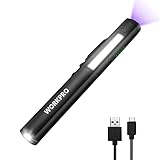
- Bright LED Flashlight: C.O.B floodlight provides 450 lumens light, and spotlight provides 120 lumens beam. Ideal for use as a mini work light and as a light for power outages
- Multi-function Black Light: This 365nm UV light is a good helper for your beloved car, perfect for automotive air conditioner and car oil leak detection. Moreover, it is also ideal for detecting pet urine, scorpions and indoor stains
- Type-C Rechargeable: The pen light is charged by the included USB Type-C cable. Surprise: it can light up while charging. Pass-through charging is useful when the battery is dead
- Magnetic & Rotatable Clip: Thanks to this mechanism, the direction of the light can be changed quite freely when it is fixed to a surface with a magnet, which is very convenient
- Pocket Penlight: The body of the small flashlight is made of lightweight aluminum alloy, only 2.8 ounces but durable. The slim 6.5-inch penlight is easy to carry around. Great gift!
Check seat-belt operation, belt webbing, airbag warning behavior, mirrors, head restraints and any factory safety equipment. Do not assume that a functioning engine means the restraint system is serviceable.
Operate every electrical and comfort feature
Luxury equipment is part of the purchase, not a free bonus. Replacement control modules, climate components, seat mechanisms and trim-specific switches may be difficult to source for an old sedan.
Use a repeatable cabin test
- Run the instrument-cluster self-test if the owner’s manual specifies one. Confirm that gauges, illumination and warning lamps behave normally.
- Operate every power window, door lock, mirror, seat adjustment, memory function, steering-column adjustment and sunroof or shade.
- Set the climate system to heat and cooling, change fan speeds and modes, and verify that air comes from the selected outlets. Check for unusual compressor noise, weak airflow or temperature that never changes.
- Test exterior lights, turn signals, hazard lamps, reverse lamps, license-plate lamps and interior lighting.
- Check the original audio, CD or cassette equipment, antenna, navigation system and any fitted telephone or changer. A dated system may be functional but still lack modern compatibility; distinguish that inconvenience from an electrical fault.
- Look for flickering displays, intermittent switches, blown fuses, non-factory wiring and battery-drain symptoms after the car is shut down.
Document each failure with a photograph and a written description. “Most things work” is not specific enough for a repair estimate.
Independent reader supportYour contribution helps us test, update, and keep practical guides available for everyone.Conduct a disciplined road test
Drive only where legal and safe, with the engine cold if possible. Turn off the radio so you can hear the car.
Also popular on Amazon
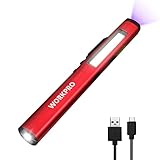
- Bright LED Flashlight: C.O.B floodlight provides 450 lumens light, and spotlight provides 120 lumens beam. Ideal for use as a mini work light and as a light for power outages
- Multi-function UV Light: This 365nm black light is a good helper for your beloved car, perfect for automotive air conditioner and car oil leak detection. Moreover, it is also ideal for detecting pet urine, scorpions and indoor stains
- Type-C Rechargeable: The pen light is charged by the included USB Type-C cable. Surprise: it can light up while charging. Pass-through charging is useful when the battery is dead
- Magnetic & Rotatable Clip: Thanks to this mechanism, the direction of the light can be changed quite freely when it is fixed to a surface with a magnet, which is very convenient
- Pocket Penlight: The body of the small flashlight is made of lightweight aluminum alloy, only 2.8 ounces but durable. The slim 6.5 inch penlight is easy to carry around. Great gift!
- Observe the first seconds after start-up: warning lamps, idle speed, smoke, belt noise and fluid leaks.
- At low speed, check steering on-center feel, turning effort, brake response, suspension knocks and drivetrain take-up.
- At moderate speed, test straight-line tracking, lane-change stability, vibration through the wheel or seat, transmission shifts and engine response.
- Use a safe grade or acceleration lane to check cooling behavior, downshifts and abnormal noises under load.
- After the drive, inspect for fresh leaks, new warning lamps, coolant odor, hot-brake smell and a compressor or cooling fan that continues running abnormally.
A road test is evidence, not a diagnosis. The next step should be an independent inspection by a mechanic experienced with the specific sedan, engine and suspension configuration. Ask for a written report that separates safety defects, immediate reliability risks, deferred maintenance and cosmetic items, with a repair estimate for each.
Model-specific cautions for common candidates
Lexus LS400
Verify timing-belt and water-pump work with invoices and mileage, then inspect for engine and power-steering leaks. Check air suspension if fitted and look closely at suspension bushings for age-related deterioration. The ClubLexus 2024 buyer guide and related enthusiast discussion present these as points to investigate; neither replaces year-specific Lexus service information or a lift inspection.
Quick wins for a faster PC:
Repair Windows errors before they cause bigger problemsFix Now →Scan for outdated or missing drivers - takes under a minuteDriver Scan →Infiniti Q45
Community technical resources provide diagnostic material for 1990–1996 Q45 models, but a single authoritative, comprehensive buyer checklist was not established. Give the inspecting technician the exact year and engine information and ask the technician to use the corresponding factory service information, diagnostic procedures and wiring diagrams.
Acura Legend and first-generation RL
No reliable model-specific pre-purchase checklist is established here. Do not substitute generic internet fault lists for an inspection. Identify the exact engine, transmission and market version, then have a technician evaluate it using the applicable service information and parts availability for that configuration.
Compare candidates by evidence, not odometer
When several cars are available, score each one using the same categories. A lower-mile car with no records can be a weaker purchase than a higher-mile example with documented major service and a sound structure.
| Category | What to compare | Why it changes the decision |
|---|---|---|
| Documentation | VIN consistency, ownership trail, dated invoices, mileage continuity and proof of scheduled work | Records reduce uncertainty and identify maintenance that is still due. |
| Structure and body | Corrosion, accident repairs, panel alignment, water intrusion and underbody condition | Structural or water damage can outweigh an attractive price or low mileage. |
| Powertrain | Cold start, leaks, smoke, noises, temperature control, transmission engagement and road-test behavior | Engine and transmission repairs can dominate the ownership risk. |
| Steering and suspension | Ride height, bushings, joints, shocks, air-suspension operation, wheel bearings and tire wear | Safety, ride quality and alignment problems often require multiple related parts. |
| Brakes and tires | Rotor and pad condition, brake lines, pedal feel, tire age, tread and matching sizes | Immediate safety work should be reflected in the offer or decision. |
| Electrical and comfort systems | Climate control, seats, windows, locks, instruments, lighting, audio and warning lamps | Luxury features are costly and sometimes difficult to repair or replace. |
| Model-specific support | Technician familiarity, service information, parts availability and written repair estimates | A mechanically sound example is easier to own when competent help and parts are available. |
How to use the inspection report before buying
- Separate defects that make the car unsafe or legally unfit from maintenance that can be scheduled.
- Obtain a written estimate from the inspecting shop, not a seller’s informal guess.
- Confirm which findings are proven, which are probable and which require additional testing.
- Subtract the documented near-term work from the price you are prepared to pay, while retaining a reserve for unknown age-related failures.
- Walk away when the seller refuses an independent inspection, will not provide access to records, or pressures you to decide before the report is complete.
An inspection flashlight can help you see dark areas in an engine bay or underbody, but it is only a supplementary aid. It cannot reveal internal engine wear, verify alignment, test control modules or replace a lift inspection.
Do these 3 things before closing this tab:
1Repair Windows errors before they cause bigger problems2Scan for outdated or missing drivers - takes under a minute3Clear out junk files and repair common Windows errorsFinal buying standard
Buy the sedan that combines a verifiable identity, the strongest maintenance evidence, a sound structure and a clean independent inspection—not simply the one with the fewest miles. Use model-specific service information to confirm intervals and diagnostic procedures, and treat every undocumented major service as work that still needs to be proven or budgeted. If the seller will not allow a cold start, records review and an independent inspection, the uncertainty itself is a reason to keep looking.




