Windows Errors? Fix Them Before They Spread
Repair common Windows errors and clear accumulated junk for a smoother, more stable PC - no reinstall needed.Free scan · no reinstallOutdated Drivers Are Slowing You Down
One free scan finds every outdated or missing driver and matches the right update for your exact hardware.Free scan · exact hardware matchThe safest way to extend an electric motorcycle’s range is to reduce avoidable energy use, not to alter the high-voltage system or ride beyond safe limits. Accelerate smoothly, hold a legal and appropriate speed, use the motorcycle’s approved regenerative-braking settings, keep tires at the maker’s specified pressure, remove unnecessary load, and plan charging with a reserve. Range estimates are conditional: speed, elevation, temperature, traffic, payload, riding mode and the specific motorcycle can change the result.
What determines an electric motorcycle’s real-world range?
A dashboard range estimate is a prediction based on recent consumption and available battery energy. It is not a guarantee of distance. The same motorcycle can travel different distances on a cold, hilly highway trip than on a mild, flatter urban trip. The variables below interact, so changing one habit may help in one journey and make little difference in another.
As an Amazon Associate I earn from qualifying purchases.
| Variable | Why it changes energy use | Safe action |
|---|---|---|
| Speed | Sustained high speed increases aerodynamic drag and can reduce range. | Choose a steady speed that is legal and suitable for traffic, weather and road conditions. |
| Acceleration and braking | Large power demands and repeated hard braking waste more energy than smooth inputs. | Look ahead, open the throttle progressively and leave a safe following distance. |
| Elevation | Climbing requires energy; descending may recover only part of it through regeneration. | Where practical, compare flatter routes without taking an unsafe detour. |
| Temperature and weather | Cold conditions, wind and rain can increase consumption and affect battery performance. | Allow extra reserve and use the manufacturer’s temperature and charging guidance. |
| Traffic pattern | Stop-start traffic, congestion and frequent speed changes alter consumption. | Use a route that gives a predictable pace, while prioritising safety and legality. |
| Payload | A passenger, luggage and accessories add mass and may increase aerodynamic drag. | Carry only what the trip requires and stay within the motorcycle’s load limits. |
| Riding mode | Power delivery and regeneration settings differ by model and can change consumption. | Use an efficiency mode only when it still provides the control needed for conditions. |
| Tire pressure | Incorrect pressure can increase rolling resistance and affect handling. | Set pressure exactly as specified for the motorcycle, load and tire conditions. |
There is no reliable universal percentage gain for any single tip. A manufacturer’s claim, a test-cycle number and your trip result describe different conditions.
Ride smoothly while preserving control
Accelerate progressively
Abrupt throttle openings demand high electrical power and often lead to an equally abrupt braking event. When traffic permits, roll on the throttle progressively and build speed without repeatedly using maximum acceleration. This is an efficiency technique, not a reason to merge slowly or leave yourself without an escape path. Match the pace of surrounding traffic, keep a safe buffer and use the power needed for a safe manoeuvre.
#1 Best Overall

- PRO ACCURACY - mechanic recommended, performance tested, & calibrated accurate to professional ANSI 2A standards - with dual pressure sensors certified to ±0.50% FS (0.50 PSI), offering reliable readings up to 100 PSI w/ precise readout resolution of 0.10 PSI - so you can now maintain your tires with a shop-grade mechanic trusted tool
- STRONG & RUGGED - feels solid in the hand & built to last from 100% solid brass & steel parts shielded by our shock-resistant gear-style protective guard to protect against drops & impact. Features ultra soft & strong 10" fully rotational, leak-proof HybridFlex air hose w/ 360 swivel angled air chuck that can be swapped out w/ any 1/4" NPT chuck
- ADVANCED ENGINEERING - all readings lock-on to the display until the "ON" button is pressed once to reset to zero. Features built-in air bleeder valve that bleeds pressure in real time without needing to reset the display - ideal for cars, trucks, motorcycles, bikes, RV & trailers, spare tires, and much more
- SMART DISPLAY - features high-resolution digital 2.5 inch LCD display screen w/ battery life indicator & bright LED backlight for high visibility in the dark. Gauge is programmed to auto shut-off after 150 seconds of inactivity to save battery (2x AAA batteries included)
- 100% Lifetime Warranty by JACO - serving the automotive industry for 35+ years. Enjoy longer-lasting tires, improved fuel economy, and superior vehicle performance & handling with properly inflated tires.
Can-Am’s Pulse and Origin guidance recommends smoother riding and notes that repeated deceleration can provide opportunities for energy recovery on those models. BMW Motorrad gives similar advice for the CE 04, recommending foresighted riding and avoiding rapid acceleration and braking (Can-Am guidance; BMW Motorrad CE 04 guidance).
Hold an appropriate, steady speed
After reaching the desired pace, avoid unnecessary speed fluctuations. Sustained high-speed travel generally consumes more energy because aerodynamic drag rises rapidly with speed. Do not slow below a safe or lawful pace to chase a range number, and do not exceed a limit to keep up with a dashboard estimate. Wind direction, road grade and traffic can make a “steady” speed consume different amounts on different days.
Use foresight instead of late braking
Scan well ahead for traffic lights, junctions, roundabouts and slowing vehicles. Closing the throttle early can reduce speed with less energy waste than accelerating toward a hazard and braking hard. Keep a proper following distance and retain the ability to stop within the visible, clear road. Efficiency never overrides braking distance or hazard response.
What’s actually slowing this PC down?
Pick the symptom - the matching free tool is one click away.
Use regenerative braking correctly
Regenerative braking sends some kinetic energy back to the battery during deceleration. It cannot recover all the energy used to accelerate, and it does not make aggressive riding efficient. Regeneration also does not replace friction brakes, tire grip or a safe following distance.
Follow the motorcycle’s control scheme
Regeneration strength, activation and limits vary. Can-Am describes adjustable passive regeneration and an active regeneration control for its Pulse and Origin. Other motorcycles may use a menu setting, a brake lever request, a fixed blend or no rider-adjustable level. Set and use only the options described in the owner’s manual. If a setting makes the motorcycle’s response unfamiliar on a wet, loose or uneven surface, select the safer predictable response rather than the strongest recovery.
Rank #2

- 90 degree head for those difficult to access valve stems.
- High quality all metal construction.
- 5-50psi (50-300kPa) readout.
- Made by Counteract Balancing Beads.
- Packaged individually. Custom red head with black anodized body with Counteract engraving.
Do not brake late to harvest energy
Approach hazards at a speed that leaves a margin for a sudden stop. If friction braking is required, use it promptly and correctly; a small amount of recovered energy is never worth extending stopping distance. ISO/TS 19466:2017 defines a method for testing regenerative-braking performance on electric motorcycles and mopeds. ISO lists the standard as reviewed and confirmed in 2025 (ISO/TS 19466:2017).
Choose a route and charging plan with margin
Compare route energy, not just distance
A short route with a steep climb, strong headwind or high-speed road can use more energy than a slightly longer flatter route. Can-Am specifically recommends flatter roads and warns that sustained highway speed can reduce range. Treat that as model-specific guidance, not a promise that every urban route is more efficient than every highway route.
Recommended Free Tools
Consider elevation, speed limits, traffic, weather forecasts, road closures and the availability of a safe stopping point. Avoid planning the trip around the final few percentage points of battery. A route that leaves no practical charging option after a detour, missed turn or closed station is not a robust plan.
Verify charging before departure
- Read the owner’s manual for the motorcycle’s connector, charging limits, compatible supply and environmental restrictions.
- Identify charging locations along the route and confirm that the plugs, access hours and payment method match your motorcycle and region.
- Choose at least one practical alternative before the point at which the battery would become difficult to recover.
- Set a personal arrival reserve that accounts for weather, elevation, payload and an unplanned detour. The correct reserve is model- and trip-specific; no universal percentage is safe for every motorcycle.
- Use the motorcycle’s route-planning or nearby-charger features only as aids. Can-Am describes in-display route planning and nearby-charger searches for its vehicles, but supported features and network availability depend on model, region and current service.
Make the reserve usable
Do not assume a displayed “miles remaining” figure has the same accuracy at every state of charge. If the estimate is falling faster than the route distance, reduce nonessential energy use only within safe limits, choose the next confirmed charger and stop before the battery becomes critically low. Never coast in a dangerous lane, switch off required safety systems or take an unsafe shortcut to save energy.
Use model-specific riding modes and published figures properly
Efficiency modes can reduce peak power or alter throttle response, but their behaviour is not universal. BMW recommends ECO mode for the CE 04. Select it when its response still gives you adequate acceleration, stability and control for the road. A mode that is appropriate on a dry commuter route may not be appropriate when you need immediate power, are carrying a passenger or are riding on a low-grip surface.
Rank #3

- PROCESS LEVEL ACCURACY: Each ETENWOLF’s digital tire pressure gauge is calibrated manually to ANSI B40.7 Grade 2A(plus-minus 1 PSI).Presta valve adapter not included, if used for bicycles, it must be purchased separately
- ACCURACY IN EXTREME PRESSURE RANGE: Whether tire pressure is below 12 PSI or above 140 PSI, ETENWOLF’s digital tire gauge is accurate as well
- ACCURACY IN EXTREME WEATHER: Built-in AI chip with thermal compensation inside, ETENWOLF’s tire gauge works normally even in extreme cold or hot weather(-4°F-130°F/-20°C-54°C)
- PRESSURE RANGE 3-200 PSI : ETENWOLF’s digital tire pressure gauge can measure pressure of all types of vehicles
- REPLACEABLE AAA BATTERIES: Batteries are easy to replace and helps to extend the tire pressure gauge’s life span, with LED light to illuminate dark areas for easy tire pressure reading
| Motorcycle and figure | Published value | Qualification |
|---|---|---|
| Can-Am Pulse, city range | Up to 100 mi (160 km) | Manufacturer estimate, dependent on riding style and conditions; Can-Am On-Road page dated March 20, 2026. |
| Can-Am Origin, city range | Up to 90 mi (145 km) | Manufacturer estimate, dependent on riding style and conditions; same dated page. |
| Can-Am Pulse, WMTC range | About 80 mi (130 km) | Manufacturer figure for the stated WMTC cycle, not an independent road test. |
| Can-Am Origin, WMTC range | About 71 mi (115 km) | Manufacturer figure for the stated WMTC cycle, not an independent road test. |
| Can-Am cited charging system | 20% to 80% in 50 minutes | Manufacturer claim for its product context; not a general electric-motorcycle charging time. |
Use these numbers to understand the model’s test context, not to promise a distance for your own trip. City and WMTC values are not interchangeable, and neither should be treated as a guaranteed highway result.
Reduce load without creating a new safety problem
Remove unnecessary mass
Before leaving, empty panniers and top boxes of items that are not needed. A passenger and luggage reduce autonomy, and a bulky accessory can add aerodynamic drag. Can-Am advises tracking carried storage, while BMW recommends carrying only necessary luggage. Keep every item within the motorcycle’s specified payload, axle and storage limits.
Keep essential equipment
Do not remove safety equipment, weather protection, a communication device, visibility aids or tools needed for a roadside problem merely to save weight. If you add a rack, case or other storage accessory, verify that it is approved or compatible with that exact model and does not exceed mounting or load limits. A luggage accessory is a carrying solution, not a range extender.
Set tire pressure to the manufacturer’s specification
Check pressure with a reliable gauge when the tires are in the condition specified by the owner’s manual, usually before riding and before the tires heat up. Use the pressure and load adjustment printed in the manual or on the manufacturer’s label. Both Can-Am and BMW include correct tire pressure in their range advice.
- Do not copy a pressure from another motorcycle, tire brand or internet forum.
- Do not inflate above specification to seek extra range; overinflation can reduce the intended contact patch, grip and handling.
- Inspect for punctures, cuts, uneven wear and valve damage. A slow leak is a safety defect, not an efficiency adjustment.
- Recheck after a major temperature change, a tire replacement or a change between solo and two-up loading, following the maker’s instructions.
Pressure is only one part of tire safety. Use the correct size and construction, observe the tire’s load and speed ratings, and replace tires at the wear limit specified by the motorcycle or tire maker.
Do these 3 things before closing this tab:
1Repair Windows errors before they cause bigger problems2Scan for outdated or missing drivers - takes under a minute3Clear out junk files and repair common Windows errorsRank #4
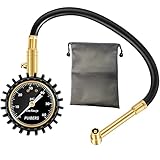
- 1. Reliable Air Pressure Gauge for Tires, full gear precision movement with bronze bourdon tube, no battery required, durable brass construction, accuracy meets ANSI Grade B40.1 Standards, more accurate and reliable than digital tire pressure gauge, maintains good performance for many years.
- 2. Legiable Luminous Dial, glow in the dark, clear display, easy to read even in very low light conditions; Patented design flexible hose and professional 90 degree right angle chuck design, very suitable for motorcycles, car, bike measurement.
- 3. Metric range design, range to 60 psi, meet your reading needs. 60 PSI Right Angle Chuck air gauge tire pressure is perfect for your motorcycle, bike, car, dirt bike, SUV, etc. for Scharder valves.
- 4. Heavy Duty Strong Structure Ensures Its Long Service Life,accurate pressure holding and quick pressure relief function; Larger button is conformed to ergonomic design which makes it more comfortable to press. An ideal gift for Father's Day or Christmas.
- 5. PUIBERS has professional car tire pressure gauge design. After continuous testing, more perfect tire pressure gauge for cars is designed. The quality can be guaranteed and the life-long friendly customer support. Buy with confidence, save a fortune with improved gas mileage, and enjoy a smoother and safer driving experience.
Charge and care for the battery without improvising
Use the approved charging equipment
Use the supplied charger or one explicitly approved for the motorcycle. Confirm that the outlet, cable, adapter and charging environment meet the owner’s manual requirements. Do not rely on a charger because its connector appears to fit; voltage, current, communication and protection systems must be compatible.
The U.S. Consumer Product Safety Commission advises users of micromobility devices to follow manufacturer instructions, use supplied or recommended chargers and use only replacement packs approved and confirmed suitable by the device maker (CPSC micromobility safety guidance). That material is general battery-safety context rather than a motorcycle-specific rulebook.
Do not modify the high-voltage system
Do not open, re-cell, bypass, reprogram or otherwise modify a traction battery. Do not install an unapproved battery pack, increase power or speed through a controller change, or combine components from another model. Such changes can defeat thermal, electrical and crash protections and may create fire, shock, warranty and legal risks.
UK government battery guidance similarly tells e-scooter users to use authorised chargers and replacement packs, follow manufacturer charging and storage instructions and avoid modifications that raise power or speed (GOV.UK battery-safety guidance). Apply the principle to an electric motorcycle only alongside the motorcycle maker’s instructions and the rules in your jurisdiction.
The Tool Desk
Outbyte PC Repair FREEClear out junk files and repair common Windows errorsFree Scan →Outbyte Driver Updater FREEScan for outdated or missing drivers - takes under a minuteDriver Scan →Follow storage and temperature limits
Use the state-of-charge, storage-temperature and charging-timing instructions in the manual. If the motorcycle reports a battery fault, overheating, impact damage, water intrusion or an abnormal smell, stop using it and contact the manufacturer or an appropriately qualified service provider. Do not troubleshoot a damaged high-voltage pack by removing covers or connecting a different charger.
Best Value
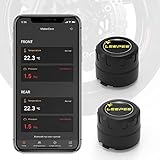
- New upgrade Designed: The LEEPEE TPMS 5.0 provides you with a faster, more accurate and more stable APP wireless connection to monitor the condition of your motorcycle tires in real-time. Only applicable to IOS and Android systems mobile phone, APP name“motorcare” (Not applicable to bicycles)
- Multiple Alert Modes: Tire Pressure Monitoring System monitors your tire condition in real time. Provide a variety of alarm conditions for your car, high and low-pressure alarm, air leakage alarm, high and low-temperature alarm, battery level alarm
- Intelligent Operation: Instantly activates or deactivates for peace of mind. The sensor enters sleep mode after 10 minutes of vehicle inactivity, conserving energy. It reawakens upon vibration and updates in real-time through the APP
- All-Weather Protection: The LEEPEE TPMS features a rugged, waterproof and dustproof construction. Withstanding extreme temperatures, it guards you year-round, accompanying you on all your mountainous and aquatic adventures
- Protection from Tire Pressure Mishaps: Abnormal tire issues can lead to serious incidents. Low pressure degrades riding quality and speeds up tire wear. Cornering risks increase, making rollovers more likely
A practical pre-ride range procedure
- Check the route. Note elevation, high-speed sections, weather, traffic, closures and confirmed charging locations.
- Check the motorcycle. Inspect tires, pressure, brakes, lights, charge connector and displayed warnings according to the manual.
- Set the load. Remove unnecessary items, secure the remaining luggage and confirm passenger and accessory limits.
- Select a suitable mode. Use the maker’s efficiency mode if its acceleration and braking response are appropriate for the conditions.
- Start with a full, correctly charged battery. Use only the approved charging equipment and allow any required charging or battery-conditioning process to finish.
- Ride predictably. Accelerate smoothly, maintain a lawful pace, scan ahead and use regeneration as the manual describes.
- Monitor the trend. Compare actual consumption with the planned route at safe stopping points; do not stare at the display while moving.
- Act early. If the reserve is shrinking, select the next confirmed charger before the situation becomes urgent.
Why test-cycle range is different from your trip
SAE J2982_202210, revised October 13, 2022, sets out on-highway electric-motorcycle range-test procedures for urban stop-and-go surface-street riding and commuting trips that include freeway operation (SAE J2982_202210). A standardised cycle makes models easier to compare under the same procedure, but it cannot reproduce every rider’s speed, temperature, elevation, wind, traffic, payload or riding mode.
When comparing motorcycles or settings, compare the same test cycle and geography. Separate city-cycle numbers from WMTC or other cycles, then look for real-world results collected under similar speed, temperature, elevation and load. Also compare charging compatibility and time, plus the maker’s battery, tire-pressure, charging and maintenance instructions. A larger advertised number on one cycle is not automatically a larger usable range on your commute.
Troubleshoot an unexpectedly short range
The estimate drops quickly at high speed
Check whether the route includes sustained high-speed travel, headwind or climbing. Reduce speed only to a safe and legal level, choose the next reliable charger and avoid treating the estimate as a guarantee.
Free tools Windows power users keep installed
One-click scans. No signup required.
Consumption changed after carrying a passenger or luggage
Confirm the combined load and accessory limits, remove nonessential items and check tire pressure using the correct loaded setting. Do not compensate for excess load by exceeding the tire’s pressure specification.
The motorcycle feels different after a pressure adjustment
Stop and verify the pressure against the exact manual or label for that model and load. If handling, vibration or tire damage is abnormal, have the motorcycle inspected rather than making repeated efficiency adjustments.
Charging takes longer or will not start
Check the connector, supply, temperature and charging status exactly as the manual directs. Use only approved equipment. If a warning, damaged cable, impact or water exposure is involved, stop and contact authorised service; do not substitute a charger or open the battery.
The battery or range display behaves abnormally
Record the conditions, route, load, riding mode and warnings, then follow the maker’s diagnostic procedure. A sudden unexplained change can indicate a fault, not a riding-technique issue, and should be assessed before the next long trip.
Safety-first range checklist
- Is the planned distance based on the same type of conditions as the published figure?
- Have you allowed for temperature, wind, elevation, speed, traffic, payload and a detour?
- Are charging locations confirmed for your model, connector and region?
- Are tires set to the manufacturer’s specified pressure for the load?
- Is every charger, cable, battery and accessory approved or explicitly compatible?
- Can you maintain safe control, stopping distance and legal speed while using the selected mode?
- Have you kept essential safety and emergency equipment?
The durable strategy is conservative: improve efficiency through smooth inputs, foresight, correct maintenance and better planning, while preserving the battery, tires, brakes and handling systems exactly as the manufacturer designed them.
Quick Recap
Product prices and availability are accurate as of the date/time indicated and are subject to change. Any price and availability information displayed on Amazon at the time of purchase will apply.




