Free tools Windows power users keep installed
One-click scans. No signup required.
Some links on this page are affiliate links: if you buy through them we may earn a commission, at no extra cost to you.
The correct AITO charging target depends on the exact model, model year, drivetrain and battery chemistry. For the 2025 AITO M5 standard version, the owner manual recommends a custom limit of 50%–90% for routine driving and says charging becomes slower above 90%. The same M5 documentation gives a separate instruction for lithium-iron-phosphate (LFP) batteries: charge to full each time when possible, or at least once a week. Do not apply a blanket “80% rule” or assume every AITO uses the same setting.
First identify which AITO battery guidance applies
AITO’s official support material provides separate owner manuals for different models and powertrains. The charging instructions discussed here are documented for M5 variants, especially the 2025 M5 standard version and the M5 EV manual. They are not proof of one charging rule for every AITO model, trim or market.
As an Amazon Associate I earn from qualifying purchases.
Recommended Free Tools
Before changing a charge limit, check the vehicle’s model year, drivetrain and battery chemistry in its owner manual or vehicle information screen. The manuals are Chinese-language official documents; translated explanations can clarify the instruction, but the manual supplied for your vehicle remains the controlling source.
| Vehicle or battery detail | What is established | What you should do |
|---|---|---|
| 2025 M5 standard version | AITO recommends a custom 50%–90% limit for routine driving and states that charging above 90% is slower. | Use a limit in that range for ordinary use, unless the vehicle’s own manual gives a different instruction. |
| LFP battery in the cited M5 manuals | The manual recommends charging fully each time, or at least once a week when a full charge every time is not feasible. | Follow the LFP-specific full-charge schedule rather than importing a generic lithium-ion rule. |
| Another AITO model, year or chemistry | The supplied M5 instructions do not establish the correct setting. | Use that vehicle’s manual and confirm the battery chemistry before choosing a limit. |
What percentage should you use for routine M5 charging?
For the cited 2025 M5 standard version, set the custom charge limit somewhere between 50% and 90% for normal driving. This is a range, not a requirement to choose one exact number. A driver who normally returns home with plenty of charge may choose the lower end; someone who needs more daily range can use the upper end.
Popular on Amazon
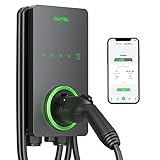
- 【Trusted Brand】Autel has been making automotive intelligent diagnostic, inspection, and analysis products since 2004. The MaxiCharger AC Home was developed over 2 years from a full team of designers and engineers to bring you the safest, smartest, and one of the best looking chargers on the market.
- 【High speed Charging】With 12kW up to 50A charging, speed will never be an issue. Add 37 miles per charging hour. Don't waste time waiting on your EV to fully charge with slower chargers. An updated 25-Foot durable cable is flexible no matter how cold the season is so you can charge with confidence in even the coldest of temperatures(-40℃).
- 【CSA Certified & NEMA Type 4】Eligible for the Federal rebate program. With NEMA Type 4 you are protected in any type of weather including snow, rain, hail, and sleet. Hang it up outside your house or inside a garage and it will operate efficiently. Fire resistant, over current, over voltage, and over temperature protection. Your level 2 charger will run better and last longer, saving you money in the long term.
- 【Smart APP Control】Use Autel Charge APP to control your charger and manage charge times, schedule charging while you're away, and optimize your charging to take advantage of off peak electricity. Bluetooth enabled, Wi-Fi connectivity, and Ethernet access make sure your automatic over the air (OTA) remote firmware updates keep you connected at the times you need.
- 【High Reliability】The MaxiCharger is easy for any electrician to install. A 3-year warranty, APP automatic updates, and around-the-clock support from Autel's service team means you'll never have to worry about quality and service.
AITO specifically says charging above 90% is slower. That does not mean a higher state of charge is forbidden, but it does mean the final part of a session takes longer. Plan that extra time when a trip requires more energy, and use the vehicle’s manual for the permitted setting on your exact variant.
How to set the limit
- Park safely and switch the vehicle on far enough to access its charging controls.
- Open the vehicle’s charging or energy-management settings and select the custom charge-limit control. Menu names can differ by software version and market.
- For routine use on the cited M5 standard version, choose a value from 50% to 90%.
- Save the setting and confirm the target shown on the instrument display or central screen.
- When you need a different target for a journey, change it deliberately and restore your routine setting afterward if appropriate.
The manual also supports scheduled AC charging. A schedule can start charging during the times you choose, but the configured limit still determines when the vehicle stops.
Do these 3 things before closing this tab:
1Scan for outdated or missing drivers - takes under a minute2Repair Windows errors before they cause bigger problems3Fix the driver behind crashes, sound loss and screen glitchesWhy LFP batteries are an important exception
LFP means lithium iron phosphate. In the cited M5 EV manual, AITO states: “磷酸铁锂电池建议每次都充满,如果没有条件每周至少充满一次。” The practical translation is: fully charge an LFP battery each time when possible; if that is not feasible, charge it fully at least once a week.
This instruction is chemistry-specific. It should not be rewritten as a universal recommendation for every AITO battery, and it should not be overridden by generic advice to stop at 80% or 90%. First establish that the vehicle actually has an LFP battery; if the chemistry is not identified in your documents, ask an AITO service centre rather than guessing from the model name.
Also popular on Amazon

- 【High speed Charging】With 12kW up to 50A charging, speed will never be an issue. Add 48 miles per charging hour. Don't waste time waiting on your EV to fully charge with slower chargers. An updated 25-Foot durable cable is flexible no matter how cold the season is so you can charge with confidence in even the coldest of temperatures(-40℃).
- 【Autel Free APP Control】Use Autel Charge APP to control your charger and manage charge times, schedule charging while you're away, and optimize your charging to take advantage of off peak electricity. Bluetooth enabled, Wi-Fi connectivity, and Ethernet access make sure your automatic over the air (OTA) remote firmware updates keep you connected at the times you need.The optional start and stop RFID card functionality can prevent unauthorized use.
- 【NO More Adapter Or Hassle】It features a NACS connector for Tesla EVs and requires a 20A or 80A circuit.Rely on this CSA-certified EV charger for safe home charging.Eligible for the Federal rebate program.
- 【High Reliability】Autel Maxicharger is NEMA 4X-rated, offering a high level of protection from all the elements, whether installed inside or outdoors. The unit is dust-tight and water-tight and thus protected against windblown dust and rain, splashing water, hose-directed water, and damage from external ice formation.
- 【Trusted Brand】AUTEL has been leading the global automotive diagnostic industry since 2004. The latest AUTEL AC Home Level 2 EV Charger provides you with a safer, more intelligent, and fast charging experience.
A simple LFP routine
- For regular use, allow the vehicle to complete a full charge whenever your schedule permits.
- If daily charging to full is impractical, arrange at least one full charge each week.
- Use the vehicle’s scheduled-AC function when a full session needs to finish at a predictable time.
- Do not interpret the 50%–90% routine range for the cited standard version as a substitute for the LFP instruction.
The manuals do not quantify how many additional years or kilometres these settings provide. They are manufacturer operating recommendations, not an independent degradation study or a guaranteed battery-life result.
Should you charge an AITO to 100%?
| Your situation | Manual-based approach | Reason |
|---|---|---|
| Routine driving in the cited 2025 M5 standard version, with a non-LFP battery | Use a custom limit between 50% and 90%. | This is AITO’s stated routine-use range; charging above 90% is slower. |
| LFP battery in the cited M5 documentation | Charge fully each time when possible, or at least once weekly. | The manual gives this separate chemistry-specific instruction. |
| A long trip requiring maximum available range | Use the setting allowed by your exact manual and allow extra time above 90%. | The M5 manual identifies slower charging above 90%, but the correct limit for other variants is not established here. |
| Battery chemistry or model is unknown | Do not choose a target based on a generic internet rule. | The available AITO guidance is variant- and chemistry-specific. |
In other words, “100% is always bad” and “100% is always best” are both too broad. The right answer comes from the battery chemistry and the manual for the vehicle in front of you.
Outdated Drivers Are Slowing You Down
One free scan finds every outdated or missing driver and matches the right update for your exact hardware.Free scan · exact hardware matchPC Slower Than It Used to Be?
A free scan shows the junk files, broken settings and background clutter dragging Windows down - then fixes them in one click.Free scan · Windows 10 & 11Understand the M5’s behaviour near a full charge
The cited M5 EV manual describes an anti-float behaviour near full charge. If the displayed charge is below 97%, a charging session can start and continue to 100%. If the display already shows 97%–100%, starting a new session will not initiate charging.
This is a vehicle operating rule, not a universal battery principle. It explains why plugging in at 98% may appear to do nothing, while plugging in at 96% can allow the vehicle to charge to full. Do not repeatedly reconnect the cable expecting the vehicle to override this threshold.
Also popular on Amazon
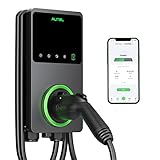
- 50A LEVEL 2 EV CHARGER — FAST 240V HOME CHARGING: Deliver up to 50A and 12kW of Level 2 charging power for faster daily EV charging. Adjustable current from 6A to 50A lets you match charging speed to your vehicle and home electrical setup.
- SMART EV CHARGING WITH APP CONTROL: Use the Autel Charge App to remotely start or stop charging, set charging schedules, monitor sessions, and optimize energy use. Built-in Wi-Fi and Bluetooth provide convenient connected control from your mobile device.
- 25FT J1772 CABLE — UNIVERSAL EV COMPATIBILITY: Includes a flexible 25-foot J1772 charging cable for convenient driveway and garage access. Compatible with J1772 electric vehicles and plug-in hybrids, making it a practical home charging station for everyday EV drivers.
- HARDWIRED INSTALLATION WITH BUILT-IN HOLSTER: Designed for permanent 240V hardwired installation with an integrated cable holster for clean, organized storage. The adjustable output helps support different EV charging requirements while keeping your charging setup neat.
- NEMA 4X OUTDOOR EV CHARGING — CSA CERTIFIED: Built for reliable indoor or outdoor use with NEMA 4X protection and CSA certification. The durable enclosure helps protect the EVSE from rain, dust, and harsh weather for dependable home charging in demanding environments.
What to check when a full charge does not start
- Read the displayed state of charge. A value from 97% to 100% can trigger the documented no-start behaviour.
- Check whether a scheduled-AC window is active and whether the current time falls inside it.
- Confirm that the connector is fully inserted and that the charging indicator shows a connected session.
- If the vehicle is below 97% and still will not charge, follow the fault instructions in the vehicle manual or contact AITO service.
Why charging time changes
AITO identifies several factors that alter charging duration: the selected charge limit, outside temperature, and battery use or age. These variables mean that the same vehicle can take different amounts of time on different days.
Charge limit
Stopping at a lower target naturally ends the session sooner. The final portion above 90% is described as slower in the 2025 M5 documentation, so a session approaching full can take disproportionately longer than one ending in the routine range.
Hot and cold conditions
In very hot or cold conditions, some charging current may be used to heat or cool the traction battery. The M5 documentation also describes automatic battery warming in low temperatures. That energy supports battery conditioning rather than appearing immediately as stored driving range, so the time shown by the vehicle can increase.
Battery use and age
AITO lists battery use and age among the factors affecting charging duration. Treat the vehicle’s time estimate as a current operating estimate, not a permanent specification.
Also popular on Amazon
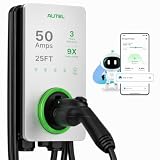
- 【Trusted Brand】Autel has brought its nearly 20 years of automotive testing and software development experience into the design of this super-efficient Smart EV Charger. Two years of research and engineering led to the development of the MaxiCharger AC Home, known for its safety, innovative features, and attractive design.
- 【High-speed Charging】With 12kW providing up to 50A charging, speed will never be an issue. Adding 37 miles per charging hour, you'll never have to wait and worry about a full vehicle charge with the MaxiCharger Home. An updated 25-Foot durable cable is flexible no matter how cold the season is so you can charge with confidence in even the coldest of temperatures(-40℃).
- 【CSA Certified & NEMA Type 4) Comprehensive testing to ensure Local and Federal rebate program eligibility. Designed for indoor or outdoor installation. NEMA 4-rated for snow, rain, hail, and sleet protection and tested to ensure its overcurrent and overvoltage protection.
- 【Smart APP Control】Use free Autel Charge APP to control your charger and manage charge times, schedule charging while you're away, and optimize your charging to take advantage of off peak electricity rates to save your money.
- 【Safe and Reliable】The Autel MaxiCharger is easy for any electrician to install. A 3-year warranty, APP automatic updates, and 24/7 local support from Autel's service team means you'll never have to worry about quality and service.
Home AC charging: equipment and installation checks
The official AITO service material describes a Huawei home-charging package, but the package is market-specific and its details may change. It includes a charging unit with a 5-metre cable, a basic installation scope of up to 30 metres, auxiliary materials, and package warranties stated as four years for the charging-unit body, two years for the charging gun and cable, and two years for installation service.
| Package detail described by AITO | Published specification | Qualification |
|---|---|---|
| Charging cable | 5 m | Package detail; verify what is supplied in your market. |
| Basic installation scope | Up to 30 m | Actual site work can require additional assessment or materials. |
| Charging-unit body warranty | 4 years | Package-specific term; confirm current conditions. |
| Gun and cable warranty | 2 years | Package-specific term; confirm current conditions. |
| Installation-service warranty | 2 years | Package-specific term; confirm current conditions. |
These figures are not a compatibility guarantee for another country or another AITO variant. Before buying or installing any wall charger, confirm the vehicle connector, the charger’s connector, the local electrical supply, protective devices, and the installer’s approval requirements. The M5 EV manual says to confirm that the household outlet’s current rating is sufficient for the supplied charging cable.
Home-charging checklist
- Match the charger and connector to the exact vehicle variant and market.
- Have a qualified installer check the circuit, outlet rating, earthing and required protection under local rules.
- Verify cable length and route before accepting an installation plan.
- Keep the charging equipment dry, undamaged and free of strain at the connector.
- Use AITO service instructions for faults rather than improvising electrical repairs.
AC charging, scheduled charging and faster charging
For home use, AC charging is the mode directly covered by the cited M5 instructions, including scheduled charging and a configurable stopping limit. Scheduling can help you complete an LFP full charge at a convenient time or avoid leaving the vehicle connected longer than needed for a routine session.
Faster charging can be useful before a journey, but the supplied AITO material does not establish a universal charging-power figure, a comparative battery-degradation rate, or a model-independent advantage for one charging method. Select equipment that the exact vehicle supports and follow the limits shown by the vehicle. Do not infer connector compatibility or battery-life results from a charger’s advertised power alone.
Also popular on Amazon

- 【Trusted Level 2 EV Charger from a Leading EV Charger Brand】Autel has been building advanced automotive diagnostic and energy solutions since 2004. This MaxiCharger AC Home Level 2 EV Charger was engineered over two years to deliver one of the safest, smartest, and best-designed EV chargers for home use. A reliable electric vehicle charger built for long-term performance.
- 【Quick 5-Minute Setup – Plug-in Home EV Charger with NEMA 14-50】Install this home EV charger indoors or outdoors in just 5 minutes by plugging it into a standard NEMA 14-50 outlet. Save thousands on installation costs. The plug-in EVSE design makes mounting, removing, or taking your EV charger with you when moving extremely convenient.
- 【Smart App Control for Your Home EV Charger (16A–40A Adjustable)】With the Autel Charge App, you can manage your EV charger remotely: adjust charging power from 16A–40A, set smart schedules, and lower costs using off-peak charging. RFID start/stop access adds security to your Level 2 EV charger, preventing unauthorized charging.
- 【NEMA 4X Weatherproof Electric Vehicle Charger Built for Any Environment】This EV charger is NEMA 4X-rated for superior durability—dust-tight, water-tight, and resistant to snow, rain, and ice. Whether used indoors, in the garage, or outdoors, this home Level 2 EV charger is built to withstand harsh environments and deliver stable charging performance year-round.
- 【 Long-Term Support for Your Home EV Charger – 3-Year Warranty】Autel provides a 3-year warranty, automatic OTA app updates, and 24/7 customer support to ensure your EV charger always operates at peak performance. Our dedicated service team guarantees a seamless and worry-free electric vehicle charging experience.
| Charging choice | Useful when | What to verify |
|---|---|---|
| Home AC with a routine limit | Everyday driving on the cited M5 standard version. | 50%–90% target, connector, circuit and installation. |
| Scheduled AC | You want charging to occur during a chosen window or finish at a planned time. | Schedule is enabled, cable is connected, and the target limit is correct. |
| Full AC charge | LFP routine charging or the weekly full-charge requirement. | Allow enough time, especially in cold or hot weather. |
| Faster charging before travel | You need additional range quickly. | Vehicle-approved equipment, regional connector fit and the time required above 90%. |
A practical charging workflow
- Identify the battery. Confirm the model year, drivetrain and chemistry from the owner manual or vehicle documentation.
- Choose the target. For the cited 2025 M5 standard version, select 50%–90% for routine use. If the battery is LFP, plan a full charge each time when possible or at least weekly.
- Inspect the equipment. Check the cable, connector and outlet for visible damage, and confirm the electrical supply is suitable.
- Connect fully. Insert the connector until the vehicle indicates that charging is active.
- Set a schedule if needed. Use the vehicle’s AC scheduling control and verify the start window.
- Watch the first session after changing settings. Confirm that the displayed target matches your choice and that charging stops at the configured limit.
- Allow for conditions. Expect longer times in very hot or cold weather, with an older or heavily used battery, or when charging above 90%.
- Disconnect safely. End the session through the vehicle or charger control before removing the connector, following the manual’s procedure.
Troubleshooting common charging situations
The vehicle stops below 100%
If the configured limit is below 100%, stopping at that percentage is expected. Check the custom limit before treating the behaviour as a fault.
Charging is much slower near the top
The M5 documentation says charging above 90% is slower. Temperature conditioning can also consume charging current. If the vehicle is very hot or cold, allow additional time rather than repeatedly unplugging and reconnecting.
The Tool Desk
Outbyte Driver Updater FREEFix the driver behind crashes, sound loss and screen glitchesFind Drivers →Outbyte PC Repair FREEClear out junk files and repair common Windows errorsFree Scan →A new session will not start at 98%
The M5 EV manual’s 97%–100% anti-float behaviour covers this case. A new session may not start when the displayed charge is already in that range.
The battery is LFP but a 90% limit is selected
Review the chemistry-specific instruction. The cited manual recommends a full charge each time when possible, or at least once a week. Change the routine only after confirming the correct setting for your vehicle.
The charger or outlet becomes unusually hot, shows damage or trips protection
Stop charging, isolate the equipment if it is safe to do so, and follow local electrical-safety procedures and AITO service instructions. Do not continue using a damaged cable or attempt an unqualified repair.
What these instructions can—and cannot—tell you about battery health
Following the manufacturer’s limit and chemistry-specific charging instructions is the most defensible way to operate the cited AITO variants. The available manuals do not provide an independent numerical estimate of capacity loss, a guaranteed lifespan increase, or a universal percentage that maximizes longevity for every AITO battery.
Quick wins for a faster PC:
Clear out junk files and repair common Windows errorsFree Scan →Fix the driver behind crashes, sound loss and screen glitchesFind Drivers →Repair Windows errors before they cause bigger problemsFix Now →Use the 50%–90% range as the 2025 M5 standard-version routine recommendation, the full-charge schedule as the M5 LFP recommendation, and the temperature and 97% charging behaviours as vehicle-specific operating information. For any other AITO, start again with that vehicle’s own manual rather than transferring these numbers automatically.




