PC Slower Than It Used to Be?
A free scan shows the junk files, broken settings and background clutter dragging Windows down - then fixes them in one click.Free scan · Windows 10 & 11Crashes, No Sound, or Screen Glitches?
Random freezes, missing sound and display glitches usually trace back to one bad driver. Find and replace yours safely.Free scan · under a minuteShort answer: EV battery fires are real, but the evidence does not show that electric vehicles generally catch fire more often than gasoline vehicles. The better-supported concern is different: when a high-voltage battery is damaged or fails, the incident can be unusually difficult to access, cool, monitor, tow, and store. Fire frequency and fire-response difficulty are separate questions.
Fire frequency and fire difficulty are not the same question
The most important distinction is simple: an EV battery fire can be unusually difficult to manage without being more common than a gasoline-vehicle fire. Headlines often collapse several different questions into one:
As an Amazon Associate I earn from qualifying purchases.
- How often does a vehicle catch fire?
- How severe is the fire once it starts?
- Can responders reach, cool, and extinguish the source?
- Can the vehicle remain dangerous after the visible flames are gone?
- How much attention does the incident receive?
Those questions do not have the same answer. Electric vehicles use high-voltage lithium-ion traction batteries, which introduce hazards involving electrical energy, damaged cells, thermal runaway, and delayed heating. That makes some incidents technically demanding. It does not, by itself, prove that EVs generally catch fire more often than gasoline vehicles.
What the comparative evidence actually shows
The clearest comparison in the supplied evidence comes from an NTSB analysis of NHTSA Fatality Analysis Reporting System data covering 2013 through 2017. The analysis looked at vehicles involved in fatal highway crashes and reported the percentage in which a fire was recorded:
#1 Best Overall

- 【Heavy-Duty Design】Our uniquely designed reinforced circular handle is a game-changer in durability. Unlike anything else on the market, this handle is seamlessly connected to the bottom of the bag, forming a continuous O-shaped loop. This innovative design not only prevents tearing but also enhances load-bearing capacity by 5 to 10 times. Built to last, it’s your reliable companion for years to come. Experience the strength and comfort that sets us apart!
- 【WITHSTAND 3000℉】Made of multilayer composite material,HulkGoo Lipo Bag behaves well in Fireproof and Waterproof.Heat insulation temperature is up to 3000℉
- 【Worry-free Charging】Excellent fire-retardant performance can prevent battery from explosion or spontaneous combustion in charging
- 【Your Fashion Bag】Not only a battery protector, but also a fashion handbag.Design with Eagle and Flag elements,the perfect combination of American culture and personality,you will become the focus no matter where you go
- 【Online Customer Service】 Size : 19.3*4.3*7inch. We provide 7*24 hours online customer service. Please feel free to contact us
| Vehicle type | Recorded fire percentage |
|---|---|
| Gasoline | 3.22% |
| Gasoline-electric hybrid | 1.36% |
| Electric | 1.96% |
Those figures do not establish a universal lifetime fire rate for each type of vehicle. They describe a narrow population: vehicles involved in fatal highway crashes during a particular five-year period. NTSB also identified important limitations, including the small number of electric vehicles in the dataset and the fact that the data did not establish where the fire began.
In other words, a recorded vehicle fire in the database was not necessarily a traction-battery fire. It could have involved another part of the vehicle or another cause entirely. The figures also do not answer how often vehicles burn during ordinary ownership, during charging, or after nonfatal crashes.
The defensible conclusion is therefore narrower than both sides of the online argument:
The Tool Desk
Outbyte Driver Updater FREEFix the driver behind crashes, sound loss and screen glitchesFind Drivers →Outbyte PC Repair FREERepair Windows errors before they cause bigger problemsFix Now →Available crash evidence does not support the sweeping claim that EVs are more likely to catch fire, but existing datasets are not complete enough to produce a simple, definitive lifetime fire-rate ranking for gasoline vehicles, hybrids, and EVs.
Raw incident counts are especially easy to misuse. A meaningful comparison would need to account for fleet size, vehicle age, miles traveled, crash exposure, battery chemistry, charging conditions, and whether the battery started the fire. Without those controls, a count of news reports or emergency calls is not a reliable fire-rate comparison.
Why EV fire stories are credible even when the broad claim is not
Lithium-ion traction batteries contain a flammable electrolyte and operate at high voltage. NHTSA’s technical assessment identified several relevant hazards, including mechanical damage, electrical faults, thermal stress, overcharging, loss of electrical isolation, and failures that occur after a vehicle has already been damaged.
A cell entering thermal runaway is one possible failure path. In plain language, a damaged or defective cell can heat uncontrollably and release heat and gases. That heat can affect neighboring cells, allowing the problem to spread through part of a module or pack. A damaged battery can also retain electrical energy after the vehicle has been switched off.
That does not mean every EV fire is a thermal-runaway event. The source of a fire must be established case by case. Nor does it mean every EV fire burns hotter than every gasoline fire. NHTSA’s assessment expected the propensity and severity of accidental electrolyte ignition, in the situations it considered, to be comparable to or somewhat less than the ignition hazard of gasoline or diesel fuel. The difference is that lithium-ion failures create a different combination of electrical and electrochemical problems.
Rank #2

- Fireproof Explosion Proof Waterproof: Fireproof Battery Organizer Case is made of upgraded non-itchy silicone coated fiberglass that can withstand temperatures up to 2000. It's also highly water-resistant. And the special material has a certain explosion-proof performance, we design this Battery Organizer Box to minimize the hazards and losses caused by battery explosion
- Stores For More Type Batteries: It can hold 79*AA, 56*AAA, 8*C, 6*D, 9*9V, 30*Button type batteries( 3V lithium - CR 2032,CR 2016,CR 1632, CR 2025,LR44 etc.), total over 200 batteries. Keeping your batteries organized and helps extend the life of your batteries
- Safely Stores Batteries: Our fireproof battery organizer bag features a double zipper and durable handle to keep batteries from shock in the event that a defective battery were to swell, leak, or explode, our bag is designed to contain this and keep your family safe. This battery case neatly holds the batteries snugly in place within the foam pre-cut slots and keeps the contact ends from contacting each other, making it easy for you to find whatever battery
- Lightweight & Portable Battery Box Containers: You can not only hang the battery pouch on the wall, put it in a storage room or drawer and anywhere away from fire, but also take it with you on trips and to various outdoor activities. It is suitable for birthdays, New Year, Christmas, Valentine's Day, Mother's Day, Father's Day and many other holidays
- Please Note: BATTERIES NOT INCLUDED. YOHAWJER included a battery tester is suitable for all types of batteries with the organizer but Does NOT include any batteries. Super convenient for you to distinguish which batteries need to be recycled
For responders, the challenge may be less about a dramatic flame temperature and more about access, cooling, monitoring, renewed heating, towing, and storage. A vehicle that looks quiet can still require careful handling if its battery has been damaged.
Three different ways an EV battery fire can begin
1. Severe crash damage
A high-energy collision can intrude into the battery enclosure or damage modules, busbars, cooling components, or electrical-isolation systems. The result may be an immediate fire, delayed heating, or a hazardous battery that has not yet visibly ignited.
NTSB’s investigation of a crash in Spring, Texas, illustrates why the details matter. A vehicle left the roadway at about 57 mph. The impact damaged two high-voltage battery modules, and investigators identified those damaged modules as the source of the post-crash fire. This was not evidence that every EV is inherently fire-prone; it was evidence that severe battery damage can create a serious post-crash hazard.
Quick wins for a faster PC:
Repair Windows errors before they cause bigger problemsFix Now →Fix the driver behind crashes, sound loss and screen glitchesFind Drivers →2. A manufacturing or design defect
Battery-related recalls and NHTSA investigations show that defects can create fire risks in defined vehicle populations. A recall is important evidence that a particular model, production range, component, or condition needs corrective action. It is not evidence that every EV battery is unsafe.
Owners should treat a manufacturer recall or safety notice seriously and follow the specified parking, charging, inspection, and repair instructions. The correct response depends on the particular defect. A recall involving one battery design cannot be generalized to the entire EV category.
3. Internal failure during driving or charging
A battery can also fail without the type of severe crash described above. NTSB’s safety work included one investigated fire attributed to an internal high-voltage battery failure during normal driving, alongside three fires associated with severe collisions. That is enough to show that non-crash failures deserve investigation; it is not enough to establish a general rate for ordinary-operation or charging fires.
The word “spontaneous” is often used as a catch-all description, but it is not a technical explanation. An incident described that way may still involve prior damage, a charging problem, a manufacturing defect, or an external trigger that has not yet been identified.
Recommended Free Tools
The Spring, Texas lesson: water worked, but the whole procedure mattered
The Spring, Texas investigation also demonstrates why blanket statements about extinguishing EV fires are misleading. Responders located the vehicle manufacturer’s emergency-response guide and used it to identify water as the effective extinguishing method. That is directly contrary to the claim that an EV battery fire is impossible to extinguish.
Rank #3

- Double-Sided Battery Organizer: The Ontel Battery Daddy is a compact & portable way to organize, store and protect a boatload of batteries! Clear 'Easy View' cover lets you see everything at a glance and prevent any unwanted contact
- Maximize Battery Organization: Battery Daddy uses both sides to store up to 180 batteries of various sizes and types. This sleek, compact battery case holds 76 AA, 72 AAA, 8 9-Volt, 10 C, 12 Coin Cell and 8 D batteries (Batteries not included)
- Help Prevent Battery Drainage: Don't let loose batteries touch and drain other batteries. Stay organized and be prepared for power outages or battery-operated household items like remote controls, flashlights, toys and emergency gadgets
- Battery Tester Included: This battery storage case comes with a tester that can check whether your single-use or rechargeable batteries are still good. Align the battery's positive and negative ends on the tester to view the result on the indicator
- Durable and Portable Design: With a clear locking lid, secure latches, and a built-in carrying handle for easy portability and storage in many drawers, shelves or emergency kits. Great for professionals, technicians or anyone needing batteries on the go
But the same investigation exposed a more useful lesson. The guide contained additional language recommending that the vehicle be lifted to improve access to the battery. Responders did not notice that instruction. The issue was not simply whether water “works.” Access to the damaged battery, the amount of cooling required, continued monitoring, and the vehicle’s eventual transport and storage all mattered.
So neither of these slogans is reliable:
- “Water never works.” The investigation documented responders using water effectively according to the vehicle-specific guide.
- “Water always solves it.” A damaged pack may need continued cooling, monitoring, specialized towing, and controlled storage after the visible fire is gone.
The correct extinguishing and handling procedure is vehicle-specific and incident-specific. It belongs with emergency services and trained responders, not with a universal consumer recipe.
Why responders need vehicle-specific information
NTSB’s responder-safety work identifies several hazards that can complicate a damaged-EV incident:
Do these 3 things before closing this tab:
1Clear out junk files and repair common Windows errors2Fix the driver behind crashes, sound loss and screen glitches3Repair Windows errors before they cause bigger problems- High-voltage components and cabling may remain dangerous after a crash.
- A damaged battery system may remain electrically energized or retain stranded energy.
- Battery damage may be hidden behind the enclosure, making access difficult.
- Toxic products of combustion may be present.
- Heating may be delayed or may return after the visible flames have been suppressed.
- Towing and storage can create a second incident if a damaged vehicle is handled like an ordinary car.
That is why NHTSA maintains an emergency-response repository containing vehicle-specific guides and rescue sheets. The materials address more than fire alone: they include information about submersion, leakage, towing, storage, vehicle construction, and hazards that may matter during rescue.
NHTSA’s 2024 post-incident stakeholder meeting similarly focused on stranded energy, emergency medical and fire response, damaged-battery transport, and lessons learned. Those topics show where the practical difficulty lies. The risk does not end simply because the flames are no longer visible.
For owners, fleet managers, and parking operators, a physical electric vehicle emergency response guide can be a useful supplementary reference when it helps organize model-specific rescue, battery-location, towing, and storage information. It should never replace the vehicle manufacturer’s official guide, emergency services, or fire-service training.
For organizations responsible for many EVs, the stronger safety investment is qualified EV emergency-response training covering damaged vehicles, stranded energy, charging incidents, towing, quarantine storage, and coordination with local responders. That is a professional-service category requiring verification of the provider’s credentials, geography, curriculum, and current availability.
What’s actually slowing this PC down?
Pick the symptom - the matching free tool is one click away.
What standards and safeguards can—and cannot—do
NHTSA identifies FMVSS No. 305a as including requirements intended to mitigate propulsion-battery fire risks during normal vehicle operation, charging, and post-crash conditions. NHTSA research also examines rechargeable-energy-storage-system failure modes such as crushing, overcharging, short circuits, loss of electrical isolation, and whether a vehicle can detect and mitigate safety-relevant events.
Rank #4
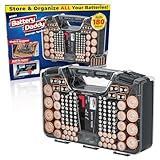
- Double-Sided Battery Organizer: The Ontel Battery Daddy is a compact & portable way to organize, store and protect a boatload of batteries! Clear 'Easy View' cover lets you see everything at a glance and prevent any unwanted contact
- Maximize Battery Organization: Battery Daddy uses both sides to store up to 180 batteries of various sizes and types. This sleek, compact battery case holds 76 AA, 72 AAA, 8 9-Volt, 10 C, 12 Coin Cell and 8 D batteries (Batteries not included)
- Help Prevent Battery Drainage: Don't let loose batteries touch and drain other batteries. Stay organized and be prepared for power outages or battery-operated household items like remote controls, flashlights, toys and emergency gadgets
- Battery Tester Included: This battery storage case comes with a tester that can check whether your single-use or rechargeable batteries are still good. Align the battery's positive and negative ends on the tester to view the result on the indicator
- Durable and Portable Design: With a clear locking lid, secure latches, and a built-in carrying handle for easy portability and storage in many drawers, shelves or emergency kits. Great for professionals, technicians or anyone needing batteries on the go
These safeguards matter because they are designed around foreseeable failure modes rather than assuming that a battery will never be damaged. They can reduce risk, require performance under specified conditions, and give regulators a basis for investigation and enforcement.
They cannot make a vehicle incapable of burning. A severe crash can exceed design assumptions. A component can fail. A manufacturing problem can affect a defined batch. A charging or maintenance issue can create conditions that require investigation. Safety standards reduce risk; they do not repeal the underlying hazards of high voltage, stored energy, flammable materials, and physical damage.
NHTSA’s ongoing Battery Safety Initiative reflects that distinction. Its work includes collecting field incidents, investigating crash and non-crash events, examining charging failures, developing battery diagnostics, enforcing safety requirements, and studying additional safety rules. The existence of that work is evidence that the risk is real and consequential. It is not evidence that EVs are broadly fire-prone.
Do not turn every lithium-ion fire into an EV statistic
“Lithium-ion fire” is a battery description, not a vehicle category. A passenger EV traction pack is different from an e-bike battery, an e-scooter battery, a charger, a consumer power bank, or a hybrid vehicle’s battery system.
U.K. product-safety reporting, for example, separately tracks fires involving e-bikes, e-scooters, chargers, and related products. Those products can share battery chemistry, but their pack design, enclosure, charging equipment, operating environment, and regulatory context may be very different from those of a passenger car.
| Category | Why it should not automatically be combined with passenger EV data |
|---|---|
| Passenger EV | Uses a large, high-voltage traction battery integrated into a crash-tested vehicle. |
| Gasoline-electric hybrid | Combines an internal-combustion system with a different battery and electrical architecture. |
| E-bike or e-scooter | Usually has a much smaller battery, different enclosure and charging setup, and a different use environment. |
| Charger or consumer battery | May fail outside a vehicle and under different electrical, mechanical, and storage conditions. |
Reports about e-bike and e-scooter fires can illustrate the broader lithium-ion safety challenge. They should be excluded from claims about passenger-EV fire rates unless the dataset explicitly combines those products and the comparison is designed for that purpose.
Independent reader supportYour contribution helps us test, update, and keep practical guides available for everyone.What owners and bystanders should do after a serious crash or suspected battery fire
This is safety guidance, not a universal DIY extinguishing protocol. A suspected high-voltage battery incident should be handled conservatively.
- Call emergency services. Report the crash or fire and, if known, identify the vehicle as an electric vehicle or hybrid.
- Keep clear of damaged components. Do not touch exposed battery parts, high-voltage components, or orange high-voltage cabling. Do not assume that switching the vehicle off makes a damaged system safe.
- Use the official vehicle information when it is available. The manufacturer’s emergency-response guide or rescue sheet is more useful than a generic lithium-ion rule because it identifies the vehicle’s construction and hazards.
- Do not improvise ordinary storage or charging. Do not charge, move, park indoors, or arrange ordinary storage for a severely damaged EV without qualified guidance.
- Do not treat visible extinguishment as the end of the incident. Damaged batteries may require monitoring and specialized decisions about towing, transport, quarantine, and storage.
- Do not rely on a consumer fire blanket or generic extinguisher as the solution. The official guidance reviewed here supports emergency services, vehicle-specific information, and specialized handling—not a universal shopping product that reliably resolves a traction-battery fire.
If a vehicle has been submerged, heavily damaged, leaking, smoking, or involved in a battery-related fire, keep people away and let qualified responders determine what happens next. The appropriate procedure depends on the vehicle and the condition of its battery.
Best Value

- 🔥【Why do you need lipo battery bag】- Do you know the potential dangers of lipo batteries? Once the battery is shorted, it will instantly generate high temperature and spontaneously ignite, which brings danger to you and your family.We designed this bag to minimize that risk, even though it can't withstand the heat and flames naturally generated by batteries for long time. But it will at least give you time to react to a spontaneous battery combustion.
- 🔥【Risk reduction】- Fireproof doesn't mean it can be endlessly exposed to fire and resist spontaneous battery combustion, we designed this product originally to reduce the risk of fire and stop the spread of fire, it is recommended that our products are stored in an open area with no flammable materials around to ensure maximum safety.
- 🔥【Three-proof battery bag】- FLASLD battery bag is fireproof - temperature resistance up to 1000℉, explosionproof - three-layer composite material is firm and reliable, waterproof - Silicone coating is waterproof and protects the battery.
- 🔥【Firefighter design】- The unique reflective strip design of the FLASLD battery bag can make it easier for you to find it in the dark night. In addition to storing batteries, it can also be used to store valuables, mobile phones, cash and various certificates and documents.
- 🔥【Safeguard liPo battery】- FLASLD Fireproof LiPo Battery bag is a convenient way of safe guarding your Lipo batteries during charging, transit, and storage. The bag is intended to reduce the chances of damage in the event of a lipo fire,Purchasing FLASLD battery bag does not mean it is absolutely safe, we do not want to mislead our customers and this statement means that we cannot cover the consequences of spontaneous battery combustion for you.
Six EV fire claims that do not survive scrutiny
| Claim | More accurate version |
|---|---|
| “EVs catch fire more often than gas cars.” | The available crash evidence cited here does not establish that broad claim, and the best-known comparison has important limitations. |
| “EV battery fires are impossible to extinguish.” | NTSB documented a case in which responders used water based on the vehicle guide, although access and follow-up handling remained important. |
| “Every EV fire is thermal runaway.” | Thermal runaway is one possible battery-failure mechanism. The source must be determined for each incident. |
| “A battery recall proves all EV batteries are unsafe.” | A recall addresses a defined population and defect condition. |
| “All lithium-ion fire statistics are EV statistics.” | E-bikes, e-scooters, chargers, consumer batteries, hybrids, and passenger EVs should be separated unless a dataset explicitly combines them. |
| “A consumer extinguisher or blanket solves a traction-battery fire.” | Vehicle-specific emergency information, emergency services, and specialized post-incident handling are the defensible recommendations. |
The accurate conclusion
EV battery fires are not imaginary, harmless, or easy to manage in every case. A damaged high-voltage battery can create serious electrical, chemical, thermal, towing, and storage hazards. Regulators continue to investigate those risks because they deserve attention.
But a difficult and highly visible fire is not proof of a higher general fire frequency. The strongest available comparison in the supplied evidence does not support the sweeping claim that EVs are more likely to catch fire, while also falling short of a definitive lifetime ranking across vehicle types.
The hype comes from treating frequency, severity, detectability, response difficulty, and media salience as if they were one measurement. They are not. The honest summary is: real hazard, wrong generalization.
Frequently Asked Questions
Can an EV battery fire restart after it appears to be out?
Not necessarily. A damaged lithium-ion battery may continue heating, retain stranded energy, or reignite after visible flames are gone. Responders may need vehicle-specific procedures, continued monitoring, specialized towing, and controlled storage.
Does water work on an EV battery fire?
Sometimes water is the effective method, but the answer depends on the vehicle and the incident. In NTSB’s Spring, Texas investigation, responders used water according to the manufacturer’s emergency-response guide. The same case showed that access to the battery and follow-up handling were also important.
Should EV owners buy a special extinguisher or fire blanket?
No. A generic extinguisher or fire blanket should not be presented as a reliable solution for a damaged traction battery. Call emergency services, keep away from exposed high-voltage components, and follow the vehicle manufacturer’s emergency information when available.
Does an EV battery recall mean all electric vehicles are unsafe?
No. A recall identifies a particular defect, vehicle population, component, or operating condition that requires corrective action. It does not demonstrate that every EV battery or every EV model has the same defect.
Free tools Windows power users keep installed
One-click scans. No signup required.
The Bottom Line
Bottom line: EV battery fires are uncommon enough that “EVs are fire traps” is not supported by the available comparative evidence, but serious enough to require vehicle-specific emergency information, trained responders, and careful towing and storage. Do not deny the hazard—and do not inflate it into a claim the data cannot prove.
Quick Recap
Product prices and availability are accurate as of the date/time indicated and are subject to change. Any price and availability information displayed on Amazon at the time of purchase will apply.