Free tools Windows power users keep installed
One-click scans. No signup required.
Electric motorcycles are usually cheaper to power per kilometre when electricity is inexpensive and you can charge conveniently, but a gas motorcycle still wins on fast refuelling, long-distance flexibility and often purchase price. There is no universal cost winner. A sound comparison uses two specific motorcycles in the same market, then combines their measured or published energy consumption, local electricity and fuel prices, purchase prices, maintenance schedules and battery terms.
What you are really comparing
An electric motorcycle replaces an internal-combustion engine, fuel tank and exhaust system with a traction battery, electric motor, inverter and charging equipment. That changes three ownership questions at once:
As an Amazon Associate I earn from qualifying purchases.
- Distance: how far the motorcycle can travel before it needs energy again.
- Downtime: how long it takes to restore that energy.
- Cost: what you pay for electricity or petrol, plus the purchase, servicing and battery costs.
Engine displacement alone does not make the comparison fair. A light urban electric motorcycle and a touring petrol motorcycle serve different jobs, so compare models with similar performance, payload, weather protection and intended use. Keep the model year, country, riding pattern and price date aligned.
Recommended Free Tools
How far can an electric motorcycle go on one charge?
Range is model-specific and the published number is not a promise for every ride. Kawasaki lists 72 km per charge for its Ninja e-1 and Z e-1. The figure is a manufacturer specification, not an independent road test, and it applies to those named models rather than to electric motorcycles generally.
#1 Best Overall

- 【Razor Motorcycle Charger】Razor electric scooters and vehicles, including the E100, E125, E150, E175, E200, E200S, E225, E275, E225S, E300, E300S, E325, E325S, E500, E500S, PR200, MX350, ZR350, MX400, SX350, Pocket Mod, Sports Mod, and Quad ATVs
- 【AC Input /Output 】Input : 100V -240VAC 50/60Hz. /Output:24V 1500MA / 6.6 Ft Power Cable
- 【Electric Dirt Bike Charger】Equipped with built-in protection against overheating, overloading, and short circuits, ensuring longevity for both your device and the charger itself
- 【LED Display】A red light indicates that the scooter is charging, while a green light signals that the battery is fully charged
- 【After-Sales Service】 If you have any questions about our products, Please contact us by email in time. We provide 24 hours online service
India’s Bureau of Energy Efficiency (BEE) gives an estimate of about 84 km per charge as the average range of electric two-wheelers available in that market at the time of its guidance. That number is geographically and temporally bounded; it is not a global average and should not be applied to motorcycles sold in another country or to a later model year.
Why your result can differ from the label
- Speed and acceleration draw more energy than steady, moderate urban riding.
- Rider weight, passenger load, luggage, hills and strong headwinds increase consumption.
- Cold temperatures can reduce usable battery performance.
- Tyre pressure, traffic, road surface and repeated stop-start riding change the result.
- Manufacturers may use a defined test cycle, while your route may include faster roads or longer climbs.
Use a claimed range as a planning reference. For commuting, compare it with your normal round-trip distance and leave a reserve for detours, weather and battery ageing. A motorcycle that barely covers your usual route on paper will require more frequent charging and gives you less flexibility as the battery loses capacity over time.
How gas-motorcycle range differs
A petrol motorcycle’s usable distance depends on tank capacity and fuel consumption. Refuelling normally takes minutes, so a shorter tank range may be less restrictive on a trip than a longer electric range that requires a multi-hour stop. Compare the distance between practical refuelling or charging opportunities, not just the maximum number printed in a brochure.
How long does an electric motorcycle take to charge?
Charging can take hours rather than the short stop associated with a petrol pump. Kawasaki reports approximately 3.7 hours per battery for 0–100% and 1.6 hours for 20–80% on the Ninja e-1 and Z e-1. Those are Kawasaki specifications for the named motorcycles.
Charging at home
The same Kawasaki announcement describes removable lithium-ion batteries that can be charged from a household outlet with a dedicated charger. Removable packs can be useful for riders without a garage socket, provided the batteries are within the manufacturer’s weight, temperature and indoor-storage limits. A home installation must follow local electrical rules and the motorcycle maker’s instructions.
The U.S. Environmental Protection Agency explains that some electric vehicles can use a standard 120-volt outlet and that a dedicated 240-volt system can charge faster. That is general electric-vehicle guidance, not a guarantee that a motorcycle accepts either voltage or that car charging hardware is compatible. Check the motorcycle’s connector, charger rating, circuit requirements and maximum charge rate before installing equipment.
Partial charging and daily routines
You may not need a full charge every day. A 20–80% session can be materially shorter than 0–100%, as the Kawasaki figures illustrate. If your workplace or home offers several hours of parking, a partial top-up may cover the next day’s travel. Public chargers can add fees, parking limits or queues, so include those constraints in a route plan.
The Tool Desk
Outbyte PC Repair FREEClear out junk files and repair common Windows errorsFree Scan →Outbyte Driver Updater FREEScan for outdated or missing drivers - takes under a minuteDriver Scan →Trip planning checklist
- Measure your normal distance, including the return journey, rather than estimating from memory.
- Check the motorcycle’s usable battery capacity and the maker’s stated charging times for your voltage and charger.
- Locate reliable outlets or public charging points at home, work and along longer routes.
- Set a reserve for weather, elevation, traffic and an unexpected detour.
- Confirm whether a charger can operate while the battery is installed, and whether a removable battery can be carried or charged safely where you park.
Is an electric motorcycle cheaper to run than a gas motorcycle?
Compare energy per distance, not a bare electricity price with a bare petrol price. Use the motorcycles’ consumption figures and your local tariffs:
| Motorcycle | Consumption input | Local price | Energy cost per distance |
|---|---|---|---|
| Electric | kWh per kilometre (or mile) | Electricity tariff per kWh, plus any charging fee | kWh per km × currency per kWh |
| Gas | litres per kilometre (or gallons per mile) | Petrol price per litre (or gallon) | litres per km × currency per litre |
Use a motorcycle-specific consumption figure measured under a known test cycle or by a transparent road test. If one figure is a laboratory claim and the other is an independent result, label the difference instead of presenting them as equivalent.
Rank #2
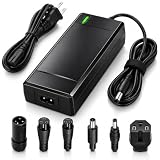
- 🌍 [Universal Compatibility] One Charger for All Your 48V Rideables Replace multiple messy chargers with this universal 54.6V 2A charger. Comes with 6 interchangeable connectors to ensure seamless compatibility with most 48V lithium-ion devices. Perfectly compatible with Gotrax, Hiboy, Jetson, Segway, Ninebot, Razor electric scooters, ebikes, hoverboards, and more. A direct replacement for your lost or damaged OEM charger, saving space and keeping your gear organized.
- 📊 [ Plug‑and‑Play Replacement] Meets or Exceeds OEM Standards No complicated setup – just pick the right connector, plug it in, and start charging. This replacement charger delivers the same or better performance than your original OEM unit. It’s the ideal solution for a lost or faulty charger, giving you dependable power without the hassle.
- 🛡️ [SGS-Certified Safety] Built-in Multi-Protection & Durable Housing Safety first! Constructed with a sturdy aluminum alloy housing for excellent heat dissipation to prevent overheating. Features full multi-protection against over-voltage, over-current, short-circuit, and over-temperature. This durable, scratch-resistant, and corrosion-proof design ensures reliable performance both indoors and outdoors, giving you peace of mind on every charge.
- ⚡ [Fast & Efficient 2A Charging] Auto Trickle Mode for Battery Care Get back on the road quickly with fast and stable 54.6V 2A output. Unlike cheap chargers, our smart charger automatically switches to trickle charge when the battery is full. This protects your battery cells, extends its overall cycle life, and ensures consistent performance for your ebike, scooter, or hoverboard — charge with confidence.
- 🌐 [Worldwide Use] Plug-and-Play Replacement for OEM Chargers Designed for global travelers and everyday commuters. Supports a wide 100–240V AC input, making it perfect for use anywhere. This replacement charger is a direct plug-and-play solution that meets or exceeds OEM performance standards. Simply select the right connector, plug it in, and enjoy a reliable, efficient, and safe charge every time.
What published examples show
BEE states that home-charging cost varies with the battery’s capacity and the state electricity tariff. Its basic method is battery capacity in kWh × charging tariff in Indian rupees per kWh. That calculation is useful for an electric two-wheeler when you substitute the motorcycle’s own battery capacity; a car example on the BEE page is not motorcycle evidence.
The U.S. Department of Energy reported an average electric-vehicle charging cost of 15 cents per kWh, with a range of 8–27 cents per kWh, in a 2020 estimate. It combined home, workplace/public and DC fast charging. Treat those figures as historical U.S. context, not as a current tariff or a motorcycle-specific rate.
In a Philippines government briefing, Department of Energy Undersecretary Felix William Fuentebella used illustrative estimates of ₱1.20 per kilometre for an internal-combustion motorcycle or tricycle and ₱0.34 per kilometre for an electric motorcycle or tricycle. The electricity figure depended on an assumed charging rate, and the briefing also acknowledged the electric vehicle’s higher initial price and eventual battery replacement. These are country-specific briefing estimates, not a worldwide result.
Worked method with your own numbers
Suppose your electric motorcycle uses 0.04 kWh/km and your tariff is 0.20 in your currency per kWh. Energy costs 0.04 × 0.20 = 0.008 per km. If a petrol motorcycle uses 0.035 litres/km and fuel costs 1.80 per litre, its energy cost is 0.035 × 1.80 = 0.063 per km. These numbers are an illustration of the method, not a claim about any particular motorcycle or market. Replace them with the consumption and prices that apply to your models.
For a home charge, allow for charging losses if your measurements or manufacturer data provide them. For public charging, add the session fee, per-kWh charge, time charge or parking cost. Keep those items visible rather than hiding them inside an assumed electricity price.
Total ownership cost: what the energy calculation leaves out
Low energy cost does not automatically make an electric motorcycle cheaper overall. Add the following categories over the period you expect to own the motorcycle:
Outdated Drivers Are Slowing You Down
One free scan finds every outdated or missing driver and matches the right update for your exact hardware.Free scan · exact hardware matchPC Slower Than It Used to Be?
A free scan shows the junk files, broken settings and background clutter dragging Windows down - then fixes them in one click.Free scan · Windows 10 & 11- Purchase price: compare the actual local transaction price, taxes, registration and any required charger or battery rental.
- Energy: electricity, public-charging fees and petrol for the distance you expect to ride.
- Routine maintenance: tyres, brakes, suspension, bearings, chain or belt components and scheduled inspections.
- Powertrain service: engine oil, filters, spark plugs and valve checks on a gas motorcycle; electric motorcycles generally do not need those engine services, but they still require chassis and brake maintenance.
- Battery terms: warranty length, mileage or capacity threshold, exclusions, replacement price and whether the pack is owned or leased.
- Financing, insurance and taxes: these depend on your country, rider profile and model and should be kept separate from energy cost.
The available evidence does not establish a universal battery replacement interval, replacement price or payback period. Obtain the written warranty and a replacement quotation for the exact model before treating projected savings as certain.
A simple ownership worksheet
| Line item | Electric motorcycle | Gas motorcycle |
|---|---|---|
| Purchase and required equipment | Local price + charger or battery cost | Local price and required equipment |
| Energy over ownership | Annual kilometres × electric cost per km × years | Annual kilometres × petrol cost per km × years |
| Scheduled maintenance | Use the manufacturer’s intervals and prices | Include oil, filters and engine checks |
| Battery or major powertrain event | Warranty-covered work and realistic replacement assumption | Engine, clutch or exhaust repairs if applicable |
| Resale value | Estimate from local listings, noting battery condition | Estimate from comparable age and mileage |
Subtract expected resale value from the total paid. Run the worksheet at several petrol and electricity prices instead of relying on one forecast. If a small price change reverses the result, the decision is sensitive to energy markets and should not be presented as a guaranteed saving.
Independent reader supportYour contribution helps us test, update, and keep practical guides available for everyone.Maintenance and reliability differences
A gas motorcycle has an engine with lubricating oil, filters, combustion components and a fuel system. Service intervals vary by model, but those systems create recurring tasks that an electric drivetrain does not have. An electric motorcycle still needs inspections of tyres, brakes, wheel bearings, suspension, steering, lights, fasteners and the drive system. Regenerative braking, where fitted, may reduce friction-brake use, but it does not eliminate brake maintenance.
Rank #3
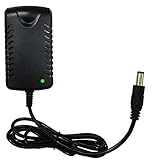
- 【Compatible Models】12 Volt Battery Charger Compatible for Ride on Toys Compatible with Wrangler, Kid Jeeps car, Motorcycle, Dynacraft, Mercedes-Benz, Range Rove, BMW i8, Kidzone Lamborghini Car, Best Choice Products, Ferrari Farm, Kid Tractor Car, Hello Kitty Car, Bumper Car,Toddler Car, Kidzone Bumper Car, Truck, SUV, Trax, AVT, UVT Ride On Cars and more
- 【Input /Output 】 Input : 110V -240VAC 50/60Hz; Output:12VDC 1000MA ; 5 Ft Power Cable
- 【Smart LED light】 Red light when charging, Green light when full
- 【Notes】 Please check the compatibility and connector type of your battery before purchasing. Before buying this charger, please check - Whether the battery is damaged
- 【After sale service】If you have any questions about our 12 volt charger, Please contact us by email in time. We provide 24 hours online service
Battery health is the distinctive electric concern. Heat, deep discharges, long storage at a high state of charge and repeated high-power use can affect capacity, although the extent depends on battery chemistry, thermal management and the manufacturer’s controls. Follow the model’s storage and charging instructions instead of applying a generic rule from a different battery.
Which motorcycle fits your use?
| Your priority | Electric is usually stronger when… | Gas is usually stronger when… |
|---|---|---|
| Daily urban commuting | Your round trip fits comfortably within the usable range and you can charge at home or work. | You cannot install or access dependable charging. |
| Long-distance touring | Your route has compatible chargers and you can schedule multi-hour stops. | You need rapid refuelling and flexible route changes. |
| Lowest energy bill | Local electricity is inexpensive and the motorcycle is efficient. | Petrol is unusually cheap or charging is mostly public and expensive. |
| Lowest upfront price | A subsidy or lower-priced electric model narrows the gap. | The comparable electric model costs more and you ride too little to recover it. |
| Quiet, low-maintenance operation | You value no engine oil or combustion emissions at the tailpipe. | You prefer established service coverage and quick mechanical repairs. |
These are decision conditions, not universal verdicts. A rider with a short commute and overnight home charging may save substantially on energy, while a rider who regularly crosses regions may value petrol’s refuelling network more than an electric motorcycle’s lower kilometre cost.
How to make a fair two-model comparison
- Define the match. Choose motorcycles with similar performance, carrying capacity and intended roads. Record model year and battery size or tank capacity.
- Set the geography and date. Use one country’s prices, taxes, electricity tariff, petrol price and incentives, all measured on comparable dates.
- Separate range evidence. Mark each number as a manufacturer claim, test-cycle result or independent real-world measurement. Do not compare a laboratory value for one motorcycle with a road-test value for the other without explaining the difference.
- Measure your duty cycle. Record weekday distance, weekend trips, passenger use, motorway exposure, hills and seasonal temperatures.
- Audit charging or refuelling. Note outlet voltage, charger power, access hours, public fees, queue risk and the time available at each stop.
- Calculate energy per kilometre. Apply the formulas above to local prices and add charging losses or public fees where known.
- Price ownership. Include purchase, servicing, insurance, taxes, battery warranty and a documented replacement assumption.
- Stress-test the result. Recalculate with higher petrol prices, a different electricity tariff, a shorter usable range and a lower resale value.
Common mistakes and how to avoid them
Treating a range figure as universal
A 72-km specification for two Kawasaki models does not describe every electric motorcycle. A BEE estimate of 84 km for electric two-wheelers in India is not a worldwide benchmark. Keep the model, market and date attached to every range statement.
Assuming a car charger will work
General EPA guidance about 120-volt outlets and 240-volt equipment does not override a motorcycle maker’s limits. Use only the connector, charger and circuit approved for the motorcycle.
Comparing prices instead of cost per distance
A cheap electricity tariff can still produce a high cost per kilometre if the motorcycle is inefficient or charging losses are large. Conversely, a fuel-efficient petrol motorcycle can narrow the gap where petrol prices are low. Calculate both products of consumption and local price.
What’s actually slowing this PC down?
Pick the symptom - the matching free tool is one click away.
Ignoring charging access
An electric motorcycle that cannot be charged where it is parked may force expensive public sessions, inconvenient detours or missed travel. Confirm access before buying, not after delivery.
Promising a universal payback period
Purchase-price differences, annual kilometres, tariffs, fuel prices and battery terms vary too widely for one reliable payback number. Publish a payback estimate only for a named model pair with dated local inputs and clearly stated assumptions.
Bottom line for buyers
Choose an electric motorcycle when its usable range covers your routine, charging is dependable and your local electricity price makes the calculated cost per kilometre attractive. Choose a gas motorcycle when rapid refuelling, long-distance travel, purchase price or service availability matters more. The defensible way to decide is a dated, local comparison of two named motorcycles that includes range evidence, charging time, energy cost, maintenance, purchase price and battery warranty or replacement risk.
Quick Recap
Product prices and availability are accurate as of the date/time indicated and are subject to change. Any price and availability information displayed on Amazon at the time of purchase will apply.




