CISPR 25 Class 5 is the strictest of the five automotive component-emissions classes. It is used to evaluate whether an electronic module, wiring harness, or vehicle electrical system is generating radio-frequency noise that could interfere with receivers installed in the vehicle.
It is not a single pass/fail number, and it is not automatically a government certification. The applicable vehicle manufacturer normally specifies the CISPR 25 edition, test method, frequency bands, detector, operating modes, and any tighter or modified limits.
As an Amazon Associate I earn from qualifying purchases.
What CISPR 25 Class 5 covers
CISPR 25 is intended to protect on-board receivers from disturbances produced by automotive electrical and electronic equipment. It applies to vehicles and to components intended for vehicles, boats, trailers, internal-combustion engines, and related applications.
The current IEC publication is CISPR 25:2021, Edition 5.0, published on December 16, 2021. It covers radio-disturbance measurements from 150 kHz to 5,925 MHz. The 2021 edition replaced CISPR 25:2016, whose upper frequency limit was 2,500 MHz.
#1 Best Overall
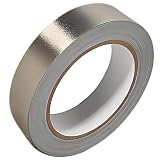
- Professional Grade: Conductive cloth tape is made of high-strength polyester fiber fabric and acrylic adhesive with a copper-nickel conductive layer formed by a special electroplating process. It ensures reliable electrical conductivity and superior electromagnetic interference shielding.
- Excellent Features: Faraday tape has good initial adhesion, with its double-sided conductive properties enabling reliable circuit connections for non-solderable electronic components. The tape also features anti-interference, anti-static, high temp resistance, and tensile strength that ensure durable performance in extreme temperatures.
- Farewell Interference: Military-grade shielding effectively blocks and suppresses external signal interference, protecting precision components from EMI and RFI. It resolves electromagnetic leakage and signal crosstalk issues, ensuring long-term stable operation of equipment.
- Multiple of Uses: Ideal for repairing internal shielded layers in devices, conduct electricity, electric repairs, electrostatic grounding, cable shield, creating paper circuits, RFID blocking, PCB heat dissipation, EMP proof, guitar noise elimination, car wire harnesses wrap, and sealing Faraday cages.
- Package Included: The full-roll conductive sticky tape measures 1" in wide × 50 Feet in length. It securely adheres to various surfaces including metal, plastic, foam, and glass, and more, while leaving no residue after removal.
The five classes are arranged by emission severity:
| Class | Relative requirement |
|---|---|
| Class 1 | Least restrictive |
| Classes 2–4 | Increasingly restrictive |
| Class 5 | Most restrictive; lowest permitted emissions |
Class 5 is commonly requested for sensitive vehicle platforms or modules located near radio, navigation, telematics, GNSS, Bluetooth, Wi-Fi, or other receiver systems. However, the class required for a particular part comes from the OEM test plan, not from the component supplier’s assumption.
Class 5 is a set of limits, not one limit line
There is no universal “Class 5 limit” that applies from 150 kHz through 5,925 MHz. The permitted level changes according to several variables:
- Conducted or radiated measurement
- Voltage method or current-probe method
- Frequency band and protected receiver service
- Peak, quasi-peak, or average detector
- Test configuration and harness arrangement
- CISPR 25 edition
- OEM-specific requirements or deviations
For that reason, a graph labelled “CISPR 25 Class 5” is incomplete unless it also identifies the edition, method, detector, frequency band, and limit source. Application-note plots are useful for engineering work, but they may use the 2016 edition or an OEM-derived subset of the requirements.
Conducted-emissions testing
Conducted testing measures RF noise travelling along the EUT’s power leads and wiring harness. Automotive testing generally uses an automotive artificial network, often called an AN or automotive LISN. A common arrangement uses a 5 µH network with a 50-ohm measurement port.
Rank #2
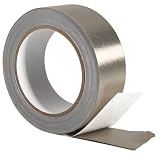
- Professional Grade: Conductive cloth tape is made of high-strength polyester fiber fabric and acrylic adhesive with a copper-nickel conductive layer formed by a special electroplating process. It ensures reliable electrical conductivity and superior electromagnetic interference shielding.
- Excellent Features: Faraday tape has good initial adhesion, with its double-sided conductive properties enabling reliable circuit connections for non-solderable electronic components. The tape also features anti-interference, anti-static, high temp resistance, and tensile strength that ensure durable performance in extreme temperatures.
- Farewell Interference: Military-grade shielding effectively blocks and suppresses external signal interference, protecting precision components from EMI and RFI. It resolves electromagnetic leakage and signal crosstalk issues, ensuring long-term stable operation of equipment.
- Multiple of Uses: Ideal for repairing internal shielded layers in devices, conduct electricity, electric repairs, electrostatic grounding, cable shield, creating paper circuits, RFID blocking, PCB heat dissipation, EMP proof, guitar noise elimination, car wire harnesses wrap, and sealing Faraday cages.
- Package Included: The full-roll conductive sticky tape measures 2" in wide × 50 Feet in length. It securely adheres to various surfaces including metal, plastic, foam, and glass, and more, while leaving no residue after removal.
This is an important distinction from the 50 µH mains LISN commonly associated with household AC equipment. Substituting the wrong network changes the impedance seen by the EUT and can produce results that do not represent the required automotive test.
Voltage method
The receiver measures the RF voltage at the artificial-network measurement port. For a two-wire DC supply, the positive and negative supply paths are tested according to the applicable setup. The unused artificial-network port is normally terminated in 50 ohms; leaving it open changes the RF environment and can distort the result.
The Tool Desk
Outbyte PC Repair FREERepair Windows errors before they cause bigger problemsFix Now →Outbyte Driver Updater FREEScan for outdated or missing drivers - takes under a minuteDriver Scan →Current-probe method
A current probe measures RF current flowing on the harness. CISPR 25 commonly specifies probe positions of:
- 50 mm from the EUT
- 750 mm from the EUT
These measurements are not interchangeable. Harness resonances and probe coupling can make a harmonic prominent at one location and much smaller at the other. A module that passes at 50 mm may still fail at 750 mm.
Voltage and current-probe results can also differ substantially, particularly at lower frequencies. The artificial-network impedance determines how noise current divides between the inductive path and the 50-ohm measurement port.
Rank #3

- Industrial Grade Material : Faraday Cloth Tape Two sided conductive material made up of conductive glue and conductive cloth,two sided conductive material made up of conductive glue and conductive cloth, this allows any overlapping seams of tape to be electrically continuous.Suitable for all kinds of electronic products and appliances.Applications with Faraday Conductive Tapes,metallized surface nickel, copper form excellent electrical conductivity,which not only provides stable electrical conductivity, but also has excellent shielding effect against electromagnetic interference.
- Farewell Interference: Faraday Fabric Tape, metallized surface nickel, copper form excellent electrical conductivity, used for shield electromagnetic signals and radio waves, it will reflect, absorb or penetrate according to the nature of the object, providing excellent shielding effect. It has high shielding, electrically conductive, anti-interference, radiation protection, antistatic, anti-aging, flexibility, abrasion resistance, and other properties.High Shielding Conductive Tape, suitable for a variety of surface applications, such as metals, aluminum, plastics, glass, copper / brass, and more, strong practicability, wide range of applications.
- Widely Used: Multi-purpose cloth adhesive tapes can be used for circuit connections, electrical repairs, wire interference shielding, automotive wiring harness wrap, cable fixing, creating paper circuits, PCB heat dissipation, electric guitar noise eliminate, display repair, RFID signal blocking, making conductive foam strips, electrostatic grounding, building Faraday cage and boxes, make credit card wallets, DIY projects and more.
- Wide range application: Suitable for laptop, mobilephone, lcd, pop cable, speaker, microphone, remoter, keyboard repair. EMI Shielding. Guitar interference shielding. ESD Grounding, sealing, Waterproof material. Fasten joint of pipes of airconditioner, refrigerator, packing or wraping of the data cables etc. Also can be used as circuit sticker.
- Package Included: The whole roll of conductive fabric tape is wide 2 inch/5.08cm by long 59 feet/18m. It's easy to use and residue-free, and you can cut it into round, square, bar, sheet, or other shapes to suit your needs, making it easy to apply to a wide range of sensitive parts without the need for complex tools or skills.
Radiated-emissions testing
Radiated measurements evaluate electromagnetic energy emitted by the EUT, its enclosure, and its wiring. Component testing is normally performed in an absorber-lined shielded enclosure, or ALSE, to reduce external signals and control reflections.
What’s actually slowing this PC down?
Pick the symptom - the matching free tool is one click away.
A typical component arrangement includes:
- A 1.5 m wiring harness between the artificial networks and EUT
- The harness routed parallel to the edge of a grounded metal tabletop
- A measurement antenna positioned approximately 1 m from the harness for the applicable bands
- The specified antenna polarization, height, EUT orientation, and scan procedure
The exact layout must follow the applicable CISPR 25 edition and customer plan. A generic FCC or CISPR 16 radiated-emissions layout is not automatically an acceptable substitute. Harness height, bundle geometry, return-path routing, tabletop position, enclosure bonding, and EUT orientation all affect the result.
A practical Class 5 test sequence
- Identify the governing document. Confirm whether the customer requires CISPR 25:2021 or an older contractual edition, and list all OEM deviations.
- Confirm the scope. Establish whether the requirement applies to a component, subsystem, full vehicle, or a particular installation condition.
- Record the test matrix. List the required class, frequency bands, detectors, bandwidths, measurement methods, supply conditions, loads, and operating states.
- Set up the EUT exactly. Use the specified artificial networks, ground plane, harness length, harness routing, load, grounding, and supply arrangement.
- Run conducted scans first. Test both supply paths and every required voltage/current method.
- Measure both probe positions. Where the current-probe method applies, check 50 mm and 750 mm from the EUT.
- Run radiated scans. Test the required antenna polarizations, EUT orientations, frequency ranges, and operating states in the ALSE.
- Verify suspicious peaks. Use the prescribed receiver measurement and detector rather than treating a fast spectrum-analyzer trace as the final result.
- Repeat operating conditions. Include minimum and maximum loads, switching modes, communications activity, startup, shutdown, charging, motor operation, and any other OEM-specified state.
- Document the result. Record the standard edition, setup photographs, detector, bandwidth, frequency range, operating condition, limit source, measured level, margin, and measurement uncertainty information.
Common reasons Class 5 evaluations go wrong
Using the wrong CISPR 25 edition
A report marked “CISPR 25 Class 5” may actually use the withdrawn 2016 edition. CISPR 25:2021 adds frequency bands, extends the range to 5,925 MHz, deletes the TEM-cell annex, and includes new measurement-uncertainty material. A 2016 plot should not be presented as automatically equivalent to a 2021 result.
Changing the harness
The harness is part of the RF test system. Altering its length, return path, bundle spacing, height, tabletop distance, or connector arrangement changes resonances and common-mode currents. A bench setup that looks electrically similar may not be comparable to the required configuration.
Testing only nominal load
Power converters and motor drives often change switching frequency, pulse width, current ripple, or control-loop behaviour as load changes. A module can pass at nominal load and fail at light load, maximum load, startup, or a mode transition.
Quick wins for a faster PC:
Repair Windows errors before they cause bigger problemsFix Now →Scan for outdated or missing drivers - takes under a minuteDriver Scan →Clear out junk files and repair common Windows errorsFree Scan →Rank #4

- Product structure : Faraday Fabric Tape is constructed of high-strength polyester fiber and acrylic adhesive.Nickel is first coated on polyester fiber by chemical deposition or physical metal transfer, then covered with a high-conductivity copper layer, and finally electroplated with anti-oxidation and anti-corrosion nickel.The copper-nickel composite layer provides outstanding conductivity and excellent EMI shielding effec.
- Product performance: Faraday fabric tape offers strong initial adhesion and double-sided conductivity, providing reliable circuit connection for non-weldable electronic components.It also features anti-interference, anti-static, high temperature resistance and high tensile strength.Stable and long-lasting performance even under extreme temperature conditions.
- Military-grade : high-density shielding strongly blocks EMI/RFI interference, eliminates electromagnetic leakage and signal crosstalk, and ensures long-term stable operation of equipment.
- Multi-functional for wide applications, ideal for internal shielding repair, conductive connection, electrical circuit maintenance, static grounding, cable electromagnetic shielding, paper circuit making, RFID signal shielding, PCB motherboard heat dissipation, EMP electromagnetic protection, electric guitar noise elimination, automotive wiring harness wrapping, and Faraday cage sealing & construction. It meets various needs of equipment repair, modification and DIY projects.
- Package Included: Easy hand tear design, The full-roll conductive sticky tape measures 1.2inch x 66Feet in length. It securely adheres to various surfaces including metal, plastic, foam, and glass, and more, while leaving no residue after removal.
Relying on a rapid peak scan
A spectrum analyzer’s fast peak trace is excellent for finding problem frequencies, but it is not automatically a formal CISPR 25 result. Receiver settings, detectors, bandwidths, correction factors, antenna factors, artificial-network factors, calibration, and uncertainty must match the required procedure.
Assuming conducted compliance proves radiated compliance
Conducted noise can become the source of radiated emissions, but radiated performance also depends on PCB-to-chassis capacitance, enclosure seams, heatsinks, connector shells, shielding, mechanical installation, and harness routing. Passing one measurement type does not guarantee passing the other.
Misunderstanding transmitter exclusions
Intentional radio transmissions may be treated according to the exclusions and conditions in CISPR 25, but that does not automatically remove every conducted or spurious emission associated with a transmitter. The OEM test plan should explain how telematics, Bluetooth, Wi-Fi, GNSS, and other intentional transmitters are handled.
Independent reader supportYour contribution helps us test, update, and keep practical guides available for everyone.Design changes that can improve Class 5 margin
Class 5 performance is usually easier to achieve when EMI control is designed into the module rather than added after the first chamber failure. Useful measures include:
Do these 3 things before closing this tab:
1Fix the driver behind crashes, sound loss and screen glitches2Repair Windows errors before they cause bigger problems3Scan for outdated or missing drivers - takes under a minute- Minimize the switch-node copper area and parasitic capacitance to the chassis or heatsink.
- Reduce the area of high-di/dt current loops.
- Keep noisy power paths away from communication and receiver-related circuitry.
- Provide a deliberate, low-impedance high-frequency return path.
- Address both differential-mode and common-mode noise.
- Place input capacitors, ferrites, common-mode chokes, and damping parts according to the actual current loops.
- Control connector-shell, enclosure, shield, and heatsink bonding.
- Use conducted scans to identify harness currents before investigating radiated peaks.
Filtering at the connector is not always enough. If the noisy loop is on the PCB, or if a heatsink and enclosure provide an unintended capacitive return path, a filter placed far from the source may provide little Class 5 improvement.
Best Value

- Strong Adhesive - Kirecoo copper tape [2inch, 33FT], The copper foil tape conductive adhesive is super sticky and is protected with an easy peel backing which make it can be used on most surfaces & is able to withstand all weather conditions.
- Highly Conductive - Our copper foil uses a highly conductive material with low resistance, has dual conductivity so current will flow through both sides and the adhesive. No need to worry that the copper tape conductive adhesive will reduce the effectiveness between components, making our emi shielding foil a excellent option for electrical projects, repairs and even paper circuits. Excellent alternative to conductive paints.
- EMI & RFI Shielding - This copper foil tape with conductive adhesive Shielding electric guitar to avoid interference, shield the pickup and control cavities of a guitar. Prevent radiating and interfering, making it an ideal guitar shielding tape option. Perfect for any guitar builder/ luthier.
- Good helper for gardening - This copper tape can for slugs. You can wrap copper tape around the base of small plants Works for keeping slugs & snail away! Seedlings to protect plants. This was the perfect eco friendly solution!
- Creative Decoration - Our copper tape is a desirable choice for decorating your home, making personalized wall vinyl’s, jewellery, stainless glass & more that will come in handy for various DIY & Creative projects. Also perfect for solder, birthday light card, paper circuit or repair such as LCD monitor mobile phone.
CISPR 25 versus CISPR 36
CISPR 25 protects receivers installed on the vehicle. It should not be confused with CISPR 36, which addresses protection of off-board receivers below 30 MHz for electric and hybrid vehicles under its own scope and test conditions. The correct standard depends on the receiver-protection problem and the customer requirement.
FAQ
Is CISPR 25 Class 5 a legal certification?
No. CISPR 25 provides automotive emissions test methods and recommended limits. Vehicle manufacturers and suppliers may agree on modified limits or additional conditions, so the OEM test plan controls the contractual requirement.
What is the difference between CISPR 25 Class 4 and Class 5?
Class 5 is more stringent and permits lower emissions than Class 4. The difference is not one universal offset across the entire spectrum; the applicable limits vary by frequency, measurement method, detector, receiver service, and test configuration.
Can a 50 µH mains LISN be used for CISPR 25 testing?
Not as a general replacement. Automotive conducted testing commonly uses a CISPR 25-compatible 5 µH artificial network. Using a 50 µH mains LISN changes the RF impedance and may invalidate comparison with the required automotive result.
Does passing conducted emissions mean the module will pass radiated emissions?
No. Conducted noise can drive radiated emissions through the harness, but enclosure construction, PCB layout, chassis coupling, shielding, connector bonding, and harness routing also affect radiated performance.
The Bottom Line
CISPR 25 Class 5 is the toughest automotive component-emissions target, but it is not one universal curve or an automatic certification. A valid evaluation must identify the governing edition and OEM plan, use the correct 5 µH automotive artificial-network arrangement, test the specified voltage and current-probe methods, preserve the harness geometry, cover all operating states, and report detector settings and margins clearly. Treating Class 5 as a generic peak scan is one of the fastest ways to obtain a misleading pass.
Quick Recap
Product prices and availability are accurate as of the date/time indicated and are subject to change. Any price and availability information displayed on Amazon at the time of purchase will apply.




