Do these 3 things before closing this tab:
1Repair Windows errors before they cause bigger problems2Fix the driver behind crashes, sound loss and screen glitches3Clear out junk files and repair common Windows errorsSome links on this page are affiliate links: if you buy through them we may earn a commission, at no extra cost to you.
Short answer: Under the Federal Trade Commission’s current federal baseline, a dealer’s advertised vehicle price must be the actual price any consumer can pay, except for charges a government requires the consumer to pay directly. Dealer-imposed fees, required packages and other mandatory charges cannot be added later without being reflected in the advertised price. The FTC’s September 2026 guidance applies to dealership and third-party websites, social media, print, signs, calls and texts, while state laws may add document-fee disclosures, caps or remedies.
What price must a car dealer advertise?
The Federal Trade Commission Act prohibits deceptive pricing. In its September 2026 Automobile Industry Pricing Transparency FAQs, FTC staff says the advertised figure should be the price any consumer can pay to buy the vehicle. The only charges that may be left out are amounts a government requires the consumer to pay directly.


As an Amazon Associate I earn from qualifying purchases.
The Tool Desk
Outbyte Driver Updater FREEScan for outdated or missing drivers - takes under a minuteDriver Scan →Outbyte PC Repair FREERepair Windows errors before they cause bigger problemsFix Now →That distinction matters. A fee the dealer requires is part of the advertised price even when state law permits the fee or allows the dealer to charge it separately. A government-required payment that the dealer collects or passes on also belongs in the advertised price. The rule concerns the advertisement’s overall impression, so a dealer cannot make a low number look like the purchase price and disclose mandatory charges only after you arrive.
The guidance is staff guidance rather than a binding regulation, and whether an individual advertisement is deceptive depends on its facts and overall presentation. It nevertheless describes the FTC’s current enforcement position under the longstanding FTC Act.
Popular on Amazon
What can be excluded?
| Charge or amount | How it should be treated in the advertised price |
|---|---|
| Dealer-required documentation, processing or administrative fee | Include it in the advertised price. It is not excluded merely because a state permits or separately regulates it. |
| Dealer-required accessories, protection packages or other products | Include the charge if every buyer must pay it. Calling an item a “package” does not make it optional. |
| Government-required charge payable directly by the consumer | This is the narrow category the FTC FAQ says may be excluded from the advertised vehicle price. |
| Government-required payment collected or passed on by the dealer | Include it in the advertised price rather than treating it as a dealer add-on. |
Example: a mandatory document fee
If a dealer advertises a car at $40,000 and requires every buyer to pay an $85 document fee, the FTC FAQ’s example says the advertised price should be $40,085, excluding only charges that the government requires the consumer to pay directly. The dealer may still negotiate a lower final price, but the advertised amount must be available to any consumer who comes to buy under the stated terms.
Document fees and state-by-state differences
States do not regulate dealer documentation fees in the same way. One state may rely on general unfair-or-deceptive-practices law; another may require a separate disclosure; another may cap the amount or prescribe wording. A state disclosure or cap does not, according to the FTC staff FAQ, turn a mandatory dealer fee into an amount that can be hidden from the advertised price.
Free tools Windows power users keep installed
One-click scans. No signup required.
Because no single state rule applies nationwide, check your state attorney general, motor-vehicle agency or consumer-protection statute for the local cap, disclosure format and available remedy. Ask the dealer to identify every dealer-imposed charge in writing and compare the total with the advertisement before discussing financing or trade-in terms.
How the price must appear online and in other advertising
The advertised-price principle follows the claim wherever consumers see it: a dealer’s site, a third-party listing, social media, a newspaper, a window sticker, a sign, a telephone quote or a text message. On a webpage showing an amount a buyer may pay, the actual price should be the most prominent amount. Prominence is judged by the entire presentation, not just type size.
An advertisement can show MSRP or another comparison figure, but it should not make that less relevant number look like the amount the consumer can actually pay. A footnote that reveals mandatory dealer charges after a large, attention-grabbing price may still leave a misleading overall impression.
Also popular on Amazon
- Look for the number presented as the purchase price, not only a monthly payment.
- Open disclosures and expand pricing details before saving the ad.
- Ask for a written buyer’s order or quote showing the vehicle price and each dealer fee.
- Save a PDF, screenshot or printout with the date, stock number and URL.
Rebates, discounts and financing conditions
Dealers may advertise a rebate or discount, including one limited to a qualifying group, when the eligibility terms are clear and the price broadly available to consumers remains the prominent figure. A price that only a narrow subset of buyers can obtain should not be presented as though every shopper qualifies.
Crashes, No Sound, or Screen Glitches?
Random freezes, missing sound and display glitches usually trace back to one bad driver. Find and replace yours safely.Free scan · under a minutePC Slower Than It Used to Be?
A free scan shows the junk files, broken settings and background clutter dragging Windows down - then fixes them in one click.Free scan · Windows 10 & 11Financing promotions require the same care. A dealer may show a financing discount while clearly presenting, as the most prominent price, the amount available to a buyer using any financing. Do not assume that a large displayed discount is available if it requires a particular lender, a high credit score, a trade-in or another condition that is not obvious.
Questions to put in writing
- What is the vehicle price before any eligibility-based rebate?
- Which rebates require membership, military status, recent graduation, a trade-in or another qualification?
- Is dealer financing required to receive the displayed price or discount?
- What is the total after mandatory dealer fees, before government-required charges that I pay directly?
These questions are a practical way to apply the FTC distinctions. They do not replace the actual terms of the advertisement, contract or applicable state law.
Are dealer add-ons optional?
Protection products, service contracts, etching, accessories and other add-ons can be offered, but an optional product should not be described as mandatory. The FTC FAQ also says a dealer should not claim an installed option cannot be removed when it can, misstate its price or charge for an item the buyer did not agree to purchase.
How to keep unwanted products out of the contract
- Ask the salesperson to identify which products are optional and which, if any, are required by law or by a lender.
- Request the price of each item separately rather than accepting a single “protection package” total.
- Inspect the buyer’s order, retail installment contract and addendum before signing.
- Cross out or remove products you declined and make sure the revised total and payment are recalculated.
- Do not rely on a verbal promise that an item will be removed later; obtain the change in the signed paperwork.
A product that is genuinely optional does not have to be included in the advertised vehicle price. A product every buyer must take, however, is a mandatory charge and should be reflected in the advertised price.
Also popular on Amazon
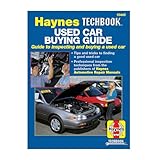
- Step-by-step procedures written from a complete teardown and rebuild, giving you the confidence to tackle repairs at any skill level.
- Over 700+ clear photos and diagrams that simplify complex systems, helping you complete jobs faster and with fewer mistakes.
- Comprehensive troubleshooting and fault-finding guides to quickly diagnose problems and reduce costly downtime.
Is the advertised car actually available?
A dealer must not advertise a vehicle that is no longer available merely to bring shoppers to the store and steer them to another car. If the advertised vehicle is in transit or at another location, the advertisement should identify that fact. A representative photograph is acceptable when it genuinely represents the vehicle and consumers can tell it is illustrative.
For a used or antique vehicle, buyers can reasonably expect the image to show the actual car because condition, mileage and equipment vary. Confirm the stock number, vehicle identification number, mileage and location before traveling, and ask the dealer to confirm in writing that the specific vehicle can still be purchased.
Warning signs of a bait-and-switch
- The salesperson says the advertised vehicle was sold before you arrived but cannot provide when it sold.
- The stock number or VIN in the advertisement does not match the car being shown.
- The dealer refuses to state whether the car is on-site, in transit or at another location.
- You are told the advertised price applies only if you buy a different vehicle, add products or accept unexplained financing conditions.
Is the FTC CARS Rule in effect?
No. The Fifth Circuit vacated the FTC’s CARS Rule on January 27, 2025, in National Automobile Dealers Association v. FTC. The court concluded that the FTC had not issued an advance notice of proposed rulemaking required by the agency’s own regulations. In 2026, the FTC formally withdrew the rule to conform to that decision. The court opinion is available at ca5.uscourts.gov/Opinions/pub/24/24-60013-CV0.pdf, and the withdrawal notice is at public-inspection.federalregister.gov/2026-02866.pdf.
Do not describe provisions of the vacated or withdrawn CARS Rule as current federal requirements. The current FTC position comes from the FTC Act and the agency’s September 2026 staff FAQ. The FAQ is not binding on the public or the Commission, but deceptive pricing can still violate the FTC Act.
Quick wins for a faster PC:
Clear out junk files and repair common Windows errorsFree Scan →Fix the driver behind crashes, sound loss and screen glitchesFind Drivers →Repair Windows errors before they cause bigger problemsFix Now →How to compare dealer offers before you sign
Compare offers using the same categories rather than the monthly payment alone. A low payment can reflect a longer term, a larger down payment or products added elsewhere in the paperwork.
Also popular on Amazon
| Comparison item | What to record | Why it matters |
|---|---|---|
| Actual pre-government-charge vehicle price | The price any consumer can obtain under the ad’s stated terms | Shows whether mandatory dealer charges were built into the advertised figure |
| Mandatory dealer fees | Documentation, processing, administrative and required-package charges | These are dealer-imposed amounts that should not appear for the first time in the contract |
| Rebates and discounts | Eligibility rules and the price without restricted incentives | Prevents a limited offer from being mistaken for the broadly available price |
| Financing condition | Lender, rate, term, required credit profile and any financing-only discount | Shows whether the displayed price depends on a particular financing route |
| Optional add-ons | Each product, price and your accept/decline decision | Confirms that you are not paying for an item you did not authorize |
| Vehicle availability | VIN or stock number, mileage, location and whether it is in transit | Confirms that the advertised car is the car you can actually buy |
| Lease upfront amount | Amount due at signing and any processing fee | The FTC FAQ says an advertisement about total upfront amount must include those upfront charges |
Federal leasing and credit-disclosure laws may impose additional requirements. Treat the table as a comparison checklist, not a substitute for reviewing the lease or credit documents.
Independent reader supportYour contribution helps us test, update, and keep practical guides available for everyone.What to do when the quote does not match the ad
- Pause the transaction. Do not sign or pay a deposit while a mandatory fee or condition remains unexplained.
- Show the saved advertisement. Identify the exact price, stock number, eligibility language and date.
- Request an itemized written quote. Ask the dealer to label government-required charges, dealer fees, optional products, taxes and registration separately.
- Ask for a correction or leave. A dealer may negotiate below the advertised amount, but it should not require an undisclosed dealer charge to obtain the advertised car.
- Preserve the record. Keep screenshots, texts, emails, call notes, the quote and every version of the contract.
If the dealer will not resolve the discrepancy, you can report suspected deceptive advertising to the FTC at ReportFraud.ftc.gov. Include the dealership’s name, location, vehicle information, the advertised price, the amount requested, dates and a concise description of what changed. The FTC specifically recommends noting available evidence, such as a saved advertisement or contract, in the report comments.
What the FTC’s 2026 enforcement example shows
In October 2026, the FTC announced a proposed settlement with Greenway Auto Group. The complaint alleged that the dealer charged, on average, more than $3,350 above the advertised price in over 92% of transactions, citing fees, packages and conditional discounts. Those figures are allegations in that case, not a national average or a court finding about dealers generally. The proposed order would require prominent actual prices and prohibit specified misrepresentations about charges and financing. The announcement is available at ftc.gov/news-events/news/press-releases/2026/10/ftc-secures-settlement-auto-dealership-group-price-transparency-win-consumers.
The FTC summarized its consumer-protection rationale in September 2026. Christopher Mufarrige, director of the FTC’s Bureau of Consumer Protection, said: “The FTC Act requires truthful and accurate pricing, which brings significant benefits for consumers and competition.” The statement appears in the FTC’s press release at ftc.gov/news-events/news/press-releases/2026/09/ftc-publishes-price-transparency-faqs-auto-dealers.
Questions buyers should be able to answer before signing
- What is the actual vehicle price before charges I must pay directly to the government?
- Which dealer fees are mandatory, and are they already included in the advertised number?
- Do I qualify for every rebate used to produce the displayed price?
- Is dealer financing, a particular lender or a specific credit profile required?
- Which add-ons did I expressly accept, and do they appear at the agreed prices?
- Does the VIN, mileage, equipment and location match the advertisement?
- For a lease, does the advertised upfront amount include every amount due at signing and the stated processing fee?
If any answer changes between the advertisement and the paperwork, treat the difference as a reason to stop and obtain a corrected written quote. State law may provide additional protections, so consult your state’s consumer-protection authority or a qualified lawyer for advice about a specific dispute.




