Some links on this page are affiliate links: if you buy through them we may earn a commission, at no extra cost to you.
Yes. You can run an electric car without a home charger by combining workplace charging, public Level 2 stations, DC fast chargers, apartment or condo equipment, and—in some cities—curbside chargers. The arrangement works best when the car regularly sits somewhere for several hours and you have reliable stations near your route. It becomes difficult when you depend on one busy charger, have no predictable parking, or need frequent long-distance travel.
Home charging is common—the U.S. Department of Energy said on November 8, 2024, that about 80% of charging happens at home—but that figure describes the overall charging network, not a requirement for ownership. Drivers without a driveway or garage can still charge successfully with a deliberate routine.
As an Amazon Associate I earn from qualifying purchases.
What changes when you do not charge at home?
Instead of plugging in whenever the car is parked overnight, you must attach charging to places you already visit. Your plan depends on four practical variables: where the car sits for long periods, how much range you use each day, which connector your vehicle accepts, and what local stations charge.
A driver with a workplace Level 2 station may rarely need a special charging stop. Someone who parks on the street and drives long distances may need a weekly DC fast-charge session plus backup stations. Neither pattern is automatically right or wrong; reliability matters more than owning a particular type of charger.
Popular on Amazon

- Never Let a Dead Battery Ruin Your Drive. The LISEN 4 in 1 Retractable Car Charger delivers reliable power for your entire journey. Compatible with standard 12V cigarette lighter sockets, it keeps phones, tablets, and devices charged during daily commutes, road trips, and long drives — the perfect practical gift for dads, truck drivers, and anyone who lives on the road.
- Daily Driver Essential: Always Ready When You Need It. Featuring two retractable cables ( USB C & Old iPhone Charging Cable ) that extend up to 31.5 inches and dual USB ports, this charger solves cable clutter while charging up to 4 devices simultaneously. Ideal for busy fathers, commuters, and families who want a tidy car and never worry about low battery again.
- Deliver full-speed PD fast charging for iPhone 18 Pro Max & iPhone 18 Pro Max & iPhone 18 Pro right inside your car. The built-in 45W PD USB-C port hits the peak charging speed for these latest iPhone models, juicing up your phone to 50% power in just 15 minutes while you drive.(Note: Maximum 45W PD output is available under 24V vehicle power supply. When used with standard 12V car sockets, the peak output is limited to 36W.)
- Standard 12V Power Solution: Designed as a dedicated USB power supply for charging devices. Note: Does NOT support CarPlay, Bluetooth, or data transfer. Compatible with most phones, tablets, and small electronics. This retractable charger is a core car organization tool, keeping your vehicle tidy. Not compatible with Micro-USB devices.
- Clutter-Free Tech Organization: Featuring dual USB ports and retractable cables, the LISEN 4 in 1 charger provides a clean car storage solution. Perfect for truck enthusiasts or as a thoughtful gift for drivers, it supports fast USB-C charging for devices like the iPhone 18Pro & iPhone 18 ProMax. Keep your vehicle organized while ensuring efficient power delivery for all your tech on the road.
Public charging can also require more planning than gasoline. A station may be occupied, offline, restricted to customers, closed outside business hours, or priced differently depending on time, energy, or membership. Treat charging access as part of your route and parking plan rather than assuming a connector will always be available.
Charging options when you have no driveway or garage
| Option | How it fits a routine | What to verify |
|---|---|---|
| Workplace charging | Plug in while the car is parked during a workday. An employer may provide an outlet or shared Level 2 equipment. | Employee eligibility, fees, reservation rules, maximum session length, and whether vehicles must move after charging. |
| Public Level 2 | Charge at shopping centers, hotels, airports, government offices, businesses, or other destinations where you already spend time. | Connector, station status, opening hours, parking limits, energy or time fees, and whether the space is reserved for customers. |
| Public DC fast charging | Add substantial range during a short stop in a city or on a highway corridor. | Your vehicle’s maximum DC rate, compatible plug, station power, price, payment method, and whether the site is dependable at your travel time. |
| Apartment or condo charging | Use existing shared equipment or seek permission to install equipment at an assigned space. | Building rules, electrical capacity, construction responsibility, billing, parking assignments, insurance, and local right-to-charge laws. |
| Municipal curbside charging | Charge near your home when the city provides equipment for residents who park on the street. | Permit or payment requirements, operating hours, time limits, winter or construction closures, and safe cable routing that does not obstruct pedestrians. |
The U.S. Department of Energy’s Alternative Fuels Data Center (AFDC) identifies these as practical alternatives to a private home installation. Availability is local: a solution that works in one neighborhood may not exist in another.
Do these 3 things before closing this tab:
1Repair Windows errors before they cause bigger problems2Scan for outdated or missing drivers - takes under a minute3Clear out junk files and repair common Windows errorsHow fast can each type charge?
Charging speed is expressed as range added over time, but the number on a station is not a promise. Battery size, state of charge, temperature, vehicle charge acceptance, and equipment power all change the result.
Also popular on Amazon

- ✅【Designed for Magsafe】 - The most fashionable iphone car mount in 2026 Magsafe is designed for iPhone 18 Pro Max/17/16/15/14/13/12 Pro Max Mini and official Magsafe cases and other magnetic phone cases and can be fixed directly to these phones without the need to affix metal plates. All Android Phones Will Work: Metal rings are provided; they fit cases and other phones without magsafe. Based on Unique Grandmaster Design (Protected by US Design Patent No. US D1,112,194 S)
- ✅【STRONG MAGNETIC MagSafe Car Mount】 - This powerful magnetic phone holder can create a powerful attraction that firmly supports your device while allowing you to drive without distraction. it easily and securely holds your phone through bumps, sharp turns or even sudden stops, no worrying of dropping your phone.
- ✅【SUPER STICK FORCE】 - VHB Dash Mounted Holders adhesive provides strong stick force between the dashboard and the car phone holder, which can firmly stick to any plane in the car, fix your device, adapt to a variety of road conditions such as sudden braking, speed bump, and rugged mountain road.
- ✅【SAFE DRIVING VIEW】 - Mini-size, not taking up space, it is placed in the dashboard without blocking the view at all, and does not need to look down at the device to ensure your safe driving. Cell Phone Car Mount is suitable for most cars, pickups, SUV, taxi; It is the best assistant for Uber and Lyft drivers
- ✅【360° FREE ROTATION】 - With an adjustable swivel ball joint, you can rotate your smartphone or device at your own will, providing the best viewing angle. Quickly pick and place with one hand, free your hands and make calls and GPS navigation more convenient
| Charging level | Approximate guidance | Best use without home charging |
|---|---|---|
| Level 1 | The DOE AFDC estimates roughly 2–5 miles of range per hour. EPA’s illustrative example is about 5 miles per hour. | An employer or building outlet when the car remains parked for many hours. It is usually too slow for a high-mileage daily routine unless the car is stationary most of the day. |
| Level 2 | The DOE AFDC estimates about 10–30 miles per hour. EPA uses about 25 miles per hour as an illustration. | Work, shopping, hotels, garages, and other destinations where you can leave the car for several hours. |
| DC fast charging | The DOE AFDC estimates 100–200-plus miles in 30 minutes. EPA’s illustration ranges from roughly 100 to 300-plus miles per 30 minutes. | Quick recovery during longer trips or when your routine does not provide enough Level 2 dwell time. Charging normally tapers as the battery approaches full. |
These are broad estimates from federal consumer guidance, not guaranteed performance. A vehicle that accepts less power than the charger supplies will charge at the vehicle’s limit. For many trips, stopping around 80% and continuing is faster than waiting for the final portion of the battery, provided the added range is sufficient.
Check connector compatibility before you depend on a station
Look up the exact charging ports listed for your model year and trim. EPA identifies CCS, CHAdeMO, and NACS among DC fast-charge formats; vehicles and networks may require different plugs or approved adapters. A station that appears nearby is useless if its connector cannot charge your car.
- Confirm whether the listing is Level 2 alternating-current charging or DC fast charging.
- Match the station’s connector to the vehicle port, including any adapter approval for your model.
- Check the station’s reported operating status shortly before arrival.
- Review access hours and whether the site is inside a paid garage or restricted lot.
- Note the network’s payment method: card terminal, phone app, account, subscription, or supported Plug and Charge.
DOE notes that networks can bill by session, elapsed time, or energy. A low advertised energy price may not represent the total if a site adds connection, parking, idle, or membership fees.
What’s actually slowing this PC down?
Pick the symptom - the matching free tool is one click away.
Also popular on Amazon

- High Quality Material: The coaster is made of environmentally friendly silicone, safe, non-toxic and odorless. Soft with toughness, easily embedded in the cup holder. Very durable, wear-resistant, long service life. High temperature resistance, can withstand 100 ℃ high temperature water cups.
- Wide Compatibility: The coaster has a diameter of 3.15 inches and a height of 1.18 inches, which is widely used in most vehicles, such as SUV, sedan, MPV, etc., as long as the size fits your car cup holder.
- Protection Function: Our car cup holder coaster has a carry handle design and a stand-up ring edge on its edge to effectively prevent food crumbs, drinks and water from leaking out and preventing the car cup holder from getting dirty.Meanwhile,Thickened design effectively prevents the cup holder from being scratched by the cup when driving on bumpy roads and eliminates the annoying thumping sound, making your journey more enjoyable.
- Easy to Use and Clean: With embedded installation, you just need to put it flat on the car cupholder. It is also very quick to remove, there is a small bump on the coaster, pinch it and you can easily remove the coaster. It is very easy to clean, rinse with water or wipe with a wet towel (be careful not to clean with sharp tools).
- 100% Satisfaction: Our products have quality assurance, if you have questions or are not satisfied after receiving the product, don't worry, please contact us as soon as possible, we provide after-sales service.
How to build a repeatable charging plan
- Map your parking time. List places where the car already sits for two or more hours: work, a regular shopping trip, a gym, school, a hotel, a municipal garage, or an assigned apartment space.
- Measure your actual driving. Use your normal daily distance and the car’s real-world energy use shown by its trip computer. Leave a reserve for weather, traffic, detours, and unavailable stations.
- Find primary and backup stations. Use the DOE AFDC Station Locator or your vehicle/network app. Check connector, power, price, operating status, parking rules, and recent availability. For an important trip, DOE advises planning ahead and calling the location to confirm that equipment is operating and accessible.
- Match dwell time to charging level. Choose Level 2 when the car will sit for work or an extended errand. Choose DC fast charging when you need range quickly or are traveling beyond your normal routine.
- Set a calendar habit. A commuter might plug in at work on specific days; a street parker might use a fast charger once a week after a grocery trip. The best schedule is one you can repeat without an emergency stop.
- Keep a fallback. Know a second station on the route and the distance to it. Do not arrive at a nearly empty battery with only one unverified charger available.
What if you rent your home or live in an apartment or condo?
Start with the property manager, landlord, homeowners’ association, or parking operator. Ask whether shared chargers already exist, whether a dedicated space can be assigned, who pays for electrical work, how electricity is metered, and what happens when another resident needs the space.
EPA consumer guidance notes that some states have right-to-charge laws that may apply to residents with designated parking spaces. Those laws differ in coverage, fees, approvals, and technical conditions, so verify the rule for your state and building rather than assuming an automatic entitlement. A landlord may also need to approve wiring, insurance, trenching, or changes to a common electrical panel.
If installation is possible later, EPA gives an estimate of $400–$1,000 for Level 2 equipment and $300–$2,000 for installation. Those figures vary with the home’s electrical setup and any required upgrades; they are not public-charging prices and do not solve access when you cannot use the installation location.
Also popular on Amazon
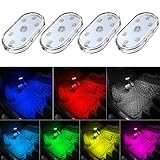
- 7 Colors Car Light: The led interior car lights are built-in 6 RGB LED lamp beads, which can be changed 7 different colors by touching, such as white, red, green, blue, yellow, pink purple, ice blue. The colors are bright and vivid, but not dazzling.Attention: Please charge before use.
- Touch Switch Design: Our led lights for car interior features touch control, one-key perspective lighting. Long touch to turn on/off, touch once to change the colors.
- Easy to Use: Stick the the iron plate in one place with double-sided tape, then put the light on it to complete the installation and fixation. Due to magnetic design, quickly install and remove, you also can attach the interior car lights to other metals.
- Portable & USB Rechargeable: Compact size, easy to carry, does not take up space. The wireless car led lights interior is charged by the USB cable, only need takes 40 minutes to fully charge the lights at a time, and keep lighting for about 2 hours.
- Wide Application: LED touch lights can be installed in dark places, such as storage boxes, armrest boxes, seat corners, etc. It's also suitable for bedside lights, wardrobe lights, reading lights, backpack lights, place it anywhere in the room, any dark place can be illuminated by it.
Can street parkers use curbside charging?
Some municipalities install curbside chargers specifically for residents without private parking. Programs are not universal and may have permits, time limits, paid parking, or neighborhood eligibility rules. Check the city transportation or parking department’s current program information.
Never run a cable across a sidewalk or other pedestrian path in a way that creates a trip hazard. If the city has not designed a safe connection for street parking, use a public site, workplace, or building arrangement instead of improvising.
Independent reader supportYour contribution helps us test, update, and keep practical guides available for everyone.How much does charging away from home cost?
There is no national public-charging price that applies to every driver. Location, network, charger type, membership, parking, and billing method all affect the total. DOE says public charging can cost more than household electricity, especially for DC fast charging. EPA says workplace or home Level 1 and Level 2 charging is generally cheaper than DC fast charging when it is available.
Also popular on Amazon

- Creative DIY Mode: Choose from 16 million available colors or customize car led light effects to your liking in DIY mode via Govee Home app. Make your car stand out in unique style with creative freedom and outdoor decorations.
- Dynamic Music Mode: Built-in mic helps interior car lights sync with any music type. Liven up your road trips, weekend getaways or evening commute with colors that dance vibrantly to your favorite songs.
- Smart App Control: Manage the colors and brightness of car lights or choose music mode by one simple tap with Govee Home app. Enjoy a comfortable and vibrant driving experience with convenient control.
- 2 Lines Design: 2 lines design connect the 4 car led strip lights, attaching the inside car lights easily to any car model without worrying about exposed wiring or an untidy look.
- Simple Installation: Before you install, make sure the installation surface is clean and dry. Then attach the led lights for car to your vehicle with adhesive and support clips. Rubber tubing outside protects lights from water spills.
| Cost item | Why it matters | How to compare it |
|---|---|---|
| Energy charge | Some stations bill per kilowatt-hour; others use time or a session fee. | Calculate the full session cost, not just the displayed energy rate. |
| Parking charge | A charger in a garage, airport, or downtown lot may add normal parking fees. | Include parking in the cost of obtaining the range. |
| Idle or overstay fee | A network may charge after the car finishes or after a time limit. | Read the station’s rules and move the vehicle promptly. |
| Membership or subscription | A plan may reduce charging prices but can add a recurring fee. | Compare the monthly total with pay-as-you-go pricing for your actual use. |
Compare local charging prices with your household electricity and gasoline alternatives. Because rates vary by network and location, a plan that is economical for a high-mileage driver may not help someone who charges only occasionally.
When does a no-home-charging setup work well?
Low or moderate daily mileage
If you drive a modest distance and have dependable Level 2 access at work or a regular destination, several hours of parked charging can replace overnight charging. You may only need a fast charger for unusual trips.
PC Slower Than It Used to Be?
A free scan shows the junk files, broken settings and background clutter dragging Windows down - then fixes them in one click.Free scan · Windows 10 & 11Crashes, No Sound, or Screen Glitches?
Random freezes, missing sound and display glitches usually trace back to one bad driver. Find and replace yours safely.Free scan · under a minuteLong commute with workplace charging
A long commute can still be manageable when the employer offers enough connectors and a fair turnover policy. Confirm that employees can use the equipment every day; a few chargers shared by many drivers may not provide dependable access.
Frequent highway travel
Drivers who regularly travel beyond the battery’s comfortable reserve should identify fast-charge corridors and backups before leaving. Expect higher costs than home charging and slower charging near a full battery.
No predictable destination charging
If you park on the street, work from different locations, and cannot use a curbside or building charger, ownership is still possible but more dependent on public fast chargers. In that case, station density, reliability, and your tolerance for dedicated charging stops become decisive.
Common failure points and fixes
- The station is occupied: Use a mapped backup rather than waiting with a low battery. If your area is consistently full, shift charging to a different time or destination.
- The connector does not fit: Confirm the vehicle port and station plug before driving there. Do not assume an adapter is approved or available.
- The charger is offline: Check live status immediately before departure and call the location for an important journey.
- The session will not start: Try the station’s required app, card terminal, account, or Plug and Charge method; some sites require registration or have poor cellular coverage.
- Charging is slower than expected: The car, battery temperature, state of charge, or station power may be limiting speed. A higher-rated station cannot exceed the vehicle’s accepted rate.
- The bill is higher than expected: Look for time, session, parking, idle, or subscription charges and compare the complete receipt with alternatives.
- You need to leave before charging is complete: Take the range you need and continue. DC charging commonly tapers near a full battery, so waiting for 100% may add disproportionate time.
Decision checklist before buying an EV without home charging
- Can you identify at least one dependable charging location where the car already spends several hours?
- Is there a second station within practical range if the first is occupied or broken?
- Does your vehicle’s connector match the stations you expect to use?
- Do you understand the payment method, parking restrictions, and complete fee structure?
- Can your weekly routine accommodate occasional DC fast-charging stops?
- If you rent or live in a shared building, have management and local rules been checked?
- Can you maintain a safe reserve for weather, traffic, and detours?
If the answers are mostly yes, home charging is not required. If every charging session would be an unscheduled fast-charge stop with no backup, the car may be inconvenient even though technically usable.
Quick wins for a faster PC:
Fix the driver behind crashes, sound loss and screen glitchesFind Drivers →Repair Windows errors before they cause bigger problemsFix Now →Scan for outdated or missing drivers - takes under a minuteDriver Scan →



