Recommended Free Tools
Some links on this page are affiliate links: if you buy through them we may earn a commission, at no extra cost to you.
The Buick Skylark is not one continuous model line. Buick used the name for a limited-production 1950s convertible, revived it on a compact Special, dropped it in 1973 and 1974, then applied it to several very different rear- and front-wheel-drive cars through 1998.
That history creates two recurring problems: generation counts vary, and a valuable GS or GS 455 is often confused with an ordinary Skylark. The six-generation collector-car classification begins with the 1964 model and ends in 1998. This guide follows that convention while separately covering the 1953–1954 Anniversary Skylark and the 1961–1963 Special Skylark.


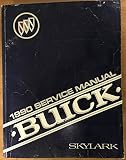
As an Amazon Associate I earn from qualifying purchases.
Buick Skylark generations at a glance
| Production years | Type and platform | Drive layout | Important versions |
|---|---|---|---|
| 1953–1954 | Limited-production full-size convertible | Rear-wheel drive | Anniversary Skylark |
| 1961–1963 | Compact Special-based model | Rear-wheel drive | Special Skylark, aluminum 215 V-8 |
| 1964–1967 | Intermediate A-body | Rear-wheel drive | Skylark, Gran Sport, GS 340, GS 400 |
| 1968–1972 | Intermediate A-body redesign | Rear-wheel drive | Skylark Custom, Skylark 350, GS 350/400/455 |
| 1973–1974 | No Skylark model | — | Buick used other intermediate nameplates |
| 1975–1979 | Compact X-body | Rear-wheel drive | Base, S, S/R |
| 1980–1985 | Compact X-body redesign | Front-wheel drive | Base, Sport, Limited, Custom, T-Type |
| 1986–1991 | N-body compact | Front-wheel drive | Somerset Regal, Skylark, T-Type, S/E, Gran Sport |
| 1992–1998 | Restyled N-body | Front-wheel drive | Custom, Limited, Gran Sport, LE |
Classic.com’s market taxonomy counts six generations from 1964 through 1998. Some historical references count the 1961–1963 Special Skylark as the first generation, which shifts every later number. When buying parts or researching a car, use the model year and platform—not just “first-generation” or “second-generation.”
1953–1954: the Anniversary Skylark
The original Skylark was a special-edition convertible built for Buick’s 50th anniversary. It was based on the premium Roadmaster chassis and used Buick’s new 322-cubic-inch V-8. This was an expensive, highly equipped automobile rather than a mass-market model.
Popular on Amazon
| Model year | Body style | Engine | Advertised output | Production information |
|---|---|---|---|---|
| 1953 | Convertible | 322-cu-in V-8 | 188 hp | 1,640 cars |
| 1954 | Convertible | 322-cu-in V-8 | Verify from factory documentation | Do not combine with 1953 production |
The 1953 car carried a $4,596 base price and distinctive Kelsey-Hayes 40-spoke chrome wheels. Its rarity and anniversary-specific equipment make it a collector car in a completely different market from a 1960s Skylark coupe.
Value
There is no useful single “1953–1954 Skylark average.” Originality, restoration quality, provenance, correct trim, and the presence of hard-to-replace model-specific parts have a major effect on price. Use recent auction results for the exact year and condition rather than prices for later Skylarks.
1961–1963: Buick Special Skylark
Buick brought the name back for 1961 on its compact Special line. These cars are best described as Special Skylarks, because many collector references reserve the first numbered Skylark generation for 1964.
The compact Skylark could use Buick’s lightweight 215-cu-in aluminum V-8 or a Buick compact V-6, depending on model year and configuration. The 1961 V-8 used a four-barrel carburetor and was rated at 185 hp. The V-6 was offered in 198- and 225-cu-in forms during this period.
A common mistake is to assume that every 1961–1963 Skylark has a V-8. Buyers should verify the engine rather than relying on the nameplate or an old advertisement. The aluminum 215 later became the basis for the Rover V-8, but a Rover engine swap does not automatically make a car factory-correct.
Generation 1: 1964–1967
Platform and body styles
The 1964 Skylark moved with the Special to GM’s new intermediate A-body platform, using a 115-inch wheelbase. Depending on the year, buyers could choose a two-door convertible, sport coupe or hardtop, four-door sedan, four-door hardtop, and—beginning in 1965—a two-door sedan.
Quick wins for a faster PC:
Fix the driver behind crashes, sound loss and screen glitchesFind Drivers →Repair Windows errors before they cause bigger problemsFix Now →The 1964 convertible came with standard bucket seats. Bucket seats were optional in the hardtop, an important detail when inspecting a claimed performance or luxury configuration.
Engines and output
| Years | Engine | Application or note |
|---|---|---|
| 1964–1967 | 225-cu-in V-6 | Standard engine in the regular Skylark range |
| 1964–1967 | 300-cu-in V-8 | Optional; the 1964 two-barrel example was rated at 210 hp |
| 1965–1966 | 401-cu-in V-8 | Gran Sport engine, rated at 325 hp |
| 1967 | 340-cu-in V-8 | GS 340, rated at 260 hp |
| 1967 | 400-cu-in V-8 | GS 400, rated at 340 hp |
Gran Sport and GS models
The 1965 Gran Sport began as a Skylark-based performance package. It used Buick’s 401-cu-in “nailhead” V-8, not the later 400-cu-in engine. Bucket seats, a center console, and an available four-speed manual helped distinguish the package.
Also popular on Amazon
For 1967, Buick divided the performance range into the GS 340 and GS 400. The GS 340 was limited to a two-door hardtop. The GS 400 was available as a two-door pillared coupe, hardtop, or convertible. Its new 400-cu-in Buick V-8 produced 340 hp and 440 lb-ft of torque. This engine was different from both the earlier 401 nailhead and Chevrolet’s small-block 400.
1967 GS 400 value
| Condition | Hagerty valuation |
|---|---|
| Concours | $55,400 |
| Excellent | $40,600 |
| Good | $25,100 |
| Fair | $13,200 |
These figures are for the specified 1967 GS 400 two-door sport coupe. Hagerty’s tracked data also shows sales ranging from $9,625 to $313,500, with a most recent recorded sale of $75,900 in the cited report. The spread demonstrates why documentation, condition, and exact configuration matter more than the word “Skylark” on the title.
Generation 2: 1968–1972
Model hierarchy
The 1968 redesign rearranged Buick’s intermediate lineup. The regular range included the base Skylark, better-equipped Skylark Custom, and V-8-focused Skylark 350. Gran Sport models were separate series rather than simply an engine option on an ordinary Skylark.
Depending on year and trim, body styles included two-door hardtops, two-door pillared coupes, convertibles, four-door sedans, four-door hardtops, and Sport Wagon variants.
Regular Skylark engines
- The 250-cu-in inline-six was standard on the 1970 base Skylark.
- The Buick 350 V-8 was optional on regular Skylarks.
- The Buick 350 was standard in the Skylark 350.
Buick’s 350 is not Chevrolet’s 350. The two engines have different dimensions, architecture, distributor location, oil-pump design, and valvetrain details. Parts advertised merely as “350 Chevy” should not be assumed to fit a Buick 350.
Gran Sport engines
| Model | Engine | Significance |
|---|---|---|
| GS 350 | 350-cu-in V-8 | Hagerty lists a 1968 version at 280 hp |
| GS 400 | 400-cu-in V-8 | 1968 version listed at 340 hp |
| GS 455 | 455-cu-in V-8 | The major big-block performance version, especially from 1970–1972 |
| Stage 1 | High-performance engine package | Highly desirable and documentation-sensitive |
| Stage 2 | Rarer competition-oriented specification | Verify factory identity carefully |
For reference, the 1969 GS 400 Stage 1 was rated at 345 hp and 440 lb-ft of torque. A 1970 GS 455 convertible is much more valuable than an ordinary Skylark and should never be used as a price proxy for the whole generation.
Do these 3 things before closing this tab:
1Clear out junk files and repair common Windows errors2Fix the driver behind crashes, sound loss and screen glitches3Repair Windows errors before they cause bigger problems1970 GS 455 convertible values
| Condition | Hagerty valuation |
|---|---|
| Concours | $107,000 |
| Excellent | $75,500 |
| Good | $44,900 |
| Fair | $28,200 |
Classic.com’s recorded Skylark sale high is $67,666 for a 1972 Skylark Sun Coupe on February 8, 2022. That is a historical transaction, not a current appraisal for every Sun Coupe.
1973–1974: no Skylark
Buick did not sell a Skylark for the 1973 or 1974 model years. The intermediate Buick range used other nameplates before the Skylark returned for 1975 on a different compact X-body platform. A listing that describes a 1973 or 1974 car as a factory Skylark deserves careful scrutiny; it may be a registration error, a misidentified model, or a later conversion.
Also popular on Amazon
Generation 3: 1975–1979
Rear-wheel-drive X-body
The 1975 Skylark was a smaller rear-wheel-drive X-body car. Buick retained the Apollo name for four-door models in 1975, while two-door coupes and hatchbacks were sold as Skylarks. Over the following years, more of the body-style range consolidated under the Skylark name.
Trims and engines
Documented trims included Base, S, and S/R, meaning Sports/Rallye. The S was a lightly equipped, lower-priced model; the S/R added a sportier and more upscale presentation.
| Engine | Availability and output |
|---|---|
| 231-cu-in/3.8-liter Buick V-6 | Central to the range; a 1975 example was rated at 110 hp |
| 260-cu-in V-8 | Available in 1975–1976 applications |
| 350-cu-in V-8 | Available in 1975–1977 applications |
Availability changed by year and body style. Do not assume every 1975–1979 Skylark has the 231 V-6, or that every one could be ordered with the 350 V-8. These cars generally sell for less than 1960s muscle-era Skylarks. Rust, originality, body style, and the actual engine and transmission combination usually matter more than the trim badge.
Generation 4: 1980–1985
The front-wheel-drive break
For 1980, the Skylark changed from a rear-wheel-drive compact to a front-wheel-drive X-body car with a transverse engine, MacPherson-strut front suspension, and two- or four-door body styles. It shared basic architecture with the Chevrolet Citation, Pontiac Phoenix, and Oldsmobile Omega.
| Years | Engine | Output or change |
|---|---|---|
| 1980–1985 | 2.5-liter Iron Duke four-cylinder | 90 hp in 1980 |
| 1980–1985 | 2.8-liter V-6 | 115 hp in 1980 |
| 1982–1985 | 2.8-liter high-output V-6 | 135 hp |
| 1982 onward | 2.5-liter four-cylinder with TBI | Fuel-injection update |
The 1980 model used a four-speed manual overdrive transaxle as standard, with a three-speed automatic available.
Trims
- Base, Sport, and Limited were early-generation designations.
- Custom replaced Base in 1983.
- T-Type replaced Sport in 1983.
The 1983-and-later T-Type was a two-door model with the 135-hp high-output 2.8-liter V-6 as standard.
Windows Errors? Fix Them Before They Spread
Repair common Windows errors and clear accumulated junk for a smoother, more stable PC - no reinstall needed.Free scan · no reinstallOutdated Drivers Are Slowing You Down
One free scan finds every outdated or missing driver and matches the right update for your exact hardware.Free scan · exact hardware match1980 braking concern
Reports of rear-wheel lockup during emergency braking specifically affected 1980 X-body cars. Do not automatically apply that issue to every 1980–1985 Skylark. On a 1980 car, inspect the braking system, confirm that updates or repairs were completed, and have the vehicle professionally road-tested.
There was another important 1985 change: the Skylark was sold only as a four-door sedan in Custom or Limited trim. The two-door model moved to the N-body platform and was sold as the Buick Somerset Regal.
Also popular on Amazon
Generation 5: 1986–1991
The 1986 Skylark sedan moved to GM’s N-body platform, shared with the Oldsmobile Cutlass Calais and Pontiac Grand Am. The coupe initially used the Somerset Regal name, but Buick brought the Skylark badge back to both body styles in 1988.
| Engine | Years and output |
|---|---|
| 2.5-liter Iron Duke four-cylinder | Early applications |
| 2.3-liter Quad 4 four-cylinder | Introduced in 1988; 150 hp |
| 3.0-liter Buick V-6 | 125 hp |
| 3.3-liter Buick V-6 | Introduced in 1989; 160 hp |
Five-speed manuals were available with four-cylinder powertrains. Early V-6 cars used a three-speed automatic. Engine, transmission, and package availability varied, so decode the vehicle identification number and inspect the actual powertrain before buying.
What’s actually slowing this PC down?
Pick the symptom - the matching free tool is one click away.
Trim timeline
| Year | Relevant designations |
|---|---|
| 1986–1987 | Custom and Limited sedans; Somerset coupe |
| 1987 | T-Type available on the four-door with the 3.0-liter V-6 |
| 1988 | Somerset name dropped; both body styles used Skylark badging; S/E replaced T-Type |
| 1989 | LE luxury package added |
| 1990 | Base model added; Custom moved upward; Gran Sport returned as a two-door |
| 1991 | Mostly carried over from 1990 |
A 1987 T-Type, 1988 S/E, 1989 LE, and 1990 Gran Sport are not interchangeable descriptions. They represent different model-year packages and equipment levels.
Generation 6: 1992–1998
The final Skylark generation was a restyled N-body compact sold as a coupe and sedan. Trim and package names included Custom, Limited, Gran Sport, LE/Luxury Edition, and later base versions. The 1992 range included both Custom and Gran Sport applications in coupe and sedan form.
Engines
- 2.3-liter Quad 4: approximately 120 hp in early base applications, with output and calibration changes by year.
- 3.3-liter V-6: used in Gran Sport and other higher-output applications.
- 3.1-liter V-6: replaced the 3.3-liter in later 1990s applications.
Do not describe the entire 1992–1998 range using only the 1992 engine lineup. A specific year, trim, body style, and transmission are needed to identify the car accurately.
Production ended after the 1998 model year. Buick’s later compact and midsize range moved toward other nameplates, including the Century.
Buick Skylark value guide
Skylark value is driven first by identity. A documented GS 400, GS 455, Stage 1, or factory GSX is not comparable with a base six-cylinder Skylark wearing reproduction badges. Before looking at a price guide, record the following:
- Model year and body style.
- Regular Skylark, Custom, GS, GS 340, GS 400, GS 455, Gran Sport, or other exact series.
- Original engine, transmission, and rear axle where documentation is available.
- Factory options, build sheet, protect-o-plate, invoices, and restoration records.
- Rust condition, panel quality, interior originality, and mechanical completeness.
Configuration-specific market references
| Vehicle | Concours | Excellent | Good | Fair |
|---|---|---|---|---|
| 1964 Skylark convertible, 300 V-8 | $43,500 | $31,000 | $18,700 | $10,300 |
| 1967 standard Skylark sport coupe, 300 V-8 | $26,800 | $17,200 | $11,600 | $5,900 |
| 1967 GS 400 sport coupe | $55,400 | $40,600 | $25,100 | $13,200 |
| 1970 GS 455 convertible | $107,000 | $75,500 | $44,900 | $28,200 |
The cited Hagerty figures are informational valuation estimates, not guaranteed insurance payouts. They also apply only to the configurations named in the table. A standard 1967 Skylark cannot be valued from the GS 400 row, and a standard 1970 Skylark cannot be valued from the GS 455 convertible row.
Also popular on Amazon

- Hundreds of photographs
- Step-by-step instructions
- Written from actual experience
1990s Skylarks
Later Skylarks are generally treated as inexpensive older used cars rather than traditional muscle-car collectibles. Edmunds’ current appraisal data for a 1995 Skylark shows private-party estimates of approximately $2,365 to $4,433, depending on trim and condition. Classic.com records a $1,500 sale for a 1995 Skylark on March 14, 2024, and reported no active listings for that generation in the cited market snapshot.
For a 1975–1991 car, sparse sales data makes a generation-wide average especially unreliable. Compare cars with the same body style, drivetrain, condition, and level of originality.
The Tool Desk
Outbyte Driver Updater FREEScan for outdated or missing drivers - takes under a minuteDriver Scan →Outbyte PC Repair FREERepair Windows errors before they cause bigger problemsFix Now →Buying checklist: what to verify
- Confirm the year. Check the VIN, title, cowl tag, and body features. The 1973–1974 gap makes casual model-year claims particularly suspect.
- Separate Skylark from GS. Look for factory documentation rather than trusting hood stripes, badges, wheels, or a seller’s description.
- Identify the engine. A 1965–1966 Gran Sport’s 401 is not the same as a 1967 GS 400’s 400. A Buick 350 is not a Chevrolet 350.
- Inspect structural rust. Check floors, rocker panels, frame sections, body mounts, wheel arches, trunk areas, and windshield surrounds.
- Check drivetrain originality. Engine swaps can improve usability but usually reduce the value of a numbers-matching or documented performance car.
- Inspect the transmission and suspension. Verify manual-transmission identity, automatic operation, steering play, bushings, ball joints, and brake performance.
- Test electrical equipment. Aging wiring, gauges, power accessories, lighting, and climate controls can be expensive to diagnose.
- Price the exact car. Use recent comparable sales for the same series and body style, then adjust for rust, restoration quality, documentation, and modifications.
Claims that need correction
| Claim | What is correct |
|---|---|
| “The Skylark ran continuously from 1953 to 1998.” | There were production gaps, including 1955–1960 and 1973–1974. |
| “The first generation was 1961.” | Terminology varies; 1961–1963 cars are Special Skylarks, while the common six-generation count starts in 1964. |
| “Every 1965–1966 GS had a 400.” | Those Gran Sports used the 401 nailhead; the Buick 400 arrived with the 1967 GS 400. |
| “The GS 400 was always just a Skylark trim.” | It became a separate series in 1967, although the 1968 GS was based on the Skylark Custom body. |
| “All 1975–1979 Skylarks had the same engine.” | The range included the 231 V-6 and, in selected years and applications, 260- and 350-cu-in V-8s. |
| “The 1980–1985 Skylark was rear-wheel drive.” | The 1980 redesign introduced transverse-engine front-wheel drive. |
| “A GSX tribute is a factory GSX.” | A tribute or clone requires separate valuation from a documented factory car. |
FAQ
How many generations of Buick Skylark are there?
The commonly used collector-car classification counts six generations from 1964 through 1998. The 1961–1963 Special Skylark is often treated separately, and the 1953–1954 Anniversary Skylark predates that system.
What years did Buick not make the Skylark?
The name was absent from 1955 through 1960 and again for the 1973 and 1974 model years. Buick used other nameplates during those gaps.
What engine did the 1965 Buick Skylark Gran Sport use?
The 1965 Gran Sport used Buick’s 401-cu-in nailhead V-8, advertised at 325 hp. The 400-cu-in engine arrived for the 1967 GS 400.
Is a Buick 350 the same as a Chevrolet 350?
No. Buick’s 350 is a separate engine design with different dimensions, architecture, distributor placement, oil-pump arrangement, and valvetrain components.
Free tools Windows power users keep installed
One-click scans. No signup required.
When did the Buick Skylark become front-wheel drive?
The 1980 redesign changed the Skylark to a front-wheel-drive X-body car with a transverse engine. The 1975–1979 Skylark was rear-wheel drive.
What is the most valuable Buick Skylark?
Rare, documented performance cars—particularly GS 400, GS 455, Stage 1, and factory GSX examples—are generally the most valuable. The exact price depends on originality, documentation, condition, and body style.
Are 1990s Buick Skylarks collectible?
Most trade as inexpensive older used cars rather than high-dollar collector cars. Exceptional originality, unusually low mileage, or a desirable configuration can improve demand, but condition and maintenance history remain critical.
The Bottom Line
The right way to identify a Buick Skylark is by year, platform, body style, series, engine, and documentation. A 1953 Anniversary convertible, a 1967 GS 400, a 1976 rear-drive S/R, and a 1995 front-drive sedan share a name but not a market, mechanical layout, or collector profile. Verify the car’s identity before comparing specifications or prices, and never use a high-value GS or GS 455 sale as the value of an ordinary Skylark.
What’s actually slowing this PC down?
Pick the symptom - the matching free tool is one click away.




