Recommended Free Tools
Some links on this page are affiliate links: if you buy through them we may earn a commission, at no extra cost to you.
Bonneville Salt Flats is the historic home of organized land-speed racing; Black Rock Desert is the site identified by the FIA for the current outright world land-speed record. Those facts do not make one venue universally “better.” A salt-flat class record, a playa attempt for an outright record and a timed endurance record on a closed circuit are different competitions with different surfaces, layouts and rules.
The useful comparison is therefore practical: what each course is made of, how much usable space and consistency it offers, which record category it serves, how its history affects its significance, and whether a team or spectator can actually access it. On those measures, Bonneville remains the best-known venue for recurring class racing, while Black Rock represents the long, straight playa associated with the highest outright speeds.

As an Amazon Associate I earn from qualifying purchases.
Quick wins for a faster PC:
Fix the driver behind crashes, sound loss and screen glitchesFind Drivers →Repair Windows errors before they cause bigger problemsFix Now →What counts as a land-speed-record course?
The phrase covers several kinds of venue. The Fédération Internationale de l’Automobile (FIA) distinguishes straight-line attempts on playa, salt or tarmac from time- or distance-based endurance records held on closed circuits. A result from one category should not be treated as a direct performance ranking against a result from another.
A straight-line attempt normally depends on a measured course, a defined vehicle class and a sanctioning body’s rules for timing, inspection and verification. Bonneville events commonly require a qualifying run followed by a return run, so the result is not simply the fastest number seen on one pass. Closed-circuit endurance records answer a different question: how far or how fast a vehicle can run over a specified period or distance while remaining on a prepared circuit.
Popular on Amazon

- Country Of Origin : China
- The Package Height Of The Product Is 3.7 Inches
- The Package Length Of The Product Is 13.5 Inches
- The Package Width Of The Product Is 8.4 Inches
- Great for sports, sightseeing, nature study, backpacking, theater or concerts
That distinction explains why a meaningful comparison uses several tests rather than one leaderboard:
- Surface: evaporated salt crust, natural playa, prepared tarmac or another material.
- Usable configuration: a straight course, a return course, multiple event tracks or a circuit.
- Record category: outright world record, class record, national record, motorcycle record or endurance record.
- History: the venue’s role in the development of land-speed racing.
- Operations: weather, closures, permits, inspections and event access.
Bonneville Salt Flats vs. Black Rock Desert at a glance
| Venue | Surface and setting | Documented significance | Operational reality |
|---|---|---|---|
| Bonneville Salt Flats, Utah | Natural salt-crust landscape in the western Great Salt Lake Desert; more than 30,000 acres, about 12 miles long and 5 miles wide (just over 46 square miles). | Racing dates to 1914; the Bureau of Land Management (BLM) says it was the standard course for world land-speed records by 1949 and remains a major class-racing venue. | Salt thickness and firmness change with winter flooding and summer evaporation. Wet-surface closures, permitted events and restricted areas can change access. |
| Black Rock Desert, Nevada | Natural playa used for long straight-line attempts. A comparable current course-size or condition dataset is not established here. | The FIA identifies Black Rock Desert as the site of the current outright world land-speed record. Save the Salt’s historical timeline records a 633 mph Thrust II run there in 1979. | Use current FIA information for the homologated record and event-specific authorities for access; the 1979 figure is a historical account, not a current record listing. |
| Other venue types | The FIA’s categories include other playa, salt and tarmac courses, plus closed circuits for endurance records. | Examples such as Lake Gairdner, Pendine Sands and Lake Eyre illustrate different natural settings, but equivalent current measurements were not established for a quantitative ranking. | Conditions, available length, permits and rules must be checked with the authority running the particular event. |
Bonneville’s surface, scale and racing history
A natural salt landscape, not a permanent racetrack
The BLM manages more than 30,000 acres of Bonneville Salt Flats. Its venue description gives a footprint of about 12 miles from end to end and 5 miles across, or just over 46 square miles. Interstate 80 crosses the flats: motorsport tracks and sightseeing areas are north of the highway, while potash operations occupy the south side.
The white surface is a natural evaporative salt crust. The Utah Geological Survey explains that winter flooding can dissolve the crust; as temperatures rise, water vaporizes and salt re-precipitates. That cycle means the apparent hardness and usable racing area are not fixed from one season to the next.
The surrounding light-brown mud is a particular hazard. The Geological Survey warns that soft wet mud can lie beneath or beside the white crust, so a vehicle that appears to be on solid ground can become stuck. The practical rule is to remain on clean, white salt and avoid driving onto discolored or wet areas.
Why Bonneville became famous
The BLM records an unofficial 141.73 mph run by Teddy Tezlaff in 1914. By 1949, the agency says, the Bonneville raceway had become the standard course for world land-speed records. Its historical account also describes milestones in which barriers above 400 mph and later below 600 mph were broken there; those are historical milestones, not a statement of today’s outright record.
Also popular on Amazon
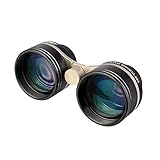
- FMC coating; SV407 super wide binocular is the real FMC objective lens; the center is clean and sharp; you can observe entire constellations and star fields and the stars are brighter and clearer more than just with the naked eye
- Wide angle; a 26-degree view of the field is like walking in space; looking through SV407 binoculars shows you complete constellations with a 26°field of view; you can observe not just the main stars in a constellation but many you have probably never even seen before
- The long depth of field design; it almost seems as if you are standing on a very high mountain in absolute darkness; from the recent focus distance to infinity; no need to twist the eyepiece frame to focus and operation portable
- With a magnification of 2.1 times; you are seeing objects about twice as large as with the naked eye; the lenses used ensure that a large amount of light enters the eyes; it is also very suitable for watching dramas in small and medium theaters; art appreciation; exhibition halls
- Finely crafted; fine workmanship; exquisite appearance; easy to carry; the objective lens has a standard 2-inch filter thread; which works better with a light-astronomical astronomical filter
A 1947 official program statement reproduced in Save the Salt’s historical timeline captured the period’s view of the venue: “The salt is like concrete. Bonneville is the world’s finest race course for several reasons. Its extreme hardness gives speeding cars maximum traction…” The quotation reflects the conditions and promotional language of that era. Modern users must account for seasonal moisture, erosion and event closures rather than assuming every visit offers the same surface.
Free tools Windows power users keep installed
One-click scans. No signup required.
Why Black Rock matters for outright speed
The FIA’s land-speed information identifies Nevada’s Black Rock Desert as the site of the current outright world land-speed record. The available material does not establish the current holder, exact speed, date or vehicle, so those details should be taken from the FIA’s current homologated record list rather than inferred from older accounts.
For historical context, Save the Salt’s timeline says Richard Noble moved the Thrust II program from Bonneville to Black Rock in 1979 because Bonneville’s international speedway had become too short. The timeline records a 633 mph Thrust II result at Black Rock. That is an important historical transition: a team seeking more room for an extreme-speed run selected a different natural playa. It is not evidence that every Black Rock event is faster, safer or more suitable than every Bonneville event.
The comparison is best stated narrowly. Black Rock is the documented setting for the current outright record; Bonneville is the established venue where generations of racers continue to pursue sanctioned class records and organized events. Neither fact erases the other.
How the courses differ in the ways that affect a run
Surface and variability
Bonneville’s surface is documented as an evaporative salt crust whose condition responds to flooding, evaporation and standing water. That gives the venue its distinctive low-friction and high-traction characteristics when the crust is firm, but it also creates a seasonal operating limit. The BLM states that motor-vehicle use is limited by seasonal closure in spring when the salt is moist or has standing water.
The Tool Desk
Outbyte PC Repair FREERepair Windows errors before they cause bigger problemsFix Now →Outbyte Driver Updater FREEFix the driver behind crashes, sound loss and screen glitchesFind Drivers →Also popular on Amazon
Black Rock is described here as a playa used for long straight-line attempts, but no equivalent cross-venue series of measurements for crust thickness, moisture, usable length or event capacity is available. It would be misleading to assign a generic “better surface” label without a specific inspection report for the date and course being considered.
Course layout and usable length
Bonneville’s large natural expanse supports event-specific tracks, return runs and different classes, but the usable racing line is not the same as the full geographic footprint. Water, soft areas, potash operations, event boundaries and safety zones can reduce the area available on a particular day.
The Black Rock comparison is primarily about a long straight playa for an outright attempt. The 1979 move by Thrust II shows why available straight-line distance can become decisive at extreme speed. It does not provide a current standardized length for every Black Rock configuration, so a team must obtain the course plan and measured distance from the current organizer or sanctioning authority.
Record category and rules
A speed reading becomes a record only when it meets the relevant class definition and procedural requirements. FIA rules govern FIA world records; other attempts use the rules of the sanctioning body running the event. Motorcycle contenders face a separate split: Bonneville Motorcycle Speed Trials directs FIM world-record attempts to the FIM Land Speed World Record Regulations and AMA national-record attempts to the AMA Racing Rulebook, including the regulations linked for 2026.
What’s actually slowing this PC down?
Pick the symptom - the matching free tool is one click away.
That is why a 633 mph historical run, a Bonneville class record and a closed-circuit endurance mark should never be placed in one undifferentiated table. They measure different combinations of vehicle, course, distance, timing method and governing rules.
Also popular on Amazon

- Beautiful design and durability built to last
- Wide-angle, Perma Focus binoculars with 10x magnification and 50-millimeter objective lenses
- Fixed-focus operation dials in focus at any distance automatically
- Fully coated optics for improved clarity and light transmission
- Ergonomic rubber housing for a secure grip and shock resistance
History and symbolic importance
Bonneville’s importance comes from continuity. It has hosted speed racing since 1914 and had become the standard world-record course by 1949. This long history makes it the reference point for many racers, historians and spectators even when an outright record program later needs a longer playa.
Black Rock’s importance is tied to the upper limit of straight-line speed and the relocation of the Thrust II effort. Its present-day significance should be expressed through the FIA’s current record information, while the 1979 account belongs to the historical record preserved by Save the Salt.
How a sanctioned Bonneville record attempt works
The exact procedure varies by event and class, but USFRA’s description provides a useful outline for a typical attempt:
- Confirm the event and class. Read the organizer’s entry rules, vehicle-class definitions and timing requirements before transporting the vehicle. A class record is meaningful only within the class for which the vehicle is inspected.
- Check the course and access status. Verify the BLM’s closure notices, the event’s permitted area and the day’s course assignment. Public-land status does not mean unrestricted driving during a permitted race.
- Complete the qualifying run. The vehicle makes the required first run under the event’s timing and safety procedures.
- Make the return run. USFRA describes a return run as part of the record process, allowing the event to establish the required result rather than accepting a single isolated pass.
- Present the vehicle for inspection. Officials check compliance with the declared class and the applicable technical and safety rules.
- File the official paperwork. USFRA states that paperwork is used to certify a new class record. Until the governing body accepts the documentation, a fast pass is not an official record.
Motorcycle teams should identify at entry whether the target is an AMA national record or an FIM world record, because the applicable rulebook and approval path differ.
Independent reader supportYour contribution helps us test, update, and keep practical guides available for everyone.Bonneville’s 2026 event windows and access limits
The BLM’s current page lists the following 2026 windows. They are dates for 2026, not a permanent annual calendar:
Also popular on Amazon

- ULTRA WIDE 24° FIELD OF VIEW: The expansive 24° true field of view lets you take in entire constellations at once—perfect for learning the sky and navigating between bright stars.
- LOW 2x MAGNIFICATION: Gentle 2x power delivers steady, natural views ideal for sweeping the Milky Way, watching meteor showers, and spotting comets.
- LARGE 40mm OBJECTIVE LENSES: Generous 40mm objectives gather plenty of light for bright, immersive views of large-scale celestial scenes.
- CITY-SKY & EVENT READY: Low magnification helps preserve detail under light-polluted skies. Also works great for concerts, sporting events, and panoramic landscapes.
- FULLY MULTI-COATED OPTICS: Multicoated lenses boost contrast and clarity for crisp, detailed views.
| Dates in 2026 | Event or use |
|---|---|
| June 25–July 1 | USFRA Test and Tune |
| July 7–13 | ECTA Bonneville Mile |
| July 27–August 8 | SCTA Speed Week |
| August 9–15 | Private event |
| August 20–28 | Motorcycle Speed Trials |
| August 30–September 8 | USFRA World of Speed |
| September 23–29 | SCTA World Finals |
During permitted racing and private events, portions of the flats are temporarily closed to general access. Separately, the BLM can close motor-vehicle use when the salt is wet or covered by standing water. Check the BLM page and the event organizer immediately before travel because dates, boundaries and conditions can change.
Visitor and team safety
- Stay on clean, white salt. Avoid the surrounding light-brown mud and any area that appears wet; the underlying material can be soft enough to trap a vehicle.
- Respect closures and barriers. A permitted event can occupy an area that is otherwise open to visitors, and course workers may move boundaries during operations.
- Verify permits. Public event use, filming and other organized activities may require a special recreation or film permit in addition to event registration.
- Plan for distance. An Associated Press report from August 2026 described spectators watching from about 400 meters away; wide-angle binoculars are a practical optional aid for following runs from designated viewing areas.
- Do not treat the flats as a permanent circuit. The surface can be closed after moisture, and a visually dry route can still have unsafe mud nearby.
Where are land-speed records set?
They are set wherever a governing body has approved a measured course and the attempt meets its rules. For straight-line records, that can mean natural salt, playa or tarmac. For endurance records, it can mean a closed circuit with a defined time or distance. The venue name alone does not identify the record’s category.
Do these 3 things before closing this tab:
1Fix the driver behind crashes, sound loss and screen glitches2Clear out junk files and repair common Windows errors3Scan for outdated or missing drivers - takes under a minuteBonneville is the answer when the question is about the historic salt-flat raceway and its continuing class-racing culture. Black Rock is the answer when the question is the FIA-identified site of the current outright world record. Other places, including Lake Gairdner, Pendine Sands and Lake Eyre, are examples of different natural or prepared settings, but the available evidence does not support a current, apples-to-apples ranking of their lengths, surfaces or operating capacity.
Which course is the right reference for your question?
If you are studying land-speed history
Start with Bonneville. Its 1914 racing origins, 1949 status as the standard world-record course and decades of class attempts make it the central historical reference.
If you are asking about the outright world record
Start with Black Rock Desert and the FIA’s current homologated record information. Use the 1979 Thrust II result as historical context, not as a substitute for the present record listing.
If you are planning to enter an event
Choose by class, sanctioning body and current course plan. Confirm the surface condition, event dates, inspection requirements, return-run procedure and paperwork before making a transport or engineering decision.
Windows Errors? Fix Them Before They Spread
Repair common Windows errors and clear accumulated junk for a smoother, more stable PC - no reinstall needed.Free scan · no reinstallCrashes, No Sound, or Screen Glitches?
Random freezes, missing sound and display glitches usually trace back to one bad driver. Find and replace yours safely.Free scan · under a minuteIf you are visiting as a spectator
Check the BLM’s 2026 schedule and closure notices, then follow the organizer’s viewing instructions. Bring distance-appropriate viewing equipment, remain outside the active course and never drive onto questionable salt or mud simply to improve a vantage point.
Bottom line
Bonneville and Black Rock answer different land-speed questions. Bonneville is the historic, BLM-managed salt-flat venue whose natural crust, seasonal closures and sanctioning procedures shape recurring class racing. Black Rock is the Nevada playa identified by the FIA for the current outright world record and the site of the historically documented 633 mph Thrust II run in 1979. Compare them by surface, usable layout, record category, history and access—not by treating every speed number as if it came from the same course and rules.




