The best SUV for snow is not necessarily the one with the most aggressive four-wheel-drive system. For most drivers, the winning combination is a predictable AWD or 4WD system, adequate ground clearance, stability control, and four properly matched winter tires. AWD helps an SUV accelerate through slippery conditions, but it does not give the vehicle extra braking grip on ice.
For 2026, the Subaru Outback is the best all-around choice for frequent snow. The Subaru Forester Wilderness is better for deep, unplowed snow in a smaller package, while the Toyota RAV4 Woodland is a strong hybrid alternative. Drivers who regularly face steep, unplowed roads may prefer the traditional 4WD hardware of a Toyota 4Runner.
As an Amazon Associate I earn from qualifying purchases.
Best SUVs for snow at a glance
| SUV | Best for | Key winter strengths | Main compromise |
|---|---|---|---|
| 2026 Subaru Outback | Best overall | Standard AWD, standard X-MODE, up to 9.5 inches of clearance | Wilderness equipment is unnecessary for ordinary plowed roads |
| 2026 Subaru Forester Wilderness | Deep snow in a compact SUV | 9.3 inches of clearance, dual-function X-MODE, all-terrain tires | More tire noise and lower efficiency than regular Forester trims |
| 2026 Subaru Crosstrek | Smaller and value-oriented choice | Standard AWD and 8.7 inches of clearance | Less cargo and passenger space |
| 2026 Toyota RAV4 AWD | Hybrid winter efficiency | Hybrid or plug-in-hybrid powertrains, available Snow mode | AWD is not standard on every hybrid grade |
| 2026 Ford Bronco Sport Badlands | Small off-road SUV | Standard 4×4, advanced system, seven G.O.A.T. modes | Less road-focused than a typical compact crossover |
| 2026 Toyota 4Runner 4WD | Traditional 4WD capability | Low range, up to 10.1 inches of clearance, rugged hardware | Heavy and excessive for routine city commuting |
| 2026 Jeep Grand Cherokee L 4×4 | Three-row winter capability | Available 4×4 systems and Snow mode | Large, heavy, and trim-dependent |
1. 2026 Subaru Outback: best SUV overall for snow
The 2026 Subaru Outback is the easiest recommendation for drivers who deal with snow throughout the winter. Every Outback has Subaru Symmetrical All-Wheel Drive, and X-MODE is standard. Ground clearance is 8.7 inches on regular trims and 9.5 inches on the Outback Wilderness.
That combination works well for a driver who needs to reach work after a storm, travel on rural roads, or deal with snow that has not been completely cleared. The Outback also remains more comfortable and road-friendly than a heavily modified off-road SUV.
#1 Best Overall
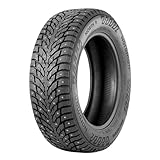
- Winter tire
- Black sidewall
- Embedded studs ensure superior grip on icy surfaces and in extreme winter conditions
- Tread optimized for deep snow and slippery terrains
- Robust construction provides long-lasting performance and resistance to wear and tear
Choose the Outback Wilderness if you regularly drive through deeper snow, rutted roads, or rough access roads. Choose a regular Outback if most of your driving is on paved roads and you value quieter highway behavior and better efficiency. The standard Outback is already capable in winter; the Wilderness is not automatically safer simply because it has more clearance.
- Standard AWD on every 2026 model
- Standard X-MODE traction assistance
- 8.7 inches of clearance on regular trims
- 9.5 inches on Wilderness
- Up to 3,500 pounds of towing on XT and Wilderness versions
The 2026 redesign is now classified by the IIHS as a midsize SUV rather than a wagon, and it earned a Top Safety Pick+ rating. Keep in mind that X-MODE is an electronic traction system, not a low-range 4WD system.
2. 2026 Subaru Forester Wilderness: best compact SUV for deep snow
The Forester Wilderness is a particularly good choice when the roads are sometimes deep, soft, or poorly plowed. It has standard Symmetrical AWD, 9.3 inches of ground clearance, front underbody protection, and dual-function X-MODE with Snow/Dirt and Deep Snow/Mud settings.
The Tool Desk
Outbyte PC Repair FREEClear out junk files and repair common Windows errorsFree Scan →Outbyte Driver Updater FREEFix the driver behind crashes, sound loss and screen glitchesFind Drivers →Its standard Yokohama Geolandar all-terrain tires are more suited to rough surfaces and deep snow than the road-oriented tires fitted to many regular crossovers. The Wilderness can also tow up to 3,500 pounds.
The tradeoff is noticeable on pavement. All-terrain tires can be louder and less efficient, and the Wilderness trim is more equipment than many commuters need. A regular Forester with four severe-snow-rated winter tires may be the better winter vehicle for someone whose SUV spends nearly all of its time on cleared roads.
The 2026 Forester received a Top Safety Pick+ rating from the IIHS. That rating applies to the tested 2026 configuration, so buyers should not assume that ratings from earlier Wilderness versions automatically carry over.
3. 2026 Subaru Crosstrek: best smaller choice
The Crosstrek is a sensible option for buyers who want Subaru’s standard AWD without moving up to the larger Outback or Forester. Its 8.7 inches of ground clearance is useful when snow accumulates on residential streets, and its shorter dimensions make it easier to maneuver and park.
It has less rear-seat and cargo space than the Outback and Forester, so it is best for a small family, a commuter, or anyone who does not routinely carry bulky winter equipment. Equipment such as tires and X-MODE can vary by trim, so verify the exact vehicle rather than assuming every Crosstrek is configured identically.
4. 2026 Toyota RAV4 AWD: best hybrid SUV for winter efficiency
The 2026 RAV4 is sold in the U.S. only as a hybrid or plug-in hybrid. That makes an AWD RAV4 attractive to drivers who want winter traction without giving up fuel-saving electrification.
Rank #2
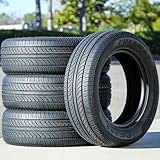
- Product Overview: The Fullway PC369 are 225/65R17 102H SL-Standard Load, 4 Ply Rated Performance Tires Manufactured For Trucks & SUVs
- Driving Conditions: All Season Traction, UTQG 380AA
- Styling and Construction: Four Black Sidewall, Radial Construction, 17 Inch Tires
- Load Index and Speed Rating: Load Index 102 Supports up to 1874 lbs Per Tire and Speed Rating H Certified to 130 mph
- Additional Note: Tires Only - Rims/Wheels Not Included
AWD availability depends on the grade. The LE, SE, and XLE Premium can be configured with either front-wheel drive or AWD, while the RAV4 Woodland has standard AWD. Most grades have 8.1 inches of ground clearance; Woodland has 8.5 inches, while the GR SPORT has 7.5 inches.
Applicable AWD versions offer drive modes including SNOW, along with settings such as SPORT, ECO, NORMAL, EV, and TRAIL. Snow mode can moderate throttle response and adjust the vehicle’s traction strategy, but it cannot replace a suitable tire.
Quick wins for a faster PC:
Scan for outdated or missing drivers - takes under a minuteDriver Scan →Repair Windows errors before they cause bigger problemsFix Now →The RAV4 Woodland is the version to consider for regularly rough or snowy roads because it combines standard AWD, greater clearance, and all-terrain tires. For normal winter commuting, an AWD RAV4 on four winter tires is usually the more sensible setup.
5. 2026 Ford Bronco Sport Badlands: best small off-road-oriented SUV
Every 2026 Bronco Sport has standard 4×4, but the Badlands gets Ford’s more advanced system and seven G.O.A.T. Modes. These include Slippery, Off-Road, Rock Crawl, and Rally. Ford says Rally mode is intended for soft surfaces or deep snow and engages the four-wheel-drive lock.
The Bronco Sport offers 7.8 inches of clearance with the 1.5-liter engine and 8.1 inches with the 2.0-liter engine. The Badlands is the better choice for unplowed roads, deep snow, and off-road access. A Big Bend or Outer Banks is adequate for ordinary plowed-road driving.
Do not confuse the Bronco Sport with the larger Ford Bronco. They use different platforms and different off-road hardware. Also, the presence of a Slippery or Snow-oriented mode does not make it safe to maintain normal speed on an icy road.
What’s actually slowing this PC down?
Pick the symptom - the matching free tool is one click away.
6. 2026 Toyota 4Runner: best traditional 4WD SUV for snow
The 4Runner is the strongest choice here for drivers who specifically want traditional 4WD hardware. Depending on trim, the 2026 model is available with 2WD, part-time 4WD, or full-time 4WD. Four-wheel-drive versions can include a two-speed transfer case with high and low range, Active Traction Control, and Auto LSD.
With up to 10.1 inches of ground clearance, the 4Runner is well suited to deep snow, steep unplowed roads, and situations where avoiding high-centering matters. TRD Off-Road, TRD Pro, and Trailhunter models add more rugged tires and off-road equipment.
The critical buying detail is the drivetrain: not every 4Runner is 4WD. A 2WD version should not be treated as equivalent to a 4WD model in deep snow. The 4Runner is also larger and heavier than the Subaru Crosstrek, Forester, or RAV4, making it less convenient for simple urban winter commuting.
Rank #3

- A studdable winter tire, the Winter Pike X (W429A) is designed for use on CUVs, SUVs, and light trucks and offers drivers strong traction and performance on icy, snowy, and wet roads in addition to a longer tread life.
- Three Peak Mountain Snowflake certified
- Can be pinned with TSMI #12 studs, where permitted, for extra traction in severe ice and snow
- Wide block in the center of the tread provides improved snow and ice traction
- Built with a new rubber compound that boosts strength and durability for a longer tread life
The IIHS lists the 2026 4Runner as a Top Safety Pick for vehicles built after January 2026. Its updated moderate-overlap test result is marginal, so safety ratings should be part of the buying decision rather than an afterthought.
7. 2026 Jeep Grand Cherokee L: best three-row SUV for winter capability
The Grand Cherokee L is the practical pick when three rows matter and winter roads can be genuinely difficult. Jeep’s Selec-Terrain system provides Auto, Sport, Rock, Snow, and Mud/Sand settings. Available 4×4 systems include versions with a two-speed transfer case.
It is important to shop by exact drivetrain and trim. “Grand Cherokee L” does not identify one universal level of winter capability. Confirm that the vehicle has the 4×4 system you want before comparing it with a Subaru or 4Runner.
The Jeep’s size and weight are useful for carrying people and equipment, but they also make it less maneuverable than a Forester or RAV4. For a family that needs three rows, that compromise may be worthwhile; for two occupants commuting on plowed roads, it is probably unnecessary.
What matters most when choosing an SUV for snow?
Winter tires come before AWD
Four winter tires generally make a bigger difference to stopping and turning than adding AWD. AWD helps distribute engine power when accelerating, but it does not materially improve braking once the tires are sliding. Consumer Reports recommends using four winter tires regardless of whether the vehicle has front-wheel drive, AWD, or 4WD.
Look for the three-peak mountain snowflake symbol, which indicates that the tire meets the severe-snow traction standard. An M+S marking by itself is not the same as a dedicated severe-snow rating.
Ground clearance is useful only in the right conditions
Clearance helps prevent the underbody from dragging or the SUV from high-centering in deep, unplowed snow. It does not improve grip on ice and does not shorten stopping distances. A lower SUV with excellent winter tires can brake and turn better than a high-clearance SUV on mediocre all-season tires.
Snow modes are assistance, not permission to drive faster
Snow, Slippery, and Deep Snow modes can reduce throttle sensitivity, change shift behavior, or alter traction-control calibration. They are useful when the surface is slippery, but they do not manufacture traction. Slow down, leave extra following distance, and make smooth steering and braking inputs.
Understand AWD versus 4WD
Most crossover AWD systems operate automatically and are optimized for changing on-road conditions. Traditional 4WD systems may provide a two-speed transfer case and low range, which is valuable for steep, rough, or deeply covered roads. Low range is not a magic setting for highway ice, and 4WD does not improve braking.
Do these 3 things before closing this tab:
1Fix the driver behind crashes, sound loss and screen glitches2Repair Windows errors before they cause bigger problems3Scan for outdated or missing drivers - takes under a minuteRank #4

- All-weather touring tire designed for crossovers and SUVs
- Dense network of sipes and snow enhancers for superior winter traction
- Snow plow features at the base of tread blocks to improve snow removal
- Three Peak Mountain Snowflake (3PMSF) rated for severe winter
- 70,000 mile limited warranty for extended tire life
How to prepare any SUV for winter
- Install four matching winter tires. Do not put winter tires on only the front or rear axle. Mixing tire types can create unstable handling, and AWD vehicles can be sensitive to differences in tire circumference.
- Check the tire pressure when the tires are cold. Cold weather lowers pressure, and the correct target is the vehicle manufacturer’s door-jamb specification—not the maximum number molded into the tire sidewall.
- Inspect tread depth and tire age. A tire can have acceptable-looking tread but reduced winter performance as the rubber ages.
- Confirm the drivetrain on the window sticker. Check whether the specific SUV is FWD, AWD, part-time 4WD, or full-time 4WD. Model names alone are not enough.
- Practice the controls before the storm. Know where Snow, Slippery, X-MODE, Selec-Terrain, or 4WD controls are located. Read the owner’s manual for when 4H and 4L may be used.
- Carry basic recovery and emergency equipment. A shovel, traction aid, charged phone, booster cables, gloves, blanket, windshield scraper, and properly secured cargo can matter more than another drive mode.
Which SUV should you buy for snow?
For most buyers, start with the 2026 Subaru Outback. It combines standard AWD, useful clearance, a comfortable road-going design, and an available Wilderness trim for deeper snow.
Choose the Forester Wilderness when compact dimensions and deep-snow capability matter most. Choose the Crosstrek if you want a smaller Subaru, or the AWD Toyota RAV4 Woodland if hybrid efficiency is a priority. The Ford Bronco Sport Badlands suits drivers who regularly leave paved roads, while the Toyota 4Runner 4WD is the more serious traditional 4WD choice. Families needing three rows should look at a properly equipped Jeep Grand Cherokee L.
FAQ
Is AWD or 4WD better for snow?
Neither is automatically better for every situation. AWD is convenient for changing road conditions and normal paved-road use. Traditional 4WD with low range is more useful for deep snow, steep unplowed roads, and off-road travel. In both cases, four winter tires matter more for braking and turning than the drivetrain alone.
What is the best SUV for driving in deep snow?
The 2026 Subaru Forester Wilderness is one of the best compact choices because it has 9.3 inches of clearance, dual-function X-MODE, and standard all-terrain tires. The Subaru Outback Wilderness and a 4WD Toyota 4Runner are better choices when the vehicle also needs to handle larger, rougher, or steeper unplowed roads.
Free tools Windows power users keep installed
One-click scans. No signup required.
Does Snow mode make an SUV safe on ice?
No. Snow mode can adjust throttle response, shifting, and traction control, but it cannot create tire grip. Ice still requires lower speeds, greater following distance, smooth inputs, and tires suited to winter conditions.
Are all-season tires adequate on an AWD SUV?
They may be adequate for occasional light snow in areas that are promptly plowed, but they are not the best choice for frequent snow or ice. Four severe-snow-rated winter tires provide better cold-weather traction, braking, and control than relying on AWD with ordinary all-season tires.
The Bottom Line
Best overall: 2026 Subaru Outback. Best for deep snow in a compact SUV: 2026 Subaru Forester Wilderness. Best smaller choice: Subaru Crosstrek. Best hybrid: AWD Toyota RAV4, especially Woodland. Best small off-road choice: Ford Bronco Sport Badlands. Best traditional 4WD: Toyota 4Runner in a 4WD configuration. Best three-row option: Jeep Grand Cherokee L with the appropriate 4×4 system.
Whichever SUV you choose, budget for four matching winter tires. AWD can help you get moving; tires are what help you stop and turn.
Recommended Free Tools
Quick Recap
Product prices and availability are accurate as of the date/time indicated and are subject to change. Any price and availability information displayed on Amazon at the time of purchase will apply.




