Quick wins for a faster PC:
Fix the driver behind crashes, sound loss and screen glitchesFind Drivers →Clear out junk files and repair common Windows errorsFree Scan →Scan for outdated or missing drivers - takes under a minuteDriver Scan →Mustang reliability depends on more than the badge on the trunk. Engine choice, transmission, mileage, rust, modifications and maintenance history can matter more than the model year. Still, owner reviews and complaint patterns point to several years that deserve a closer look—and a few that require especially careful inspection.
The eight years below were favored in owner-review data from Cars.com, with complaint records from CarComplaints.com and the National Highway Traffic Safety Administration (NHTSA) used as additional context. This is not an official Ford reliability ranking or a controlled, mileage-adjusted failure study. Treat the list as a used-car shopping guide, not a guarantee.
As an Amazon Associate I earn from qualifying purchases.
Eight Ford Mustang years owners rate highly
| Model year | Generation and notable powertrains | Why it stands out |
|---|---|---|
| 2002 | SN95; 3.8-liter V6, with V8 versions available | Strong owner satisfaction and simple, inexpensive mechanicals |
| 2004 | Final SN95 year; 3.9-liter V6 and SVT Cobra V8 | Good owner-reported reliability and value |
| 2008 | S197; 4.0-liter V6 and V8 models | Positive reliability ratings and a mature early-S197 package |
| 2013 | Late S197; 3.7-liter V6 or 5.0-liter V8 | Useful combination of performance, comfort and durability |
| 2015 | First S550; V6, EcoBoost four-cylinder or GT V8 | Modern chassis and generally favorable owner impressions |
| 2017 | S550; final year for the 3.7-liter V6 | High owner recommendation rate and broad powertrain choice |
| 2019 | Updated S550; EcoBoost, GT and Bullitt variants | Well-regarded by owners after the 2018 refresh |
| 2020 | S550; EcoBoost, GT and EcoBoost High Performance Package | No major mechanical redesign and relatively favorable newer-car feedback |
1. 2002 Ford Mustang
The 2002 Mustang is one of the better choices for a buyer who values mechanical simplicity and low purchase cost over modern refinement. Cars.com lists 70 consumer reviews, with 98% of reviewers recommending the car. The standard engine was a 3.8-liter V6 producing 193 horsepower and 220 lb-ft of torque.
Outdated Drivers Are Slowing You Down
One free scan finds every outdated or missing driver and matches the right update for your exact hardware.Free scan · exact hardware matchWindows Errors? Fix Them Before They Spread
Repair common Windows errors and clear accumulated junk for a smoother, more stable PC - no reinstall needed.Free scan · no reinstallOwners commonly praise the car’s ease of repair, straightforward design and value. That does not make a 2002 Mustang trouble-free. Air-conditioning components, alternators, power-steering pumps and transmission mounts can fail simply because the car is now more than 20 years old. Rust, neglected fluids and amateur modifications are bigger concerns than the model-year reputation.
#1 Best Overall

- FD. MUSTANG V8 64.5-73
2. 2004 Ford Mustang
As the final year of the SN95 generation, the 2004 Mustang benefits from a long-developed platform and a large supply of replacement parts. The range included a 3.9-liter V6 and the supercharged 4.6-liter SVT Cobra V8. More than 100 Cars.com reviewers gave the year a 97% recommendation rate, according to the owner-review data used for this ranking.
The 2004 is appealing for its reliability and value, but it is not as comfortable, spacious or technologically current as an S197 or S550. A Cobra also deserves a separate inspection standard: high-performance use, clutch wear, cooling-system stress and modifications can overwhelm any advantage associated with the model year.
3. 2008 Ford Mustang
The 2008 Mustang is a well-regarded early S197. Cars.com currently lists 125 reviews, a 4.7-out-of-5 reliability rating and a 95% recommendation rate. The base engine was a 4.0-liter V6 rated at 210 horsepower, while V8 versions supplied substantially more performance.
Free tools Windows power users keep installed
One-click scans. No signup required.
The S197 brought a more modern interior and driving experience than the SN95, while the 2008 model had several years of production development behind it. Owner feedback is broadly positive, but inspect the paint, suspension, cooling system and underbody carefully. A car that has been lowered, fitted with budget parts or repeatedly driven at a drag strip may be a poor buy regardless of its review scores. Paint complaints may be less prominent than on some earlier cars, but that does not mean every 2008 Mustang has defect-free paint.
4. 2013 Ford Mustang
The 2013 Mustang is a late-production S197 with styling influenced by the Shelby GT500. Its 3.7-liter V6 made 305 horsepower and 280 lb-ft of torque, while the 5.0-liter V8 produced 420 horsepower and 390 lb-ft of torque.
Owners tend to like the 2013 for its combination of everyday usability, strong performance and generally good reliability. It is a sensible middle ground for buyers who want a modern-feeling Mustang without paying S550 prices. However, the available evidence does not establish that it is objectively the most reliable S197. Condition and powertrain selection still matter: a lightly used V6 and a heavily modified GT are very different prospects.
Rank #2

- Comprehensive Repair Guide: This Haynes Manual provides detailed instructions for servicing and repairing Ford Mustang models from 2015 to 2023.
- Extensive Repair Information: Offers over 10 times more details than previous manuals, ensuring complete coverage of all repairs.
- Interactive QR Codes: Access extra repair content, continuously updated, via QR codes for more in-depth information.
- Multi-Device Accessibility: Supplementary content is available on any computer or mobile device for added convenience.
- Full-Color Visuals: Clear, full-color illustrations enhance ease of use compared to black-and-white manuals.
5. 2015 Ford Mustang
The 2015 model launched the S550 generation and introduced independent rear suspension to the regular Mustang lineup. In the United States, buyers could choose a 3.7-liter V6 rated at 300 horsepower, a 2.3-liter EcoBoost making 310 horsepower or a 5.0-liter GT V8 producing 435 horsepower.
What’s actually slowing this PC down?
Pick the symptom - the matching free tool is one click away.
Its modern structure, improved cabin and updated technology help explain the favorable owner impressions. It is also the first year of a new generation, so buyers should not assume every version has identical reliability. Compare the V6, EcoBoost and GT separately, check for software updates and recalls, and pay close attention to clutch operation, automatic shifting, electronic features and accident repairs during the test drive.
6. 2017 Ford Mustang
Cars.com lists 300 reviews for the 2017 Mustang, with 97% of drivers recommending it. It was the final Mustang year available with the 3.7-liter V6, making it attractive to buyers who want the S550 chassis without choosing an EcoBoost or V8.
The year has a strong owner reputation, but the reviews are not uniformly positive. Individual owners report thin or peeling paint, heated-seat failures, engine problems and clutch issues. Those reports do not prove that all 2017 cars share the same defects, but they show why a pre-purchase inspection and a scan of the vehicle’s modules are worthwhile.
7. 2019 Ford Mustang
The 2019 Mustang followed the 2018 refresh and was offered with a 2.3-liter EcoBoost four-cylinder or 5.0-liter V8. The EcoBoost produced 310 horsepower and 350 lb-ft of torque; the GT made 460 horsepower, while the Bullitt was rated at 480 horsepower.
Do these 3 things before closing this tab:
1Clear out junk files and repair common Windows errors2Fix the driver behind crashes, sound loss and screen glitches3Repair Windows errors before they cause bigger problemsOwner reviews generally regard the 2019 as a dependable, enjoyable newer Mustang. Trim and transmission are important qualifiers. A turbocharged EcoBoost, a manual GT and a Bullitt have different cooling, drivetrain, tire and maintenance demands. Look for evidence of hard launches, track use, tuning and missed oil changes rather than relying only on the year printed on the registration.
Rank #3
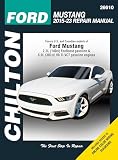
- Comprehensive Coverage: Designed for U.S. and Canadian models of Ford Mustang (2015-23) with 2.3L EcoBoost and 5.0L V8 Ti-VCT gasoline engines.
- Access to Online Resources: Includes access to color wiring diagrams, fuses/relays, troubleshooting guides, and a glossary to simplify complex repairs.
- Step-by-Step Instructions: Easy-to-follow guidance for routine maintenance, engine repair, transmission work, and more.
- Professional-Grade Detail: Features workshop-backed data, high-resolution images, and detailed diagrams for precise repairs and adjustments.
- Comprehensive Coverage: Designed for U.S. and Canadian models of Ford Mustang (2015-23) with 2.3L EcoBoost and 5.0L V8 Ti-VCT gasoline engines.
8. 2020 Ford Mustang
The 2020 Mustang received no major mechanical redesign, which can be a positive trait for buyers seeking a relatively mature S550. The EcoBoost High Performance Package raised output to 330 horsepower while retaining 350 lb-ft of torque.
There is an important limitation to the 2020 recommendation: newer vehicles have had less time and mileage to accumulate long-term complaints. A lower volume of reported problems does not automatically prove superior durability. Check warranty and service records, confirm that software campaigns were completed, and inspect any turbocharged or high-performance model for signs of overheating, tuning or track use.
Five Mustang years to inspect especially carefully
“Avoid” is too absolute for a used car. A repaired, documented Mustang from one of these years can be a better purchase than a neglected example from a favored year. The following model years simply deserve more scrutiny based on owner complaints, recall history and complaint-database patterns.
2006 Ford Mustang
Reported trouble areas include bubbling or peeling paint, limp-mode complaints, cracked thermostat housings and rear-differential bearing wear. Some cars also have unrepaired Takata airbag recalls.
The 2006 base engine was a 4.0-liter V6, not a V8. That distinction matters when comparing repair information and parts. During an inspection, check the coolant system for leaks, verify that the engine reaches and maintains normal temperature, listen for differential whine and examine every painted panel in bright light. NHTSA complaint totals change over time, so old, undated numbers should not be treated as a fixed failure rate.
2007 Ford Mustang
The 2007 Mustang is associated with paint blistering, water leaks into the cabin and climate-control faults. Uncompleted Takata airbag work is another reason to verify the VIN before purchase.
Rank #4
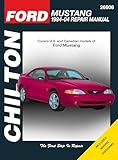
- Detailed repair and maintenance coverage trusted by professional technicians and DIYers for decades.
- Clear step-by-step instructions supported by wiring diagrams, diagnostic charts, and technical illustrations.
- Covers routine maintenance through advanced repairs, making it the go-to resource for keeping your vehicle running reliably.
The 4.0-liter V6 itself is generally regarded as sturdy; the concern is more about body and build-quality problems than an automatic assumption of engine failure. Lift the carpets where practical, inspect the trunk and footwells for dampness, test the heater and air conditioner through every setting, and look for bubbling around seams, edges and repaired panels.
Recommended Free Tools
2010 Ford Mustang
The 2010 model was the final S197 year with the 4.0-liter V6, before the more powerful 3.7-liter V6 arrived for 2011. Reported concerns include outer tie-rod-end wear and corrosion on the hood. CarComplaints.com currently identifies 2010 as the Mustang’s worst model year on its overview page, with hood corrosion listed as its leading complaint.
That ranking reflects reports submitted to a complaint database, not a controlled engineering reliability score. Check the hood for bubbling corrosion, inspect steering components for looseness and make sure the front tires wear evenly. If performance matters, compare the 2010 directly with a 2011–2014 V6; the newer engine is a substantial upgrade.
2012 Ford Mustang
The most important issue for certain 2012 automatic Mustangs was a recall involving an unexpected downshift into first gear regardless of vehicle speed. Sudden deceleration or rear-wheel skid could increase crash risk. Ford’s remedy was reprogramming the powertrain-control module at no charge for affected vehicles.
A separate recall concerned the transmission-range sensor, reverse-gear indication and backup lamps. Neither recall means every 2012 Mustang remains unsafe, but the buyer should check the vehicle identification number and obtain documentation showing that the work was completed. During the test drive, the automatic transmission should shift without harsh engagement, unexpected downshifts or warning lights.
2014 Ford Mustang
CarComplaints.com currently lists 496 complaints, four recalls and 102 technical service bulletins for the 2014 Mustang. Its reported categories include body and paint, engine, airbags, drivetrain, steering and transmission issues. These are database counts, not the percentage of all 2014 Mustangs that developed a defect.
Best Value

- Complete Repair Coverage: Step-by-step repair procedures specific to your vehicle — from routine maintenance like oil changes and air filter replacement to complex engine and transmission repairs
- 700+ Photos & Illustrations: Every procedure is visually supported with clear, close-up photography taken during an actual vehicle teardown and rebuild — no guesswork required
- Beginner to Advanced: Written in plain language so a DIY owner with basic tools can tackle most repairs confidently, while still serving as a valuable reference for experienced mechanics
- Full Troubleshooting Section: Quickly diagnose problems with dedicated troubleshooting guides for engine, electrical, brakes, and drivetrain systems
- Time-Saving Tips Throughout: Pro shortcuts and notes highlight common pitfalls, helping you avoid costly mistakes and get your vehicle back on the trail faster
Look closely for paint bubbling, water intrusion, drivetrain noises and transmission problems. Confirm Takata airbag recall status by VIN. The unexpected-first-gear-downshift campaign cited for 2012 should not be treated as a blanket 2014 recall; the NHTSA campaign document specifically identifies 2012 Mustang vehicles. A 2014 with complete records and a clean inspection may still be worth considering.
Independent reader supportYour contribution helps us test, update, and keep practical guides available for everyone.How to check any used Mustang before buying
- Run the VIN through NHTSA. Use the recall lookup at NHTSA.gov/recalls. A year-and-model search shows general information, but only a VIN search can identify unrepaired recalls on that particular car.
- Confirm Takata airbag work. Mustangs from 2005 through 2014 were included in Takata campaigns, and some affected vehicles have been subject to “Do Not Drive” warnings. Do not assume a recall was completed because the car is old or because the seller says it was repaired.
- Inspect the body and underside. Check hood edges, roof seams, quarter panels, door bottoms, floor pans and suspension mounting points for corrosion, bubbling paint or poor repairs.
- Start it cold. Listen for abnormal timing-chain, valvetrain, bearing or differential noise. A warm engine can hide hard-starting and smoke problems.
- Test every transmission function. A manual should engage gears cleanly without clutch slip. An automatic should not hesitate, flare between gears, slam into gear or downshift unexpectedly.
- Check cooling and electrical systems. Look for coolant residue, overheating, inoperative fans, air-conditioning faults, warning lights, dead pixels and failed seat or infotainment functions.
- Look for modification evidence. Ask whether the car has been tuned, supercharged, lowered, raced or used for repeated launches. Keep receipts for parts and calibration work, not just verbal assurances.
- Pay for an independent inspection. A Ford specialist can identify fluid leaks, worn suspension parts, accident repairs and drivetrain issues that a short dealership test drive may miss.
Remember that NHTSA’s VIN search does not display every kind of campaign. It may not show recalls already repaired, some newly announced recalls before all affected VINs are identified, non-safety manufacturer campaigns or safety recalls more than 15 years old. A Ford dealer can sometimes provide additional campaign and service-history information.
FAQ
What is the most reliable Ford Mustang year?
There is no universally proven single winner, but owner-review data used for this ranking identifies 2002, 2004, 2008, 2013, 2015, 2017, 2019 and 2020 as strong choices. The best purchase is the individual car with the best maintenance, inspection and recall history.
Which Mustang years should I avoid?
The years flagged for extra caution are 2006, 2007, 2010, 2012 and 2014. “Avoid” does not mean every car from those years is defective; it means buyers should investigate the reported paint, water-leak, steering, transmission and recall concerns carefully.
Is the 2012 Mustang transmission recall serious?
Yes. Certain automatic 2012 Mustangs could unexpectedly downshift into first gear, causing sudden deceleration and potentially a rear-wheel skid. Check the VIN and repair records to confirm that the powertrain-control-module software update was completed.
Are 2014 Mustangs covered by the 2012 unexpected-downshift recall?
The cited NHTSA campaign specifically identifies 2012 Mustang vehicles. Do not assume that every 2014 Mustang was covered by that same recall. Use the vehicle’s VIN to check its actual recall status.
The Bottom Line
The strongest owner-reviewed Mustang years in this group are 2002, 2004, 2008, 2013, 2015, 2017, 2019 and 2020. The years needing extra scrutiny are 2006, 2007, 2010, 2012 and 2014, mainly because of reported body, corrosion, steering, transmission and recall concerns.
For a used Mustang, condition beats reputation. Verify the VIN, inspect for rust and water intrusion, drive the car from cold, check the powertrain and have an independent Mustang or Ford specialist examine it before money changes hands.
Quick Recap
Product prices and availability are accurate as of the date/time indicated and are subject to change. Any price and availability information displayed on Amazon at the time of purchase will apply.




