Do these 3 things before closing this tab:
1Fix the driver behind crashes, sound loss and screen glitches2Repair Windows errors before they cause bigger problems3Scan for outdated or missing drivers - takes under a minuteSome links on this page are affiliate links: if you buy through them we may earn a commission, at no extra cost to you.
Which midsize truck gets the best gas mileage? In the available 2026 U.S. comparisons, the Toyota Tacoma and Ford Ranger tie at up to 23 mpg combined in the cited configurations. The Honda Ridgeline is listed at 21 mpg combined at the model level, with official trim ratings of 20 or 21 mpg. That is a useful starting point, not a universal winner: engine, drivetrain, trim and tires can change the rating substantially.
For a fair purchase decision, compare the exact EPA row for the truck you will buy. A 2WD Tacoma or Ranger can look more efficient than a 4WD version of the same model, and Honda’s TrailSport Ridgeline is rated differently from other Ridgeline trims.
As an Amazon Associate I earn from qualifying purchases.
2026 fuel-economy leaders at a glance
The following figures are the clearest current comparison points for gas-powered midsize pickups in the U.S. They are EPA estimates or figures reported from EPA-based comparison data, not promises of the mileage every owner will achieve.
| Model | Model-year context | Combined mpg | City/highway detail | What the figure represents |
|---|---|---|---|---|
| Toyota Tacoma | 2026 comparison | 23 | 20 city / 26 highway for the EPA-listed 2WD 2.4-liter four-cylinder | iSeeCars reports 23 mpg for the cited Tacoma; the 2026 EPA/DOE guide gives 23 mpg combined for the specified 2WD configuration. |
| Ford Ranger | 2026 comparison | 23 | Not stated in the available 2026 comparison | iSeeCars reports 23 mpg for the cited Ranger configuration. |
| Honda Ridgeline | 2026 comparison | 21 | Trim ratings range from 18/24/21 to 18/23/20 city/highway/combined | iSeeCars lists 21 mpg at the model level; Honda’s specifications separate standard trims from TrailSport trims. |
The Tacoma and Ranger are therefore tied on the cited 23-mpg number. iSeeCars places one ahead of the other by incorporating an overall quality score into its ordering, but that does not make either truck the categorical fuel-economy winner. The right result depends on the exact configuration.
Popular on Amazon

- HEAVY DUTY FABRIC: This truck tailgate cover is made of 600D PVC material which is wear-resistant and water repellent. The underside soft material and inner thick padding protect both the bikes and the truck tailgate.
- HOLD 5 BIKES: The hook and loop straps go around the bikes are long which makes this tailgate pad can accommodate most bikes.
- CONVENIENT DESIGN: There is a roll up flap to expose the backup camera. The interior pocket is helpful when storing accessories. The reflective strip improves nighttime visibility.
- EASY TO INSTALL: Open the tailgate, place the pad on the tailgate, feed the straps from the back to front and connect.
- DIMENSIONS: This tailgate pad is 51" wide – perfect fit for compact pickups (tailgate width>51"), good coverage for mid-size pickups (tailgate width≤56"), partial coverage for full-size pickups (tailgate width≥60").
How to read the comparison
Combined mpg is a blended score from city and highway test cycles. It is the most convenient first filter because it gives one number for mixed use, but it does not describe every driving pattern. City mpg is more relevant for short trips, intersections and frequent idling. Highway mpg matters more for steady-speed travel. A truck with a slightly lower combined score can still be the better fit for a buyer whose driving is overwhelmingly highway or who must choose a particular drivetrain.
Read the table from left to right: identify the model year, confirm the combined number, then inspect the city/highway split and the configuration behind it. A model-level ranking is useful for finding candidates; the EPA row is what validates a purchase decision.
Quick wins for a faster PC:
Fix the driver behind crashes, sound loss and screen glitchesFind Drivers →Clear out junk files and repair common Windows errorsFree Scan →Scan for outdated or missing drivers - takes under a minuteDriver Scan →Why the configuration matters more than the name on the tailgate
EPA fuel economy is assigned to a specific powertrain and equipment combination. A headline number for a model may describe a rear-drive truck with a particular engine and tire package, while the truck on a dealer lot may have four-wheel drive, different wheels or another trim.
- Drivetrain: 2WD, 4WD and AWD versions can receive different ratings. Readers who require four-wheel drive should compare only four-wheel-drive rows.
- Engine: The EPA guide’s 23-mpg Tacoma example is specifically a 2WD truck with a 2.4-liter four-cylinder.
- Trim and tires: Heavier equipment or a different tire package can alter the certified result.
- Model year: A 2025 comparison can illustrate how driveline changes work, but it is not a substitute for a 2026 EPA listing.
Do not use the most efficient 2WD rating as an expectation for a 4WD purchase. Match the certification row to the truck’s window sticker or build sheet. When a listing uses broad language such as “up to 23 mpg,” treat “up to” as a prompt to locate the qualifying configuration, not as a promise for every truck wearing that model name.
Toyota Tacoma: 23 mpg is tied to a specific 2WD configuration
The 2026 Fuel Economy Guide from the U.S. Department of Energy and U.S. Environmental Protection Agency lists a Tacoma 2WD with a 2.4-liter four-cylinder at 23 mpg combined, with a split of 20 mpg city and 26 mpg highway. That is the most detailed Tacoma figure available in the cited material.
iSeeCars’ 2026 midsize-truck comparison also reports Tacoma at 23 mpg combined. Because the comparison does not establish every Tacoma engine, drive system, trim and tire combination, the 23-mpg number should be read as a top cited configuration rather than a rating for every Tacoma.
The Tool Desk
Outbyte Driver Updater FREEScan for outdated or missing drivers - takes under a minuteDriver Scan →Outbyte PC Repair FREERepair Windows errors before they cause bigger problemsFix Now →A prior-year Cars.com comparison shows why this distinction matters: its 2025 figures put a cited rear-wheel-drive Tacoma at 23 mpg combined, while the cited 4WD Tacoma was 21 mpg. Those numbers are useful evidence that drivetrain changes the result, but they should not be carried forward as definitive 2026 specifications.
For a Tacoma shopper, record whether the truck is 2WD or 4WD before comparing it with a Ranger. Then note the engine description and wheel or tire package shown on the EPA listing. If a dealer vehicle has optional equipment that changes the certified row, use the label attached to that vehicle rather than a generic model-page headline.
Ford Ranger: tied with Tacoma in the cited 2026 comparison
iSeeCars lists the 2026 Ford Ranger at 23 mpg combined, tying the Tacoma on the available headline figure. The retrieved 2026 material does not provide the Ranger’s complete city/highway breakdown for every trim or a full table of 2WD and 4WD rows.
Cars.com’s 2025 model-year comparison reports 23 mpg combined for the base rear-wheel-drive Ranger and 22 mpg combined for the cited 4WD Ranger. Since those are 2025 figures, use them as a warning against assuming that all Rangers share the 23-mpg rating, not as a replacement for checking a 2026 vehicle.
Free tools Windows power users keep installed
One-click scans. No signup required.
If you are comparing a Ranger with a Tacoma, record the drivetrain and engine beside the combined figure. Comparing a rear-drive Ranger with a four-wheel-drive Tacoma would answer a different question from comparing like-for-like off-road configurations. The fairer worksheet has one row for each truck and columns for model year, drive system, engine, trim, tire description, city mpg, highway mpg and combined mpg.
Honda Ridgeline: official trim ratings explain the 20-to-21-mpg range
Honda’s 2026 specifications list several Ridgeline trims at 18 mpg city, 24 mpg highway and 21 mpg combined. The listed trims are Sport, RTL, Black Edition and Black Edition Two-Tone.
Also popular on Amazon

- MID-SIZE TRUCK BED MATTRESS (5.0'-5.2'): Our truck bed air mattress is specifically designed to snugly fit 5.0' to 5.2' mid-size short bed pickup trucks, perfect as a Tacoma truck mattress (5ft), Jeep Gladiator truck bed mattress (5ft), Chevy Colorado (5.2ft), GMC Canyon (5.2ft), Nissan Frontier (5'), Honda Ridgeline (5'), and Dodge Dakota (5.3'). Mattress dimensions: 63"L x 56"W x 10"H (48" width between wheel wells). It is NOT compatible with full-size trucks or 6.0'-6.5' long beds. Please ensure your truck bed length measures between 5.0 and 5.2 feet for a perfect fit before purchasing.
- HIGH-QUALITY & PUNCTURE-PROOF MATERIALS: Our inflatable truck bed mattress features a plush, soft-flocked top surface for maximum sleeping comfort, a heavy-duty PVC construction for reliable support, and an extra-thick 210T grid fabric on the bottom to prevent punctures, tears, and air leakage against rough spray-in bed liners. Ideal as a durable truck tent mattress for overland camping and outdoor road trips.
- HEAVY WEIGHT CAPACITY & ERGONOMIC SUPPORT: Designed with multiple internal wave straps, this truck air mattress distributes weight evenly to prevent sagging or sinking. It can support up to 260 kilograms (600 lbs), comfortably accommodating 2-3 people at once. Its robust construction ensures exceptional durability and optimal spinal support for extended camping use.
- ABUNDANT TRUCK CAMPING ACCESSORIES: The complete truck mattress package includes a high-flow 12V electric air pump, a 1.8-meter power cable to connect directly to your truck’s cigarette lighter socket, 2 inflatable pillows, multiple repair patches for convenience, and a handy oversized storage bag for easy transport and storage.
- DON’T RUSH TO RETURN! (INITIAL USE TIP): When first using the truck bed air mattress, you may think it’s leaking due to the stretching caused by air pressure on the high-grade PVC material. Simply inflate the mattress fully again to allow it to expand. Repeat this process for 2-3 nights until the mattress fully inflates and settles into its final shape. Backed by dedicated customer service for worry-free purchasing.
The 2026 TrailSport versions are rated at 18 city, 23 highway and 20 combined. That one-mpg combined difference is small on paper but important when comparing the exact trucks. iSeeCars uses a 21-mpg model-level figure in its 2026 midsize-truck ranking, which aligns with the 21-mpg rating for the non-TrailSport trims listed by Honda.
| 2026 Ridgeline trim group | City mpg | Highway mpg | Combined mpg |
|---|---|---|---|
| Sport, RTL, Black Edition, Black Edition Two-Tone | 18 | 24 | 21 |
| TrailSport versions | 18 | 23 | 20 |
When a Ridgeline is on your shortlist, use the trim-specific Honda rating rather than assuming the model-level 21 mpg applies to TrailSport. The difference also illustrates why a one-number ranking should be followed by a trim check: two trucks sold under the same model name can have different certified results.
What is—and is not—established for other midsize trucks
The available 2026 evidence does not establish complete, comparable figures for every configuration of the Nissan Frontier, Chevrolet Colorado, GMC Canyon, Ford Ranger or Toyota Tacoma. A ranking page may show a model-level number without listing every engine, drivetrain and tire combination.
That means a responsible list of the best midsize trucks for fuel economy cannot fill in missing rows by guessing, copying an older model year or treating one trim as representative of an entire model. If a truck is not shown in the comparison table above, check its exact 2026 EPA entry before drawing a conclusion. The same rule applies when a manufacturer changes an engine, transmission, axle ratio or tire package during a model-year run.
EPA estimates are a comparison tool, not a mileage guarantee
EPA ratings use standardized test procedures so shoppers can compare vehicles under consistent conditions. Your result can differ because of weather, traffic, speed, payload, towing, terrain, tire pressure, accessories, maintenance and driving style. The figures remain valuable because they are measured on the same framework; they are not a promise of a particular trip computer reading.
The most useful single number for shopping is combined mpg because it blends city and highway cycles. City and highway values still matter when your use is lopsided. A commuter who spends nearly every mile in stop-and-go traffic should pay attention to the city rating, while a long-distance driver may see the highway figure as more relevant.
Do not compare unlike body styles or model years as if they were one test. Keep the model year, drivetrain and trim visible whenever you copy a number into a spreadsheet or buying note. EPA estimates also assume the vehicle is maintained and operated as tested; a roof accessory, underinflated tire or heavy load can move actual consumption away from the label.
How to verify the exact truck before you buy
The EPA directs shoppers to fueleconomy.gov to find and compare vehicles. Use that database as the final check for the truck you are actually considering.
- Open the vehicle search at fueleconomy.gov.
- Choose model year 2026, then select the make and model.
- Match the drivetrain shown for the vehicle: 2WD, 4WD or AWD where applicable.
- Match the engine and trim or equipment description. If the site shows more than one row, do not choose the first row automatically.
- Write down combined, city and highway mpg for that exact row.
- Repeat the process for each truck on your shortlist, keeping model year and configuration constant.
- Compare only like-for-like rows. If one candidate is 2WD and another is 4WD, label that difference instead of presenting the numbers as an equal test.
- Save or print the matching EPA result with the vehicle identification details so you can reconcile it with the dealer’s window sticker.
For a dealer vehicle, confirm that the EPA label and the online row describe the same engine, drive system and equipment. If they do not match, pause the comparison until the discrepancy is resolved. A salesperson’s shorthand, an advertisement’s “up to” claim and a model overview page are not substitutes for the certification row.
A simple like-for-like comparison worksheet
Before visiting dealers, make one line for every specific truck you might buy. Enter the model year first, then drivetrain, engine, trim, wheel or tire description, city mpg, highway mpg and combined mpg. Add a note if the figure comes from a prior-year comparison so it cannot be mistaken for a current certification.
What’s actually slowing this PC down?
Pick the symptom - the matching free tool is one click away.
Next, separate requirements from preferences. If 4WD is mandatory, remove 2WD rows before ranking. If highway travel dominates, sort or review the highway column. If mixed driving is typical, start with combined mpg and use city mpg as a tie-breaker. This process prevents a highly rated 2WD truck from displacing a lower-rated 4WD truck that actually meets your needs.
Keep the comparison narrow enough to stay accurate. The cited figures do not establish a complete 2026 ranking for every midsize pickup, so an honest worksheet may contain blank cells until you verify them at the EPA site. A blank is safer than a number borrowed from another year or trim.
Also popular on Amazon

- UNIVERSAL FITS MID-SIZE TRUCKS: Our truck bed tent with awning is compatible with Soft/Hard Topper or Camper Shell, good for Tacoma, Gladiator JT, Frontier, Canyon, Colorado, Ranger
- SPACE EXPANSION: This truck tailgate tent features an extended awning shade, offering extra protection from rain and sun. Suitable for camping, picnics, fishing, and more. Improve your outdoor comfort with added space and shelter
- BITE-PROOF & PRIVACY: Our truck bed tent has a high-density mesh zipper door that is anti-bite and ventilated. Plus, it has an opaque zipper door to ensure complete privacy whenever you need it
- SKYLIGHT DESIGN: Comes with an openable PVC transparent skylight, which not only enhances lighting but also lets you enjoy breathtaking views of the night sky. Make every night under the stars unforgettable
- WEATHER RESISTANCE & STABLE: The truck canopy is made of 210D Oxford fabric with PU2000 waterproof coating. Aluminum alloy support rods, multiple fixing straps and ground stakes ensure secure installation, protecting against rain, sun, and wind
Choosing among the leaders by driving requirement
If maximum published efficiency is your priority
Start with the 23-mpg combined Tacoma and Ranger configurations cited for 2026. Then verify which drivetrain, engine and trim produce that number. A nominal tie does not mean the trucks will have identical ratings in the configurations you can purchase.
If you need four-wheel drive
Filter the comparison to 4WD trucks before looking at the ranking order. The 2025 Cars.com figures show the practical effect: the cited 4WD Ranger was 22 mpg combined and the cited 4WD Tacoma was 21 mpg, versus 23 mpg for their cited rear-drive counterparts. Those prior-year figures are not 2026 certification, but they demonstrate why a 2WD headline number should not guide a 4WD purchase.
If your use is mostly highway travel
Check the highway column, not just combined mpg. The EPA-listed 2026 Tacoma example is 26 highway, while the non-TrailSport Ridgeline trims listed by Honda are 24 highway and TrailSport is 23. The Ranger highway value is not established in the available 2026 comparison, so retrieve it from the EPA row for the exact truck.
If you are considering a Ridgeline TrailSport
Use Honda’s 20-mpg combined TrailSport rating rather than the 21-mpg model-level figure. The city rating remains 18 mpg, while highway rating is 23 mpg for the TrailSport versions listed.
If you drive a mixed city-and-highway route
Use combined mpg as the first screen, then verify that the city and highway numbers fit your route. The Tacoma example’s 20 city and 26 highway spread is materially different from the Ridgeline groups’ 18 city and 24 or 23 highway ratings. Those figures do not predict your exact tank, but they show why route mix can change which truck looks preferable.
Track your own fuel use after purchase
An EPA comparison answers the shopping question; a simple log answers how your truck performs in your routine. Record odometer miles and gallons at each fill-up, and keep notes about heavy loads, trailers, winter weather or unusual traffic. Calculate miles driven divided by gallons added over several fill-ups rather than treating one tank as a definitive test.
Recommended Free Tools
For a consistent log, fill at the same pump when practical, record the gallons rather than relying only on the dashboard estimate, and avoid comparing a short trip with a long steady highway run. The goal is to identify a pattern under your normal use, not to recreate the EPA laboratory cycle.
An OBD-II fuel-economy monitor can provide another way to observe consumption, but it is a tracking aid, not a replacement for the EPA rating or the vehicle’s maintenance requirements. An owner’s manual remains the authority for the truck’s recommended fuel, tire pressures and service intervals.
Independent reader supportYour contribution helps us test, update, and keep practical guides available for everyone.Common mistakes in midsize-truck mpg comparisons
- Calling a tie a winner: Tacoma and Ranger both appear at 23 mpg in the cited 2026 comparison. A separate quality score used to order a ranking is not an mpg advantage.
- Mixing model years: The Cars.com 2025 figures should not be presented as 2026 specifications.
- Ignoring drivetrain: A rear-drive rating is not a reliable proxy for a 4WD truck.
- Using a model-level number for every trim: Honda’s 2026 Ridgeline data separates 21-mpg trims from 20-mpg TrailSport versions.
- Inventing missing rows: No complete 2026 table is established here for every Ranger, Frontier, Colorado, Canyon or Tacoma configuration.
- Treating EPA mpg as a guarantee: Standardized estimates enable comparison, but actual consumption varies with conditions and use.
- Comparing different equipment: Wheel and tire changes, accessories and heavier trim content can alter the certified row.
- Relying on one fill-up: A single tank can be distorted by weather, traffic, towing or a different fuel level at the pump.
- Leaving the model year off your notes: A correct 2025 number becomes misleading when it is copied into a 2026 buying list without a label.
Frequently asked questions
Which midsize truck gets the best gas mileage in 2026?
The cited 2026 comparison shows the Toyota Tacoma and Ford Ranger tied at 23 mpg combined. That tie applies to the cited configurations, not automatically to every trim or drivetrain.
Is the Tacoma more fuel-efficient than the Ranger?
Not on the cited combined figure: both are listed at 23 mpg. A ranking may place one first using a separate quality score, but that is not a higher mpg rating. Compare matching EPA rows to determine the result for the trucks you can buy.
What is the most efficient 2026 Tacoma configuration cited here?
The 2026 EPA/DOE guide lists a 2WD Tacoma with a 2.4-liter four-cylinder at 23 mpg combined, rated 20 city and 26 highway. Other Tacoma configurations require their own EPA lookup.
How much does 4WD change the comparison?
It can change the certified number. In Cars.com’s 2025 comparison, the cited rear-drive Ranger and Tacoma were each 23 mpg combined, while the cited 4WD versions were 22 and 21 mpg. Those are prior-year examples, so verify the 2026 row before buying.
Also popular on Amazon
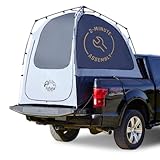
- Effortless Camp Setup: Dive into adventure with the Fofana Truck Bed Tent and say goodbye to complicated setups. This mid size truck bed tent pops up in seconds, letting you jump straight into fun with its quick setup truck bed tent design
- Ultimate Comfort Zone: Stretch out in style with a spacious 6-foot standing height and enjoy the roomy vibes of this truck bed dome. The large U-shape door ensures easy access while mesh windows let you breathe in fresh air without the bugs crashing your party
- Adventure-Ready Design: Keep your gear dry and your space cozy with the fully sewn-in floor and waterproof fabric. Whether you're chilling by the campfire or hitting the trails, this truck bed camping accessory is ready for action
- Perfect for Two: Ideal for couples or solo adventurers, this 2 person truck bed tent transforms your pickup into a cozy getaway. Pack up your gear, hit the road, and let the Fofana pop up truck camper be your ticket to spontaneous adventures
- Organized and Easy: Keep your gear right where you need it with big interior pockets and a handy gear loft. No more scrambling for your stuff; this tent for pickup truck beds makes it easy to stay organized and prepared for whatever the day brings
Which Ridgeline trim gets 21 mpg combined?
Honda lists Sport, RTL, Black Edition and Black Edition Two-Tone at 18 city, 24 highway and 21 combined mpg. TrailSport versions are listed at 18 city, 23 highway and 20 combined.
Can I use a model-level ranking for a specific truck?
Use it as a shortlist, not as the final specification. Model-level figures can hide drivetrain, engine, trim and tire differences. Confirm the exact vehicle at fueleconomy.gov and against its window sticker.
Crashes, No Sound, or Screen Glitches?
Random freezes, missing sound and display glitches usually trace back to one bad driver. Find and replace yours safely.Free scan · under a minuteWindows Errors? Fix Them Before They Spread
Repair common Windows errors and clear accumulated junk for a smoother, more stable PC - no reinstall needed.Free scan · no reinstallWhy might my truck get less than its EPA rating?
Weather, traffic, speed, payload, towing, terrain, tire pressure, accessories, maintenance and driving style all affect actual consumption. EPA testing provides a consistent comparison framework rather than a guaranteed trip result.
Where should I verify a 2026 midsize-truck mpg rating?
The EPA directs shoppers to fueleconomy.gov. Select the model year, make, model and exact configuration, then compare the city, highway and combined values.
Bottom line
For the 2026 U.S. gas midsize-truck market covered here, Toyota Tacoma and Ford Ranger are tied at 23 mpg combined in the cited configurations. Honda Ridgeline follows at 21 mpg at the model level, with official ratings of 21 mpg for several trims and 20 mpg for TrailSport. The decisive step is to verify the exact EPA row for your drivetrain, engine, trim and tires at fueleconomy.gov before treating any ranking as your likely real-world result.
Frequently Asked Questions
Which midsize truck gets the best gas mileage in 2026?
The cited 2026 comparison shows Toyota Tacoma and Ford Ranger tied at 23 mpg combined in their listed configurations. Exact results vary by drivetrain, engine, trim and tires.
The Tool Desk
Outbyte PC Repair FREEClear out junk files and repair common Windows errorsFree Scan →Outbyte Driver Updater FREEFix the driver behind crashes, sound loss and screen glitchesFind Drivers →Is the Tacoma more efficient than the Ranger?
Both are listed at 23 mpg combined in the cited comparison. A ranking order based on a separate quality score is not an mpg advantage.
What is the 2026 Tacoma’s cited city/highway rating?
The EPA/DOE guide lists a 2WD Tacoma with a 2.4-liter four-cylinder at 20 city, 26 highway and 23 combined mpg.
How are 2026 Ridgeline trims rated?
Sport, RTL, Black Edition and Black Edition Two-Tone are rated 18 city, 24 highway and 21 combined mpg. TrailSport versions are 18 city, 23 highway and 20 combined.
Should I compare 2WD and 4WD mpg numbers?
Only with the drivetrain difference clearly labeled. Buyers who need 4WD should compare 4WD rows rather than use a more efficient 2WD rating as an expectation.
Where can I verify the exact EPA rating?
Use fueleconomy.gov, select model year 2026 and match the make, model, drivetrain, engine and equipment description to the truck’s window sticker.
The Bottom Line
Tacoma and Ranger tie at 23 mpg combined in the cited 2026 configurations; Ridgeline is rated 20–21 mpg depending on trim. Verify the exact EPA row before you buy.




