Recommended Free Tools
Some links on this page are affiliate links: if you buy through them we may earn a commission, at no extra cost to you.
The most reliable way to improve a Bajaj Pulsar’s fuel economy is to combine smooth riding with model-specific maintenance, then measure the result using repeated full-tank calculations. Avoid abrupt acceleration and braking, select gears for your speed and load, keep the motorcycle within its designed load, use the throttle gradually, and switch the engine off during stops longer than two minutes. Correct tyre pressure, oil, air-filter condition, spark-plug condition, clutch adjustment and free-moving brakes also matter. No single percentage increase can be promised: mileage changes with the Pulsar variant, traffic, route, load, weather, fuel and measurement method.
What “mileage” means on a Pulsar
In India and many other markets, motorcycle mileage is normally expressed as kilometres per litre (km/L). It is not a fixed specification that every rider will obtain. A Pulsar ridden through congested traffic with frequent stops, a passenger and luggage will show a different result from the same motorcycle travelling steadily on an open road. Model generation, engine size, tyre condition, service history, road gradient, temperature and fuel quality all influence the number on your log.
As an Amazon Associate I earn from qualifying purchases.
Bajaj’s own NS125 guidance identifies riding style, road and traffic conditions, maintenance, carried load, tyre pressure and fuel quality as mileage factors. Those factors are useful for diagnosing your result, but they do not create one mileage figure for the entire Pulsar family. Compare figures only when the model or engine, model year, route, traffic, load and measurement method are broadly alike.
The owner’s manual for your exact variant is the controlling reference for operating limits, pressures, lubricant specification and service intervals. Bajaj’s owner-manual index provides the individual manuals. A figure printed for one Pulsar should not be treated as a target for another.
Popular on Amazon

- Accurate, Dependable Readings: Factory‑calibrated to ±1 PSI, so you can confidently match your vehicle’s recommended PSI (check the door jamb sticker). Ideal for monthly checks and road trips — consistent results every time, cold or warm.
- Bright Backlit Display & Nozzle Light: The illuminated nozzle helps you find the valve stem in the dark, while the backlit LCD makes readings crystal clear in dim garages or at night. No more squinting or holding a flashlight.
- 4 Measurement Units, One Button: Quickly switch among PSI, Bar, Kgf/cm², and KPA with a single press. No complex settings — just press and cycle to your preferred unit. Perfect for drivers who need multiple scales.
- Broad Compatibility for Everyday Vehicles: 0–150 PSI covers cars, SUVs, motorcycles, and spare tires (often 60 PSI). Fits standard Schrader valves; just press on for a reading.
- Auto‑Off to Extend Battery Life: The gauge automatically powers down after 30 seconds of inactivity, so the included batteries last longer. Always ready for your monthly checks without surprise dead batteries.
Measure your real fuel economy before changing anything
Bajaj manuals describe the “full tank to full tank” method as the best way to calculate fuel efficiency. It is a practical comparison method, not a laboratory test: small differences in how the tank is filled, pump shut-off, traffic and route can change one reading. Establish a baseline over several fills before deciding that a habit or repair made a difference.
Full-tank calculation
- Use the fuel level and filling procedure described in your manual. Fill the tank consistently to the same brim level; do not force fuel into the filler neck beyond the instruction.
- Record the odometer reading or reset the trip meter. Also note the date, fuel station, route, traffic, rider/passenger and luggage.
- Ride the ordinary journey you want to evaluate. Keep the load and riding style representative of your daily use rather than deliberately riding unusually slowly.
- Refill at the same station, preferably at the same dispenser, and stop at the same consistent level.
- Record the kilometres travelled and the litres added. Calculate km/L = kilometres travelled ÷ litres added.
- Repeat the process for more than one tank. Keep notes on unusually heavy traffic, rain, a long highway trip, a passenger or maintenance work so those conditions are not mistaken for a mechanical trend.
Worked example
If the trip meter shows 312 km and the refill takes 8.0 litres, the observed economy is 312 ÷ 8.0 = 39 km/L for that tank. This is the result for that motorcycle, route, load and period; it is not a claim about every Pulsar or a guaranteed future result.
Crashes, No Sound, or Screen Glitches?
Random freezes, missing sound and display glitches usually trace back to one bad driver. Find and replace yours safely.Free scan · under a minuteWindows Errors? Fix Them Before They Spread
Repair common Windows errors and clear accumulated junk for a smoother, more stable PC - no reinstall needed.Free scan · no reinstallWhy one tank can mislead
A different pump cut-off point changes the litres recorded. A short tank may contain mostly cold starts and idling, while a long tank may include a highway ride. Comparing a single unusually congested tank with a mostly open-road tank does not isolate the effect of tyre pressure or riding style. Use a consistent refill procedure and look for a pattern across multiple fills.
Daily riding habits that usually protect mileage
Accelerate progressively
Open the throttle smoothly instead of using large, sudden inputs. Once moving, hold a steady speed where traffic permits and anticipate gaps so you do not repeatedly accelerate hard and then brake. Bajaj’s NS200 manual states: “Ride smoothly and steadily at an optimum driving speed to get best mileage.” The statement is from the Pulsar NS200 Owner’s Manual (Single Channel ABS); it is riding guidance, not a universal speed promise for every Pulsar.
Choose gears for speed and load
Use a gear that lets the engine pull without unnecessary strain, and change gear in response to speed, slope and load. A high gear at an inappropriate low speed can make the engine lug; an unnecessarily low gear keeps revs high. There is no single shift-speed chart that applies to every Pulsar engine. Follow the shift guidance and operating instructions in your variant’s manual, and downshift before a hill or overtaking manoeuvre rather than opening the throttle harshly in an unsuitable gear.
Also popular on Amazon
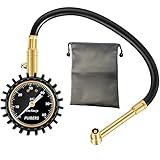
- 1. Reliable Air Pressure Gauge for Tires, full gear precision movement with bronze bourdon tube, no battery required, durable brass construction, accuracy meets ANSI Grade B40.1 Standards, more accurate and reliable than digital tire pressure gauge, maintains good performance for many years.
- 2. Legiable Luminous Dial, glow in the dark, clear display, easy to read even in very low light conditions; Patented design flexible hose and professional 90 degree right angle chuck design, very suitable for motorcycles, car, bike measurement.
- 3. Metric range design, range to 60 psi, meet your reading needs. 60 PSI Right Angle Chuck air gauge tire pressure is perfect for your motorcycle, bike, car, dirt bike, SUV, etc. for Scharder valves.
- 4. Heavy Duty Strong Structure Ensures Its Long Service Life,accurate pressure holding and quick pressure relief function; Larger button is conformed to ergonomic design which makes it more comfortable to press. An ideal gift for Father's Day or Christmas.
- 5. PUIBERS has professional car tire pressure gauge design. After continuous testing, more perfect tire pressure gauge for cars is designed. The quality can be guaranteed and the life-long friendly customer support. Buy with confidence, save a fortune with improved gas mileage, and enjoy a smoother and safer driving experience.
Brake early and avoid harsh braking
Look well ahead for signals, queues, speed breakers and turning traffic. Rolling off the throttle early and braking progressively reduces the repeated acceleration-and-braking cycle typical of stop-and-go riding. This is a fuel-saving habit as well as a smoother way to manage traffic; it must never override safe following distance or the braking technique required by the road.
Quick wins for a faster PC:
Clear out junk files and repair common Windows errorsFree Scan →Scan for outdated or missing drivers - takes under a minuteDriver Scan →Use the accelerator judiciously
Keep throttle openings measured when starting, climbing and joining traffic. Do not rev the engine while stationary or hold a high throttle to maintain speed when a lower, appropriate gear would do. Smooth control is more useful than chasing a particular speed on roads where conditions require a different pace.
Switch off for stops longer than two minutes
Bajaj’s fuel-saving advice recommends switching off the engine during stops longer than two minutes. Apply that rule only when it is safe and legal: keep the motorcycle under control, watch traffic and pedestrians, and restart when you need to move. Do not shut down in a situation where a quick escape or continuous control is required.
Carry only the load you need
Extra luggage and a passenger increase the work the engine must do, especially during repeated starts and on inclines. Secure the permitted load properly and stay within the limits in your manual. Do not remove safety equipment or overload the motorcycle in an attempt to improve a fuel-economy number.
Keep a consistent, safe pace
The Pulsar 125 manual gives 40–50 km/h as an optimum-speed guidance in its fuel-saving section. That range belongs to that particular manual and should not be presented as the ideal or safest speed for every Pulsar, road or traffic situation. Obey posted limits and ride at a speed appropriate to visibility, surface, weather and surrounding traffic.
Also popular on Amazon

- PRO ACCURACY - mechanic recommended, performance tested, & calibrated accurate to professional ANSI 2A standards - with dual pressure sensors certified to ±0.50% FS (0.50 PSI), offering reliable readings up to 100 PSI w/ precise readout resolution of 0.10 PSI - so you can now maintain your tires with a shop-grade mechanic trusted tool
- STRONG & RUGGED - feels solid in the hand & built to last from 100% solid brass & steel parts shielded by our shock-resistant gear-style protective guard to protect against drops & impact. Features ultra soft & strong 10" fully rotational, leak-proof HybridFlex air hose w/ 360 swivel angled air chuck that can be swapped out w/ any 1/4" NPT chuck
- ADVANCED ENGINEERING - all readings lock-on to the display until the "ON" button is pressed once to reset to zero. Features built-in air bleeder valve that bleeds pressure in real time without needing to reset the display - ideal for cars, trucks, motorcycles, bikes, RV & trailers, spare tires, and much more
- SMART DISPLAY - features high-resolution digital 2.5 inch LCD display screen w/ battery life indicator & bright LED backlight for high visibility in the dark. Gauge is programmed to auto shut-off after 150 seconds of inactivity to save battery (2x AAA batteries included)
- 100% Lifetime Warranty by JACO - serving the automotive industry for 35+ years. Enjoy longer-lasting tires, improved fuel economy, and superior vehicle performance & handling with properly inflated tires.
Maintenance checks that can affect fuel efficiency
Maintenance cannot turn one model into another, but an incorrect adjustment, restriction or mechanical drag can reduce efficiency and affect safety. Perform only checks permitted by your manual; have a qualified technician handle inspections that require specialist tools or disassembly.
Tyre pressure
Check both tyres when they are cold and set pressure to the value specified for your exact variant, wheel size and load. Under-inflation increases rolling resistance and can affect handling; over-inflation can reduce the intended contact patch and ride compliance. Bajaj’s NS125 article recommends manufacturer-specified pressure, while the Pulsar 150 FAQ illustrates that front and rear values can differ and may vary with load. Do not copy a pressure from another Pulsar.
A simple pressure gauge is useful beside this check. Choose one with a readable scale, a pressure range covering your manual’s value, a durable valve connection and a form you will actually use. The gauge does not improve mileage by itself; accurate, regular checking does.
Engine oil: grade, level and quantity
Inspect the oil level using the procedure in the manual and use the specified grade and quantity. Too little, too much or an unsuitable lubricant can affect engine operation. Do not infer an oil grade or fill volume from a different Pulsar engine, service invoice or online comment. The Pulsar 125 Owner’s Manual (2025 single-seat carbon-fibre edition), Pulsar 150 Owner’s Manual and NS200 manual each provide model-specific maintenance information.
Free tools Windows power users keep installed
One-click scans. No signup required.
Air filter
A dirty or restricted air filter can affect the engine’s air supply. Inspect, clean or replace it only as the periodic maintenance chart for your motorcycle directs. The interval depends on the model and operating environment, so a universal kilometre interval would be misleading. Dusty roads may require more attention than clean, paved commuting, but the manual remains the reference.
Also popular on Amazon

- Whats Include: 5 packs of tire pressure gauges with a range of 10 - 100 PSI to meet the needs of various models and applications. It is suitable for giving as a gift
- Accuracy Measure Tire Pressure : The tire pressure gauge pencil has high-precision measurement function to ensure accurate readings of your tire pressure. Easily readable printed clear scale
- Widely Application:This multi-purpose tire pressure gauge is easy to use on cars, trucks, off-road vehicles, RVs, ATVs, motorcycles, scooter and bicycles, and can easily obtain fast and accurate readings to ensure correct inflation and deflation.
- Easy to Carry: Mechanical tire pressure gauge, no battery required, not affected by lack of electricity, ready to use at any time. The written test hanging buckle design can hang clothes pockets, making it easy to carry.
- Reliable Material: Stainless steel components prevent rust and corrosion; Crafted to create a great seal around a tire's valve stem.
Spark plug
Inspect and clean the spark plug and set the electrode gap only to the specification for your engine. A plug that is fouled, worn or incorrectly gapped can contribute to poor running. The plug type, gap and inspection procedure are not interchangeable across the Pulsar range; obtain the values from the exact manual or a qualified technician.
Fuel lines and connections
Look for fuel leaks or damaged connections during routine checks. A leak is a safety issue, not merely a mileage problem. Stop riding if you smell or see fuel, keep flames and ignition sources away, and arrange qualified inspection. Never try to compensate for a leak by changing riding habits.
Brakes that do not drag
After a ride, unusual heat, a persistent rubbing sound or a wheel that does not spin normally can indicate brake drag. Do not touch a hot brake component to test it. Have the brake system checked promptly; binding brakes waste energy and compromise stopping performance. Never loosen or disable a brake to improve rolling resistance.
The Tool Desk
Outbyte PC Repair FREERepair Windows errors before they cause bigger problemsFix Now →Outbyte Driver Updater FREEScan for outdated or missing drivers - takes under a minuteDriver Scan →Clutch-lever play
Maintain the free play specified in your manual. Incorrect clutch adjustment can cause incomplete disengagement, slipping or difficult gear changes, all of which can affect control and efficiency. If adjustment does not restore correct operation, seek a qualified inspection rather than continuing to ride with a slipping clutch.
Follow the periodic maintenance chart
Record services and repairs, including the date and odometer reading. Use the schedule for your exact variant, not a generic Pulsar checklist. The manuals identify checks such as oil, air filter, spark plug, brakes, clutch and fuel connections; the chart determines when each inspection or replacement is due.
Also popular on Amazon
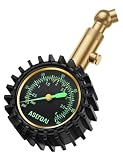
- TRUSTED BY OVER 3 MILLION USERS: Based in Garden Grove, California, AstroAI serves customers across 15+ countries, providing professional-grade automotive tools for everyday drivers, mechanics, and DIYers.
- OPTIMIZED 2-60 PSI ACCURACY: Calibrated to ANSI B40.1 precision standards (±1%). Focused on the most common 2-60 PSI range with ultra-large scale divisions for fast, accurate readings on cars without guessing.
- NIGHT-READY DUAL SCALE: Features a 2-inch glow-in-the-dark pointer and dual PSI/BAR scales on one dial. Easily check tire pressure during midnight emergencies or low-light garages with zero tedious unit conversions needed.
- ALL-WEATHER BATTERY-FREE: Engineered with precision brass internals that require no batteries or electronics. Delivers immediate needle response and reliable readings even in extreme cold winter, high heat, or wet conditions.
- RUGGED & DROP-PROOF BUILD: Encased in a shock-absorbing protective rubber armor with a durable solid brass body. Built to withstand garage drops and rough trunk storage while maintaining accurate calibration over years of use.
How to compare mileage reports without drawing the wrong conclusion
When two riders report different numbers, separate the variables before blaming the motorcycle. Use this checklist:
| Comparison axis | Why it changes the result | What to record |
|---|---|---|
| Pulsar variant and engine | Engine size, tuning, gearing and equipment differ. | Exact model name, displacement, generation and model year. |
| Route and traffic | Stop-start congestion, hills and signals require more acceleration. | City, highway or mixed use; distance and typical congestion. |
| Load | A passenger, luggage and accessories increase required effort. | Solo or two-up; approximate luggage and permitted-load compliance. |
| Riding style | Hard acceleration, harsh braking and high engine speed consume more fuel. | Steady or aggressive inputs, gear use and long idling periods. |
| Mechanical condition | Pressure, oil, filter, plug, clutch and brake condition influence operation. | Last service, adjustments, tyre condition and any symptoms. |
| Measurement method | Partial fills and different pump shut-off points create inconsistent litres. | Full-tank procedure, kilometres and litres for each fill. |
Bajaj’s Pulsar NS160 FAQ contains approximate real-world examples for that specific motorcycle. Such examples can illustrate why owner reports vary, but they are not a benchmark for every Pulsar. No official source establishes a portfolio-wide mileage figure or a guaranteed percentage improvement from these habits.
A practical weekly and monthly routine
Before regular rides
- Check cold tyre pressure against your model’s manual and look for visible damage.
- Look for fuel or oil leaks and confirm that controls operate normally.
- Notice whether either brake shows signs of binding or abnormal heat after use.
At each refill
- Record litres, odometer or trip distance, station and the conditions of the previous tank.
- Use the same full-tank level and calculate km/L only after the refill.
- Flag a sudden change rather than editing the number to fit an expectation.
At the service interval
- Use the exact periodic-maintenance chart for your variant.
- Ask the technician to verify oil specification and level, air-filter condition, spark-plug condition and gap, clutch play, brake freedom and fuel-line connections.
- Keep the service record so a gradual decline can be distinguished from a one-off traffic or route effect.
What to do when mileage suddenly falls
- Confirm the measurement. Repeat a consistent full-tank calculation. Check that the odometer or trip reading and litres entered are correct.
- Check recent conditions. Note congestion, detours, hills, rain, a passenger, luggage, tyre-pressure changes, long idling or a different fuel source.
- Inspect simple items safely. Check cold tyre pressure, visible leaks and obvious brake drag without touching hot components.
- Review service status. Compare the odometer with the maintenance chart for your exact model and verify that the correct oil and adjustments were used.
- Arrange qualified diagnosis. If the decline persists across repeated tanks, or the motorcycle has poor starting, misfiring, smoke, unusual noise, fuel smell, overheating or braking problems, stop treating it as a riding-efficiency issue and have it inspected. Use the model-specific Bajaj manual and a qualified service professional.
Do not attempt to recover mileage by fitting an unspecified spark plug, changing fuel-system settings, overinflating tyres, removing emissions or safety equipment, coasting with the engine switched off, or ignoring a warning symptom. Those actions can create a larger reliability or safety problem.
Bottom line for daily Pulsar riders
Start with an accurate baseline, then make the controllable changes: smooth acceleration, early and progressive braking, appropriate gears for speed and load, measured throttle use, no excess load and engine-off stops longer than two minutes when safe. Keep tyre pressure, oil, air filter, spark plug, brakes, clutch and fuel connections in the condition and schedule specified for your exact Pulsar. Judge improvement only from repeated, consistently measured tanks. Because the official guidance does not quantify a universal gain, treat any change in your km/L as an observation for your motorcycle and conditions, not a promise for the Pulsar range.




