Quick wins for a faster PC:
Scan for outdated or missing drivers - takes under a minuteDriver Scan →Clear out junk files and repair common Windows errorsFree Scan →Some links on this page are affiliate links: if you buy through them we may earn a commission, at no extra cost to you.
For most winter commuters, AWD is better at getting moving on slick starts, steep snowy driveways and roads that have not been cleared. FWD can be entirely adequate when snow is moderate, routes are plowed and the car has suitable tires. Neither drivetrain shortens braking distance or prevents a slide. On ordinary wet roads there is no well-established, drivetrain-wide winner. When rain is near freezing, rapidly forming ice—not AWD versus FWD—is the main danger.
Your tires, speed, following distance, route and weather decision matter more than the badge on the trunk. AWD can provide extra traction while accelerating, but it does not make hazardous travel safe.
As an Amazon Associate I earn from qualifying purchases.
AWD and FWD: what the difference actually changes
Front-wheel drive (FWD) sends engine torque to the front wheels. All-wheel drive (AWD) can send torque to both axles, with the amount and timing controlled by the particular vehicle’s system. That distinction matters primarily when you are asking the tires to transmit engine power on a low-grip surface.
Why AWD can pull away more confidently
When a driver accelerates on snow or ice, the driving tires can spin if the requested torque exceeds available grip. An AWD system can share that request across four contact patches, potentially reducing wheelspin and helping the vehicle get moving. Bridgestone describes this advantage for leaving a snowed-in parking space, traveling on an unplowed road and accelerating on a slick surface.
Popular on Amazon
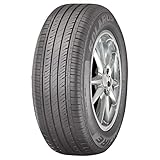
- 50,000 mile warranty
- All-Season Touring Tire
- Ideal for consumers looking for plenty of miles, good traction and fuel economy
- M+S Rated (mud and snow)
- Manufactured by Cooper Tire & Rubber Company
AWD behavior is not identical from one model to another. Honda’s Real Time AWD explanation, for example, describes increasing force at the rear wheels for an uphill start. Treat that as an explanation of Honda’s system and of load transfer, not a promise that every AWD vehicle reacts in exactly the same way.
Why FWD can still be a sensible winter choice
FWD places the engine’s weight over the front driving wheels, which can help those tires maintain grip in many ordinary conditions. Bridgestone considers FWD a reasonable option in moderate winter climates. Its weakness is most noticeable on a steep, slippery climb: as the car points uphill, load shifts toward the rear, reducing the normal force on the front tires that must both steer and drive the vehicle.
Head-to-head comparison for a commute
| Situation | AWD | FWD | What the evidence supports |
|---|---|---|---|
| Pulling away on a slick level road | Can distribute engine power to more wheels and reduce wheelspin. | May spin the front tires if acceleration is too aggressive, but can work well with good tires and gentle throttle. | AWD’s clearest advantage is acceleration traction, not stopping. |
| Starting uphill on snow or ice | Can increase rear-wheel contribution as load moves rearward; system response varies by vehicle. | Front-wheel load can decrease on the incline, making a very slippery start harder. | AWD is more helpful on steep, slick starts. |
| Unplowed or deeper snow | Extra driven wheels can help maintain forward motion, provided the vehicle does not become high-centered. | May struggle sooner when front tires lose grip or snow depth exceeds the vehicle’s capability. | AWD is useful, but ground clearance, tires and snow depth still set the limit. |
| Braking on snow, ice or wet pavement | Does not shorten braking distance. | Does not have an AWD acceleration benefit, but braking is performed by all four wheels through the brake system. | Ford owner-manual guidance says AWD accelerates better in snow and ice but “cannot stop any faster.” |
| Steering through a slippery corner | Does little to create cornering grip once the tires are overloaded. | Has the same tire-and-speed limitation. | Bridgestone says AWD provides little turning help compared with a two-wheel-drive vehicle on all-season tires. |
| Ordinary rain above freezing | No general, research-supported winner. | No general, research-supported winner. | Use appropriate speed, tread and following distance; do not buy AWD solely for normal wet pavement. |
| Rain near freezing | Can still lose traction if ice forms. | Can still lose traction if ice forms. | The National Weather Service recommends slowing down and leaving plenty of distance because ice can form quickly. |
Snow: when AWD earns its advantage
Snowy intersections and parking spaces
The repeated stop-and-go of a commute exposes traction differences. A careful AWD driver may pull away from a snow-covered parking space or signal-controlled intersection with less wheelspin. That extra ability is most useful when the surface is loose, polished by traffic or slightly uphill.
It is not a license to apply full throttle. Spinning all four tires can still overwhelm the available grip, and electronic traction controls may reduce power abruptly. Accelerate smoothly and let the system work rather than trying to force momentum.
Steep hills and ramps
Inclines combine low grip with load transfer. On an uphill FWD start, some weight shifts away from the front axle. If the front tires cannot both steer and transmit torque, they may spin or the vehicle may stop short of the crest. AWD can send useful torque to the rear axle in this situation. Descending the same hill reverses the practical priority: controlled speed and braking distance matter more than which axle is powered.
Unplowed streets and deeper accumulation
AWD can help maintain forward motion on an uncleared road, but it cannot overcome a snow depth that lifts the vehicle’s underbody or blocks the tires. A lower AWD crossover may be less capable than a higher-clearance FWD vehicle in deep snow. Check the forecast and road-treatment status rather than assuming a drivetrain makes any road passable.
Also popular on Amazon
- 50,000 mile warranty
- All-Season Touring Tire
- Ideal for consumers looking for plenty of miles, good traction and fuel economy
- M+S Rated (mud and snow)
- Manufactured by Cooper Tire & Rubber Company
Moderate, regularly plowed winter routes
For a route that is cleared promptly, mostly level and driven at conservative speeds, FWD with suitable tires can meet normal commuting needs. The decision becomes less about theoretical maximum traction and more about whether you can postpone or cancel a trip when conditions exceed the car’s capability.
Braking and steering: the limits AWD cannot remove
AWD controls how engine power reaches the road; it does not create additional tire friction for a stop. BMW’s cold-weather guidance summarizes the distinction: “In the winter, four-wheel drive can help you get going but won’t help when you’re trying to stop.” Ford owner-manual guidance makes the same point: “Although an all-wheel drive vehicle accelerates better than a two-wheel drive vehicle in snow and ice, it cannot stop any faster as braking occurs at all four wheels.” Consult your own manual for system-specific instructions, but treat the principle as universal.
Cornering has a similar limit. Entering a turn too quickly can produce understeer or oversteer in either drivetrain. AWD may let you accelerate earlier on the exit, yet the tires still have to supply the lateral grip needed to follow the curve. Reduce speed before the turn, make steering inputs smooth and leave room for an unexpected stop.
Tires are the first winter decision
Why tire type changes the equation
Winter tires use cold-weather compounds and tread designs intended to remain effective in cold, snowy and icy conditions. BMW notes that tire design affects stopping distance, and Bridgestone says winter tires can improve control regardless of drivetrain. A FWD car on appropriate winter tires may be safer than an AWD car on worn or poorly suited all-season tires.
Recommended Free Tools
Choose a matched, approved set
Use four tires of the correct size, load rating and speed rating for your vehicle unless the manufacturer explicitly specifies another arrangement. Verify fitment in the owner’s manual, door-jamb label or a qualified tire professional. Mixing substantially different tread designs or wear levels can upset handling and confuse traction-control systems.
Inspect condition before the season
- Check tread condition and look for uneven wear, cracks, bulges or damage.
- Set pressures when the tires are cold and follow the vehicle label rather than a generic number.
- Confirm that the spare, jack and tire-inflation equipment are usable.
- Replace tires that are aged or damaged even if tread appears acceptable.
No single tire model is right for every vehicle. The relevant recommendation is winter tires for your vehicle, with fitment and ratings verified before purchase.
Also popular on Amazon

- Designed for use on passenger cars and sedans
- Backed by a 70,000 mile limited manufacturer tread life warranty
- Three Peak Mountain Snowflake certified for use in moderate to severe winter conditions
- Multiple siping arrangement improves traction and grip in wet and winter conditions
- Three wide circumferential grooves evacuate water and slush for increased wet and winter traction
Rain: separate wet pavement from freezing rain
Ordinary rain
On wet pavement above freezing, this evidence does not establish a general AWD advantage over FWD. Hydroplaning and wet-road stopping depend on speed, water depth, tread condition, inflation and roadway design. AWD cannot prevent a tire from riding on water, and it does not justify following closer or driving faster.
Rain close to 32°F (0°C)
Near-freezing rain can freeze on pavement and create an ice hazard quickly. The National Weather Service advises slowing down and leaving plenty of distance. The same warning applies to AWD and FWD: four driven wheels can still slide when the road surface offers almost no friction. If the forecast or road reports indicate icing, changing the trip plan is safer than selecting a different drivetrain.
Windows Errors? Fix Them Before They Spread
Repair common Windows errors and clear accumulated junk for a smoother, more stable PC - no reinstall needed.Free scan · no reinstallOutdated Drivers Are Slowing You Down
One free scan finds every outdated or missing driver and matches the right update for your exact hardware.Free scan · exact hardware matchDecide based on your actual commute
Use this route-and-weather screen before treating AWD as a necessity:
- Map the difficult sections. Identify steep driveways, hilly approaches, untreated side roads, exposed bridges and areas that routinely drift or ice.
- Check local operations. Look at the forecast, warnings and road-condition reports before leaving. Determine whether your route is plowed, salted or likely to remain untreated.
- Classify the surface. Distinguish loose snow from polished ice and ordinary rain from freezing rain. AWD’s acceleration benefit is most relevant to the first two snow scenarios, not to stopping on any of them.
- Audit your tires. Confirm winter suitability, tread, pressure and correct fitment before comparing drivetrains.
- Set a cancellation threshold. Decide in advance when remote work, a delayed departure or another route is safer than attempting the trip.
| Your conditions | Practical conclusion |
|---|---|
| Mostly level, plowed roads; moderate snowfall; flexible schedule | FWD can be adequate with suitable tires and conservative driving. |
| Frequent steep hills, untreated roads or deep snow; travel cannot easily be delayed | AWD offers a meaningful starting and acceleration margin, but does not remove the need for winter tires or caution. |
| Mostly rain above freezing | Do not assume AWD is better; prioritize tire condition, speed control and wet-road distance. |
| Regular freezing-rain or ice exposure | Neither drivetrain makes the trip safe. Monitor warnings and change plans when roads are hazardous. |
Driving technique for either drivetrain
Before moving
- Clear snow and ice from every window, mirror, lamp and roof area that could slide forward under braking.
- Allow extra time so you can accelerate, steer and brake gradually.
- Keep the vehicle’s traction and stability systems enabled unless the manual gives a specific reason to change a setting.
While moving
- Accelerate gently and avoid abrupt steering, braking or lane changes.
- Increase following distance substantially on slick roads; AWD does not reduce stopping distance.
- Brake before a curve, not while asking the tires to handle maximum cornering force.
- If the vehicle begins to slide, look and steer smoothly toward the intended path and ease off abrupt inputs; follow the owner’s manual and driver-training guidance for your vehicle.
If you are stuck
Stop spinning the tires. Straighten the wheels, clear snow from around the tires if it is safe, and use only the traction-control or drive-mode procedure described in the manual. Avoid repeated high-power attempts that can bury the vehicle or damage components. If conditions are dangerous, call for assistance rather than continuing onto an untreated road.
Independent reader supportYour contribution helps us test, update, and keep practical guides available for everyone.Prepare the vehicle for a winter commute
The National Weather Service recommends checking the forecast and road conditions, winterizing the vehicle, inspecting tires and other systems, carrying a winter supply kit and changing plans when travel is hazardous. A practical kit can include:
- Charged phone and vehicle charger
- Blankets and warm clothing
- Flashlight and spare batteries
- First-aid kit and drinking water or food
- Snow shovel, scraper and brush
- Battery booster cables or an appropriate jump starter
- Cold-rated windshield-washer fluid
Keep the fuel or battery state of charge sufficient for delays, and tell someone your route when a major storm is expected. These preparations benefit both drivetrains and often matter more than a small difference in launch traction.
Also popular on Amazon

- 3PMSF WINTER CERTIFIED - Three Peak Mountain Snowflake (3PMSF) certified to meet industry standards for severe snow service, providing enhanced traction in snow while maintaining dependable all weather performance.
- DEPENDABLE ALL-SEASON PERFORMANCE - Asymmetric tread design delivers reliable traction and responsive handling on dry roads, wet pavement, and in light snow for confident year-round driving.
- ENHANCED STABILITY & PRECISE CONTROL - Strong outer shoulder blocks improve cornering stability, while optimized 3D sipes increase traction and steering precision for greater confidence behind the wheel.
- WET WEATHER & QUIET RIDE - Four wide circumferential grooves efficiently evacuate water to improve wet-road traction, while the multi-pitch tread pattern helps reduce road noise for a quieter, more comfortable ride.
- Premium Quality Backed by 5-Year Warranty: Rigorously tested and protected by 5-Year Limited Manufacturer's Warranty. 60,000 Mile Limited Tread Wear Out Warranty and 3-Year Road Hazard Warranty.
Vehicle-specific cautions before you buy or drive
AWD systems are not interchangeable
Clutch-based, continuously variable and mechanically linked AWD systems can distribute torque differently. Some engage the second axle only after slip is detected; others can anticipate demand. Read the owner’s manual for the system’s operating limits, drive-mode instructions and warning messages.
Ground clearance and vehicle condition still matter
AWD cannot help if the underbody is packed with snow, the tires are worn, the suspension is damaged or visibility is poor. Compare the complete vehicle and its maintenance condition, not just the drivetrain label.
Chains and other traction devices
Traction-device requirements and wheel-position rules vary by vehicle. Consult the manual for approved tire sizes, chain or cable clearance and any restrictions before installing equipment. Do not infer compatibility from another AWD or FWD model.
Costs and efficiency are model-specific
There is no universal, current price, fuel-economy or maintenance difference that applies to every AWD and FWD vehicle. Those factors depend on the exact model, engine, transmission, weight, tire package and market. Evaluate them from the specifications and ownership information for the vehicles you are actually considering.
The Tool Desk
Outbyte PC Repair FREEClear out junk files and repair common Windows errorsFree Scan →Outbyte Driver Updater FREEFix the driver behind crashes, sound loss and screen glitchesFind Drivers →Common misconceptions to avoid
- “AWD means I can drive normally in a storm.” False. The National Weather Service states, “Even trucks and SUVs with four-wheel drive can still lose traction in the snow.”
- “AWD stops faster.” False. AWD’s principal benefit is power delivery during acceleration; braking still depends on tire-road grip, speed and distance.
- “FWD is unsafe in all snow.” False. FWD can be suitable for moderate, maintained winter routes when equipped and driven appropriately.
- “AWD is automatically better in rain.” Not established for ordinary wet roads. In freezing rain, both drivetrains face the same ice hazard.
- “The drivetrain matters more than the tires.” Usually the wrong priority. Tire suitability and condition affect acceleration, cornering and stopping for every drivetrain.
Bottom line for commuters
Choose AWD when your route regularly includes steep, slick starts, unplowed roads or deeper snow and you value an extra margin for getting underway. Choose FWD with confidence when winter conditions are moderate, roads are maintained and you can drive conservatively or delay travel when they are not. In either case, fit the vehicle with appropriate tires, leave more stopping distance, slow down for wet or icy surfaces and follow weather and road-condition warnings. AWD helps you go; it does not guarantee that you can stop, turn or safely complete a hazardous trip.




