What’s actually slowing this PC down?
Pick the symptom - the matching free tool is one click away.
Some links on this page are affiliate links: if you buy through them we may earn a commission, at no extra cost to you.
Yes—but only conditionally. A sound, properly maintained air-cooled Volkswagen Beetle Type 1 can handle routine transportation for an owner who accepts frequent, model-specific maintenance and the limitations of an old car. It is not reasonable to describe a classic Beetle as having the crash protection of a modern vehicle. The right answer depends on the individual car’s condition, maintenance history, safety equipment, the roads it will use and the driver’s tolerance for mechanical work and inconvenience.
First, separate the classic Type 1 from later Beetles
In this context, “classic Volkswagen Beetle” means the air-cooled Type 1, not the New Beetle or the later Beetle sold in the 1990s and 2000s. That distinction is essential when discussing safety evidence.


As an Amazon Associate I earn from qualifying purchases.
The Insurance Institute for Highway Safety (IIHS) identifies the New Beetle as a 1998 reincarnation. Its 2002 rating applies to 1998–2010 vehicles built after June 1998, while a separate 2013 rating covers a still later Beetle and reports mixed results among the tests performed. Those ratings describe the later, water-cooled cars and must not be presented as crash ratings for an air-cooled Type 1.
No directly applicable Type 1 crash-test score is identified in the available ratings. That is an evidence limit, not a safety certification. It means you should not use a later Beetle’s rating to predict how a particular classic will perform in a collision, nor should you assign the Type 1 a numerical safety grade that has not been established.
Popular on Amazon

- Used Book in Good Condition
What safety can reasonably mean in a classic Beetle
Mechanical safety comes before convenience
A daily driver has to stop, steer, remain visible and keep its tires in usable condition every day. The reproduced 1977 Volkswagen owner’s manual specifically tells drivers to check tire pressure and condition, lights, safety belts and brake operation, and to drive defensively. These are basic checks, but on an old car they are not optional housekeeping.
The same manual frames safety as a combination of the vehicle and the driver. It says: “The engineering and safety features that have gone into your VW will be enhanced by . . . you, the safe driver — who knows his vehicle and all the controls, — who maintains his vehicle properly, — who uses his driving skills wisely.” The quotation is from an official Volkswagen document reproduced online; it is period guidance, not a modern crash-performance claim.
Do not infer modern crash protection
A Type 1’s design and restraint equipment belong to its production era. Even when a particular car has been restored beautifully, restoration quality does not turn it into a modern safety design. The cited safety evidence establishes no Type 1 crash-test result, and it does not support a claim that one year or trim level is safe in every type of collision.
For occupants, the practical implication is risk management: choose roads and speeds carefully, maintain the car’s brakes, steering, suspension, tires, lighting and belts, and recognize that a newer vehicle is the more defensible choice when crash protection is the overriding priority.
Also popular on Amazon
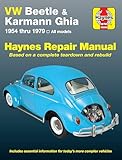
- Step-by-step procedures written from a complete teardown and rebuild, giving you the confidence to tackle repairs at any skill level.
- Over 700+ clear photos and diagrams that simplify complex systems, helping you complete jobs faster and with fewer mistakes.
- Comprehensive troubleshooting and fault-finding guides to quickly diagnose problems and reduce costly downtime.
Safety evidence: what the available ratings do and do not tell you
| Vehicle covered | Evidence identified | What it can be used for | What it cannot establish |
|---|---|---|---|
| Classic air-cooled Type 1 | No directly applicable crash-test rating was identified. | It supports a cautious, condition-based assessment rather than a numerical rating. | It cannot establish a universal crashworthiness score or predict the behavior of every restored or modified car. |
| New Beetle, 1998–2010 | IIHS 2002 rating for vehicles built after June 1998. | It describes the later New Beetle generation tested by IIHS. | It is not evidence about the classic Type 1. |
| Later Beetle, including 2013 model | IIHS rating with mixed results across tests. | It describes that later vehicle’s test performance. | It cannot be transferred to an air-cooled Beetle. |
When a classic Beetle can work as a daily driver
The car must be a known quantity
Daily use is most realistic when the Beetle has a documented maintenance history, a careful inspection and no unresolved brake, steering, suspension, tire, lighting or electrical faults. A shiny paint job is not evidence of mechanical condition. Rust repair, engine work and interior restoration can coexist with neglected wheel bearings, deteriorated hoses, poor wiring or worn suspension components.
Condition matters more than the badge. Two cars with the same model year can have completely different risk profiles because of corrosion, previous repairs, modifications, storage conditions and the quality of work performed by earlier owners.
Do these 3 things before closing this tab:
1Repair Windows errors before they cause bigger problems2Fix the driver behind crashes, sound loss and screen glitches3Clear out junk files and repair common Windows errorsYou need access to appropriate expertise
Volkswagen Classic Parts lists repair guides for Beetle Type 1 models and describes Classic Competence Centers that support maintenance, repairs, restoration and parts sourcing. That support is useful, but availability and fitment can vary. Confirm the exact year, market and variant before ordering a component or following a procedure.
A general repair shop may be able to perform routine work, but a mechanic who understands air-cooled Type 1 systems is valuable when diagnosing recurring faults or assessing a modified car. If no suitable help is available locally, the time and transport involved in finding it become part of the daily-driver calculation.
Also popular on Amazon
The commute has to suit the car
A classic Beetle is a better candidate for a predictable, moderate-speed route than for a commute dominated by high-speed traffic, long distances, severe weather or roads where a breakdown would create an immediate hazard. The vehicle’s capabilities, the driver’s comfort with its controls and the availability of a backup plan all matter.
Daily practicality also includes parking, security, heating and ventilation, luggage needs, passenger use and the ability to keep the car dry and maintained. These are individual-use questions rather than universal specifications, so inspect the actual car and route instead of assuming every Type 1 behaves alike.
Maintenance is part of the ownership requirement
The Type 1 maintenance reference covering 1960–1986 cars includes brakes, steering, suspension, tires and electrical systems. That range is a coverage description, not one schedule that applies unchanged to every Beetle. Procedures and service details must be matched to the model year and specification.
Checks before driving
- Check tire pressure and inspect each tire for damage, age-related deterioration and abnormal wear.
- Confirm that the brake pedal feels normal and that the car stops without pulling, grinding or excessive travel.
- Test exterior lights, brake lights and turn signals before entering traffic.
- Look for fresh fluid leaks, loose components or signs of overheating.
- Confirm that seat belts latch and retract properly and that the controls are familiar to the driver.
These checks reflect the priorities in the 1977 owner’s manual. They do not replace a workshop inspection or the year-specific procedures in a suitable repair reference.
Also popular on Amazon

- Used Book in Good Condition
Periodic inspection areas
- Brakes: inspect the complete system rather than judging it by a short test drive alone.
- Steering and suspension: investigate play, wandering, clunks, uneven ride height and abnormal tire wear.
- Tires and wheels: verify correct pressure and condition, not merely adequate tread depth.
- Electrical system: check charging, starting, wiring condition, fuses and lighting reliability.
- Body and structure: examine corrosion and previous repairs, especially where rust could affect mounting points or load-bearing areas.
The correct interval and method depend on the car’s year, market and modifications. A model-specific Type 1 repair manual is more useful than applying a generic checklist to every version.
A practical pre-purchase process
- Identify the exact car. Record the model year, market, body style, engine and transmission, and note non-original parts. This information determines which manual procedures and parts fit.
- Review the history. Look for evidence of brake, steering, suspension, tire, electrical and rust repairs. Missing records are a reason for a deeper inspection, not proof that the work was done.
- Inspect it cold. A cold start can reveal starting problems, smoke, unusual noises and warning signs that may be hidden after the engine has warmed up.
- Test the controls and visibility equipment. Verify brakes, steering, lights, belts and the driver’s ability to operate every control confidently.
- Use an independent specialist. Have a mechanic familiar with Type 1 cars inspect the underside, structural areas, suspension, brakes, wiring and previous repairs.
- Evaluate the route. Drive the roads you actually intend to use. Consider traffic speed, hills, weather, distance, parking and what happens if the car cannot continue.
- Decide on a backup plan. A second vehicle, transit option or roadside-assistance arrangement can make occasional faults manageable, but it does not substitute for repairing a safety defect.
Common reasons a daily-driver plan fails
Buying on appearance alone
Fresh paint and a tidy cabin can conceal corrosion, worn suspension, deteriorated wiring or neglected brakes. Treat visual restoration as separate from mechanical certification.
Free tools Windows power users keep installed
One-click scans. No signup required.
Following the wrong procedure
Type 1 cars span many years and specifications. A procedure that is correct for one model can be unsuitable for another. Check the manual’s coverage before adjusting, replacing or ordering anything.
Assuming parts are interchangeable
Classic Parts support and repair guides are useful resources, but the correct fitment still has to be confirmed for the exact year, market and variant. Incorrect parts can create both reliability and safety problems.
Also popular on Amazon
Using later Beetle ratings as reassurance
IIHS ratings for the 1998–2010 New Beetle and the later Beetle concern different vehicles. They do not fill the evidence gap for the classic Type 1.
Ignoring the driver’s workload
An old car may require more attention to gauges, sounds, controls and changing road conditions. If the driver is uncomfortable monitoring the vehicle or responding to a developing fault, the car is not a practical daily choice for that driver.
The Tool Desk
Outbyte Driver Updater FREEFix the driver behind crashes, sound loss and screen glitchesFind Drivers →Outbyte PC Repair FREEClear out junk files and repair common Windows errorsFree Scan →How to compare a Type 1 with choosing a newer vehicle
The meaningful comparison is not a made-up reliability score or an estimated ownership cost. The available evidence does not provide direct comparative figures for cost, reliability or performance. Instead, compare the decision along four practical axes:
| Decision axis | Questions to ask | Warning sign |
|---|---|---|
| Crash evidence and equipment | Is the driver accepting an older design with no directly applicable Type 1 crash rating? | Choosing the car because a later Beetle received an IIHS rating. |
| Maintenance demand | Can the owner perform or arrange recurring inspections and repairs? | No time, tools or plan for faults outside routine servicing. |
| Parts and expertise | Can correct parts and Type 1 knowledge be obtained for this exact car? | Buying components without confirming year and market fitment. |
| Road and commute fit | Are traffic speeds, distance, weather and backup options compatible? | A high-speed or remote route where a breakdown would be dangerous. |
So, is it safe and practical?
A classic Type 1 can be practical daily transportation when it is structurally and mechanically sound, inspected by someone who understands the model, maintained according to its exact specification and used on roads that suit its capabilities. The owner must also accept that an old car can demand more attention than a newer one.
It is not an evidence-based conclusion to call every classic Beetle unsafe, just as it is not defensible to call every example safe. The cited safety evidence supplies no Type 1 crash-test score and no universal reliability or cost statistic. The responsible conclusion is conditional: a carefully selected and maintained example may work, while an unknown or neglected car is a poor daily-driver bet.
If maximum collision protection, predictable low-maintenance transport or a demanding high-speed commute is the priority, choose a later vehicle with safety evidence that actually applies to that vehicle. If the priority is classic character and the owner is prepared for model-specific upkeep, a properly evaluated Type 1 can serve—provided its limitations are accepted before it becomes the only way to get to work.
Recommended Free Tools