Do these 3 things before closing this tab:
1Scan for outdated or missing drivers - takes under a minute2Clear out junk files and repair common Windows errors3Fix the driver behind crashes, sound loss and screen glitchesSome links on this page are affiliate links: if you buy through them we may earn a commission, at no extra cost to you.
Short answer: Safety depends on what “car robot” means. Driver-assistance systems still require a human to drive or supervise. Robotaxis operate only within a defined service area and under specific conditions. Fully automated cars that consumers can buy and use without human fallback are not currently available, according to the National Highway Traffic Safety Administration (NHTSA). Privacy, cybersecurity, software updates, remote assistance and emergency procedures are therefore as important as crash-avoidance sensors.
What counts as a “car robot” today?
Marketing often uses “self-driving” for several very different technologies. The automation level determines who is responsible when conditions change and what safety claims are reasonable.
As an Amazon Associate I earn from qualifying purchases.
Free tools Windows power users keep installed
One-click scans. No signup required.
| System | What it does | Human responsibility | Availability |
|---|---|---|---|
| Levels 0–1 | Provides warnings or one assistance function, such as adaptive cruise control or lane keeping. | The driver must operate the vehicle and remain responsible. | Widely sold. |
| Level 2 assistance | Can control steering and speed together in limited situations. | The driver must continuously monitor the road and be ready to take over. It is not “self-driving.” | Widely sold in some markets. |
| Constrained robotaxi | Drives without a passenger steering, but only in a mapped area, approved operating conditions and a defined service mode. | The operator’s system and remote-support plan provide the fallback; the passenger is not expected to drive. | Available only in selected locations and services. |
| Levels 3–5 consumer automation | Would perform the driving task in specified conditions (Level 3) or broadly (Levels 4–5). | Responsibility and fallback depend on the level and operating design. | NHTSA says fully automated consumer vehicles are a future technology, not something consumers can currently purchase and use as fully self-driving cars. |
NHTSA describes vehicles with automated driving systems as a future technology rather than a product currently available for ordinary consumer purchase and use. A robotaxi in a limited commercial service is therefore not equivalent to owning a car that can drive itself anywhere.
Why robotaxi safety is conditional
Operating domain and weather limits
A robotaxi may be restricted to a geofenced map, particular roads, speed ranges, daylight hours or weather conditions. The system can be designed and tested for those conditions without being capable of handling every road. Heavy rain, snow, flooding, unusual construction, blocked lanes or an unrecognized object can trigger a stop, a request for remote assistance or a service withdrawal.
Popular on Amazon

- GPS TRACKER FOR VEHICLES: A strong built-in magnet holds it under a car, truck or RV for stealthy anti-theft tracking. An included screw mount adds flexible vehicle placement
- MAGNETIC GPS TRACKER FOR VEHICLES: The 10,000 mAh battery lasts 2 to 7 months active at 1 to 5 minute updates or up to 12 months in sleep mode. Built for cars, trailers, fleets, equipment, boats and motorcycles
- REAL-TIME GPS TRACKER FOR CAR AND FLEET: Location updates every 15 seconds to 1 minute. A professional fleet GPS tracker and tracker device for vehicles that shows your car, truck and boat on one map
- INSTANT FLEET ALERTS: Get speed, geofence, movement, idle time, impact and battery alerts through SMS, email and app notifications, such as Delivery Van started moving from Depot. Download the alerts report in the app
- TRACKS INDOORS: Triangulation keeps you connected inside buildings, garages and malls, with Wi-Fi fallback indoors when GPS signals are harder to reach. GPS accuracy is 5 to 10 m outdoors
Before booking, check the service’s stated coverage and weather policy. A trip that is supported on a mapped arterial may not be supported on an unpaved road, a private driveway or a route outside the operating domain.
Fallbacks, updates and human support
Safety is a system property, not just a sensor feature. A service needs redundant braking, steering and power functions; a safe response when a sensor is unavailable; monitoring for software faults; secure updates; and a way to reach trained remote personnel. Remote assistance should help the vehicle interpret an unusual situation, not silently transfer the entire driving task to an unseen person without a documented process.
The Tool Desk
Outbyte Driver Updater FREEScan for outdated or missing drivers - takes under a minuteDriver Scan →Outbyte PC Repair FREERepair Windows errors before they cause bigger problemsFix Now →NHTSA’s current automated-vehicle work specifically addresses emergency-responder interaction, remote assistance and post-crash behavior. Those subjects matter because the safest response after a failure may be to stop in a predictable place, unlock access for responders, contact an operations center and preserve event data.
What the road-safety numbers do—and do not—show
NHTSA recorded 39,254 motor-vehicle deaths in 2024. That figure explains why automated safety technology attracts attention, but it is not a robotaxi crash rate.
NHTSA projects that Federal Motor Vehicle Safety Standard 127’s automatic emergency-braking requirements, including pedestrian automatic emergency braking, will save at least 360 lives and prevent at least 24,000 injuries each year. The rule requires the technology to be standard in passenger cars and light trucks by September 2029. Those estimates concern automatic emergency braking across covered vehicles; they do not prove that every robotaxi is safer than a human driver.
What data can a connected or autonomous car collect?
Privacy is a data-governance question. Depending on the vehicle, app and service mode, connected systems can process:
- Precise vehicle and mobile-phone location, route and trip history.
- Driving behavior such as speed, braking, acceleration and safety events.
- Exterior-camera imagery, cabin-camera video and sound-detection data.
- Voice commands, calls, messages and other communications routed through infotainment systems.
- Account details, payment information, support conversations and device identifiers.
- Infotainment interactions, including destinations and features used during a trip.
The FTC has described connected and automated vehicles as capable of generating “an enormous amount of data,” including real-time precise geolocation and the contents of driver communications. The same data that helps route a ride or investigate a crash can reveal where a person lives, works, worships or receives medical care.
Also popular on Amazon

- WORK & SLEEP WITHOUT WORRY - CarLock car anti theft device and car alarm monitors and alerts you on your phone when your vehicle is moved, when the engine starts, if unusual vibration is detected & even if the device is disconnected!
- MONITOR YOUR TEENAGER - We love our teens but they can be entirely different people behind the wheel. Car Lock car safety device detects harsh acceleration (drag racing), hard braking & sharp cornering (stunt driving).
- CAR BATTERY MONITORING - CarLock anti theft for car actively monitors the health of your vehicle and alerts you in advance if your car battery is running dangerously low or is experiencing high battery drain.
- LIKE GPS ON STEROIDS - Car Lock GPS tracker and car alarm includes detailed trip tracking which lets you monitor where your car has been. Whether your car is stolen or a "trusted" driver is going off course - you'll know!
- EXTREMELY AFFORDABLE - CarLock antitheft GPS vehicle tracker uses cloud computing, internet storage, GPS tracking and a modern day app (Android & iOS). You get all this for only $9.95 per month and the first month is FREE!
A manufacturer notice is not an industry-wide rule
Tesla’s current Robotaxi Rider Privacy Notice illustrates how policies can be narrower in ordinary operation and broader after a safety event. It says cabin-camera and sound-detection data are not used by default until support or an emergency is involved. Precise mobile and vehicle location is processed to request and route a ride; trip details and infotainment interactions are processed; and safety-event camera clips may be linked to the rider account. Early-access programs may use broader exterior-camera, cabin-camera and sound-detection analytics.
That notice is an example, not a universal promise or an independent verification of every operator’s behavior. Read the policy for the exact service, vehicle and market you will use.
Consent, sharing and retention
In its 2025 action involving GM and OnStar, the FTC alleged that precise location and driver-behavior data were collected and sold without informed consent. FTC Chair Lina M. Khan said the company monitored and sold precise geolocation and driver-behavior information, sometimes as often as every three seconds. The agency required affirmative express consent before collecting, using or sharing connected-vehicle data, with limited exceptions such as providing location information to emergency first responders.
What’s actually slowing this PC down?
Pick the symptom - the matching free tool is one click away.
Before enrolling in a connected-car or robotaxi service, look for specific answers to these questions:
- Which cameras, microphones and sensors operate during a normal trip?
- Is cabin audio or video analyzed continuously, only after a support request, or only after an emergency?
- How long are location, trip, driving-behavior and event recordings retained?
- Can you view, download, correct or delete account-linked data?
- Which contractors, insurers, law-enforcement agencies or emergency services can receive it?
- Does an emergency call, collision, airbag deployment or in-vehicle stop request change recording or sharing?
- What permissions does the companion app have on your phone, and can you revoke them without ending the ride service?
Can a robotaxi be hacked?
Any connected vehicle can present cybersecurity risk. Attackers could target a customer account, phone, backend service, wireless interface, diagnostic port, third-party accessory or software-update process. Potential consequences range from location and account exposure to service disruption or interference with vehicle functions. The FTC has warned that vehicle cybersecurity weaknesses could be exploited to extort money or cause physical harm.
No public guidance supports saying that any automated vehicle is impossible to hack. NHTSA calls cybersecurity critical to safe deployment and recommends continuous risk reevaluation, secure design, information sharing and recognized practices. Its best-practices document points to work by SAE International, ISO, Auto-ISAC, NHTSA, CISA and NIST. Auto-ISAC was fully operational on January 19, 2016; NHTSA’s document reported 64 members in early 2022. NIST identifies privacy and security in vehicle-to-vehicle, vehicle-to-infrastructure and vehicle-to-everything systems as a major standards theme.
Practical protections for riders and owners
- Install updates promptly. Apply vehicle, app and phone updates from the operator or manufacturer. Do not delay a safety or security patch merely because the car still drives normally.
- Protect the account. Use a unique, long password and multifactor authentication where offered. Do not reuse the robotaxi account password on email or shopping sites.
- Review app permissions. Limit location, contacts, microphone and Bluetooth access to what the service requires. Remove old phones and former riders from the account.
- Avoid untrusted accessories and software. Unknown diagnostic adapters, modified charging equipment and unofficial apps can expand the attack surface.
- Report anomalies immediately. Tell the operator if the vehicle behaves unexpectedly, the app shows an unfamiliar trip, a door or stop control acts abnormally, or an account alert appears. Preserve screenshots and the trip time.
- Use physical safety controls. If the service provides an emergency-help button, intercom or passenger stop control, learn its location before moving off.
What happens after a crash or during an emergency?
Follow the operator’s documented procedure
Emergency handling is manufacturer- and jurisdiction-specific. NHTSA’s 2026 automated-vehicle announcement says updated technical guidance will focus on emergency-responder interactions, safety-management systems, remote assistance and post-crash behavior. That means there is no universal assumption that every robotaxi can be opened, stopped or driven in the same way.
Also popular on Amazon
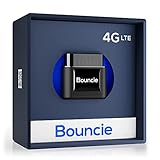
- Real-Time GPS Tracker Device for Vehicles — Ideal for personal use or fleet management, this GPS tracker updates driving location every 5 seconds. Our car tracking device also provides unlimited trip history, including detailed route history
- Driving Insights — Our OBD tracker for cars monitors speed, acceleration, hard braking, idle time, and more. This versatile family and fleet GPS tracker for cars also helps improve road safety by sending alerts in response to unsafe driving practices
- Vehicle Health — Unlike other vehicle tracking devices, our car tracker device continuously monitors diagnostic engine data, alerting you to potential maintenance issues, so you can avoid downtime and keep fleet and family vehicles in peak condition
- Geo-Fencing & Accident Detection — Set up geo-fences to receive notifications when your vehicle enters or exits designated areas; Equipped with advanced sensors and software, this vehicle tracker device instantly detects impacts and sends SMS alerts
- Easy To Install & Low Monthly Subscription — Our OBD GPS tracker for vehicles plugs directly into OBD2 ports and works on most vehicles 1996 and newer; $9.65 monthly subscription required - no hidden activation or return fees - cancel anytime
As one concrete example, Tesla’s first-responder resource provides interaction plans, emergency-response guides and rescue sheets for autonomous Model Y vehicles in Robotaxi service, and offers responder training. Other operators may use different controls, labels and access points.
Passenger actions after a collision or serious fault
- Use the in-vehicle emergency-help or stop control if you are able to do so safely. Follow the spoken or screen instructions.
- Call local emergency services when there is an injury, fire, dangerous location or immediate threat. Give the exact operator, vehicle model, street, direction of travel and trip destination.
- Tell responders that the vehicle is an automated service. Do not assume a conventional ignition key, gear selector or door release exists.
- Move away from traffic, smoke and damaged batteries only when emergency personnel direct you or it is clearly safe.
- Keep the trip receipt, incident number and time. Do not tamper with cameras, sensors or controls unless a responder instructs you.
A safety event can change the data policy. Tesla’s notice says recordings may be triggered by a collision, airbag deployment, emergency-help request or in-vehicle emergency stop and may be used to provide emergency services, evaluate the vehicle and arrange roadside assistance. Ask the operator what was recorded, who received it and how long it will be retained.
If a police officer stops the vehicle
Follow the service’s passenger instructions and any lawful direction from the officer. Keep your hands visible, explain that you are a passenger in an automated vehicle and provide the operator’s name and vehicle identification. The vehicle may contact its operations center or use a remote-assistance procedure. Do not attempt to take control unless the vehicle specifically provides a passenger control and the operator or officer directs you to use it.
How to compare two autonomous services
Price and a smooth demonstration do not reveal the most important safety differences. Compare the following items for the exact city, vehicle and service mode:
Quick wins for a faster PC:
Fix the driver behind crashes, sound loss and screen glitchesFind Drivers →Repair Windows errors before they cause bigger problemsFix Now →| Comparison area | Questions to ask |
|---|---|
| Operating domain | Which roads, times, speeds and weather conditions are supported? What happens when the route leaves the map? |
| Automation and fallback | Is a human required to monitor? If not, how does the vehicle handle a sensor or software failure? |
| Remote assistance | Can staff help with an unusual scene, and what authority do they have? Is the interaction logged? |
| Emergency stop and access | Where are passenger controls, exterior access points and responder instructions? |
| Cybersecurity | How are updates authenticated, vulnerabilities reported and incidents communicated? |
| Data practices | What location, audio, video, trip and behavior data are collected, retained, shared and deleted? |
| Regulatory status | Which permits and safety requirements apply in the jurisdiction where the ride operates? |
Are autonomous cars safer than human drivers?
There is no general, apples-to-apples official crash comparison proving that all robotaxis are safer than human drivers. A fleet may have fewer crashes in one carefully selected operating domain while still lacking evidence for snow, unusual construction, dense pedestrian activity or another city. Conversely, human drivers make predictable errors that automation is designed to reduce.
Evaluate a specific service’s published safety record, operating limits, incident reporting and fallback design rather than treating “autonomous” as a safety guarantee. NHTSA’s road-death and automatic-emergency-braking figures show the potential value of prevention technology, not a universal robotaxi verdict.
Quick Recap
Bottom-line checklist before your first ride
- Confirm whether the service is a constrained robotaxi or a driver-supervised assistance system.
- Read the current rider privacy notice and app permissions.
- Find the emergency-help, stop and intercom controls before departure.
- Check weather, map and service-hour limits.
- Use a unique password and multifactor authentication, then install updates.
- Know that collision or emergency recording and data sharing may differ from normal-trip handling.
- Keep the operator name, vehicle model and trip details available for responders.
- Reject blanket claims that the vehicle is private by default, immune to hacking or proven safer in every situation.




