Outdated Drivers Are Slowing You Down
One free scan finds every outdated or missing driver and matches the right update for your exact hardware.Free scan · exact hardware matchWindows Errors? Fix Them Before They Spread
Repair common Windows errors and clear accumulated junk for a smoother, more stable PC - no reinstall needed.Free scan · no reinstallShort answer: Agrivoltaics combines photovoltaic electricity with crops, grazing or pollinator habitat on the same land. A conventional ground-mounted solar farm generally dedicates its fenced site to electricity generation. Sharing land can preserve farm use and improve total land productivity, but panels change light, temperature, moisture, access and maintenance. Crop yields may rise, fall or remain similar depending on the crop, climate and array design; sheep grazing is established in the United States, while long-term evidence on animal welfare and ecological effects is still limited.
What agrivoltaics changes compared with a conventional solar farm
The defining difference is agricultural co-use. The U.S. Department of Energy (DOE) describes agrivoltaics, also called dual-use solar, as placing “agricultural production, such as crops, livestock, or pollinator habitats, underneath solar panels or between rows of solar panels.” A conventional utility-scale array normally uses the land inside its perimeter for panels, electrical equipment, roads and managed vegetation rather than for an ongoing food or grazing enterprise.
As an Amazon Associate I earn from qualifying purchases.
Co-location does not make a solar project automatically farm-friendly. Modules intercept some sunlight, shed rain unevenly and create cooler or warmer patches through the day. Posts, trackers, fencing, inverters and access lanes can restrict machinery. The useful comparison is therefore not “solar versus no solar,” but two different site designs with different outputs and risks.
Recommended Free Tools
| Question | Conventional ground-mounted PV | Agrivoltaic PV |
|---|---|---|
| Primary land purpose | Electricity generation; vegetation is usually managed for fire safety and access. | Electricity generation combined with crops, livestock grazing or habitat. |
| Light environment | Panels are arranged to maximize solar production; crop shade is not a design objective. | Height, spacing, tilt and tracking can be selected to leave usable light and working space. |
| Farm access | Access serves electrical inspection and vegetation work. | Rows, headlands, gates, wiring and clearance must accommodate farm equipment, animals and harvests. |
| Measures of success | Energy yield, reliability, cost and land-use compliance. | Those measures plus agricultural yield or forage, product quality, water and soil effects, animal welfare and farm operations. |
| Main trade-off | More predictable single-purpose operation, but ordinary production may be displaced. | Retained agricultural use and possible resilience benefits, with more complex design and uncertain biological results. |
What the evidence says about crops
Yield responses are crop- and location-specific
A March 2024 systematic review by Widmer, Christ, Grenz and Norgrove found that yield effects vary substantially among crops and geographic locations. Shade and a cooler microclimate can help some heat-sensitive or shade-tolerant plants, especially where excessive heat limits photosynthesis or accelerates water loss. The same shade can reduce production for crops that require intense sunlight, and posts or row spacing can make planting and harvesting less practical.
#1 Best Overall

- [Strong Adaptability] ECO-WORTHY Mounting Bracket is 118"Lx39"W In. the front and rear pillars are 5.9 in higher, the front column is 13.78 in, and the rear column is 28.53 in,Which can better support large Solar Panels. Width per panel < 38.6 in for 3×300W panels and < 27.5 in for 4×200W panels. Suitable for home, farms, cabin and off-grid
- [Upgraded stability] When install the bracket, the distance between parallel vertical columns should be 59 in, and an upgraded support rod should be installed in the middle,It can bear 160lbs, solving the sagging or collapse problem in the middle of the solar panel
- [ 30% Efficiency Improvement ] ECO-WORTHY mounting system features adjustable hole positions. It can be set between 30 and 60 degrees, which allows the solar panel to absorb the sun's rays efficiently and make the best use of the sun's resources
- [ Beginner-Friendly Installation ] Our upgraded mounting system includes a detailed step-by-step manual, and a full installation video is available on our product page. Whether you're a DIY beginner or a pro, setting up your solar panel bracket is easy
- [ 15 years Durability ] Upgraded Galvanized Steel construction, endure harsh weather conditions,up to 15 years. You can put battery, controller, inverter at backside of the mounting system. It can save lots of room and use solar power system easier
That finding rules out a universal promise that agrivoltaics increases yield. It also rules out the opposite assumption that every panel reduces yield. A result measured for lettuce in a hot, dry site cannot be transferred to grain, vines or a cool, cloudy region. Multi-year, larger-area trials are needed because a single season may capture unusual weather rather than a stable design effect.
Microclimate and water
Panels alter the amount and timing of sunlight, air temperature, wind exposure and soil moisture. Shade may lower midday leaf and soil temperatures and slow evaporation, potentially reducing irrigation demand in dry or hot locations. Rainfall is also redistributed: water can run off module edges and create wetter strips beneath drip lines while leaving other areas drier. Irrigation layouts, drainage and soil sampling must account for that pattern rather than assuming uniform conditions.
DOE’s farmer guidance lists reduced irrigation needs, possible yield or weather-resilience gains, diversified revenue and on-farm energy as potential benefits. They are context-dependent possibilities, not fixed savings or guaranteed yield improvements. A project should measure water applied, soil moisture at several points, crop quality and disease pressure instead of inferring benefit from shade alone.
What’s actually slowing this PC down?
Pick the symptom - the matching free tool is one click away.
Quality, pests and field operations
Marketable yield is more than weight. Shade can change size, color, sugar content, maturity dates or other quality grades. Humidity and longer leaf-wetness periods may affect pests and disease, while hotter, drier conditions can produce different pressures in unshaded rows. Panels can complicate spraying, cultivation, harvest traffic and emergency access. A crop that performs well biologically may still be unsuitable if equipment cannot turn at row ends or if workers cannot safely reach it.
Rank #2
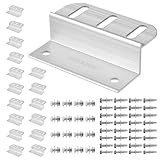
- Durable & Wind-Resistant Build: Crafted from corrosion-resistant aluminum alloy, these heavy-duty Z brackets provide long-lasting, stable performance and withstand high winds for outdoor solar installations.
- Adjustable Multi-Slot Design: The multi-slot structure allows flexible positioning and precise alignment during installation, making setup straightforward and hassle-free.
- Complete 16-Pack Kit with All Hardware: Includes 16 Z brackets, all necessary mounting hardware, and clear installation guidance for quick, secure mounting right out of the box.
- Versatile Application: Suitable for solar panel installations on RVs, boats, roofs, and off-grid systems, offering universal compatibility for diverse outdoor setups.
- Reliable Hold-Down Performance: Sturdy construction ensures your solar panels stay securely mounted in various conditions, giving you peace of mind for long-term use.
The USDA Agricultural Research Service’s Southwestern project illustrates the needed scope of local evaluation: researchers are measuring crop yield and quality, light, temperature, soil moisture, livestock stress, soil health, water use, pests and disease. Those are research questions, not universal findings. Farmers should treat a pilot as a production trial with controls, not as proof that every array will perform the same way.
How livestock grazing works under solar panels
Why sheep are the common model
Sheep can graze vegetation beneath and between rows without the height and reach problems associated with larger animals. Grazing can retain an agricultural use, reduce mowing and help manage plants around equipment. USDA Economic Research Service reporting in 2024 found that just over one quarter of U.S. agrivoltaic sites combined panels with sheep grazing. The same account reported that systems were predominantly grasses, native grasses and/or pollinator-friendly vegetation.
DOE’s farmer guide notes that utility-scale infrastructure may require little modification for grazing, but wire-management systems must be properly protected so animals cannot chew, snag or otherwise interact with electrical components. Fencing, gates, water, shade access, predator management and a plan for moving animals remain agricultural requirements even when the solar owner supplies the infrastructure.
Welfare and ecological evidence is still developing
A 2025 multidisciplinary review of agrivoltaic grazing found limited peer-reviewed research and called for foundational fieldwork on animal welfare, ecological effects and interactions with PV infrastructure. Do not assume that shade automatically improves health, weight gain or productivity. Animals may benefit from reduced heat load in some climates, but welfare depends on access to water and forage, stocking density, heat and cold exposure, footing, fencing and the absence of hazards.
Rank #3

- Reliable & Multi-Functional: Torsion-resistant and corrosion-resistant, these solar panel mounting brackets provide high stability and precise manufacturing, making them ideal for secure attachment of photovoltaic and solar modules. The tilt angle can be adjusted from 0-90° without tools
- Sturdy & Versatile: Crafted from high-strength aluminum rails and sold in packs of 4, our solar panel mounting kit ensures fast, easy, and secure installation for balcony power plants, mini PV systems, and off-grid solar setups
- Wide Application Range: The 45 inch long solar panel mounting rails are suitable for modules up to approximately 115 cm and 100-400 watts. Panels can be attached horizontally or vertically, and for solar panels, two can be installed horizontally
- Universal Use: Quickly and easily mount your PV or solar system on flat roofs, garage roofs, balconies, balcony railings, walls, facades, boats, campers, and caravans. They can also be placed on the ground in gardens, balconies, and terraces
- Package Includes: 8 x 1140mm/45in Aluminum Mounting Rails, 4 x rails for angle adjustment, 12 x knurled screws and wing nuts, 8 x M6 hex screws and nuts, 12 x self-tapping screws
Monitoring should include body condition, behavior, access to water and forage, injuries, heat-stress indicators and any contact with wiring or structures. Vegetation management must also consider soil compaction, overgrazing, invasive plants and pollinator habitat. A grazing plan that is safe for sheep may not suit goats, cattle or mixed herds; animal size and behavior change the engineering requirements.
U.S. scale: what the dated figures actually mean
Available U.S. estimates use different dates, definitions and denominators. They should not be combined as one inventory.
| Figure | What it measures | Qualification |
|---|---|---|
| Less than 5% of U.S. agrivoltaic sites had crops beneath panels; just over one quarter combined panels with sheep grazing; 70% had capacity below 5 MW. | Site characteristics | USDA Economic Research Service, 2024 article; a dated U.S. snapshot, not a global or timeless share. |
| More than 4,000 MW included sheep grazing underneath. | Solar capacity | NREL InSPIRE data reported by DOE in 2023, as of November 2023; capacity is not a count of farms. |
| About 60,000 acres and 10 GW of U.S. agrivoltaic sites. | Land area and capacity | NREL feature, 2024, as of November 2024; categories overlap across grazing, crops, habitat and greenhouse uses. |
The figures show a growing field, not a settled performance record. A megawatt total says nothing by itself about crop yield, animal welfare, revenue or whether a site uses elevated panels, fixed tilt or trackers.
Design choices that determine the outcome
Panel height, row spacing and orientation
Higher structures can leave room for people, tractors or taller crops but generally add steel, foundation and installation cost. Wider row spacing improves light and turning space while reducing the number of modules per acre. Tilt and tracking change both energy output and the timing of shade. Designs should map the sun path, crop canopy height, machinery dimensions and required turning radii before equipment is ordered.
Rank #4

- Practical Design & Easy to Install: End clamps and T-shaped middle clamps ensure a secure and easy grip during the solar panel installation. It also reduces the impact of the weight of the PV system on the suction of the roof covering. The grooved strips of the rails allow for a more secure connection to the solar panels
- Premium Material, Durable and Long-lasting: Anbte solar panel brackets are made of aluminum alloy, lightweight, high load capacity and corrosion resistance, suitable for various outdoor environments. Stainless steel screws have the advantages of rust and corrosion resistance. And the rubber mat made of EPDM material has good waterproof performance
- Innovative Two-hole End Clamp: Anbte solar panel end clamp is divided into long end and short end, and 2 fixing holes are pre-drilled. Choose the shorter side of the end clip for mounting solar panels with 30 mm/1.18" frame, and choose the longer side of the end clip for mounting solar panels with 35 mm/1.38" frame
- Wide Applications: Suitable for most home, RV and marine solar panel installations, you can install solar panels on flat and pitched roofs made of tiles, asphalt shingles, ceramic tiles, slab shingles and standing seam boards. Provides toughness to withstand extreme weather conditions
- Complete Kit: 10pcs 4.72n rails + 4pcs end clamps +6pcs middle clamps, including complete accessories for mounting (fixing screws and rubber pad). Ideal for mounting 4 solar panels
Light and shade management
Uniform shade is not always desirable. Alternating sun and shade can produce a different response from continuous cover, and seasonal sun angles alter the pattern. A design review should model photosynthetically active radiation at crop height, then verify it with sensors after installation. Compare shaded and unshaded control plots over multiple seasons.
Water, drainage and soil
Module edges can concentrate runoff, while foundations and roads can compact soil. Include drainage channels, erosion controls, irrigation zones and soil-moisture sensors in the civil plan. Track infiltration, compaction, organic matter and soil health rather than relying on total rainfall or a single moisture reading.
Wiring, fencing and safety
Use protected cable routing, secure connectors, robust conduit and inspection access. Keep electrical equipment outside animal reach where possible. Gates must permit farm and emergency vehicles, and fencing must prevent both livestock escapes and unauthorized entry. Establish lockout, fire and storm procedures shared by the solar operator and farm manager.
Quick wins for a faster PC:
Repair Windows errors before they cause bigger problemsFix Now →Fix the driver behind crashes, sound loss and screen glitchesFind Drivers →Clear out junk files and repair common Windows errorsFree Scan →Maintenance and harvest access
Vegetation control, panel washing, inverter service and replacement work can conflict with planting, grazing or harvest windows. Put access lanes and headlands on the plan, define who maintains them and schedule electrical work around farm operations. A layout that cannot be reached without driving through crops will create recurring losses even if its energy output is strong.
Best Value

- 【SUPERIOR QUALITY】 Anodized Aluminum Z brackets, Stainless Steel Hex Bolts and Screws, service life up to 25 years, perfectly supporting solar panels in off-grid installations.
- 【MULTIPLE APPLICABILITY】 Z Brackets are ideally designed to install single solar panels from 50w~150w on RVs, Trailers, Boats, Motorhome,Yachts, Wall, Cabins, Sheds, Garages and Other Off Gird Roofs.
- 【EACH SET CONTAINS】 16 units per set, each set includes 16pcs Z brackets, 16pcs Bolts, 16pcs Flange Nuts, 32pcs Self-Tapping screws.
- 【HIGH PERFORMANCE】 Light weight in quality construction, rust free and excellent corrosion resistance performance. We ensure our Z brackets performs well in all weather conditions!.
- 【CONSIDERATE AFTER-SALES SERVICE】 If you have any questions about product itself or about installation, please feel free to contact with us, we will have our professional technical team to help.
Comparing the two options across the outputs that matter
| Output or risk | Conventional solar farm | Agrivoltaic approach | What to verify locally |
|---|---|---|---|
| Electricity | Layout is optimized mainly for generation and service access. | Spacing, elevation and tracking may reduce or redistribute module density and output. | Modeled annual energy, clipping, shading losses, curtailment and maintenance access. |
| Food or forage | Ordinary production on the footprint is generally displaced. | Production remains possible under or between rows, but shade and access can reduce or improve results. | Marketable yield, quality, labor hours and machinery compatibility over several seasons. |
| Water and soil | Managed vegetation and stormwater controls still matter, but crop irrigation is absent. | Shade and runoff redistribution may lower some water demand or create wet and dry zones. | Applied irrigation, soil moisture, infiltration, erosion, compaction and soil health. |
| Livestock | Usually excluded except for vegetation management where permitted. | Sheep grazing is established at many sites; welfare and infrastructure interactions need monitoring. | Forage, stocking rate, water, heat stress, injuries, fencing and wire protection. |
| Operations | Fewer simultaneous farm tasks. | Solar and farm calendars, traffic, spraying, harvesting and inspections must be coordinated. | Written responsibilities, access routes, shutdown rules and conflict-resolution procedures. |
| Revenue and cost | Primarily electricity and lease or ownership economics. | May add farm, grazing or habitat value and diversified revenue, with higher design and management complexity. | Both parties’ capital, labor, insurance, replacement, lost-yield and revenue assumptions. |
A practical process for deciding whether a site is suitable
- Define the agricultural objective. Specify the crop, rotation, forage, livestock species or habitat outcome, including quality standards and harvest dates.
- Survey the baseline. Record soil type, slope, drainage, existing yields, irrigation, extreme temperatures, wind, pests, disease and machinery dimensions before selecting an array.
- Model alternative layouts. Compare conventional spacing with elevated or wider-row designs. Map shade by season, expected energy production, turning areas, fencing, roads and equipment clearances.
- Design water and soil controls. Locate gutters or runoff paths, irrigation zones, drainage, erosion protection and monitoring points. Plan for compaction around foundations and access roads.
- Engineer animal safety where applicable. Select suitable fencing and gates, protect wiring, provide water and forage, and define stocking and inspection schedules with a livestock professional.
- Run a controlled pilot. Keep unshaded comparison plots or grazing areas. Measure yield, quality, energy, irrigation, soil moisture, temperature, labor, animal condition and incidents for more than one season.
- Set decision thresholds. Agree in advance on acceptable yield or quality change, water use, animal-welfare indicators, downtime, maintenance cost and electrical output before expanding.
- Write the operating agreement. Assign responsibility for access, vegetation, repairs, crop losses, livestock escape, fire response, insurance, data collection and decommissioning.
Common claims that need qualification
- “Agrivoltaics always increases yields.” False. The 2024 systematic review reports highly variable effects by crop and geography.
- “Panels always save a fixed percentage of water.” Unsupported. Shade can reduce evaporation in some settings, but runoff patterns, crop demand and irrigation practice determine the result.
- “Shade guarantees healthier animals.” Not established. The 2025 grazing review says peer-reviewed evidence is limited and calls for welfare research.
- “A capacity statistic equals a number of farms.” It does not. Megawatts measure electrical capacity, while site counts and acreage use different units and definitions.
- “Any solar array can become a farm.” Not necessarily. Clearance, row spacing, wiring, access, soil, water and local regulations may require a redesign.
What a credible comparison should measure
Evaluate both systems with the same accounting period and boundaries. For crops, report marketable yield, quality, planting and harvest labor, rejected product and revenue—not only total biomass. For energy, report modeled and actual generation, downtime and maintenance. For water and soil, measure irrigation applied, soil moisture, infiltration, erosion and compaction. For grazing, record forage availability, stocking density, water access, animal condition, heat-stress observations and infrastructure incidents.
Include community and land-use factors: visual impact, traffic, fire access, stormwater, pollinator habitat, farm continuity and end-of-life restoration. These outcomes can matter as much as a small difference in annual kilowatt-hours. A transparent baseline and control area make the eventual decision more defensible than a headline yield claim.
Bottom line for landowners and project developers
Choose conventional solar when the site has no viable agricultural enterprise, when farm access would compromise safety or maintenance, or when a single-purpose layout is the only design that meets engineering and financial requirements. Choose agrivoltaics when a real crop, grazing or habitat operation can use the site and the project team is prepared to design around it, collect local data and manage two businesses.
Agrivoltaics is best understood as a site-specific operating system, not a universal upgrade to solar. Its strongest case is retaining productive land use while generating electricity; its weakest case is assuming that panels alone will increase yield, eliminate irrigation or improve animal health. The evidence supports careful co-location, measured pilots and explicit trade-offs—not blanket promises.
Quick Recap
Product prices and availability are accurate as of the date/time indicated and are subject to change. Any price and availability information displayed on Amazon at the time of purchase will apply.




