Some links on this page are affiliate links: if you buy through them we may earn a commission, at no extra cost to you.
Choose the vehicle for the route, not the badge. An all-wheel-drive (AWD) vehicle can be suitable for formed, maintained gravel roads when it has enough clearance and the road is open. A four-wheel-drive (4WD) is the safer choice for rougher tracks, deep corrugations, sand or roads explicitly restricted to 4WDs, provided the vehicle is equipped and driven within its limits. Rain, flooding and closures can make either type unsuitable.
“The outback” covers sealed highways, graded gravel, natural-surface roads, sand and difficult tracks. Check the exact road, current conditions, park or state restrictions and the vehicle manufacturer’s instructions before leaving.
As an Amazon Associate I earn from qualifying purchases.
The Tool Desk
Outbyte PC Repair FREEClear out junk files and repair common Windows errorsFree Scan →Outbyte Driver Updater FREEFix the driver behind crashes, sound loss and screen glitchesFind Drivers →What “the outback” means for vehicle choice
There is no single outback specification. A sealed highway between regional towns presents very different demands from a remote station track, a sandy river crossing or a corrugated park road. NSW National Parks and Wildlife Service notes that many outback roads are unsuitable for 2WD vehicles, while also making clear that not all outback travel requires a 4WD.
Start with the road surface and its maintenance standard rather than the marketing name on the tailgate.
Popular on Amazon

- RAPID INFLATION & ROAD-READY PORTABILITY: Plugs into standard 12V DC car outlet with 15A fuse protection. Powerful 120W motor delivers up to 35L/min airflow—inflates a standard car tire (195/65 R15) from 30 to 36 PSI in under 1 minute under ideal operating conditions. Weighs only 2.2 lbs and fits glove compartments or trunks for daily commutes, road trips, and emergencies. AIRUN H features its cordless counterpart H2 Pro.
- HEAVY-DUTY BUILD & 2-YEAR WARRANTY: Reinforced cylinder, motor gears, and connecting rod engineered with advanced powder metallurgy for improved durability and long-term reliability. Intelligent thermal management with auto shut-off after 15 minutes of continuous use; 10-minute cool-down period recommended before resuming. Backed by AIRUN H's 2-Year Limited Warranty.Practical car accessories make great Thanksgiving gifts for men.
- DIGITAL PRESET & AUTO SHUT-OFF: Easy 3-button control to select target pressure across 4 units (PSI, kPa, Bar, kg/cm²). Large backlit LCD displays real-time and preset pressure simultaneously. Inflator automatically stops at your target—preventing over-inflation with zero guesswork. Ideal for cars, motorcycles, bicycles, and more. Set it and forget it.
- EMERGENCY LED LIGHT & BUILT-IN SAFETY: One-touch LED flashlight provides instant illumination for nighttime inflation, dim parking lots, and roadside emergencies. Backlit LCD ensures clear readings in any lighting condition. Integrated overheat protection and 15A fuse safeguard both the inflator and your vehicle's electrical system. An essential safety tool for every driver.
- ALL-IN-ONE KIT FOR CARS, BIKES & SPORTS: Includes 2 air nozzles, needle valve for balls (basketball, soccer, football), Presta-to-Schrader adapter for road/mountain bikes, extension hose, and spare fuse. 9.84-foot cord reaches all tires without repositioning. Compatible with standard Schrader valves on cars, motorcycles, and bicycles. Note: Not designed for high-volume inflatables such as pool floats or air mattresses.
| Route type | Main hazards | Typical vehicle question |
|---|---|---|
| Sealed highways and well-maintained access roads | Long distances, heat, fatigue and limited services | AWD may be unnecessary; a sound vehicle with adequate range and spares can be sufficient. |
| Formed, maintained gravel roads | Loose gravel, reduced braking grip, dust and corrugations | AWD can work if clearance, tyres and the manufacturer’s limits suit the road. |
| Natural-surface roads with deep corrugations or ruts | Underside damage, loss of control and bogging | A high-clearance 4WD is often the appropriate choice; verify the specific route. |
| Sand, dunes and beaches | Rapid loss of traction and soft patches | Use a vehicle and equipment approved for sand travel; a 4WD with suitable gearing and clearance is commonly required. |
| Flood-prone or recently rain-affected roads | Mud, washouts, hidden holes and moving water | Either vehicle may be unsuitable. Closure information and water conditions take priority over drivetrain. |
AWD and 4WD: useful distinctions, imperfect labels
What AWD generally indicates
AWD systems normally distribute drive to more than one axle automatically or with limited driver selection. They can improve traction on loose gravel and help keep a vehicle moving when one or more tyres lose grip. Their usefulness off sealed roads still depends on ground clearance, tyre specification, underbody protection, approach and departure angles, and the controls provided by that exact model.
What 4WD generally indicates
4WD vehicles are designed with off-road use in mind and often provide selectable drive modes, including low-range gearing on some models. Low range can give the driver more control at very low speed and on steep or soft terrain. However, not every vehicle carrying a 4WD badge has the same hardware, and a 4WD badge does not guarantee access to every track.
Recommended Free Tools
The national training unit used for Australian off-road instruction covers both AWD and 4WD operation on formed dirt roads. That is a reminder that the category alone does not decide suitability. Read the owner’s manual for the exact vehicle, including permitted surfaces, towing limits, tyre pressures, recovery points and any restrictions on using particular drive modes.
Also popular on Amazon

- 【50s Fast Inflation】: Equipped with Industrial-Leading chip, sensor and Zinc-Alloy motor, Inzeetor Tire Inflator takes only 50 seconds to inflate a tire (195/65R15) from 30 to 36 PSI.
- 【Auto Shut-Off】: Press the “+” or “-” button to preset the tire pressure, then click the “Start” button, the inflator will automatically shut off when it reaches the preset pressure.
- 【No Rest Between Tires】: Inzeetor tire inflator can finish the inflation of all the four tires continuously, making the inflation a breeze for you.
- 【Low Vibration, Low Noise】: The Inzeetor TIT001 achieves the lowest vibration and noise during inflation, no more walking by itself when in use.
- 【Multi-Purpose】: Package includes a tire inflator with 10.5ft power cord and an air hose of about 1.97ft, schrader valve adapter, presta valve adapter, ball needle. The effective reach from the car power source is around 9.84ft.
Compare the things that actually determine access
| Decision factor | Why it matters | What to check |
|---|---|---|
| Road formation and surface | Gravel, sand and dirt reduce traction; corrugations and ruts can destabilise a vehicle or strike its underside. | Is the road formed and maintained, or a rough natural-surface track? Are there recent reports of corrugations, erosion or soft sections? |
| Ground clearance and vehicle limits | Ruts, washouts and rocks can damage a low vehicle even when its tyres still have grip. | Vehicle clearance, tyre sidewalls, approach and departure angles, payload, recovery points and all manufacturer limits. |
| Weather and closures | Rain can turn a graded road into mud; floodwater can hide the road edge, holes and debris. | State road reports, park notices, local forecasts and closure gates immediately before departure and during the trip. |
| Driver preparation | Remote travel can mean long distances between fuel, help and mobile coverage. | Fuel range, spare tyres, navigation redundancy, communications, food, water and a realistic turnaround plan. |
When an AWD can be the sensible choice
An AWD is a reasonable option when all of these conditions are true:
- The route is open and described as formed or maintained rather than a difficult track.
- The vehicle has sufficient clearance for the reported ruts, corrugations and flood damage.
- The owner’s manual permits the intended surface and provides suitable tyre and drive-mode guidance.
- Weather is stable, and there is no warning of bogging, washouts or water across the road.
- You are carrying an appropriate spare, enough fuel and navigation and communication backups.
Drive conservatively on loose surfaces. NSW Government guidance advises extra care and slower speeds on unsealed roads because grip and braking distances change. AWD can help maintain traction, but it cannot create grip on a surface that is too soft, steep or wet for the vehicle.
When a 4WD and high clearance are justified
A 4WD becomes the prudent choice when the route information or physical conditions point to a narrow margin:
What’s actually slowing this PC down?
Pick the symptom - the matching free tool is one click away.
Also popular on Amazon

- Fast-Inflation & Compact: Our compact and lightning-fast upgrade to the popular R7 air compressor portable. With a powerful 40L/Min cylinder, this air pump for car can inflate a tire (215/50 R17) in under a minute (26-35PSI) and even Tesla tires (235/40 R19) in just 1.5 minutes (28-36PSI). Say goodbye to slow and cumbersome inflation processes - This 150PSI tire inflator portable air compressor offers a smoother, faster solution for all your inflation needs.
- Dual Digital Display: A whole new experience our portable tire inflator with a dual digital LED display showing real-time and preset pressure values, product status, and possible errors. The advanced chip ensures safe inflation with accurate pressure control and monitoring. Say goodbye to guesswork and hello to convenience with our user-friendly car tire inflator.
- Long-Lasting Durability: Our 12v air compressor is built for long-lasting durability with high-quality materials and optimal cooling system. It has a sturdy structure and comes with a 10FT power cord and 2FT hose made from premium materials that won't easily get damaged from folding or bending. Invest in worry-free use with our dependable car air compressor.
- Simplicity with Auto-Stop: Only three steps- connect, preset, and start; It also features auto-shutoff and a memory function for easy one-key use next time. it's easy to use even if you have not used similar tire air compressor before. Plus, it's an emergency device with three light modes for nighttime use. This air compressor tire inflator is suitable for cars, EVs, motorcycles, bicycles, basketballs, and soccer balls.
- What Will You Get: Get the perfect gift for men and women - the R8 car tire pump! It's compact, measuring 2.79 x 4.92 x 6.49 inches, and comes with a carrying bag for easy storage and transport. In the box, you'll find a 12v tire inflator, Carrying Bag, Schrader-Presta Valve, Fuse, Needle Valve, Extension Nozzle, Wire, and User Manual. Rest assured that your purchase is covered by a two-year warranty, and don't hesitate to contact us with any questions - we'll get back to you promptly!
- The road authority or park service specifies 4WD-only access.
- The route has deep corrugations, ruts, rocky shelves, steep entries or soft sand.
- There is a high-clearance requirement or a realistic risk of underside contact.
- You need low-speed control on soft or steep terrain and the selected vehicle provides the required gearing.
- Recovery equipment, tyres and driver experience match the terrain.
South Australia’s road information includes roads restricted to 4WDs and other vehicle-specific conditions. Treat such restrictions as access rules, not suggestions: a capable AWD cannot override a posted restriction.
Route examples show why the answer changes
Diamantina National Park, Queensland
Queensland park guidance describes approximately 200–300 kilometres of unsealed gravel roads in Diamantina, with deep corrugations, and recommends a high-clearance 4WD. That is a route-specific recommendation, not a claim that every Queensland outback road needs a 4WD. Check the park’s current status and road advice before setting out.
NSW outback travel
NSW National Parks and Wildlife Service’s guidance captures the central nuance: “Not all of the outback requires a 4WD.” A vehicle suitable for one formed road may be unsuitable for a nearby track after rain or grading changes. Plan each road segment separately.
Also popular on Amazon
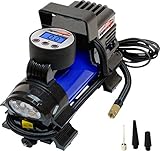
- Convenience: Plug directly into Cigarette Lighter Socket of your Vehicle. 12VDC, 10 to 15 amps, 120 to 180W. Equipped with 12V-DC Cigarette Lighter Socket Plug, NOT 110V AC plug.
- Multiple Uses: Inflate tires on cars, bikes, sedan and midsize SUV. (Engine size under 3.5 liter) Universal valve connector for schrader valve is ready to use. Additional adapters include needles value (for basketball, balls), short cone/long cone adapters (for inflatable kayak, swimming pool accessories, etc)
- Capacity: Does NOT Support truck tires, for instance: light truck tires (LT), heavy duty truck tires or any truck tires.
- Easy to Read: 4 Display Units: PSI, KPA, BAR, KG/CM; LED FLASHLIGHT: Bright Torch
- Prevent Over Inflation: Auto shut off when reaching the desired tire pressure. Overheat protection shuts off automatically when overloading. USPTO Patent NO:D875,788
South Australian restrictions
South Australian road reports identify 4WD-only sections and other conditions that apply to particular vehicles. Read the restriction for the exact road and date; do not infer access from a broad regional label such as “outback.”
Pre-trip decision process
- List every road and park. Write down the exact roads, not just the destination. Include side trips, campsites and alternate exits.
- Classify each surface. Mark each segment as sealed, formed gravel, rough natural surface, sand or potentially flooded.
- Check official access information. Review the relevant state road-condition service, park notices, closures and vehicle restrictions.
- Check weather twice. Look before departure and again immediately before entering a remote section. Rain upstream can affect a road even when the local sky is clear.
- Match the vehicle to the hardest segment. Compare clearance, tyres, payload and available drive modes with the worst reported conditions, not the easiest kilometres.
- Read the owner’s manual. Confirm permitted surfaces, tyre-pressure procedures, recovery points, wading warnings and the operation of any low-range or traction systems.
- Plan fuel and communications. NSW National Parks recommends carrying plenty of fuel and a detailed paper map. Keep a digital map as well, but do not rely on mobile coverage in remote areas.
- Set a turnaround rule. Decide in advance which conditions—rising water, a closure, unexpected corrugations or insufficient fuel—will make you stop or return.
Sand: preparation that applies to either drivetrain
Sand demands a specific setup. Queensland Government guidance recommends using low gears, reducing tyre pressure for traction and carrying an air pump so tyres can be reinflated on hard surfaces. It also advises carrying a jack and shovel.
- Confirm the vehicle manufacturer’s permitted tyre pressures and any sand-driving procedure.
- Reduce pressure only as far as the vehicle and tyre guidance allows; record the starting pressure so you can restore it accurately.
- Use the appropriate low gear or drive mode before entering soft sand, avoiding unnecessary wheelspin.
- Keep momentum smooth and avoid abrupt steering, braking or throttle inputs.
- If the vehicle bogs, stop spinning the wheels. Clear sand with the shovel and use the approved recovery method.
- Reinflate with the 12V air compressor before returning to hard gravel or sealed pavement, then check pressures again after the tyres cool.
An air pump, jack and shovel improve preparation; they do not make an unsuitable vehicle or a closed route safe.
Also popular on Amazon
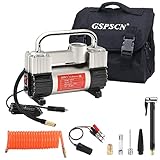
- 6X FASTER INFLATION: GSPSCN Heavy Duty Double cylinder design, maximum pressure 150PSI, air flow 70L/min, inflates standard vehicle tire in 1 minutes (200/70/R18, 0-35psi).
- DOUBLE CYLINDERS DIRECT DRIVE INFLATION PUMP: In the direct drive of the motor, the two cylinders at the same time compressed air, powerful and fast inflatable, direct drive motor makes the drive low rotating speed, high efficiency, compact, quiet, stability, and easy to control.
- 5X MORE VEHICLE COMPATIBILITY: Equipped with an 11.5-foot power cord and an 11.5-foot extended air hose, the GSPSCN tire inflator meets the inflation needs of most standard-sized vehicles. It is suited for SUVs, pickup, small trucks, vans, RVs, crossovers, MPVs, campers, trailers, minivans-and also works seamlessly with cars, motorcycles, golf carts, bicycles, and more.
- 70dB WHISPER-QUIET INFLATION vs. 90dB COMPETITORS: Cut noise by 20dB compared to traditional loud tire inflators. Our precision-tuned design runs as quietly as a normal conversation, so you can inflate tires at night or camp without disturbing neighbors or your family
- TRAVEL COMPANION: During your car trip, carry our GSPSCN compact air compressor, which is easy to use and keep your tires in good condition. You can buy this tire inflator as a gift to your friends or family.
Rain, flooding and changing road conditions
Wet weather can make unsealed roads muddy, slippery, boggy or impassable. Corrugations may soften, shoulders may collapse and a previously shallow crossing can become moving water. NSW Government guidance says to avoid driving through floodwater. No AWD or 4WD system guarantees a safe crossing, and the water depth, current, roadbed and debris may be impossible to judge from the driver’s seat.
- Check for newly issued closures before leaving and at every reliable information point.
- Stop at water across the road unless an official authority has confirmed it is open and safe for your vehicle and conditions.
- Do not bypass a gate or drive around a closure; an apparently dry detour may be private land, unstable ground or deeper water.
- Expect conditions to worsen after rain and allow for the possibility that the return route will not be available.
Equipment and supplies for remote roads
Vehicle choice is only one part of preparation. For outback travel, carry equipment appropriate to the route and your ability to use it.
- A full-size spare tyre where the vehicle permits, plus the tools needed to change it.
- A tyre gauge and a portable 12V air compressor for pressure adjustments and reinflation.
- A jack and shovel for sand or soft shoulders, used only according to the vehicle and recovery-equipment instructions.
- A detailed paper road map as a backup to digital navigation.
- More fuel than the planned distance requires, accounting for detours, low-speed work and idling.
- Water, food, first-aid supplies, sun protection and a way to communicate if mobile service fails.
- Information about local recovery services and an agreed check-in time with someone who is not travelling with you.
Common mistakes and how to correct them
| Mistake | Why it fails | Better action |
|---|---|---|
| Choosing by the AWD or 4WD badge alone | Badges do not state clearance, gearing, tyres or legal access. | Compare the exact vehicle specification and manual with the exact route notice. |
| Assuming a 4WD guarantees passage | Floods, closures, mud and damaged roads can stop any vehicle. | Turn around when authorities close a road or conditions exceed your plan. |
| Keeping highway tyre pressures in soft sand | Traction can be lost quickly, increasing wheelspin and bogging risk. | Follow the manufacturer’s sand-pressure guidance and carry an air pump. |
| Driving at normal sealed-road speed on corrugations | Loose surfaces reduce grip and increase stopping distance and vehicle stress. | Reduce speed, increase following distance and adjust to visibility and surface changes. |
| Relying on a phone map alone | Coverage and map data can be incomplete or unavailable. | Carry a detailed paper map and current official road information. |
| Continuing after conditions change | Rain and closures can make the return route worse than the outbound route. | Use your turnaround rule and reassess before entering the next remote section. |
Bottom line
For a maintained gravel road in dry, open conditions, a properly equipped AWD may be entirely appropriate. For deep corrugations, sand, rough natural-surface tracks, high-clearance requirements or 4WD-only restrictions, choose a suitable high-clearance 4WD. In every case, current road reports, weather, closures and the vehicle manual matter more than the drivetrain label—and floodwater is a reason for neither vehicle to proceed.




