Quick wins for a faster PC:
Scan for outdated or missing drivers - takes under a minuteDriver Scan →Repair Windows errors before they cause bigger problemsFix Now →Neither model is automatically easier to own. A solid, complete 1963 Ford Falcon can be a better car to live with than a rusty or modified Chevrolet, and the reverse is equally true. Buy the individual car—not the badge—by comparing structural condition, completeness, mechanical configuration, documentation, parts required and access to competent local help.
One naming detail matters: “Nova” was the upper series of the 1963 Chevy II line. Parts books and manuals may call the same car Chevy II or Chevy II/Nova. Confirm the exact series, body style, engine, transmission and modifications before you estimate repair difficulty or order parts.
As an Amazon Associate I earn from qualifying purchases.
The ownership answer in one sentence
Condition outranks model reputation. The easier car is the one with sound structure, an intact and correctly identified drivetrain, fewer missing trim and body pieces, understandable wiring, and records showing how previous work was done. A low purchase price does not compensate for corrosion, incomplete restoration work or an undocumented engine swap.
What’s actually slowing this PC down?
Pick the symptom - the matching free tool is one click away.
| Ownership question | What to compare on the actual car | Why it changes the decision |
|---|---|---|
| Is it safe and repairable? | Floor, rocker, suspension and steering mounting areas; quality of previous rust repair | Structural corrosion can cost more and create greater risk than a worn bolt-on mechanical part. |
| Is the specification clear? | Series/trim, body style, engine, transmission and identification documents | Parts and service instructions are configuration-specific, especially on a modified car. |
| Is it complete? | Glass, brightwork, emblems, interior hardware, wheels and correct brackets | Missing model-specific trim may be harder to source than common mechanical service parts. |
| Can you maintain it locally? | Knowledgeable shops, machine work, fabrication and electrical help near you | A well-supported car in your area can be easier than a theoretically common car with no local expertise. |
There is no controlled current comparison of breakdown rates, repair bills or regional parts stock for these two 1963 models. Treat claims about a universal winner as opinion unless they are tied to a particular car and a documented work list.
#1 Best Overall

- 1:25 scale, skill level 2, paint & glue required
- 84 parts
- Molded in white, clear, and some chrome-plated parts
- Black vinyl tires
- Metal axle
First identify the Chevrolet correctly
Chevy II and Nova are related names, not a license to assume later specifications
For 1963, Chevrolet marketed the compact line as Chevy II; Nova identified the upper Chevy II series. A supplier may therefore file a part under “1963 Chevy II,” “1963 Nova” or “Chevy II/Nova.” Verify the catalog application rather than assuming that a part listed for a later Nova fits.
Do not apply a later Nova V8 specification to a 1963 car. The specialist history material for 1963 describes the Nova SS as an option package with a six-cylinder standard. The factory V8 option arrived in 1964. A 1963 car can have a V8 today because an owner installed one, but that makes it a modified present-day configuration, not proof that the engine was factory-installed.
What to record before you compare prices or parts
- Body style and series or trim badge.
- Engine casting, displacement and identifying numbers, rather than the seller’s description alone.
- Transmission type and whether the shifter, linkage and crossmember are original or adapted.
- Axle, brake and suspension changes that may affect service parts.
- Whether the wiring, charging system, fuel system and cooling system remain close to factory specification.
- Receipts, identity documents, restoration photographs and a written list of missing parts.
What the 1963 cars offered
Ford Falcon
Ford’s “Falcon for ’63” brochure is useful for period specifications and for understanding how Ford presented the car when new. It is not a modern maintenance assessment of a six-decade-old survivor. The reviewed material does not provide enough directly comparable technical and current ownership-cost information to declare every stock six-cylinder Falcon easier to maintain than every stock Chevy II/Nova.
Chevrolet Chevy II/Nova
Chevrolet’s official 1963 passenger-car information kit was prepared as an engineering reference for period specifications. A specialist restoration listing describes a 153-cubic-inch four-cylinder and a 194-cubic-inch six-cylinder, with a three-speed manual or Powerglide listed. These are the factory-era configurations you should use as a starting point, then confirm against the vehicle and the Chevrolet documentation.
Rank #2

- MODERN TOOLING PICKUP – Crisp mold detail and improved fit for an enjoyable build.
- MULTIPLE CUSTOM OPTIONS – Stock and custom front ends, wheels, push bumper, and roof flasher included.
- SUPERCHARGED FORD ENGINE – Detailed engine bay with opening hood.
- AUTHENTIC FOUR SIXES DECALS – Ranch branding plus optional markings included.
- DISPLAY-WORTHY BUILD – Chrome parts and custom options for collectors and builders.
| Item | 1963 Chevy II/Nova evidence | 1963 Falcon evidence |
|---|---|---|
| Engine choices cited | 153-cubic-inch four-cylinder and 194-cubic-inch six-cylinder in the specialist 1963 range description | Not stated in the cited Ford material used for this comparison. |
| Transmissions cited | Three-speed manual or Powerglide in the specialist range description | Not stated in the cited Ford material used for this comparison. |
| Nova SS | Six-cylinder standard for 1963; factory V8 option arrived in 1964, according to the specialist history | Not applicable. |
| Model-specific references | 1963 chassis service manual listing and 1963 wiring diagrams are documented in specialist and 2025 restoration-catalog listings | 1963 Falcon/Comet shop-manual supplement and early Falcon wiring diagrams are indexed by an enthusiast reference |
Secondary figures for a Nova 400 six-cylinder sedan
The Classic Car Database listing accessed in 2026 gives a 194.37-cubic-inch inline six rated at 120 bhp at 4,400 rpm and 177 lb-ft at 2,400 rpm, with a 110-inch wheelbase and 2,590-pound weight. Those numbers are a secondary cross-check for a Nova 400 six-cylinder sedan, not a substitute for Chevrolet’s information kit or the records of the particular car. A different series, body style, engine or modification can produce different specifications.
Ford’s “two stops a year” claim—and what it means now
Ford’s 1963 Falcon brochure says: “Routine maintenance for Falcons has now been reduced to just two stops a year, or one every 6,000 miles.” That sentence is period manufacturer advertising. It describes Ford’s scheduled-service message when the car was new; it is not a maintenance recommendation for a 1963 vehicle today and does not establish lower ownership cost than a Chevy II/Nova.
Age changes the service question. Rubber seals, hoses, tires, brake components, fuel-system parts, wiring insulation and previous repairs may require attention regardless of the original schedule. Start with the correct service literature for the exact year and equipment, inspect the car, and establish a baseline for fluids, lubrication, brakes, steering, cooling and electrical systems before adopting any interval.
Free tools Windows power users keep installed
One-click scans. No signup required.
Parts, manuals and specialist support
What the listings actually establish
A specialist retailer lists a 1963 Nova chassis service manual containing repair and maintenance instructions for Nova fitment. An enthusiast Falcon/Comet reference indexes a 1963 shop-manual supplement and early Falcon wiring diagrams. A 2025 Classic Industries Nova catalog lists Chevy II/Nova restoration literature and 1963 wiring diagrams. These references can make diagnosis and correct assembly easier.
Rank #3

- Authentic Ford Design: Each model kit accurately captures the signature style and details of iconic Ford vehicles.
- Precision-Molded Parts: High-quality, finely molded components ensure a realistic and detailed build.
- Customizable Features: Includes decals and optional parts for a personalized, unique build.
- Ideal for Hobbyists: Perfect for model builders of all skill levels, from beginners to experienced collectors.
- Display-Ready Models: Create a stunning Ford model that’s ready to showcase in your collection or as a standout display piece.
A listing proves that a reference was offered or indexed; it does not prove that every body panel, trim item, fastener or electrical component is currently in stock, inexpensive, or interchangeable. Catalog presence is not evidence of Amazon availability, a particular partner program or supply in your region.
Ask for availability by component, not by model name
- Give the supplier the model year, series, body style, engine and transmission.
- Separate mechanical requests—brake, cooling, ignition and suspension—from body and trim requests.
- Ask whether the item is new, reproduction, used or remanufactured, and whether modification is required.
- Check return policy and measurements for trim, glass, weatherstripping and wiring before ordering.
- For a swapped engine or transmission, identify the donor application as well as the 1963 chassis.
Mechanical service parts are often easier to cross-reference than one-year or body-specific trim. That is why a complete but cosmetically imperfect car can be a better ownership proposition than a freshly painted project missing emblems, interior hardware, brackets and correct glass.
How to inspect either car before buying
- Document the identity. Photograph identification plates and numbers, record the body style and series, and compare them with the title, registration and seller’s description. Write down every non-original component.
- Inspect structure before cosmetics. Use a lift when possible. Examine floor sections, rocker areas, suspension and steering mounting points, subframe or frame attachment areas, trunk structure and previous patches. Probe suspicious repairs and look for corrosion hidden under undercoating.
- Judge repair quality. Look for overlapping sheet metal, trapped moisture, poorly placed drain holes, cracked filler, uneven welds and corrosion returning around old repairs. A straight exterior does not prove sound structure.
- Check completeness. Make a list of missing glass, brightwork, emblems, seat hardware, instrument parts, brackets, correct wheels and trim clips. Price the list before negotiating.
- Establish the drivetrain. Confirm cold-start behavior, oil pressure, smoke, overheating, leaks, compression or leak-down results where practical, clutch or Powerglide operation, driveshaft vibration and axle noise. A modified drivetrain needs a parts trail and evidence that cooling, braking and wiring were upgraded appropriately.
- Test the electrical system. Verify charging voltage, starter operation, lighting, gauges, turn signals, heater, wipers and grounds. Trace added relays, fuse panels and alarm wiring rather than assuming the original diagrams cover them.
- Evaluate brakes, steering and suspension. Inspect lines, hoses, wheel cylinders or calipers, master-cylinder behavior, steering play, bushings, springs, shocks and tire age. A car that stops poorly is not made easier to own by a low asking price.
- Review records and receipts. Ask who performed engine, transmission, rust and paint work, when it was done, what parts were used and what remains unfinished. Require explanations for gaps instead of treating a verbal “restored” claim as documentation.
- Price the actual work. Obtain parts and labor estimates for the defects you found. Include transport, machine work, paint, upholstery and specialist electrical or fabrication time where applicable.
Compare candidates with a work-list worksheet
Use the same worksheet for a Falcon and a Chevy II/Nova. Do not score a model in the abstract; score the specific car after inspection.
The Tool Desk
Outbyte PC Repair FREEClear out junk files and repair common Windows errorsFree Scan →Outbyte Driver Updater FREEScan for outdated or missing drivers - takes under a minuteDriver Scan →| Category | Record | Decision question |
|---|---|---|
| Structure | Locations and severity of corrosion, previous patches, measurements and photographs | Can the work be repaired safely within your skills and budget? |
| Powertrain | Factory or swapped engine, transmission, cooling, fuel and exhaust condition | Are parts and expertise available for this exact combination? |
| Body and trim | Missing or damaged panels, glass, moldings, emblems and interior pieces | Can you source the one-year items, or will fabrication be required? |
| Electrical | Original harness condition, added circuits, charging and instrument operation | Do the diagrams match what is in the car? |
| Documentation | Title, identification, receipts, manuals and restoration photographs | Can you verify what was done and what remains? |
| Local support | Shops, clubs, machine services, fabricators and parts suppliers within practical distance | Who will handle work you cannot perform? |
Choose the car with the smaller, better-understood work list—not necessarily the one with the lower advertised price. If a seller will not allow an inspection or will not identify major modifications, treat that uncertainty as a cost.
Rank #4

- Highly detailed 1:24 scale diecast model kit of 1929 Ford Model A
- Comes with everything needed for assembly including screwdriver
- Features opening parts, rolling wheels and pre-painted metal body
- Easy to assemble, creates fully functional rolling replica model car
- Fun and educational STEM activity for kids to build realistic miniature vehicle
Different ownership scenarios change the answer
A near-stock weekend driver
For a car that retains its original-style engine, transmission and wiring, the deciding factors are usually structure, completeness and the quality of the previous maintenance. Match the service manual and parts catalog to the year and series, then establish your own baseline rather than relying on a brochure-era interval.
A modified cruiser
A V8-swapped 1963 Chevy II/Nova, an altered Falcon suspension or a modern charging conversion may drive better for its owner, but it creates a mixed-application parts problem. Record donor components, measurements, wiring changes and replacement part numbers. Do not order a factory 1963 part until you know the modified assembly still uses it.
A restoration project
Projects need a completeness audit before paint or teardown. Missing trim, glass, interior hardware and correct brackets can stop progress after expensive bodywork. Compare the cost and time to obtain each missing item with the cost of buying a more complete car.
What historical prices and production numbers can—and cannot—tell you
A Ford archival presentation dated December 11, 1962, lists $1,975 for a Ford Futura and $1,972 for a Chevy II Nova in a comparison chart of wholesale-delivered convertible price entries. These are specific historical listed figures, not current market values, retail prices, restoration budgets or ownership-cost measurements. The three-dollar difference says nothing about which car is easier to maintain in 2026.
Best Value
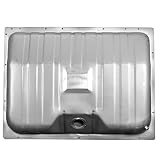
- Reference Numbers: 576-037; C4DZ9002A; F28B; F28F; lF28B
- YOUR TRUSTED DIY VIDEO SOURCE: TRQ offers the largest catalog of DIY videos for replacement parts, making installation easier and repairs more accessible. Our mission is to help you "View Before You Do," with hundreds of new videos added weekly.
- TRUST & COMPATIBILITY: For over 25 years, TRQ has been the premium choice for direct-fit replacement parts. Confirm fitment with the Amazon Garage "confirmed fit" feature and review our full compatibility chart below before purchase.
- EASE OF INSTALLATION: Save time and effort with pre-assembled components designed as direct replacements for the original equipment, ensuring precise fit and eliminating the need for modifications.
- Limited Lifetime Warranty This product is warranted against defects in materials and workmanship for its lifetime, when used as intended. Excludes normal wear and tear, misuse, abuse, or unauthorized modification.
An undated SS396.com compilation reports 326,607 Chevy II/Nova units for 1963, broken down by body style, while warning that its compiled numbers are not guaranteed complete or accurate. Use that figure only as a qualified historical compilation; it is not a primary Chevrolet production record and cannot be converted into a current parts-stock statistic.
Common buying mistakes
- Assuming “Nova” means V8. A 1963 SS was six-cylinder standard; a present V8 indicates a later swap or other modification unless factory documentation proves otherwise.
- Buying by engine name alone. The chassis, transmission, brakes, mounts and wiring may have been changed together, so identify the complete system.
- Confusing a catalog with inventory. A manual or restoration listing demonstrates reference coverage, not guaranteed availability of every requested component.
- Ignoring trim and glass. A running car can still be a difficult restoration if one-year exterior or interior pieces are missing.
- Trusting a maintenance slogan. Ford’s two-stops-per-year statement is historical advertising, not a safe schedule for an uninspected 63-year-old car.
- Comparing asking prices instead of repair totals. Add structural, mechanical, electrical, body, trim and professional labor costs for each candidate.
- Skipping local support. A specialist, fabricator or machinist who understands your exact car can matter more than a model’s general reputation.
A practical decision rule
Buy the Falcon if the particular Falcon has the stronger structure, clearer history and more complete configuration after you have confirmed the parts for its work list. Buy the Chevy II/Nova on the same terms. If both cars are equally sound and complete, choose based on the drivetrain and body style you prefer, the manuals and diagrams you can obtain, and the people who can service it near you. The available evidence supports that conditional decision, not a categorical model winner.
Final verdict
The 1963 Ford Falcon and 1963 Chevrolet Chevy II/Nova can both be manageable classic compacts when bought as documented, structurally sound cars. Neither has a proven universal advantage in current repair cost, reliability or regional parts supply. Verify the exact configuration, inspect rust and previous repairs, confirm component-level parts support, and price the work before you buy. That process—not the name on the grille—determines which car is easier to own.
Do these 3 things before closing this tab:
1Fix the driver behind crashes, sound loss and screen glitches2Clear out junk files and repair common Windows errors3Scan for outdated or missing drivers - takes under a minuteQuick Recap
Product prices and availability are accurate as of the date/time indicated and are subject to change. Any price and availability information displayed on Amazon at the time of purchase will apply.




